
Garage Door Repair Cost in 2026: What Homeowners Actually Pay
Garage door repair cost typically runs between $150 and $450, with most homeowners landing around $265 for a single-issue fix like a broken spring, a bad sensor, or a jammed opener. The exact number depends on which part failed, your door’s size and material, and whether you need a same-day emergency visit. Minor jobs can come in under $100, while major panel or track damage can push past $800.
If your garage door has started grinding, sagging, or refusing to open, you’re probably here for one reason: you want a real number before you call anyone. Below is a full breakdown of what drives the price up or down, what each common repair actually costs, and how to avoid overpaying for a fix that should be simple.
Signs You Need a Garage Door Repair Now
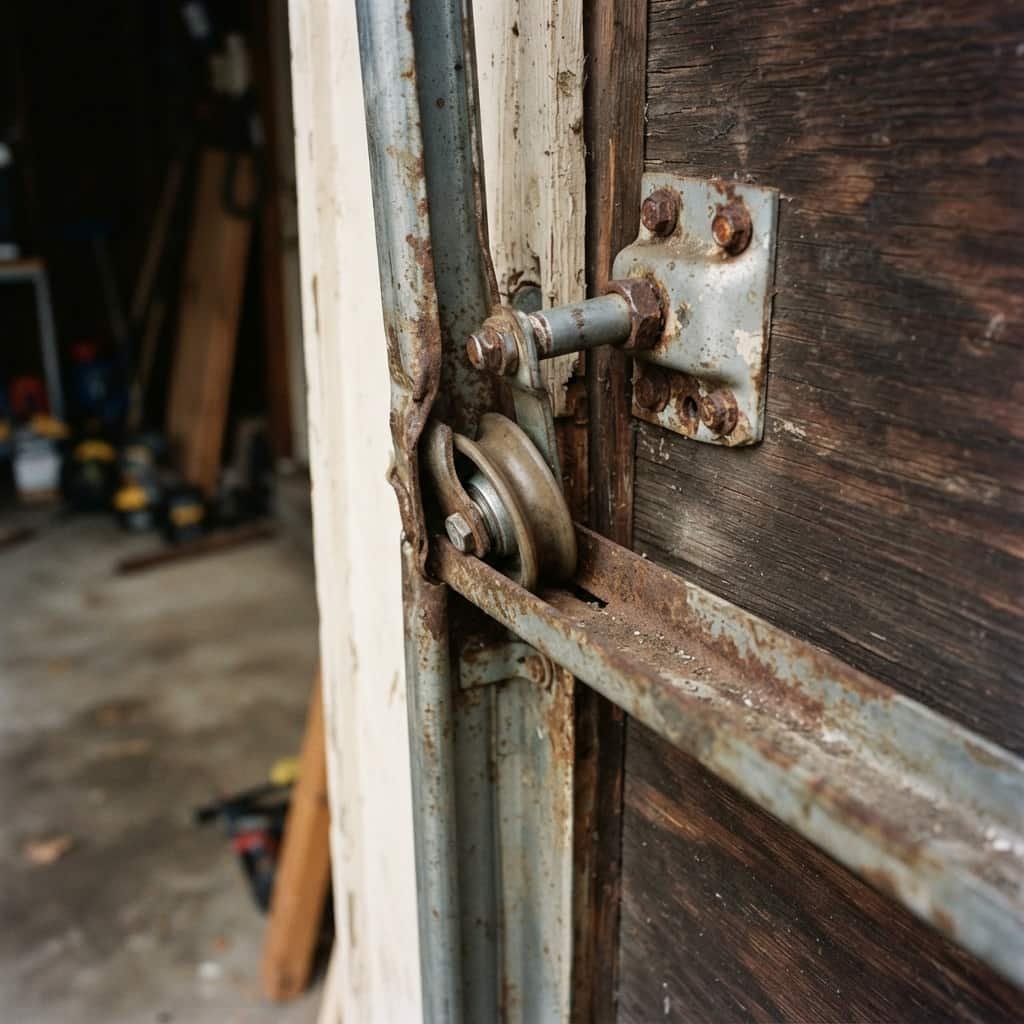
Most garage door problems give some warning before they turn into a full breakdown, and catching them early is one of the easiest ways to keep your garage door repair cost on the lower end.
- Uneven or jerky movement. If one side of the door lags behind the other as it opens, a spring or cable is usually losing tension.
- Loud grinding or popping noises. A sudden bang is often a spring snapping; a steady grind usually points to a track or roller issue.
- The door reverses before it closes. This is frequently a sensor that’s dirty, misaligned, or blocked, which is a cheap fix if caught early.
- The door won’t stay open on its own. This is a classic sign of a worn or broken spring struggling to hold the door’s weight.
- Visible sagging, rust, or dents. Cosmetic damage rarely stays cosmetic; it tends to strain nearby hardware over time.
Waiting on any of these usually doesn’t make the problem go away. It shifts the strain onto the opener motor, the tracks, or the remaining springs, which is how a $150 fix quietly turns into a $500 one.
Garage Door Repair Cost by Part
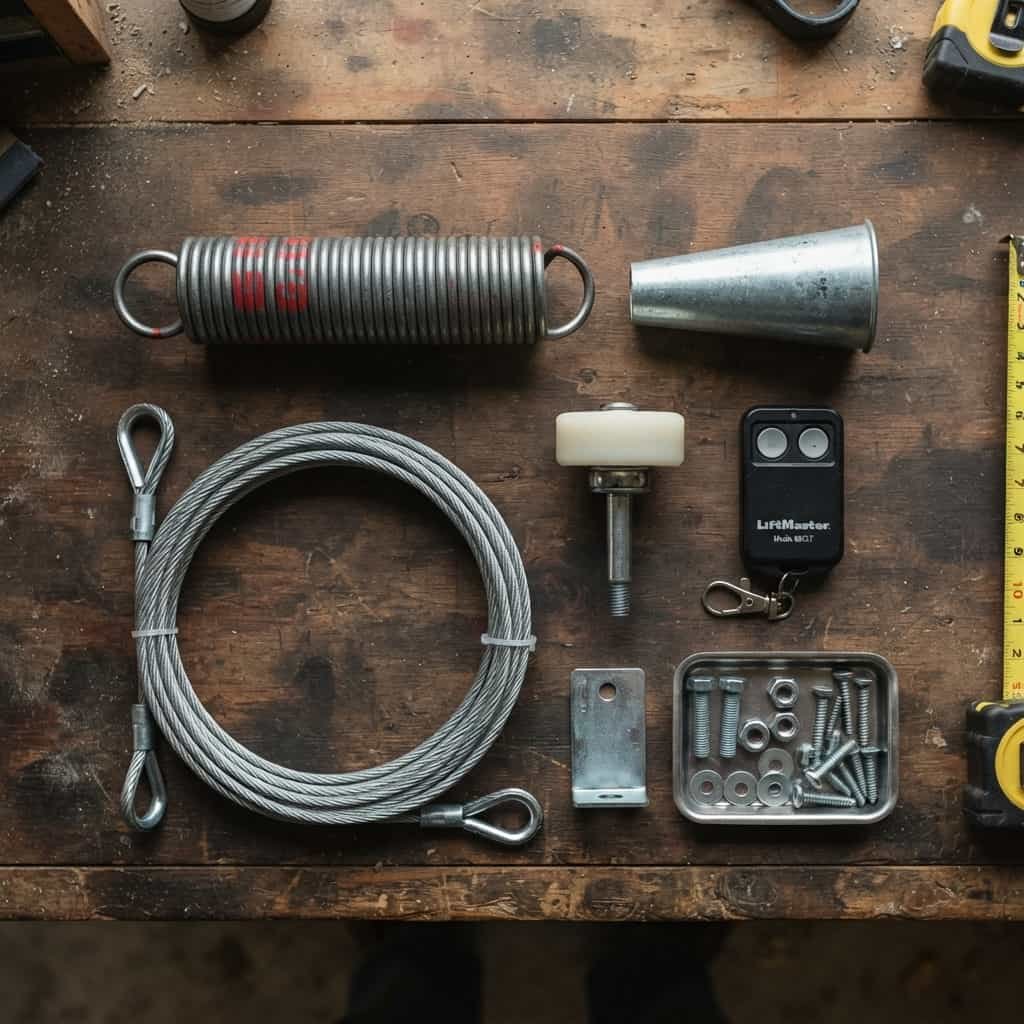
The part that failed has the single biggest effect on your bill. Here’s what homeowners typically pay for the most common repairs, based on national pricing data from home-services sources.
| Repair | Typical Cost Range |
|---|---|
| Spring replacement (torsion or extension) | $150–$350 |
| Opener repair | $100–$500 |
| Cable repair or replacement | $100–$400 |
| Sensor replacement or realignment | $150–$250 |
| Track repair | $5–$400 |
| Panel replacement (per panel) | $250–$1,000 |
| Dent repair | $100–$300 |
| Remote or keypad fix | $100–$350 |
Spring replacement is the most frequent call a technician gets. Torsion springs and extension springs both wear out after roughly 10,000 to 20,000 open-and-close cycles, which works out to about 7 to 14 years for a typical household. Because a wound spring can hold hundreds of pounds of tension, this is one repair where the labor charge is paying for training and safety equipment as much as the part itself.
Opener problems come in second. Sometimes it’s a $20 remote battery, other times it’s a burned-out motor or circuit board that needs a full swap. A technician will usually diagnose this on the spot before quoting you, so ask for the breakdown between parts and labor before you approve the work.
What Affects Your Garage Door Repair Cost
A quote for the “same” repair can vary by a few hundred dollars between two homes, and it usually comes down to four factors.
Door size and weight. A single sectional door is cheaper to service than a double-wide or insulated door, since heavier doors need stronger springs, extra hands on-site, and more time.
Door material and type. Basic steel roll-up or tilt-up doors are the least expensive to repair. Custom wood, glass-paneled, or carriage-style doors use specialty parts that cost more and take longer to source.
| Door Type | Typical Repair Cost Range |
|---|---|
| Sectional | $150–$400 |
| Tilt-up | $150–$1,000 |
| Roll-up | $300–$800 |
| One-panel | $400–$1,200 |
| Carriage-style | $1,000–$10,000 |
Labor rate and service call fee. Most technicians charge $75 to $150 an hour, and many companies tack on a $50 to $75 service call fee that’s often credited toward the repair if you approve the work. Total labor on a standard job usually lands between $150 and $450.
Timing. Calling for an after-hours or weekend emergency, like a door stuck open overnight, can add a premium on top of the standard rate. If the issue isn’t urgent, scheduling during a weekday can save you real money.
Garage Door Repair vs. Replacement: Which Costs Less
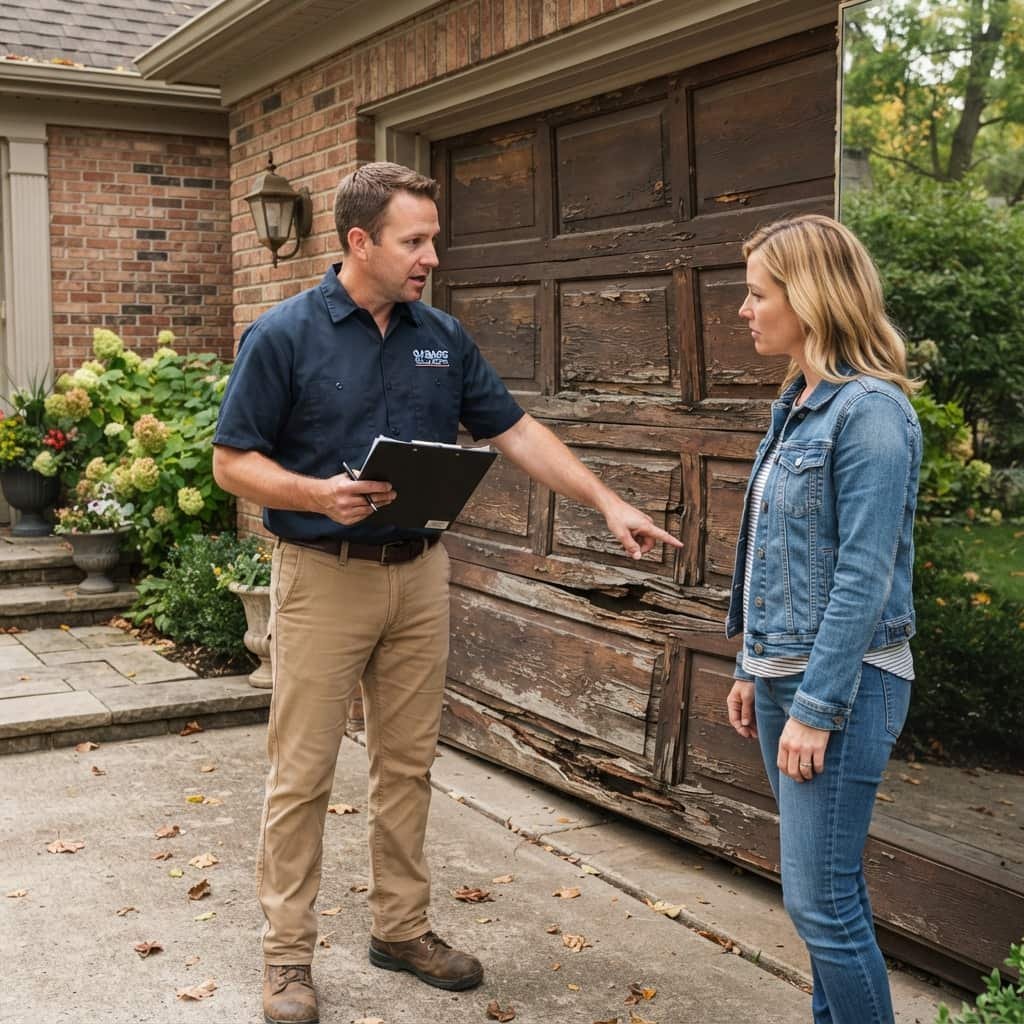
This is the question that actually determines your budget, and the answer depends on how bad the damage is.
Repair almost always wins for an isolated problem: a single broken spring, one dented panel, a bad sensor, or worn rollers. These are contained fixes a technician can usually handle in one to two hours.
Replacement starts to make more financial sense when the door is warped, needs frequent repairs, or has multiple components failing at once. The average full garage door replacement costs around $1,200, compared to roughly $265 for a typical repair, so replacing only becomes the better deal once your combined repair costs start approaching half the price of a new door. A good rule of thumb: if a contractor’s estimate is creeping past $600 to $700 on an older door, it’s worth asking for a replacement quote side by side with the repair quote.
How to Lower Your Garage Door Repair Cost
You don’t need to accept the first number you’re quoted. A few practical moves can meaningfully cut the bill.
- Get two or three quotes. Prices for the same job can swing by $100 or more between local companies, so a quick round of quotes pays for itself.
- Schedule during regular business hours. Avoiding nights, weekends, and holidays sidesteps the emergency-service premium.
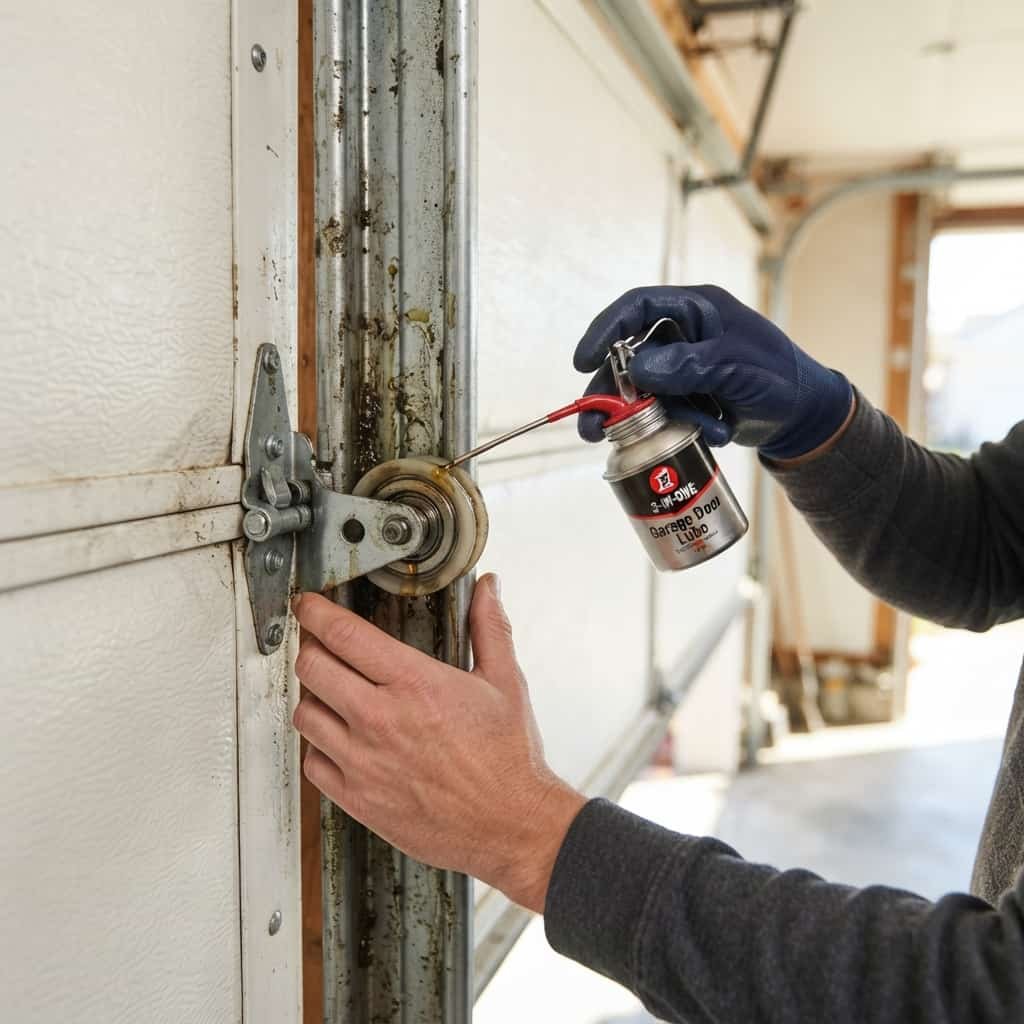
- Handle the truly minor stuff yourself. Lubricating rollers and hinges, tightening loose bolts, and replacing weatherstripping are safe, low-skill tasks that don’t require a technician.
- Don’t ignore small noises. A squeak or a slightly uneven door is cheap to fix now and expensive to fix once it strains the opener, track, or panels around it.
- Ask about bundled maintenance. An annual tune-up costs far less than an emergency call and catches worn parts before they fail completely.
DIY vs. Professional Repair: What’s Safe to Do Yourself
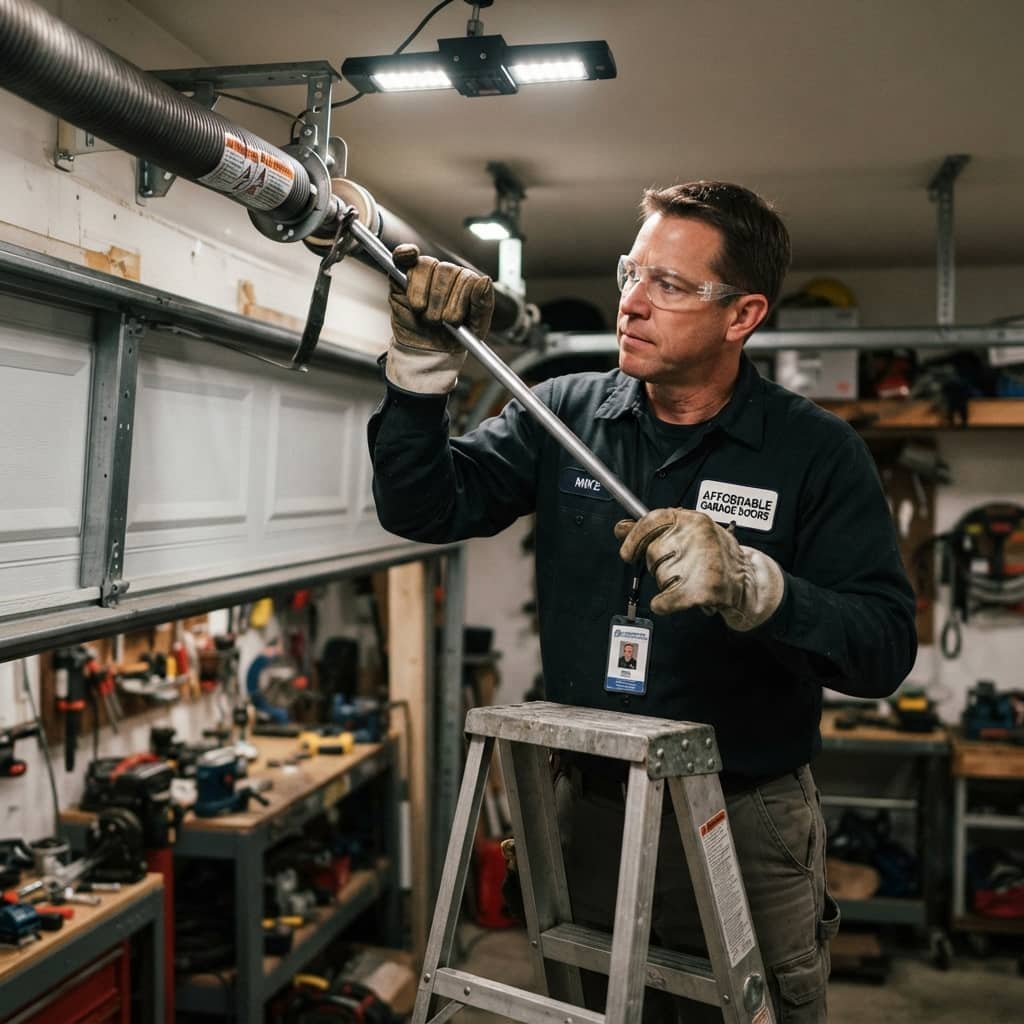
Not every garage door fix needs a professional, but the line matters more here than with most home repairs.
Safe for most homeowners: lubricating tracks and hinges, tightening visible hardware, cleaning sensor lenses, and swapping remote batteries. These jobs use basic tools and carry little risk.
Better left to a pro: anything involving springs or cables. Torsion springs are wound under extreme tension and extension springs can whip loose if released incorrectly; both have caused serious injuries to homeowners who assumed the job looked simple online. Opener motor repairs also involve electrical wiring that’s easy to get wrong. The labor cost on these jobs is largely what you’re paying for a trained technician’s judgment and the right tools to release that tension safely.
Frequently Asked Questions
How much does it cost to fix a garage door spring?
Spring replacement typically costs $150 to $350 including labor, covering both springs on most residential doors. Torsion springs run slightly higher than extension springs. This is a repair where hiring a professional is worth the cost, since the springs store enough force to cause serious injury if handled incorrectly.
Is it cheaper to repair or replace a garage door?
Repair is cheaper for a single, isolated issue and usually costs a few hundred dollars. Replacement, which averages around $1,200, becomes the better value once a door needs frequent repairs or has multiple parts failing at the same time.
Can I fix a garage door myself?
You can safely handle basic maintenance like lubricating rollers, tightening hardware, and cleaning sensors. Spring and cable repairs should go to a professional because of the tension involved and the injury risk if something releases unexpectedly.
How often do garage doors need repair?
Most well-maintained garage doors need a repair every few years, with springs typically lasting 7 to 14 years depending on use. Regular lubrication and prompt attention to small issues, like a squeak or uneven movement, can stretch that timeline and reduce how often you need a technician.
Does Homeowners Insurance Cover Garage Door Repair?
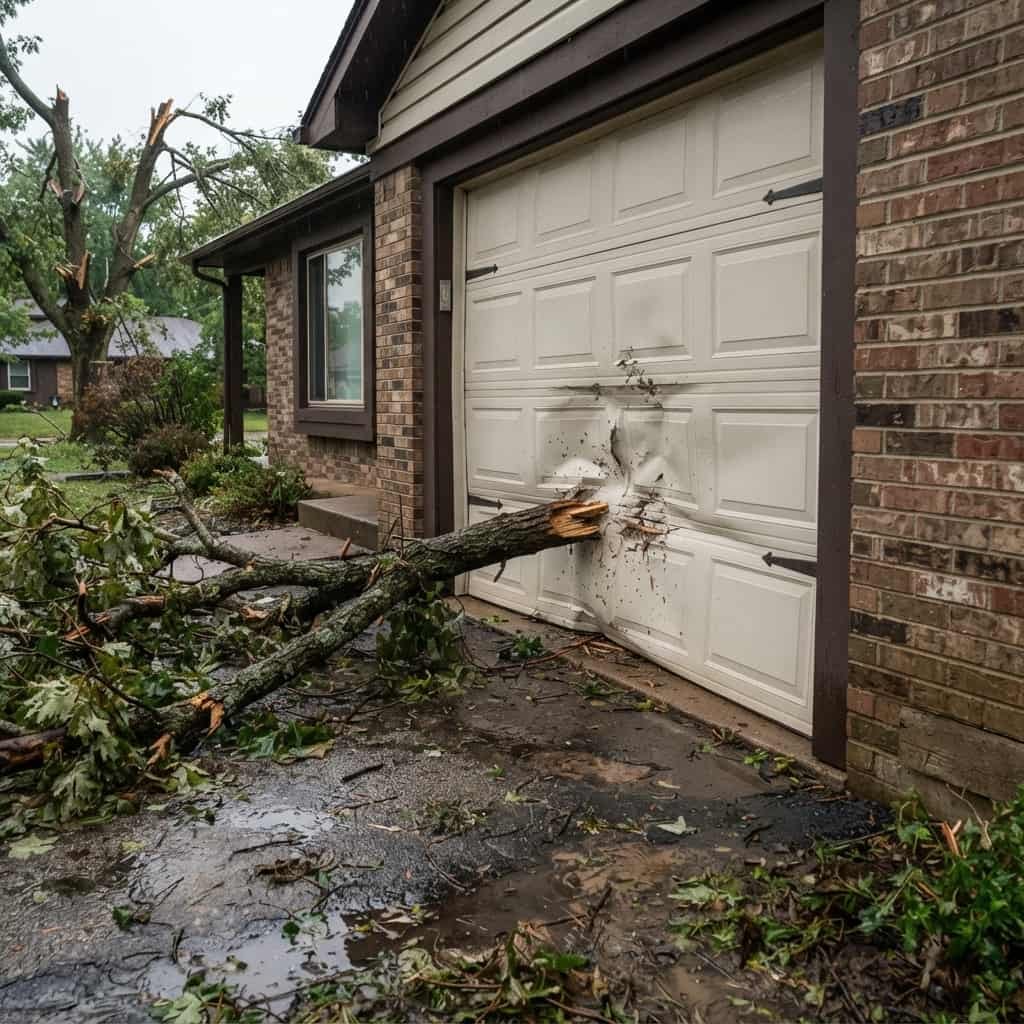
It depends on the cause. If your door was damaged by a covered event, like a storm, fallen tree, or a car accident involving someone else’s vehicle, homeowners insurance will often cover the repair cost minus your deductible. Routine wear and tear, like a spring that finally gave out after years of use, is not something a standard policy covers, since insurers treat that as normal maintenance rather than sudden damage. If a storm or accident is involved, it’s worth calling your insurer before you approve any repair work, since some policies require an adjuster to inspect the damage first.
Getting the Best Value on Your Repair
A garage door repair cost is rarely a surprise once you know what’s driving the number: the part, the door type, local labor rates, and timing. Getting a couple of quotes, scheduling during normal hours, and staying on top of small maintenance tasks will keep most repairs on the lower end of that $150 to $450 range. And when a technician tells you it’s a spring or cable issue, that’s the one time paying for professional labor is worth every dollar.