
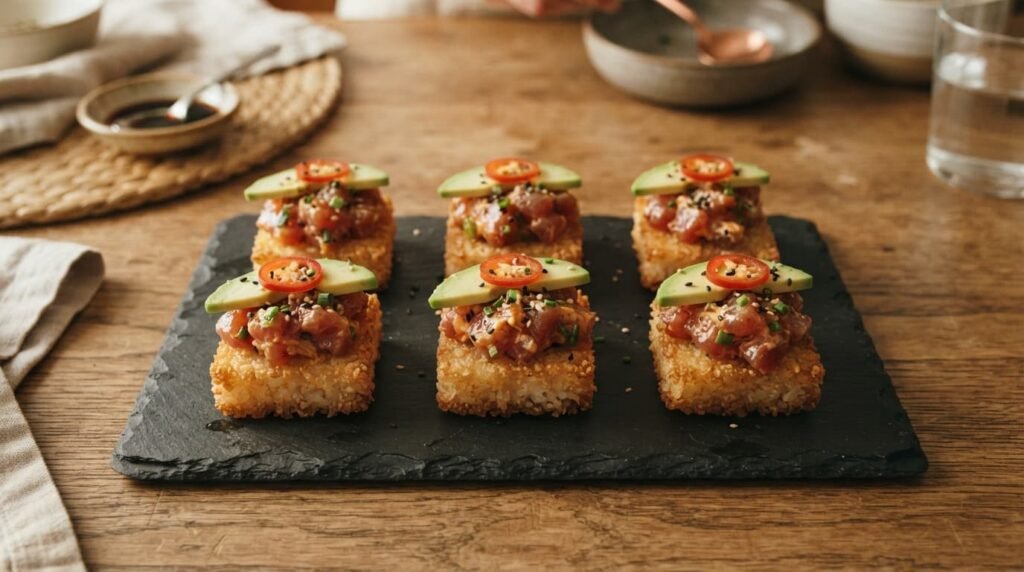
Spicy Tuna Crispy Rice: A Practical Guide to Making It at Home
Spicy tuna crispy rice combines golden, crunchy sushi rice with a cool, spicy tuna topping. Each bite offers a contrast of textures: a crisp outer layer, soft rice in the middle, and a creamy mixture of tuna, mayonnaise, and chili sauce. Although it looks like an appetizer from an upscale sushi restaurant, you can prepare it in your own kitchen with a few basic ingredients and some planning.
The secret is not an elaborate cooking technique. It is getting the rice firm enough to cut, frying it at the right temperature, and keeping the tuna mixture balanced rather than overly wet. Once you understand these details, the recipe becomes easier to manage, whether you are preparing a small snack for yourself or making a platter for guests.
This guide covers ingredient choices, preparation, cooking methods, food safety, common mistakes, and practical ways to adapt spicy tuna crispy rice to your taste.
What Is Spicy Tuna Crispy Rice?
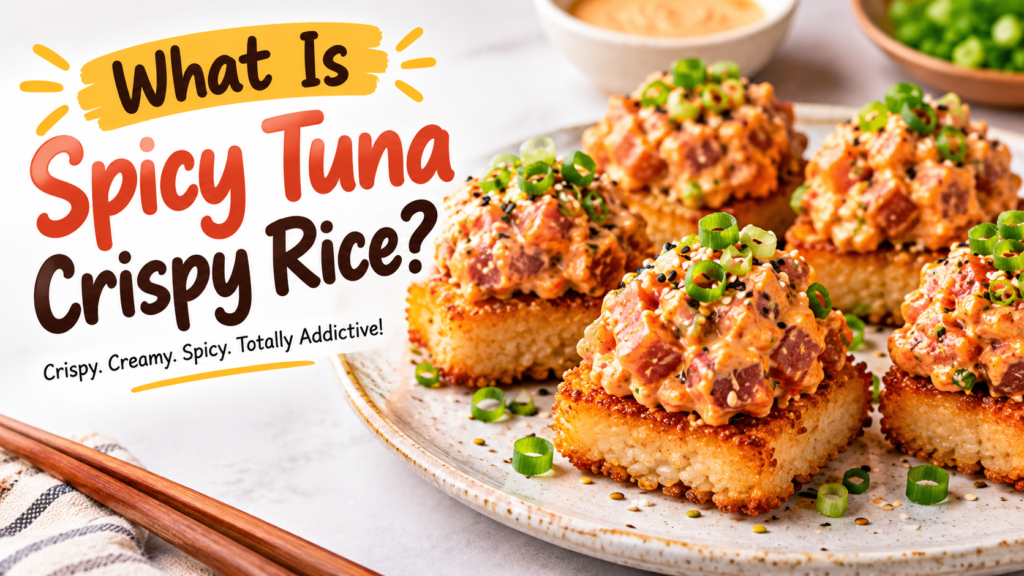
Spicy tuna crispy rice is a sushi-inspired appetizer made from seasoned short-grain rice that is pressed into a compact slab, chilled, cut into small portions, and fried or air-fried until crisp. Each piece receives a spoonful of spicy tuna and optional toppings such as avocado, jalapeño, or sesame seeds.
Unlike traditional sushi rolls, this dish does not require a bamboo mat or the skill to roll rice and nori tightly. The rice serves as a small, sturdy base for the topping.
The main components each have a specific job:
-
Sushi rice: Provides the sticky texture needed to hold each piece together.
-
Rice vinegar, sugar, and salt: Give the rice its familiar seasoned flavor.
-
Tuna: Supplies the savory center of the appetizer.
-
Mayonnaise and sriracha: Create a creamy topping with adjustable heat.
-
Fresh garnishes: Add color, texture, and freshness.
Restaurant versions often use raw tuna, but a cooked alternative can work well at home. The best choice depends on your comfort with raw seafood, ingredient availability, and how you plan to serve the dish.
Which Ingredients Make the Best Crispy Rice?
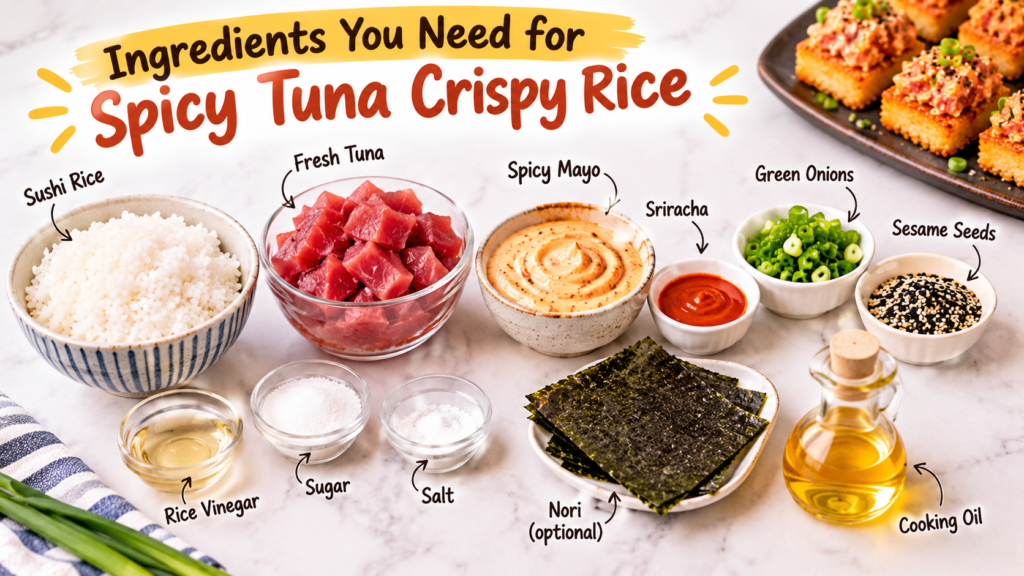
You do not need a long ingredient list, but choosing the right rice and controlling moisture make a noticeable difference.
Choosing the rice
Use Japanese short-grain sushi rice. Its starch content helps the cooked grains stick together when pressed and chilled. Long-grain rice, such as basmati, generally stays more separate and is more likely to crumble when cut into small blocks.
Cook the rice according to the package instructions. Avoid adding excessive water, because soggy rice is difficult to handle and may produce a soft rather than crisp center.
Seasoning the rice
For a typical small batch, start with approximately 2 cups of cooked sushi rice, 2 tablespoons of rice vinegar, 1 tablespoon of sugar, and ½ teaspoon of salt. Adjust the seasoning to your taste and the amount of rice you prepare.
Warm the vinegar mixture gently so the sugar dissolves. Fold it into the hot rice using a spatula, lifting and turning the grains instead of mashing them.
The goal is evenly seasoned rice that remains recognizable as individual grains while sticking together when pressed.
Selecting tuna and mayonnaise
For the topping, you can use finely diced raw tuna intended for raw consumption or well-drained canned tuna.
If using raw tuna, buy it from a reputable seafood supplier and explain that you intend to eat it uncooked. Fish described as sushi-grade or sashimi-grade is not a universal guarantee that it is free of parasites or harmful bacteria. Appropriate sourcing and handling still matter.
Kewpie mayonnaise is a popular option because of its rich, tangy flavor. Regular mayonnaise also works. Sriracha adds heat, soy sauce brings saltiness, toasted sesame oil contributes a nutty aroma, and finely chopped green onion adds freshness.
Start with a small amount of each sauce. You can always add more, but an excessively wet topping is difficult to keep on the rice.
How Do You Make Spicy Tuna Crispy Rice Step by Step?
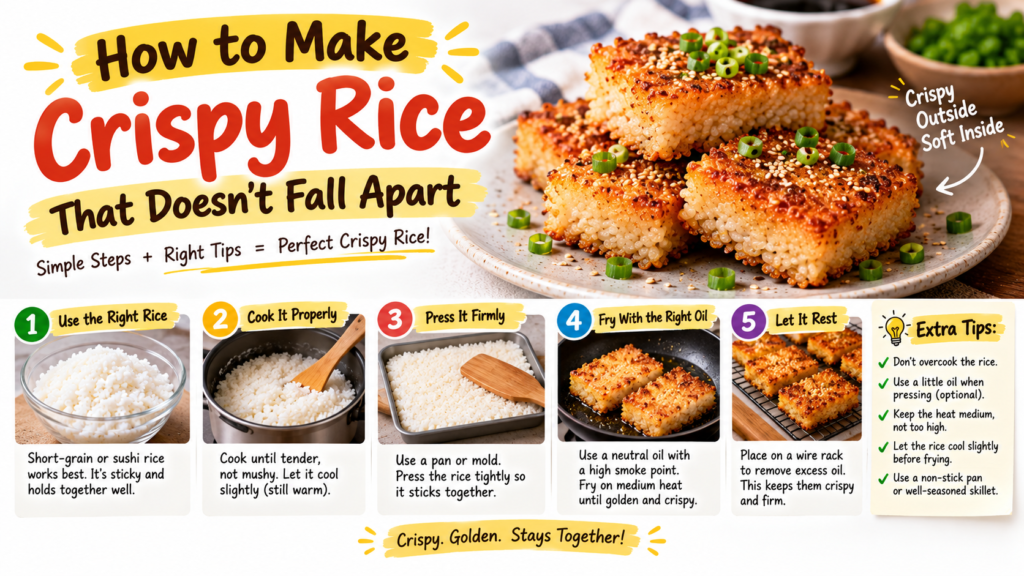
The preparation has three stages: shaping the rice, preparing the topping, and assembling the finished bites. The rice needs time to chill, so begin that part first.
Step 1: Cook and season the rice
Rinse the sushi rice until the water becomes less cloudy, then cook it according to the package directions. Transfer the warm rice to a wide bowl and gently fold in the vinegar, sugar, and salt mixture.
Do not stir aggressively. Pressing or crushing the grains too much can make the finished rice dense and pasty.
Step 2: Press the rice into a firm block
Line an 8-by-8-inch pan or a similar shallow container with plastic wrap or suitable food-safe lining. Spread the rice evenly, aiming for a thickness of around ¾ to 1 inch.
Wet your hands lightly and press the rice firmly into the pan. Pay attention to the corners, where loose grains can cause the block to break when you cut it.
Cover the rice and refrigerate it for at least two hours. Overnight chilling can make preparation easier because the rice has more time to firm up.
Step 3: Cut the rice into portions
Lift the chilled rice block out of the pan and place it on a clean cutting board. Use a sharp knife to cut it into small rectangles, roughly 2 inches long and 1 inch wide.
Wipe the knife between cuts and dampen it slightly if the rice sticks. If the block cracks or crumbles, return it to the refrigerator rather than trying to fry loose pieces.
Smaller pieces are convenient for parties, while slightly larger rectangles provide more room for toppings. Keep the portions similar in size so they cook evenly.
Step 4: Fry until golden and crisp
Pour enough neutral oil into a heavy skillet to create a shallow layer, approximately ½ inch deep. Heat the oil over medium to medium-high heat.
Add a small test piece first. The rice should begin sizzling when it touches the oil. If it barely sizzles, allow the oil to heat further. If the oil smokes, reduce the heat.
Fry the rice pieces in batches, leaving space between them. Cook for approximately 3–4 minutes per side, adjusting the time according to their thickness and the heat of your pan.
Look for a golden, crisp exterior rather than relying on the clock alone. Transfer the cooked pieces to a wire rack or a plate lined with paper towels.
Step 5: Prepare the spicy tuna
While the rice chills, finely dice the tuna and place it in a clean bowl. Add mayonnaise, sriracha, a little soy sauce, toasted sesame oil, and chopped green onion.
Fold everything together gently. Taste the mixture before adding extra chili sauce or soy sauce.
If you are using canned tuna, drain it thoroughly and remove as much excess liquid as possible. This small step helps prevent the topping from becoming watery.
Step 6: Assemble just before serving
Let the fried rice cool briefly until it is warm but not dangerously hot. Add a small spoonful of tuna to each piece, keeping the topping centered.
Finish with a thin slice of avocado, a jalapeño ring, or a sprinkle of sesame seeds if desired. Serve immediately for the best texture.
Can You Make Crispy Rice in an Air Fryer?
Yes. An air fryer is a useful alternative when you want to reduce the amount of oil used during cooking.
Brush the chilled rice pieces lightly with oil on all sides. Arrange them in a single layer in the basket, leaving enough room for air to circulate.
Air-fry at 400°F for approximately 8–10 minutes, turning the pieces halfway through. Cooking times vary by appliance, rice thickness, and how firmly the pieces were pressed, so check their color and texture as they cook.
Pan-frying versus air-frying
|
Method |
Advantages |
Limitations |
|---|---|---|
|
Pan-frying |
Deep golden crust and rich crunch |
Uses more oil and requires closer attention |
|
Air-frying |
Uses less oil and creates less splatter |
May produce a drier or less evenly browned crust |
Choose pan-frying when you want a traditional restaurant-style finish. Choose the air fryer when convenience and lower oil use matter more. Neither method can compensate for rice that has not been chilled and packed properly.
Why Does Crispy Rice Fall Apart During Cooking?
Rice that breaks apart usually has a problem with preparation rather than the frying method itself.
The rice was not chilled long enough
Warm rice is softer and less stable than chilled rice. Cutting it too soon can produce cracked edges and loose grains.
What to do: Refrigerate the pressed rice for at least two hours. If the block still feels soft, give it more time.
The rice was packed too loosely
The grains need to press against one another to form a sturdy base. Loose packing leaves gaps that become weak points during cutting and frying.
What to do: Press the rice evenly into the pan with damp hands. Pay special attention to the edges and corners.
The rice contained too much moisture
Rice cooked with excess water can become mushy. It may stick to your hands easily but still fail to develop a good crisp exterior.
What to do: Follow the rice package’s water measurements and avoid adding extra liquid when seasoning. Do not try to fix soggy rice by adding more mayonnaise or sauces to the topping.
The oil was not hot enough
Rice added to insufficiently hot oil can absorb more oil before its exterior becomes crisp.
What to do: Let the oil heat properly and test one piece before frying the whole batch. Avoid overcrowding the skillet, which can lower the oil temperature.
How Can You Keep the Spicy Tuna Topping From Sliding Off?
The topping should stay in place when someone picks up a rice square. Three practical adjustments help.
First, dice the tuna finely. Large chunks are harder to balance on the small base and can roll off when the appetizer is moved.
Second, control the amount of sauce. Add mayonnaise and sriracha gradually rather than pouring them in all at once. The mixture should look creamy without pooling liquid at the bottom of the bowl.
Third, use a moderate portion. A heaping teaspoon is a reasonable starting point for a small rice rectangle, although the ideal quantity depends on its size.
If you want to add avocado, use a thin slice or a small amount of mashed avocado beneath the tuna. Thick slices can make the topping unstable.
One useful serving trick is to arrange the finished pieces on a flat platter with a little space between them. Crowding the plate makes it easier to knock the toppings off when guests reach for a piece.
Is Spicy Tuna Crispy Rice Safe to Eat?
Food safety deserves attention because this recipe can involve raw seafood, cooked rice, and a mayonnaise-based topping.
Handling raw tuna
Keep raw tuna refrigerated until preparation and use clean knives, cutting boards, and bowls. Avoid using the same unwashed utensils for raw fish and ready-to-eat ingredients.
Buying fish from a reputable supplier is important, but the term “sushi-grade” alone does not guarantee safety. People who are pregnant, immunocompromised, older, or otherwise at increased risk from foodborne illness should avoid raw or undercooked seafood and choose a fully cooked alternative.
Storing cooked rice
Cooked rice should not be left at room temperature for extended periods. Some bacteria can produce toxins in rice that reheating may not reliably destroy.
Refrigerate cooked rice promptly in shallow containers, and do not leave it cooling on the counter for hours while waiting for it to become convenient to handle.
Keeping the finished appetizer cold when necessary
Raw tuna and tuna mixtures containing mayonnaise should remain refrigerated until needed. Prepare small batches for serving and return perishable ingredients to the refrigerator promptly.
For a gathering, consider assembling a few pieces at a time rather than leaving the entire platter out. Follow local food-safety guidance for time and temperature limits.
Can You Prepare Spicy Tuna Crispy Rice Ahead of Time?
Yes, and advance preparation can make this recipe much easier to manage.
The rice block: Prepare, press, cover, and refrigerate it up to a day ahead. Cut it into pieces shortly before frying or store the cut portions covered in the refrigerator.
The tuna mixture: Prepare it a few hours ahead if needed, using properly handled ingredients and keeping it refrigerated. For the freshest texture, avoid mixing it too far in advance.
The fried rice: This is best cooked close to serving time. The crust gradually softens as moisture moves from the rice into its exterior.
The final assembly: Wait until the last minute to add the tuna and garnishes. This keeps the rice crisp and makes the appetizer easier to pick up.
If you are serving guests, arrange your ingredients in separate containers before frying. That way, you can move quickly from the skillet to the platter without rushing the cooking process.
What Are the Best Alternatives to Raw Tuna?
You can keep the basic recipe while changing the topping to suit your preferences.
Drain it thoroughly and mix it with mayonnaise, sriracha, soy sauce, and green onion. This is a practical choice when raw seafood is unavailable or unwanted. Its texture is softer, so avoid adding too much sauce.Flake fully cooked salmon into small pieces and season it with a little mayonnaise and chili sauce. It offers a richer flavor and avoids the need for raw fish.For a vegetarian variation, top the rice with avocado, finely chopped cucumber, sesame seeds, and a small drizzle of spicy mayonnaise. Add the vegetables just before serving to prevent excess moisture.
These variations preserve the contrast between crisp rice and a flavorful topping. The main adjustment is moisture: cooked fish should be cooled appropriately, canned fish should be drained, and vegetables should be prepared shortly before assembly.
Final Tips for Better Spicy Tuna Crispy Rice
A good batch depends on preparation more than complicated cooking skills. Use short-grain sushi rice, season it gently, press it firmly, and give it enough time to chill. Fry in batches so the exterior turns golden instead of greasy, and keep the topping cool and relatively thick.
For your first attempt, make a small batch and test one rice piece before cooking the rest. If it breaks, improve the chilling or packing. If it absorbs too much oil, check the frying temperature. If the topping slides off, reduce the sauce or portion size.
Once you have a reliable method, spicy tuna crispy rice becomes a flexible appetizer for casual dinners, parties, and homemade sushi nights. You can keep the classic tuna topping or try cooked salmon, canned tuna, or avocado. The aim is the same: crisp rice, balanced seasoning, and a topping that complements rather than overwhelms the base.
Can I use regular white rice?
Short-grain sushi rice is the better option because it sticks together more reliably. Regular long-grain rice tends to separate and can crumble when cut or fried.
How long should the rice chill?
Refrigerate the pressed rice for at least two hours. Overnight chilling can make the block easier to cut and handle.
Can I freeze the rice before frying?
Freezing may firm the rice, but it can also affect its texture and moisture. Refrigeration is the more reliable starting method. If you experiment with freezing, thaw the rice safely and check that it holds together before frying.
Why is my crispy rice greasy?
The oil may not have been hot enough, or the skillet may have been overcrowded. Fry in small batches, allow the oil to recover its temperature, and drain the pieces after cooking.
How should leftovers be stored?
Refrigerate perishable leftovers promptly in a covered container. For best quality, store the rice and tuna separately when possible. The rice will lose its crunch in storage, so re-crisp the rice on its own before adding freshly chilled topping. Discard food that has been left out too long or that may have been stored unsafely.