Why Is a Recipe Important Heartumental? What the Trend Really Means
“Why is a recipe important heartumental?” It’s a phrase that’s suddenly everywhere online, and if you just want a straight answer, here it is. Heartumental is a made-up but genuinely useful word for something every home cook already senses: a good recipe does two jobs at once. It gives you a reliable set of instructions, the fundamental part, and it holds memory, comfort, and identity, the heart part. In this guide, we’ll unpack where the phrase comes from, what it actually means, and why it matters the next time you tie on an apron.
What Does “Heartumental” Actually Mean?
Heartumental isn’t a word you’ll find in Merriam-Webster. It’s a blend of “heart” and either “fundamental” or “instrumental,” depending on which cooking site you read. Both readings point to the same idea.
A recipe is instrumental because it’s a tool. It tells you how much flour to use, how long to roast the chicken, and when the pasta is actually done, not just when the timer says it should be. That’s the practical, no-nonsense side of cooking.
A recipe is also heart-driven because it rarely stays purely practical for long. Follow your grandmother’s biscuit recipe enough times and it stops being a set of measurements. It becomes a memory of her kitchen, her hands, and the smell of butter melting on a cold morning.
Put those two things together and you get heartumental cooking: instructions that work, wrapped around meaning that lasts.
Why Is a Recipe Important Heartumental? The Short Answer
So why is a recipe important heartumental, specifically? Because recipes rarely function as just one or the other. A dish that’s only technically correct but has no story behind it feels flat. A dish that’s full of sentiment but impossible to actually cook falls apart in the kitchen, sometimes literally.
The recipes people return to for decades tend to do both well. They’re specific enough to succeed on a Tuesday night, and personal enough that making them means something. That combination is the entire reason the heartumental idea has caught on with home cooks this year.
Recipes as Emotional Anchors
Cooking pulls on more senses than almost anything else we do. Smell, taste, texture, and even the sound of a pan sizzling all get wired to memory at the same time, which is part of why a single whiff of cinnamon or garlic browning in oil can take you straight back to a specific kitchen from years ago.
That’s not a coincidence. It’s the reason a bowl of chicken soup can feel like comfort even before you’ve tasted it, and why holiday dishes carry weight that a random Tuesday dinner doesn’t. A recipe, especially a handwritten or hand-me-down one, becomes a kind of emotional shorthand. You don’t just cook it. You revisit something.
This is where the “sentimental” thread in heartumental content really lives. People aren’t only asking how to make a dish. They’re asking why certain recipes stick with them when so many others get forgotten, and the answer usually comes down to who taught it to them and when.
Why Recipes Matter for Beginners and Confident Cooks Alike
New cooks and experienced ones need recipes for different reasons, but both genuinely need them.
For beginners, a recipe removes the guesswork that causes most kitchen disasters. Burnt garlic, undercooked chicken, and dense bread usually come down to skipping steps or misjudging timing, not a lack of talent. A clear recipe teaches:
- How to sequence tasks so nothing overcooks while something else is still prepping
- Basic techniques like sautéing, simmering, and proper knife cuts
- How much seasoning is actually enough, before instinct takes over
For experienced cooks, recipes work more like a foundation than a rulebook. Once you understand why a recipe calls for resting meat or blooming spices in oil, you can start adjusting with confidence instead of guessing. That’s the difference between following a recipe and understanding one.
Either way, structure comes first. Creativity comes after.
How Recipes Preserve Culture and Family Tradition
Every culture has dishes that carry more than flavor. A specific spice blend, a particular folding technique for dumplings, or the order ingredients go into a pot can represent generations of practice, migration, and celebration.
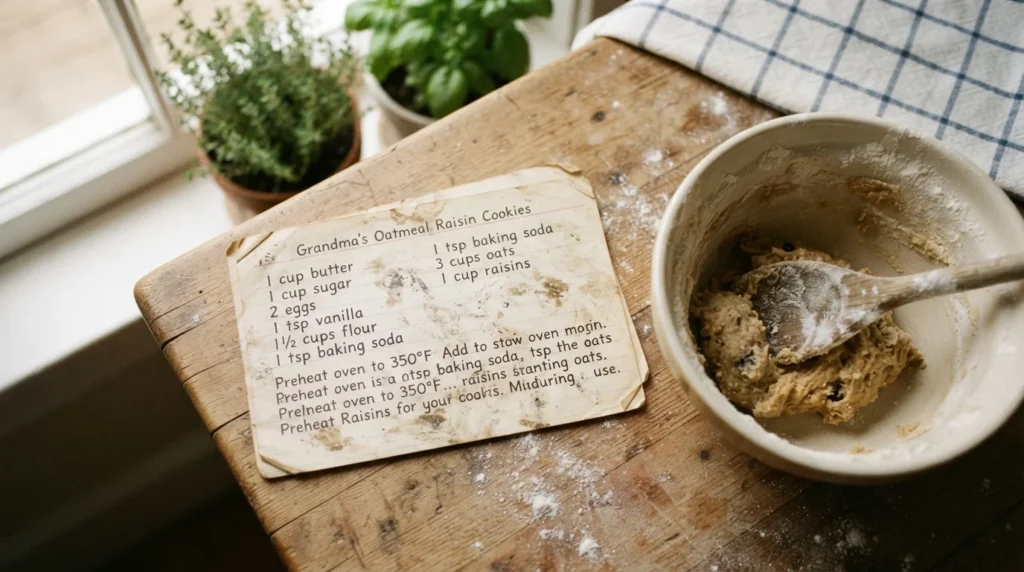
Recipes are one of the few things that survive that kind of transmission almost perfectly intact. A story can get exaggerated over the years. A recipe, followed the same way each time, tends to stay accurate. That’s part of why so many families treat an old recipe card like an heirloom rather than a piece of paper.
Recipes also build community in the present, not just the past. Potlucks, holiday tables, and neighborhood cookouts usually revolve around a handful of dishes everyone expects to see, and trying a recipe from a different background is often the easiest way to understand a culture you didn’t grow up in.
Teaching a recipe to the next generation matters just as much as preserving it. A recipe written down but never cooked together eventually turns into words on a page. A recipe cooked side by side with a kid or grandkid, mistakes and all, is how the actual knowledge, not just the ingredient list, gets passed along.
The Practical, “Instrumental” Side of Recipes
It’s worth giving the practical half of heartumental its due, because it’s doing real work too.
| What a recipe controls | Why it matters |
|---|---|
| Ingredient amounts | Prevents waste and keeps results consistent |
| Cooking times and temperatures | Reduces the risk of undercooked or dried-out food |
| Order of steps | Keeps the kitchen calm instead of chaotic |
| Portion sizing | Makes meal planning and grocery shopping easier |
| Nutrition balance | Helps you manage sodium, sugar, and fat compared to takeout |
Following recipes regularly also tends to lower kitchen stress. Prepping vegetables before the pan heats up, instead of chopping while something burns, sounds like a small detail, but it’s usually the difference between an easy dinner and a stressful one. Cooks who plan meals around recipes also tend to waste fewer ingredients, since they’re buying with a specific dish in mind rather than guessing.
Can Cooking From a Recipe Actually Help Your Mental Health?
Yes, to a real degree. Following a familiar recipe gives your brain a structured, low-stakes task with a predictable, positive outcome, which is part of why cooking is often recommended as a grounding activity during stressful periods. The repetitive, sensory nature of prepping ingredients can work similarly to other mindfulness practices, and finishing a dish you know will turn out well adds a small, reliable sense of accomplishment to the day.
That doesn’t mean a recipe replaces professional support for anyone dealing with a genuine mental health concern. It just means the act of cooking something familiar is one small, real tool worth having.
Modern Recipes in 2026: What’s Changed and What Hasn’t
Digital recipes, AI-assisted meal planning, and apps that suggest dinner based on what’s already in your fridge have made cooking more flexible than it’s ever been. You can adjust a recipe’s serving size in a tap, swap an ingredient you’re out of, or pull up a video for a technique you’ve never tried. Smart grocery lists build themselves from whatever you’ve saved, and voice assistants can walk you through a recipe hands-free while your fingers are covered in flour.
For beginners especially, this shift has lowered the barrier to entry. A decade ago, learning a new cuisine often meant tracking down a specialty cookbook or asking around for a recipe someone half-remembered. Now that same recipe, along with a video of exactly how it’s supposed to look at each step, is a search away.
What hasn’t changed is the reason people keep certain recipes for decades. No app has replaced the specific comfort of a dish someone you love used to make. The tools around recipes have gotten faster and smarter. The heart behind why we cook them hasn’t moved at all, and that’s really the whole point of the heartumental idea. Technology can speed up the instrumental half of a recipe. It has no way to manufacture the memory attached to the other half.
The Bottom Line
Why is a recipe important heartumental? Because a recipe was never really just a list of steps. It’s a tool that gets dinner on the table reliably, and it’s often a thread connecting you to the people who taught you to cook in the first place. The next time a recipe feels like more than instructions, that’s not your imagination. That’s the heartumental part doing exactly what it’s supposed to do.
Frequently Asked Questions
Why are recipes important?
Recipes give structure to cooking. They reduce mistakes, teach real techniques, and help you get consistent results, while also preserving family traditions and the emotional connection people have to certain dishes.
What does heartumental mean in cooking?
Heartumental blends “heart” with “fundamental” or “instrumental.” It describes recipes and cooking habits that are both practically useful, giving reliable instructions, and emotionally meaningful, carrying memory and tradition.
Can recipes actually help with stress or mental health?
Cooking a familiar recipe can lower stress by giving you a structured, sensory task with a predictable outcome. It’s a genuine grounding tool, though it isn’t a substitute for professional mental health care when that’s needed.
Are recipes necessary for beginners?
Yes. Recipes help new cooks avoid common mistakes, learn foundational techniques, and build confidence one dish at a time, instead of guessing and getting discouraged.
How do recipes preserve culture and family history?
Recipes pass down specific techniques, spice ratios, and traditions almost exactly as they were originally made, which is why old family recipe cards often get treated like heirlooms rather than instructions.