
Tile and Grout Cleaning: What Actually Works, What It Costs, and When to Hire a Pro
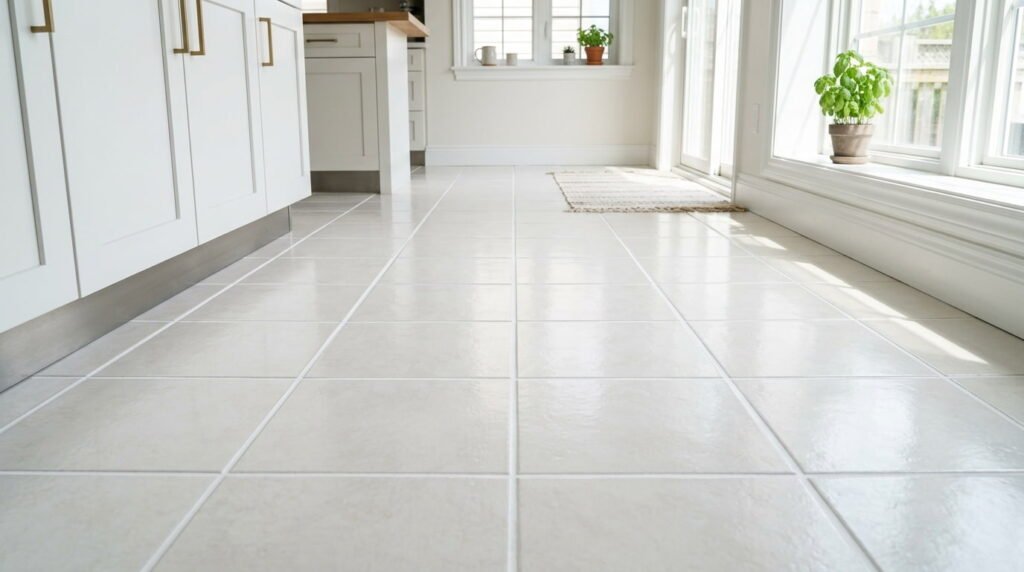
A tile floor can look clean after mopping and still have dirty grout.
That happens because tile and grout do not hold dirt in the same way. Glazed ceramic and porcelain tile have a relatively hard, nonporous surface, while traditional cement-based grout is much more absorbent. Dirt, grease, soap residue, and spills can work their way into the grout instead of staying on the surface.
That is why a bathroom floor may look fine from across the room but show dark grout lines when you get closer.
Tile and grout cleaning is designed to remove that deeper buildup. Depending on the tile, grout condition, and type of soil, the job may involve vacuuming, a suitable cleaning solution, agitation, hot-water extraction, or specialized equipment.
The biggest mistake is assuming that stronger chemicals automatically produce better results. They do not. The right cleaning method depends on what your floor is made of and what caused the discoloration in the first place.
What Does Professional Tile and Grout Cleaning Include?
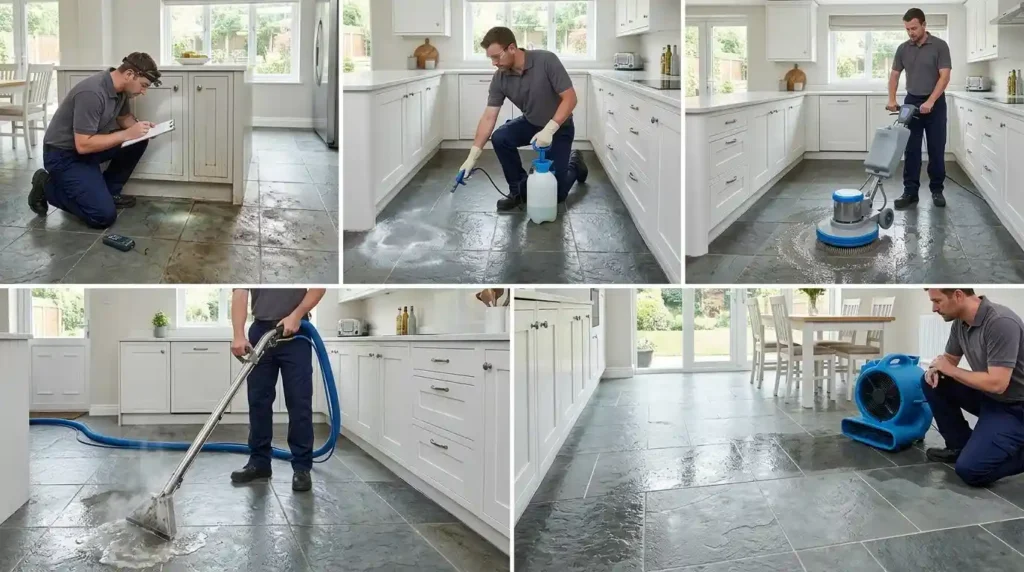
A professional cleaning is more than spraying a cleaner on the floor and scrubbing it.
A good service usually follows a sequence that allows the technician to loosen dirt before removing it.
1. Inspection and surface preparation
The first step should be an inspection.
The technician needs to identify the tile material, grout type, condition of the joints, existing sealers, stains, and any areas that may require special treatment.
This matters because the same cleaner should not automatically be used on every surface. Ceramic and porcelain can tolerate cleaning methods that may be inappropriate for some natural stone surfaces.
Loose dirt is usually removed before wet cleaning. This prevents grit from becoming muddy and spreading across the floor.
2. Pretreatment loosens embedded soil
A suitable cleaning solution is applied to help break down grease, soap residue, tracked-in dirt, or other buildup.
The product and dwell time should match the surface. Leaving a cleaner on the floor longer is not necessarily better, especially when grout, sealers, or natural stone are involved.
For heavily soiled grout, agitation may be needed to work the solution into the grout lines.
3. Agitation and extraction remove the loosened dirt
This is where professional equipment can make a noticeable difference.
Depending on the service, technicians may use rotary tools, grout brushes, pressure-assisted cleaning equipment, or hot-water extraction systems. The goal is to loosen soil and then remove it rather than simply moving it around.
Many companies call this process “steam cleaning,” although the actual process may be hot-water extraction rather than true steam cleaning.
The important question is not what the marketing label says. Ask how the company will clean your particular tile and grout and how the dirty water will be removed.
4. Drying and final inspection
After cleaning, excess moisture is removed, and the area is allowed to dry.
The technician should inspect the floor for areas that need additional attention. Some stains may not disappear completely because discoloration can be caused by damaged grout, permanent staining, efflorescence, or a problem underneath the surface.
This is one of the places where realistic expectations matter. Professional cleaning can remove a great deal of soil, but it cannot magically restore grout that is cracked, missing, or permanently damaged.
How Much Does Tile and Grout Cleaning Cost?
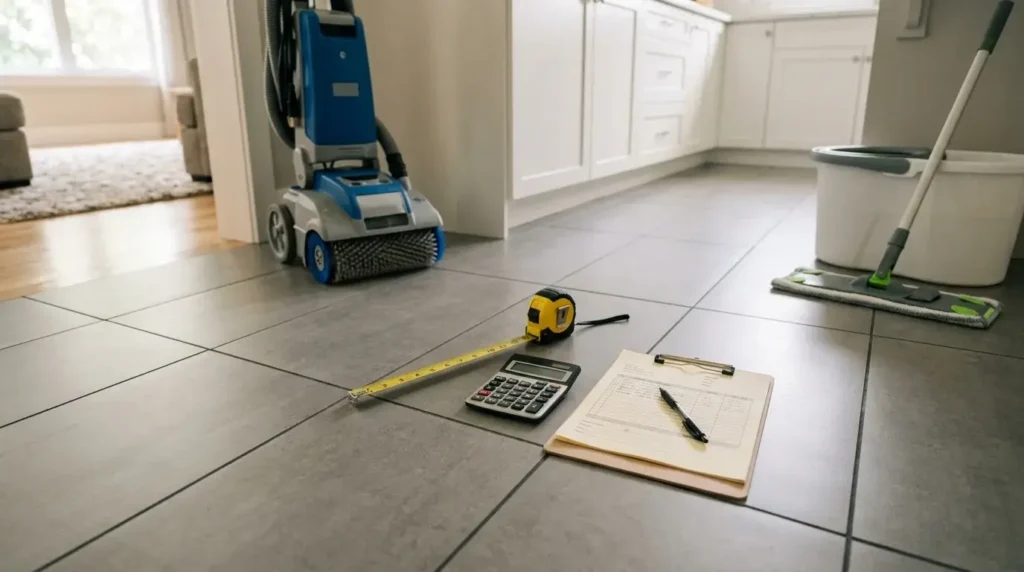
Professional tile and grout cleaning costs average around $480 for a full $0.50 to $3.50 per square foot, although actual prices vary significantly by location, surface condition, cleaning method, and company.
Some providers charge by square foot, while others use minimum service charges or hourly pricing.
For a small bathroom, the minimum service charge can have a bigger effect on the final price than the size of the room.
Several factors influence the estimate.
| Cost factor | Why it matters |
|---|---|
| Tile size | Smaller tiles create more grout lines and usually require more detailed work |
| Grout condition | Deep staining and neglected grout may need additional cleaning passes |
| Surface material | Natural stone may require specialized products and techniques |
| Room size | Larger areas increase labor and equipment time |
| Accessibility | Tight showers and complicated layouts can take longer |
| Furniture | Moving or protecting furniture may add labor |
| Sealing | Grout sealing is usually an additional service |
| Repairs | Cracked grout or broken tile may require work beyond cleaning |
A quote that looks cheap at first can become more expensive if pretreatment, furniture moving, sealing, or difficult areas are charged separately.
Before booking, ask for a written estimate that explains what is included.
Is Professional Tile and Grout Cleaning Worth It?
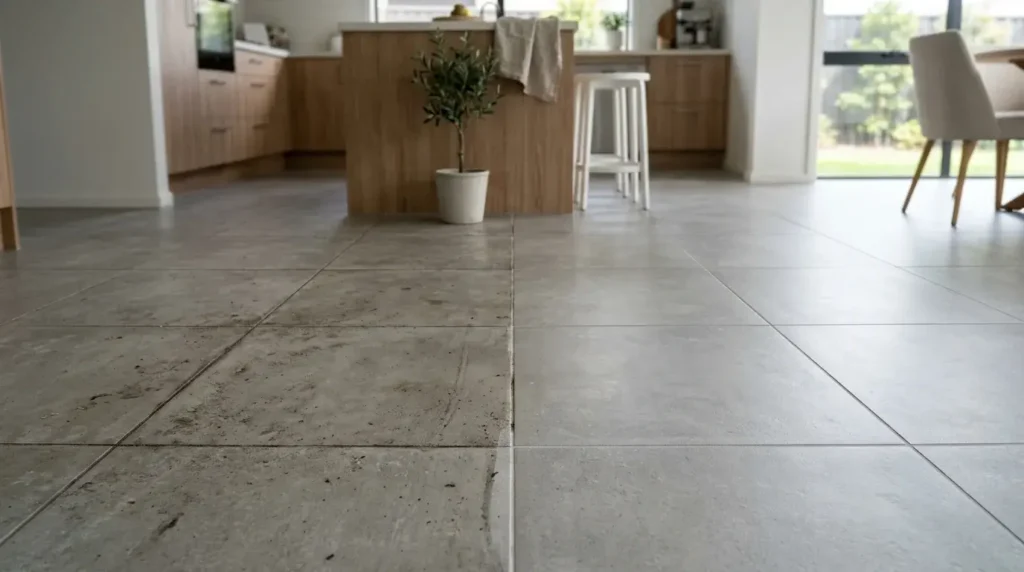
It can be, particularly when routine cleaning no longer produces the result you want.
DIY cleaning works well for regular maintenance and light buildup. The problem starts when dirt has accumulated for years or grout has become heavily stained.
Consider a kitchen floor where the tile looks reasonably clean but the grout around the cooking area has become dark. Repeated mopping may remove loose surface dirt without fully addressing the grease and soil embedded in the grout.
A professional cleaning can provide a deeper reset.
There is another reason to avoid aggressive DIY cleaning: more force and stronger chemicals can sometimes create a bigger problem.
Scrubbing too aggressively can wear grout. Incorrect cleaners can damage certain tile surfaces or natural stone. Strong chemicals may also affect existing sealers.
The better approach is to identify the surface first and choose the least aggressive method that can reasonably solve the problem.
DIY vs. Professional Tile and Grout Cleaning: Which Should You Choose?
DIY cleaning has a place in normal home maintenance.
For light buildup, you can start with a tile-safe cleaner and a suitable grout brush. Work in small sections, allow the cleaner to dwell according to its instructions, scrub the grout, and rinse away the residue.
The important part is not to assume that every homemade cleaning mixture is safe for every floor.
When DIY cleaning makes sense
DIY maintenance is reasonable when:
- Grout has only light surface dirt.
- There are no serious stains or persistent odors.
- The tile material is known and compatible with the cleaner.
- You can clean the area without damaging surrounding surfaces.
- The floor is maintained regularly.
When professional cleaning makes more sense
Consider professional service when:
- Grout remains dark after normal cleaning.
- Large areas have years of accumulated dirt.
- You have extensive tile flooring.
- The surface is natural stone and you are unsure which products are safe.
- Previous cleaning attempts have left residue.
- Grout is heavily stained and requires extraction equipment.
- You want grout sealing after cleaning.
One practical rule is simple: if you are repeatedly scrubbing the same grout without getting a meaningful improvement, stop increasing the strength of the cleaner and reconsider the cleaning method.
What Cleaning Method Is Best for Tile and Grout?
There is no single method that is best for every floor.
The cleaning method should be selected based on the material and the type of contamination.
Ceramic and porcelain: These surfaces generally allow a wider range of cleaning approaches, although grout still requires care.
Natural stone: Marble, limestone, travertine, and similar materials require more careful product selection. Acidic cleaners, for example, can damage acid-sensitive stone.
Cement-based grout: This grout is porous and may benefit from deep cleaning followed by appropriate sealing.
Epoxy grout: Epoxy grout behaves differently from traditional cement grout and should be cleaned according to the manufacturer’s recommendations.
The most useful question to ask a cleaning company is not simply, “Do you use steam?”
Instead ask:
“What method will you use for my specific tile and grout, and how will you remove the dirty water afterward?”
That answer tells you much more about the actual process.
How Often Should Tile and Grout Be Professionally Cleaned?
There is no universal schedule.
For many homes, professional cleaning every 12 to 18 months is a reasonable starting point, but actual frequency depends on traffic, moisture, pets, children, cooking, and how well the floor is maintained.
High-traffic entryways
Entryways collect grit, mud, and outdoor debris. These areas may need more frequent deep cleaning, particularly in homes with heavy foot traffic.
Kitchens
Kitchen grout is exposed to food spills, grease, and frequent traffic. Annual deep cleaning may make sense when regular maintenance is not enough.
Bathrooms and showers
Bathrooms deal with soap residue, body oils, moisture, and mildew-prone conditions. The shower area may need attention sooner than a dry tiled hallway.
Low-traffic rooms
A lightly used room with well-maintained and sealed grout may go considerably longer between professional cleanings.
Rather than putting every room on the same schedule, look at the condition of each area.
What Are the Signs Your Grout Needs Cleaning?
You do not have to wait until the calendar says it is time.
A few visual and practical clues can tell you that routine cleaning is no longer enough.
Dark or gray grout lines
If grout that used to be light has gradually become gray or brown, dirt may have accumulated below the surface.
Stains that survive normal cleaning
If regular mopping and tile-safe cleaning do little to change a stain, deeper cleaning may be necessary.
A dull-looking floor
Sometimes the tile itself is not the problem. Residue and dirty grout lines can make the entire floor look older and less clean.
Persistent musty conditions
A musty smell around a shower or other wet tiled area deserves more attention than simply applying a stronger cleaner. Persistent moisture can indicate a maintenance or moisture problem that cleaning alone may not solve.
Recently completed renovation
After construction or remodeling, fine dust and grout residue can remain on tiled surfaces. A proper post-project cleaning can help remove this material before it becomes part of the everyday buildup.
What About Grout Sealing After Cleaning?
Cleaning and sealing solve two different problems.
Cleaning removes existing soil. Sealing is intended to make suitable grout less vulnerable to future staining and moisture absorption.
If a professional recommends sealing, ask what type of grout you have and whether the sealer is appropriate for it.
Sealing does not mean the grout will never become dirty again. It is not a permanent substitute for maintenance.
Think of it as an extra layer of protection rather than a guarantee of stain-proof grout.
After sealing, follow the product’s curing instructions before putting the area back into heavy use.
Common Tile and Grout Cleaning Mistakes
Some of the worst cleaning results come from doing too much rather than too little.
Using bleach as a universal grout cleaner
Bleach may affect discoloration, but it should not be treated as a universal solution for every grout or tile surface. Repeated exposure can also be hard on certain materials and sealers.
Mixing cleaning chemicals
Never mix household cleaning chemicals simply because one product did not work. Some combinations can create dangerous fumes.
Use products according to their labels and keep the chemistry simple.
Using an abrasive tool on delicate tile
A stiff brush can be useful on appropriate grout, but abrasive pads or aggressive tools can scratch or dull certain surfaces.
Ignoring the grout condition
If grout is cracked, crumbling, or missing, cleaning is not a substitute for repair.
Expecting every stain to disappear
Some discoloration is permanent. Mineral deposits, dye transfer, damaged grout, or underlying moisture problems may require a different solution.
Focusing only on the tile
The tile surface often gets all the attention because it is easier to see. But the grout lines are where much of the visible dirt can remain.
How to Choose a Tile and Grout Cleaning Company
Do not choose a provider only because the advertised price is the lowest.
Ask a few practical questions before booking:
- What type of cleaning equipment do you use?
- How do you identify the tile and grout material?
- What products will you use on my floor?
- Is pretreatment included in the quote?
- How do you remove dirty water after cleaning?
- Is grout sealing included or charged separately?
- Do you clean showers and vertical grout as well as floors?
- What happens if a stain does not come out?
- How long should the area remain unused after cleaning or sealing?
- Can I get the complete price in writing before the work begins?
A good provider should be comfortable explaining the process instead of simply promising that the floor will look “like new.”
How to Keep Tile and Grout Cleaner Between Professional Visits
Deep cleaning lasts longer when everyday maintenance is handled properly.
Start by removing loose dirt before mopping. Sweeping or vacuuming first prevents grit from being pushed into grout lines.
Use an appropriate tile cleaner rather than repeatedly reaching for strong household chemicals.
Do not leave spills sitting on porous grout longer than necessary. In kitchens especially, quick cleanup can prevent oily residue from becoming a long-term problem.
Bathrooms benefit from moisture control. Good ventilation and drying wet surfaces can help reduce the conditions that contribute to persistent buildup.
Also pay attention to the edges of the room. Grout around toilets, tubs, shower corners, and baseboards can accumulate dirt differently from open floor areas.
The goal is not to scrub harder every week. It is to prevent small amounts of dirt from becoming a restoration project.
What Should You Expect After Professional Cleaning?
A successful cleaning should leave the tile and grout noticeably cleaner, but the final result depends on the starting condition.
Light surface soil may come away easily. Heavily neglected grout may require multiple treatments. Permanent discoloration may remain even after substantial cleaning.
That distinction matters when evaluating a quote.
If someone promises that every stain will disappear regardless of the tile, grout, or cause of discoloration, treat that promise carefully. A knowledgeable technician should be able to explain what they expect the cleaning to accomplish and where the limitations are.
For homeowners, the best result is usually not simply the whitest possible grout. It is a clean surface achieved without damaging the tile, grout, finish, or sealer.
The Bottom Line
Tile and grout cleaning is most useful when normal mopping has reached its limit.
The right approach is not simply the strongest chemical or the highest-pressure machine. It starts with identifying the surface, understanding what caused the buildup, choosing an appropriate cleaning method, and removing the loosened soil properly.
For light dirt, regular maintenance may be enough. For deeply stained grout, large tiled areas, or surfaces that require specialized care, professional cleaning can save considerable effort and help restore the appearance of flooring that does not actually need to be replaced.
Get a detailed estimate, ask exactly what the service includes, and make sure the cleaning method is appropriate for your tile and grout. That is a much better way to judge the service than choosing based on a low advertised price alone.
How often should tile and grout be professionally cleaned?
For many homes, every 12 to 18 months is a reasonable starting point. High-traffic kitchens, entryways, and bathrooms may need cleaning sooner, while lightly used areas can often go longer.
Can tile and grout be steam cleaned?
Many companies use the term “steam cleaning” for services that actually rely on hot water and extraction equipment. Ask the provider to explain the exact process rather than relying on the service name.
Does professional cleaning remove all grout stains?
No. Professional cleaning can remove substantial amounts of dirt and staining, but some discoloration may be permanent or related to damaged grout, mineral deposits, dyes, or moisture problems.
Should grout be sealed after cleaning?
Sealing can be useful for suitable grout because it can reduce absorption and make future maintenance easier. However, the appropriate sealer depends on the grout and surface.
How long does tile and grout cleaning take to dry?
Drying time varies with the cleaning method, ventilation, humidity, and amount of water used. Many floors can dry within a few hours, but sealed surfaces may require additional curing time.
Can I clean grout myself?
Yes. DIY cleaning is practical for light and routine buildup. For deeply soiled grout, large areas, delicate materials, or difficult stains, professional equipment and surface-specific knowledge can make the job more effective.
Is tile and grout cleaning worth the money?
It can be a practical alternative to replacing otherwise serviceable tile flooring. The value depends on the condition of the tile and grout, the severity of the buildup, and the cost of the cleaning compared with repair or replacement.