
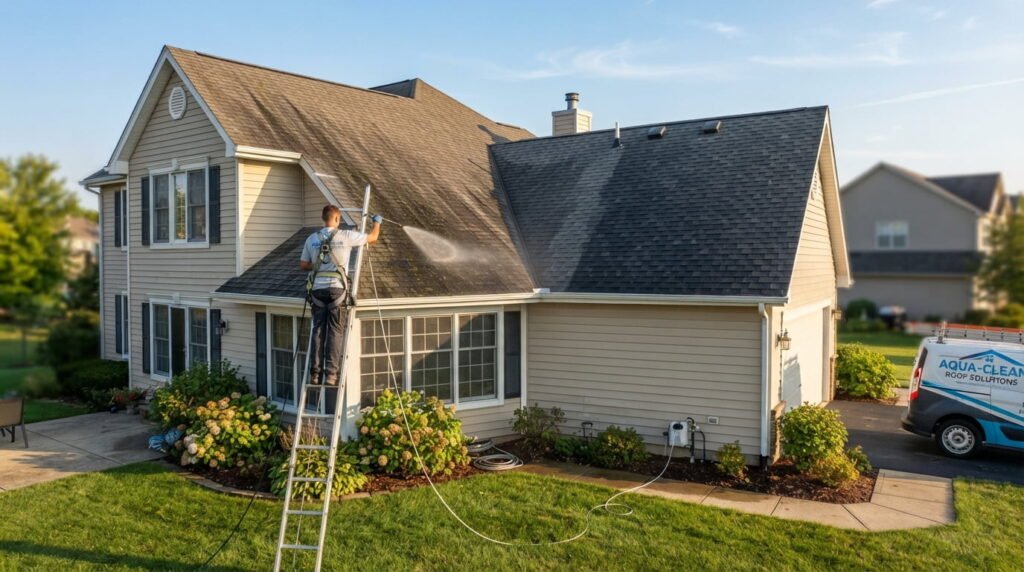
Soft wash roof cleaning is a low-pressure method that uses specialized cleaning solutions, rather than blasting water, to remove algae, moss, lichen, and the black streaks that build up on shingles over time. It’s the method roofing manufacturers actually recommend, and it’s quietly become the standard way professionals clean roofs without voiding a warranty or shortening a roof’s life. If you’ve noticed dark streaks or green patches creeping across your shingles, this guide covers what soft washing actually does, how it differs from pressure washing, what it costs, and how often you really need it.
What Is Soft Wash Roof Cleaning?
Soft washing combines low-pressure water, typically under 60 PSI and roughly comparable to a garden hose, with a biodegradable cleaning solution that usually contains a diluted bleach compound and surfactants. Instead of scrubbing or blasting stains off the surface, the solution is sprayed onto the roof, left to dwell, and allowed to kill the organic growth at the root. A gentle rinse then washes away what’s left.
That “root level” part matters. Most of the dark streaking on asphalt shingles isn’t dirt at all , it’s a cyanobacteria called Gloeocapsa magma, which feeds on the limestone filler inside the shingles themselves. Moss and lichen work differently, trapping moisture against the roof surface and accelerating rot, especially through freeze,thaw cycles in colder climates. Soft washing is formulated to address both problems rather than just scrubbing the surface clean.
The Asphalt Roofing Manufacturers Association specifically recommends low-pressure, detergent,assisted washing as the preferred method for cleaning asphalt roofs, precisely because it avoids the physical damage that comes with high-pressure alternatives.
Soft Washing vs. Pressure Washing: Why the Difference Matters
Homeowners often assume more pressure means a more thorough clean. On a roof, it’s the opposite.
Pressure washing uses high-velocity water to physically strip away dirt and grime. On a roof, that same force strips off the protective granules that shield shingles from UV exposure, can loosen or crack the shingles outright, and forces water underneath the roofing layer, which leads to leaks down the road. It also tends to miss the underlying organic growth, so stains often reappear within months.
Soft washing uses low pressure paired with a targeted cleaning solution. It kills algae and moss at the root, which slows regrowth substantially, and it does this without physically abrading the shingle surface. This is why it’s the only method most manufacturers endorse for asphalt roofs, and using the wrong method can, in some cases, affect a shingle warranty.
For tile, slate, cedar shake, and metal roofs, soft washing is generally still the safer choice, though the mix and dwell time of the cleaning solution should be adjusted for the material.
How the Soft Wash Process Actually Works
A typical professional soft wash follows roughly the same sequence regardless of the company:
- Inspection and prep. The roof is inspected for loose shingles, existing damage, or areas needing special care. Landscaping, siding, and outdoor fixtures near the roofline are pre-wetted or covered to protect them from runoff.
- Application. The cleaning solution is sprayed evenly across the roof using a low-pressure pump and specialized nozzle, usually in the 150–500 PSI range for equipment, though the actual water pressure hitting the shingle is far lower.
- Dwell time. The solution sits on the roof for a set period, breaking down algae, moss, lichen, and mildew.
- Rinse. The roof is rinsed thoroughly with low-pressure water to remove dead organic material and residue.
- Neutralizing rinse. A neutralizing agent is often applied to surrounding plants and landscaping to counteract any runoff from the cleaning solution.
- Final walkthrough. A visual check confirms the streaks, moss, and algae are gone and nothing was missed.
Most residential jobs take a few hours from start to finish, depending on roof size, pitch, and how heavily contaminated the surface is.
How Much Does Soft Wash Roof Cleaning Cost?
For most single-family homes, professional soft wash roof cleaning runs roughly $400 to $900, though the final number depends on a handful of factors:
- Roof size and pitch — larger and steeper roofs take longer and require more safety equipment
- Level of contamination — a roof covered in thick moss needs more solution and labor than one with light staining
- Accessibility — hard-to-reach sections or complex rooflines add time
- Location — regional pricing and travel distance both factor in
Compared to the cost of premature shingle replacement, which can run into the thousands, soft washing is a relatively small maintenance expense that protects a much larger investment.
How Often Should You Soft Wash a Roof?
There’s no single universal number here — it depends heavily on climate, shade, and roof material. That said, the general guidance from cleaning professionals breaks down like this:
- Humid or shaded climates (heavy tree cover, coastal or southern regions): every 1 to 2 years
- Moderate climates: every 2 to 3 years is typically sufficient
- Dry, sunny climates with little tree cover: some roofs can go 4 to 6 years between cleanings
- Asphalt shingles tend to need cleaning more often than tile or metal, since algae grows faster on the material
A good rule of thumb: if you can see dark streaks or green patches from the street, it’s already overdue. Catching growth early, before moss becomes thick and established, also makes each cleaning faster and less aggressive.
Can You Soft Wash Your Own Roof?
Technically, yes. Homeowners can rent or buy a soft wash system, mix a diluted bleach-and-water solution, and apply it themselves with a pressure washer set to a low-pressure nozzle, generally in the 100–500 PSI range. But most professionals and roofing sources advise against DIY roof cleaning for a few practical reasons:
- Fall risk. A dry roof is already dangerous to walk on. Once it’s wet with cleaning solution, it becomes significantly more slippery.
- Chemical handling. Incorrectly mixed solutions can discolor or damage shingles, and runoff needs to be managed carefully around landscaping, pets, and pools.
- Incomplete results. DIY attempts often miss embedded algae or moss roots, meaning the stains return within months instead of years.
- Equipment matters. A standard pressure washer without a true low-pressure soft wash attachment can easily cross into damaging territory.
If your roof is low-pitched, single-story, and easy to access, and you’re comfortable with ladder safety and chemical handling, small-scale DIY maintenance is manageable. For anything steep, multi-story, heavily contaminated, or made of a delicate material like cedar shake, hiring an insured professional is the safer call — both for the roof and for you.
Is Soft Wash Roof Cleaning Safe for Plants and Pets?
Yes, when done correctly. Professional soft wash technicians pre-wet surrounding landscaping with plain water before applying any solution, and follow up with a thorough rinse afterward. The biodegradable solutions used in professional soft washing are formulated to break down quickly and shouldn’t harm grass, plants, or pets when applied and rinsed properly. The bigger risk comes from DIY jobs where dilution ratios or rinse timing aren’t quite right.
Signs Your Roof Needs a Soft Wash
- Dark streaks running down from the ridge or vents (usually algae, not dirt)
- Green or grayish patches, especially on shaded sections
- Moss forming along shingle edges or in valleys
- A roof that looks noticeably darker or “dirtier” than neighboring homes
- Visible growth after a wet season or following heavy storms
Quick Answer: Is Soft Washing Better Than Pressure Washing for Roofs?
Yes — for roofs specifically, soft washing is almost always the better choice. It cleans just as effectively (often more effectively, since it kills organic growth at the root) while avoiding the granule loss, shingle damage, and leak risk that come with high-pressure water. Pressure washing has its place on driveways and concrete, but most roofing manufacturers explicitly advise against using it on shingles.
Maintaining Your Roof Between Cleanings
A few habits can stretch the time between soft washes:
- Trim overhanging branches to reduce shade and let the roof dry out faster after rain
- Clean gutters regularly, since clogged gutters cause water to back up and promote moisture-driven growth
- Do periodic visual inspections from the ground for early signs of streaking or moss
- Address small growth early rather than waiting for it to become thick and embedded
Final Thoughts
Soft wash roof cleaning is a low-risk, high-value way to protect one of the most expensive parts of your home. It removes the algae, moss, and streaking that quietly wear down shingles over time, without the damage that comes from high-pressure alternatives. Whether you handle light maintenance yourself or bring in a professional for a full clean, the key is not waiting until the staining is severe — a roof that’s cleaned on a reasonable schedule simply lasts longer.
If you’re noticing streaks or buildup on your own roof, getting a quote from a licensed, insured soft wash provider is generally worth the ten minutes it takes — most offer free inspections, and it gives you a clear sense of cost before committing.