Olive Garden Grilled Chicken Margherita
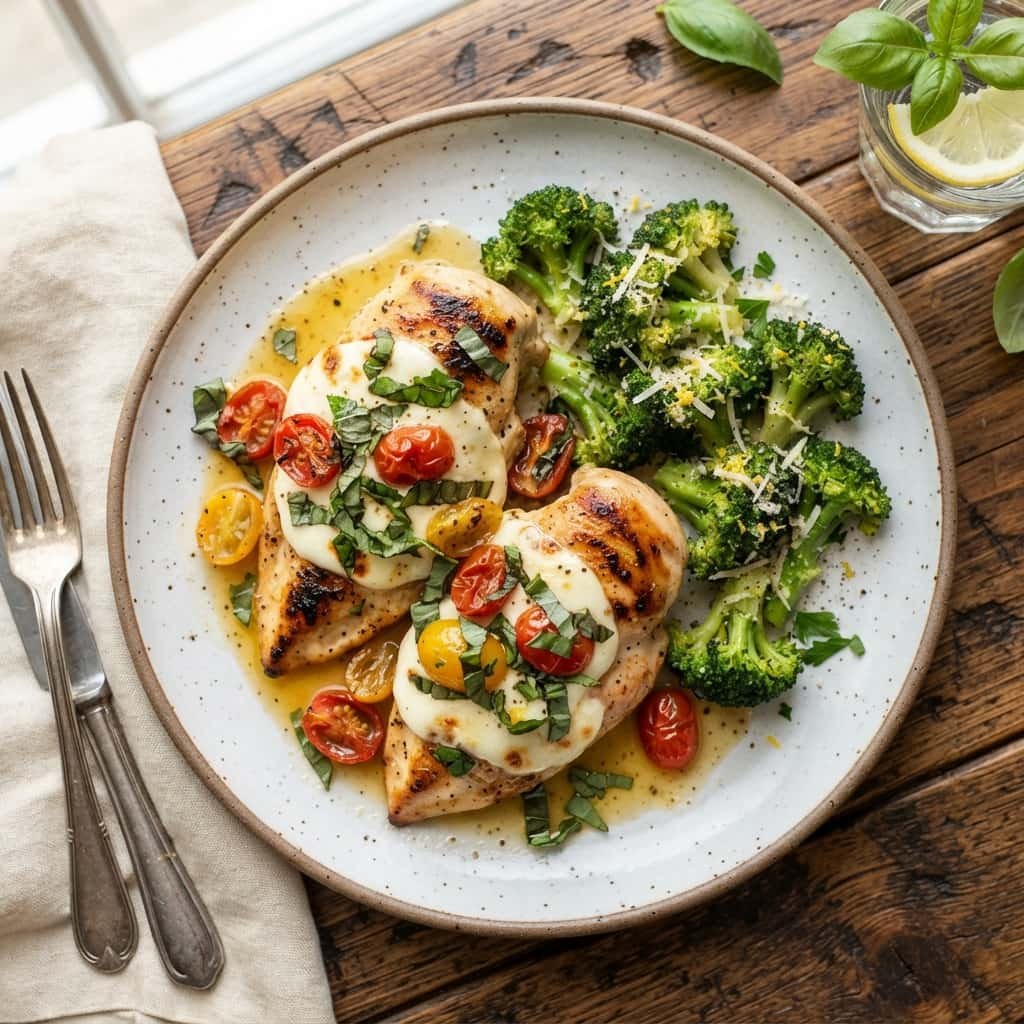
If you love the fresh, savory flavors of Olive Garden but want something lighter than a big bowl of pasta, Olive Garden Grilled Chicken Margherita is an easy dish to recreate at home. Juicy grilled chicken is layered with melted mozzarella, basil pesto, and fresh tomatoes, then finished with a buttery lemon-garlic sauce.
The combination works because each ingredient has a clear job. The chicken provides a hearty base, mozzarella adds creamy richness, pesto brings basil and nuttiness, tomatoes add freshness, and lemon cuts through the richness. You get the familiar flavors associated with a margherita-style topping without needing to make pizza.
This copycat version is designed for a practical weeknight dinner. The chicken can be marinated ahead of time, the sauce takes only a few minutes, and the entire dish can be finished in one skillet or under the broiler.
What Is Olive Garden Grilled Chicken Margherita?
Olive Garden Grilled Chicken Margherita is a chicken entrée built around the classic tomato, mozzarella, and basil flavor combination.
Instead of placing those ingredients on pizza dough, the dish uses grilled chicken as the main component. The chicken is topped with mozzarella, pesto, and tomatoes and served with a lemon-garlic butter sauce.
That balance is what makes the dish appealing. It has some rich ingredients, particularly cheese, pesto, and butter, but the fresh tomato, basil, and lemon keep the overall flavor from becoming too heavy.
The dish is also a good example of why simple restaurant meals can be surprisingly easy to reproduce at home. There is no complicated cream sauce or long list of specialty ingredients. The main challenge is getting the chicken juicy and timing the toppings correctly.
What Does Grilled Chicken Margherita Taste Like?
The flavor is savory, fresh, buttery, and slightly tangy.
The grilled chicken gives the dish its main savory flavor. Melted mozzarella adds a mild, creamy layer, while basil pesto provides a stronger herbal note with garlic and nutty flavors. Fresh tomatoes bring acidity and a little sweetness.
Then comes the lemon-garlic butter sauce.
That sauce is more important than it might seem. Without some acidity, the mozzarella, pesto, and butter can make the dish feel rich. Lemon brightens everything and helps the other flavors stand out.
If you are making this at home for the first time, resist the temptation to add a lot of extra pesto. A spoonful is enough to give each chicken breast a noticeable basil flavor without covering up the chicken.
Ingredients You Need
You do not need a complicated shopping list.
For the Chicken
- 4 boneless, skinless chicken breasts
- 1 cup Italian salad dressing, for marinating
- 2 tablespoons olive oil
- Salt and black pepper, to taste
Pounding the chicken to an even thickness is worth the few extra minutes. Thick centers and thin edges are one of the easiest ways to end up with dry chicken.
For the Toppings
- 8 ounces fresh mozzarella, sliced
- 1/2 cup basil pesto
- 1 cup cherry or grape tomatoes, halved
- 1/4 cup fresh basil, thinly sliced
Fresh mozzarella is preferable if you want a soft, creamy melt. If you only have regular mozzarella, it will still work, although the texture will be slightly different.
For the Lemon Garlic Butter Sauce
- 6 tablespoons butter
- 2 teaspoons minced garlic
- 1 1/2 tablespoons fresh lemon juice
Fresh lemon juice makes a noticeable difference here. Bottled lemon juice can work in a pinch, but fresh juice gives the sauce a cleaner flavor.
How to Make Olive Garden Grilled Chicken Margherita
The recipe is straightforward, but a few small details make a big difference.
1. Even Out the Chicken
Place each chicken breast between sheets of plastic wrap or parchment paper and gently pound it until the thickest parts are closer in thickness to the thinner areas.
You are not trying to flatten the chicken completely. The goal is simply to create an even piece that cooks at roughly the same rate from edge to center.
This is particularly helpful with large chicken breasts.
2. Marinate the Chicken
Place the chicken in a bowl or resealable bag with the Italian dressing.
Refrigerate for at least 30 minutes. If you have more time, you can let it marinate for a few hours.
A short marinade is useful when you are preparing this for a weeknight dinner. You do not need to leave the chicken overnight to get good results.
Before cooking, remove the chicken from the marinade and let excess dressing drip off. Season with salt and pepper.
3. Cook the Chicken
Heat the olive oil in a large skillet over medium-high heat.
Add the chicken and cook until the underside is nicely browned. Flip and continue cooking until the chicken is nearly done.
The exact cooking time depends on the thickness of the breasts, so use temperature rather than the clock as your final test. Chicken should reach an internal temperature of 165°F.
One common mistake is turning the heat up too high because you want a quick sear. That can brown the outside before the center has finished cooking. Medium-high heat gives you enough browning without making the outside tough.
4. Make the Lemon Garlic Butter Sauce
Remove the chicken from the skillet and set it aside briefly.
Reduce the heat slightly. Add the butter, minced garlic, and lemon juice to the same pan.
As the butter melts, scrape up the browned bits left behind by the chicken. Those browned pieces add extra flavor to the sauce.
Cook just until the garlic becomes fragrant.
You do not want to aggressively brown the garlic. Burnt garlic can quickly turn a fresh lemon-butter sauce bitter.
5. Add the Mozzarella and Pesto
Return the chicken to the pan and spoon some of the lemon-garlic butter over each piece.
Place sliced mozzarella over the chicken and add a spoonful of pesto on top.
Cover the skillet for a minute or two so the mozzarella can soften and melt.
Alternatively, transfer the chicken to a broiler-safe dish and place it under the broiler briefly. Watch it closely because mozzarella can go from melted to overly browned surprisingly quickly.
6. Finish With Fresh Tomatoes and Basil
Once the mozzarella is melted, remove the chicken from the heat.
Add the halved tomatoes and fresh basil shortly before serving.
Spoon a little more lemon-garlic butter sauce over the chicken.
Adding the tomatoes and basil at the end helps preserve their fresh flavor. Cooking them for too long can make the tomatoes watery and the basil dull.
How Long Does This Recipe Take?
Plan for roughly 30 minutes of active preparation and cooking, plus the time needed to marinate the chicken.
A practical schedule looks like this:
- 5 minutes to prepare the chicken
- 30 minutes or more for marinating
- About 10–15 minutes for cooking
- A few minutes for melting the mozzarella and finishing the dish
If you are short on time, prepare the chicken marinade earlier in the day. Then dinner becomes mostly a matter of cooking, making the sauce, and adding the toppings.
For an even faster meal, you can prepare the tomatoes, basil, mozzarella, and pesto while the chicken cooks.
What Makes the Best Copycat Version?
The biggest lesson with this recipe is that the toppings should complement the chicken rather than bury it.
Use evenly thick chicken breasts
This is probably the most useful technique in the entire recipe. Uneven chicken breasts cook unevenly, which often leads to dry edges and a center that takes much longer to finish.
Do not overload the pesto
Pesto has a concentrated flavor. Start with a modest spoonful per chicken breast and add more only if you want a stronger basil flavor.
Use fresh mozzarella when possible
Fresh mozzarella gives the topping a softer, creamier texture. Slice it fairly thinly so it melts before the chicken has a chance to overcook.
Add fresh basil at the end
Basil loses some of its fresh character when exposed to prolonged heat. Adding it immediately before serving gives you a stronger herbal aroma.
Watch the chicken temperature
Cooking time is only a guideline because chicken breasts vary greatly in size. A thermometer is much more reliable than assuming every breast needs exactly the same number of minutes.
Can You Grill the Chicken Instead of Pan-Searing It?
Yes. In fact, grilling is an excellent option if you want more pronounced grilled flavor.
Heat an outdoor grill or grill pan, oil the cooking surface if necessary, and cook the marinated chicken until it develops attractive grill marks and reaches 165°F internally.
Once the chicken is cooked, add the mozzarella and pesto. You can either cover the chicken briefly to help the cheese melt or move it to a broiler-safe pan for a short finishing step.
Grilling works especially well when you are preparing several servings at once.
The tradeoff is that a skillet makes the lemon-garlic butter sauce easier because you can use the browned bits from the chicken directly in the same pan.
What Should You Serve With It?
The original article pairs the entrée with parmesan garlic broccoli, and that is a sensible choice for a similar meal at home.
Other good options include:
- Roasted broccoli
- Steamed green beans
- Simple mixed salad
- Roasted asparagus
- Sautéed zucchini
- Lightly dressed vegetables
If you want a more filling dinner, add pasta, potatoes, or crusty bread.
The choice depends on what you want from the meal. A vegetable side keeps the plate relatively light, while pasta or potatoes turns it into a more substantial dinner.
One thing I would avoid is pairing it with an extremely rich side. The chicken already has mozzarella, pesto, and butter, so a simple vegetable can provide better balance.
Olive Garden Grilled Chicken Margherita Nutrition
The nutrition information in the original material lists a dinner serving at approximately 650 calories, with about 39 grams of fat, 15 grams of carbohydrates, and 65 grams of protein.
Sodium is also relatively high, at roughly 2,120 milligrams according to the supplied information.
Those numbers should be treated as menu-specific figures rather than exact nutrition values for this homemade recipe. The amount of dressing, pesto, butter, mozzarella, and salt you use at home can change the nutritional profile considerably.
For example, using less butter or pesto will change the total calories, while the specific Italian dressing and mozzarella you buy can affect sodium and fat.
If nutrition tracking matters to you, calculate the homemade recipe using the exact brands and quantities you use.
Is Grilled Chicken Margherita a Healthy Choice?
There is no need to label the dish simply as “healthy” or “unhealthy.” A more useful way to look at it is to consider what is actually on the plate.
You get a substantial serving of protein from chicken, along with fat from mozzarella, pesto, and butter. Tomatoes and basil add fresh produce, while the dish avoids the large pasta portion found in many Italian-American entrées.
The main thing to watch is sodium and the overall amount of rich ingredients.
If you want to make the homemade version lighter, you can:
- Use less butter in the sauce
- Use a smaller amount of pesto
- Choose a lower-sodium dressing
- Use a moderate amount of mozzarella
- Serve it with vegetables rather than a heavy starch
There is no need to remove every rich ingredient. The combination of pesto, mozzarella, and lemon butter is what makes the dish distinctive.
Is It Low-Carb or Keto-Friendly?
The supplied restaurant information lists approximately 15 grams of carbohydrates for the dinner serving.
That is considerably different from a typical pasta entrée, but whether it fits your personal low-carb or keto plan depends on your daily carbohydrate target and the specific ingredients used.
The homemade version can also vary significantly. Italian dressing, pesto, and other prepared ingredients may contain carbohydrates, so check their labels if you are carefully tracking carbs.
If you are trying to keep the meal lower in carbohydrates, serve the chicken with non-starchy vegetables and skip breadsticks or pasta.
Common Mistakes to Avoid
Cooking the chicken until it is dry
The chicken continues cooking slightly after it leaves the heat. Use an instant-read thermometer and remove it from aggressive heat once it reaches the appropriate safe temperature.
Putting the cheese on too early
If you add mozzarella while the chicken still needs several minutes of cooking, the cheese can become overly melted or browned before the chicken is ready.
Cook the chicken first, then finish with the cheese.
Burning the garlic
Garlic only needs a short time in the butter. Once it becomes fragrant, move on. Dark, burnt garlic can overpower the lemon and butter.
Adding too much sauce
The lemon-butter sauce is there to add brightness and richness, not turn the chicken into soup. Spoon enough over the chicken to flavor it while keeping the toppings visible.
Using cold, thick mozzarella
Very thick slices straight from the refrigerator may take longer to melt. Thin slices give you more control during the finishing stage.
Can You Make It Ahead?
You can prepare several components ahead of time.
The chicken can be marinated in advance and kept refrigerated until you are ready to cook it. Tomatoes can also be washed and cut ahead of time, while the mozzarella and pesto can be portioned so everything is ready when the chicken comes off the heat.
For the best texture, I recommend cooking the chicken close to serving time rather than fully cooking it hours ahead.
This dish is at its best when the mozzarella is freshly melted and the basil and tomatoes are still bright.
How to Store Leftovers
Allow leftovers to cool, then place them in an airtight container and refrigerate them.
For best quality, use refrigerated leftovers within about 3 to 4 days.
Reheat gently rather than blasting the chicken on high heat. A covered skillet over medium-low heat works well because the gentle steam helps prevent the chicken from drying out.
A low oven can also work.
The microwave is convenient, but short heating intervals are better than one long burst. Overheating is what tends to make chicken tough and mozzarella rubbery.
Can You Make This Gluten-Free?
The core ingredients in this type of dish—chicken, mozzarella, tomatoes, basil, pesto, butter, garlic, lemon, and olive oil—do not inherently require wheat.
However, prepared products such as Italian dressing and pesto can vary by brand, and restaurant kitchens may have cross-contact concerns.
If you need the meal to be strictly gluten-free, check packaged ingredient labels carefully and ask the restaurant about preparation practices rather than assuming the dish is safe based only on its name.
What Sauce Goes With Olive Garden Grilled Chicken Margherita?
The flavor profile described in the supplied recipe is a lemon-garlic butter sauce.
It is made by combining melted butter, minced garlic, and fresh lemon juice. In the homemade version, cooking those ingredients in the same pan used for the chicken also lets you pick up flavorful browned bits from the skillet.
The lemon is particularly useful because it cuts through the richness of the butter, mozzarella, and pesto.
Does Grilled Chicken Margherita Come With a Side?
The supplied article describes the entrée as being served with parmesan garlic broccoli.
At a restaurant, sides and menu combinations can change, so check the current menu for the location you plan to visit.
At home, broccoli is an easy choice because its slightly bitter, roasted flavor works well with the creamy cheese and buttery sauce.
Can You Freeze Grilled Chicken Margherita?
You can freeze cooked chicken, but this particular dish is better fresh or refrigerated.
The reason is texture. Fresh tomatoes, basil, and mozzarella do not always thaw and reheat as nicely as the chicken itself.
If you need to freeze it, consider freezing the cooked chicken separately and preparing fresh tomatoes, basil, pesto, and mozzarella when you reheat it.
That approach gives you a much fresher finished dish.
Restaurant Dish or Homemade Copycat?
If you are already going to Olive Garden, ordering the restaurant version is obviously the easiest option.
The homemade version wins when you want control over the ingredients, portion size, cooking method, or flavor intensity.
It is also useful for meal planning because the chicken can be prepared in batches.
For a first attempt, I would keep the recipe simple rather than trying to reproduce every tiny detail. Focus on four things: juicy chicken, properly melted mozzarella, fresh basil and tomatoes, and enough lemon-garlic sauce to balance the richness.
Once those are right, the dish already captures what makes Olive Garden Grilled Chicken Margherita appealing.
Final Thoughts
Olive Garden Grilled Chicken Margherita is a good example of a restaurant-style dinner that does not require complicated cooking at home. The ingredients are familiar, the sauce takes only minutes, and most of the flavor comes from getting the basics right.
The most useful trick is to focus on the chicken first. Even thickness and careful temperature control matter more than adding extra seasoning. Once the chicken is cooked properly, the mozzarella, pesto, tomatoes, basil, and lemon-garlic butter do the rest.
For a weeknight meal, prepare the chicken in advance, have the toppings ready, and finish everything just before serving. That gives you a dinner that feels special without turning the kitchen into a project
What is in Olive Garden Grilled Chicken Margherita?
The dish centers on grilled chicken with mozzarella, basil pesto, fresh tomatoes, and a lemon-garlic butter sauce. The supplied article also describes parmesan garlic broccoli as the accompanying side.
How do you keep the chicken juicy?
Pound the breasts to an even thickness, avoid excessive cooking time, and use an internal thermometer instead of relying only on the clock. Marinating the chicken before cooking can also add flavor.
Can I use shredded mozzarella?
Yes. It will work, but sliced fresh mozzarella gives a softer, more restaurant-style topping. If using shredded cheese, add it near the end and watch it closely.
Can I use chicken thighs?
Yes, although the result will be different. Boneless skinless thighs are naturally more forgiving and remain juicy, but chicken breasts are the better choice if you are trying to stay close to the described restaurant-style version.
Can I skip the marinade?
You can. The chicken will still cook properly, but the Italian dressing adds flavor and moisture. Even a short marinade can be useful when time is limited.
Can I make the recipe without pesto?
You can, but pesto is one of the ingredients that gives the dish its basil-forward character. If you do not have pesto, fresh basil and a little garlic can provide some of the same flavor direction, although the finished dish will not be identical.
How do I know when the mozzarella is ready?
Look for mozzarella that is soft and melted but not heavily browned. The goal is a creamy topping that still sits nicely on the chicken.
What is the best side dish?
Parmesan garlic broccoli is the natural pairing described in the original dish. At home, roasted broccoli, green beans, asparagus, or a simple salad also work well.