How to Wash Chicken Safely
If you’ve ever stood at the sink holding a package of raw chicken, wondering whether to rinse it before it hits the cutting board, you’re not alone. Learning how to wash chicken safely starts with a fact that surprises a lot of home cooks: food safety experts mostly say don’t. Rinsing raw chicken under running water doesn’t remove bacteria, it just launches it around your kitchen. Below, we’ll walk through why that happens, what to do instead, and how to handle raw chicken so dinner turns out both safe and delicious.
Quick Answer: Should You Wash Raw Chicken?
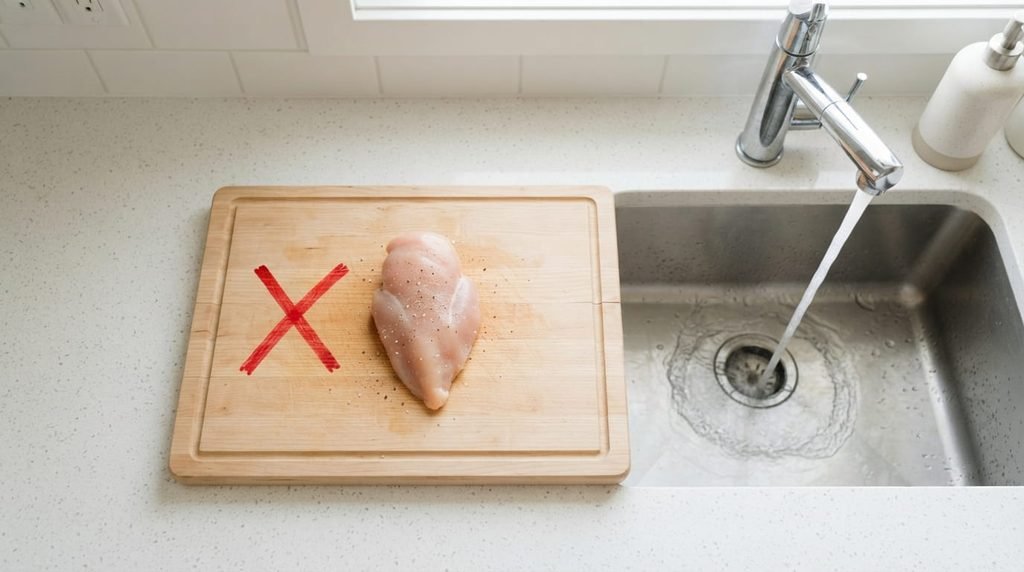
No. The USDA, the CDC, and food safety researchers agree that washing or rinsing raw chicken is unnecessary and risky. Water splashing off raw poultry can carry bacteria like Salmonella and Campylobacter well beyond the sink, landing on countertops, dish towels, and any ready-to-eat food nearby. Cooking chicken to an internal temperature of 165°F is the only step that actually destroys the bacteria that live on it.
Why Washing Raw Chicken Is Actually Risky
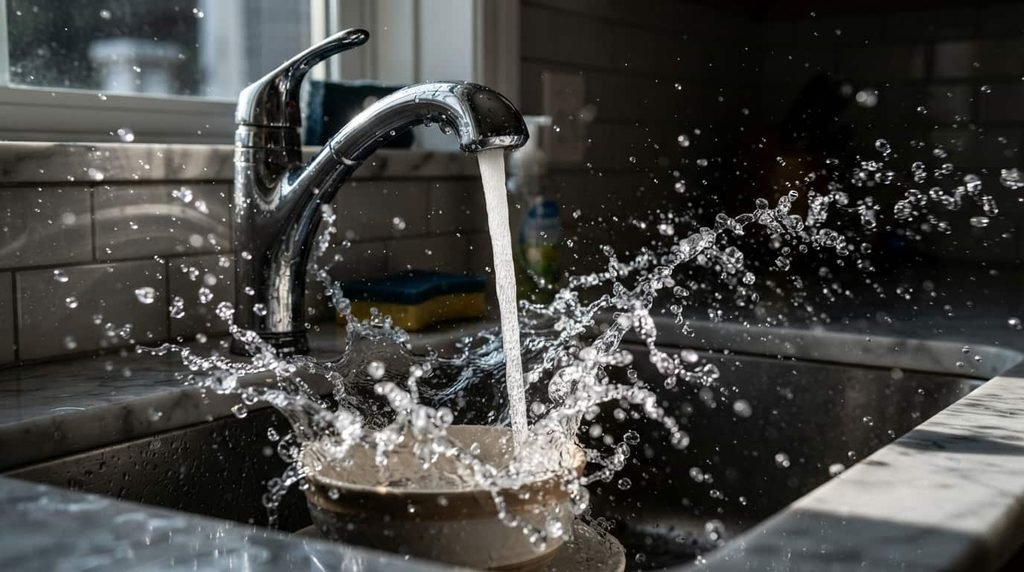
It feels intuitive to rinse away whatever is on a raw chicken breast before cooking it. The problem is what that rinse actually does. Bacteria on raw poultry doesn’t sit still under a stream of water, it scatters. Researchers at Drexel University filmed this effect and found that droplets from a rinsed chicken can travel several feet from the sink, landing on nearby dish racks, utensils, and countertops.
A USDA observational study backed this up in a real home kitchen setting. Among people who washed their raw poultry, most ended up with bacteria in their sink afterward, and a notable share transferred that bacteria onto a ready-to-eat salad prepared in the same kitchen. Even people who skipped the rinse weren’t perfectly safe, since imperfect hand washing and shared utensils still caused some cross-contamination. The lesson isn’t that hygiene doesn’t matter, it’s that rinsing chicken isn’t the hygiene step people think it is.
Registered dietitians echo the same point: whatever concerns you have about bacteria on raw chicken get resolved by cooking, not by rinsing. The heat of a hot pan or oven kills Salmonella and Campylobacter far more reliably than a splash of tap water ever could, and it does so without spraying contaminated water across your kitchen.
Why the Habit Sticks Around
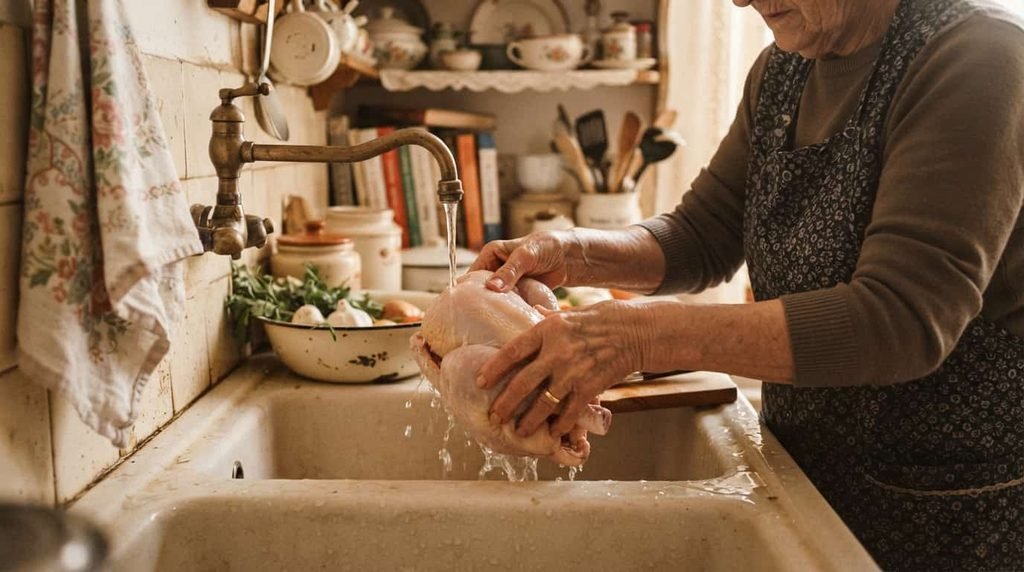
If washing chicken doesn’t help, why do so many recipes and family traditions still call for it? Part of it is generational. Cooks like Julia Child grew up rinsing poultry as standard practice, long before researchers had the tools to trace exactly where bacteria ends up after a rinse. Part of it is also a reasonable-sounding assumption: if you can see or feel residue on food, washing it off seems like common sense.
The gap is that “seems like common sense” and “is measurably safer” turned out to be two different things once food safety researchers actually tested it. Studies have shown that even people who consider themselves careful in the kitchen still end up with contaminated sinks and surfaces after rinsing raw poultry, simply because water splash is harder to contain than it looks. That’s the reason major health agencies shifted their guidance from “rinse if you want” to a clear “don’t.”
How to Wash Chicken the Safe Way (Without Spreading Bacteria)
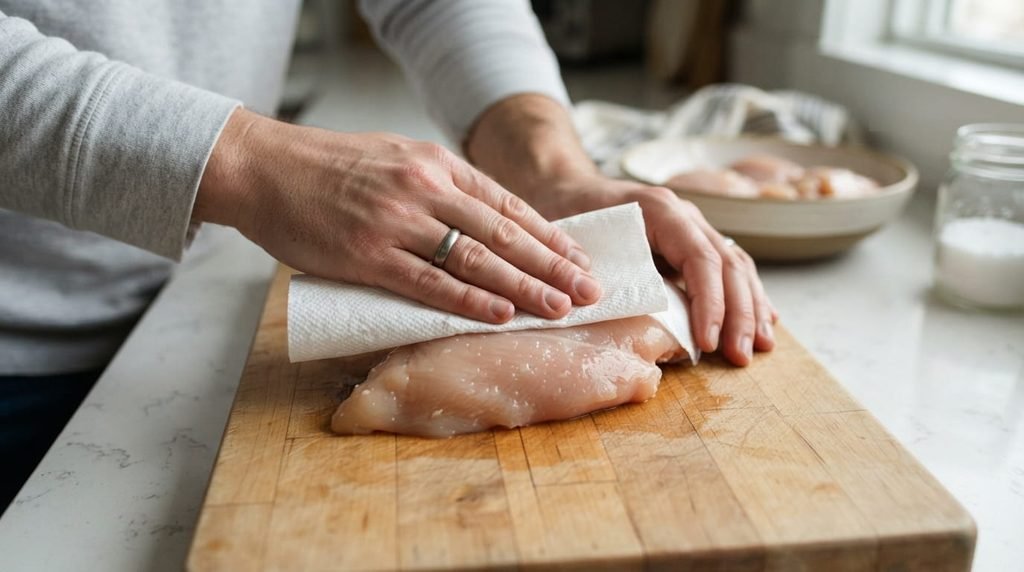
If the word “wash” makes you picture running water, it helps to reframe the goal. What most people actually want when they wash chicken is to deal with the sticky, slimy texture on the surface of the meat. That slime isn’t dirt, it’s a mix of proteins and moisture that naturally forms as chicken sits in its packaging, and it’s completely normal.
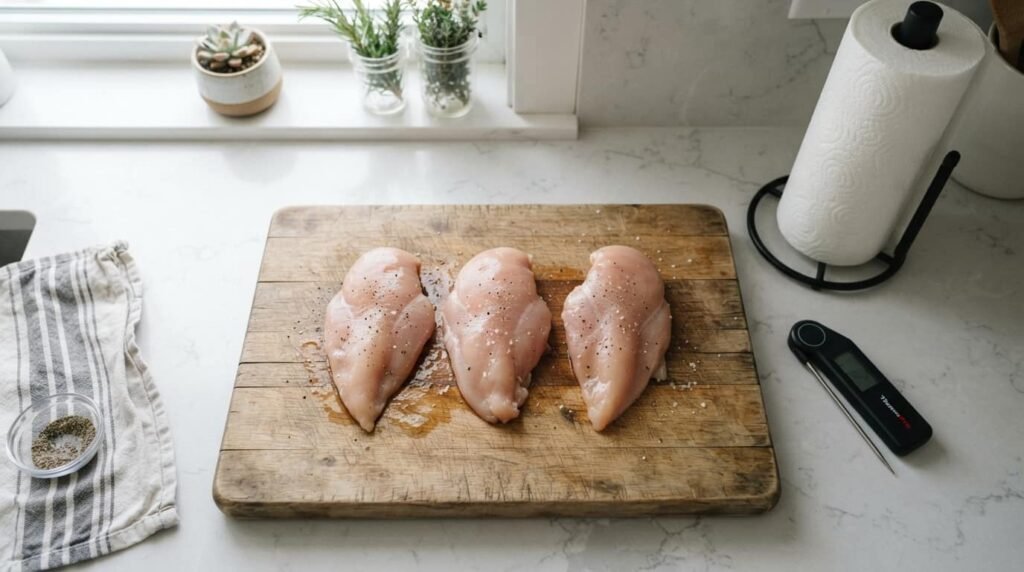
Here’s the safe version of “washing” raw chicken that food safety agencies actually recommend:
- Take the chicken directly from its packaging to a clean cutting board, ideally one reserved just for raw meat and poultry.
- If the texture bothers you, pat the surface gently with a paper towel instead of rinsing it under the tap.
- Immediately throw that paper towel away, don’t set it down on the counter first.
- Wash your hands with soap and water for at least 20 seconds before touching anything else.
- Move straight into seasoning and cooking, since a dry surface also browns better in the pan.
This approach gets rid of the sensation people are trying to avoid without ever turning on the faucet or risking a splash zone.
What to Do Instead of Rinsing Raw Chicken
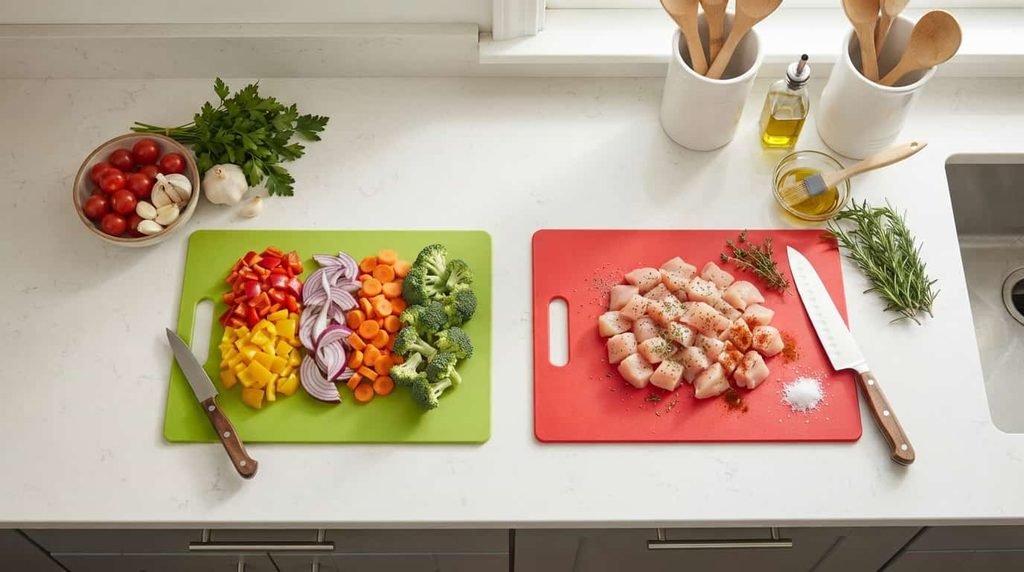
A few small habits do more for food safety than rinsing ever could:
- Prep first, chicken last. Wash and chop any vegetables, salads, or foods that won’t be cooked before you open the chicken package. That way, nothing raw can contaminate food that’s ready to eat.
- Use a separate cutting board. Keeping one board for raw meat and poultry and another for produce cuts down on cross-contamination dramatically.
- Pat, don’t rinse. As mentioned above, a paper towel handles excess moisture without spreading bacteria.
- Cook to temperature, not to color. A food thermometer inserted into the thickest part of the meat, avoiding bone, is the only reliable way to confirm chicken has hit 165°F. Color and texture can be deceiving, especially with dark meat like thighs and wings.
- Rest briefly, then serve. Once chicken reaches a safe temperature, it’s ready. There’s no food safety benefit to further handling.
Common Chicken-Washing Myths (Vinegar, Lemon Juice, and Salt Water)
A lot of home kitchens have their own version of “washing” chicken that goes beyond plain water, and most of these methods carry the same risks without the safety benefit people expect.
Vinegar and lemon juice are popular because they feel like they’d have some antibacterial effect, and they do make chicken smell fresher. But neither one gets hot enough or stays in contact long enough to destroy Salmonella or Campylobacter. The USDA has stated plainly that washing, rinsing, or brining meat and poultry in salt water, vinegar, or lemon juice does not destroy bacteria. Any acid-based rinse still involves running water near your sink, which means the same splash risk applies.
Salt water soaking, or brining, is a different story when it comes to purpose. Brining is a flavor and moisture technique, not a safety measure, and the USDA has no objection to it as long as it’s done correctly. If you brine chicken, keep it in the refrigerator the entire time, pour out the soaking liquid without reusing it, and wash or sanitize the container afterward in the dishwasher. Treat the whole process the same way you’d treat any raw poultry prep, with a clean, contained workspace and immediate cleanup.
How to Clean Your Kitchen After Handling Raw Chicken
Real food safety happens after the chicken is put away, not during a rinse. Once you’ve handled raw poultry, a short cleanup routine makes a bigger difference than anything you’d do at the sink with the chicken itself:
- Wash your hands with warm, soapy water for a full 20 seconds, then dry them with a clean towel or fresh paper towel.
- Run any cutting boards, knives, and utensils through the dishwasher on the sanitize setting if you have one, since heat kills bacteria that hand-washing alone might miss.
- If a dishwasher isn’t an option, wash tools in hot, soapy water and let them air dry rather than wiping them with a towel that could redistribute bacteria.
- Wipe down counters and the sink itself with hot, soapy water, then follow up with a sanitizing spray on anything the chicken or its packaging touched.
- Store raw chicken on the lowest shelf of the refrigerator or freezer so juices can’t drip onto other food while it’s stored.
Frequently Asked Questions About Washing Chicken
Does vinegar or lemon juice clean bacteria off chicken?
No. Vinegar and lemon juice can change the smell and texture of raw chicken, but neither reaches a high enough concentration or stays on the surface long enough to kill Salmonella or Campylobacter. Cooking to 165°F is still the only step that reliably destroys these bacteria.
What should I do if I already rinsed my chicken?
Don’t panic, just clean up thoroughly. Wash your hands, then clean and sanitize the sink, faucet handles, and any nearby countertops with hot, soapy water followed by a sanitizer. Going forward, cook the chicken to a verified 165°F and skip the rinse next time.
Is it safe to soak or brine chicken in salt water?
Yes, as a flavor technique, though it doesn’t add any food safety benefit. Keep the chicken refrigerated while it soaks, discard the liquid instead of reusing it, and wash the soaking container in the dishwasher afterward.
How do I deal with the slimy texture without washing chicken?
Pat the surface with a paper towel, then discard it immediately and wash your hands. The slippery texture is just surface protein and moisture from packaging, and it disappears once the chicken cooks.
Does washing chicken affect how it cooks?
Yes, but not in the way people expect. A wet surface steams instead of browns, so chicken that’s been rinsed can end up paler and less crisp than chicken that’s been patted dry. Skipping the rinse and drying the surface with a paper towel actually helps the meat sear better in a hot pan or under the broiler.
Final Thoughts
Once you understand what that splash of water is actually doing, skipping the rinse gets a lot easier. The safest version of how to wash chicken doesn’t involve your faucet at all, it comes down to a clean cutting board, a paper towel, a working food thermometer, and a thorough cleanup afterward. Get those four things right, and dinner will be both safer and better browned than it ever was under running water.