Gluten Free Pancake Recipe: Light, Fluffy & Foolproof
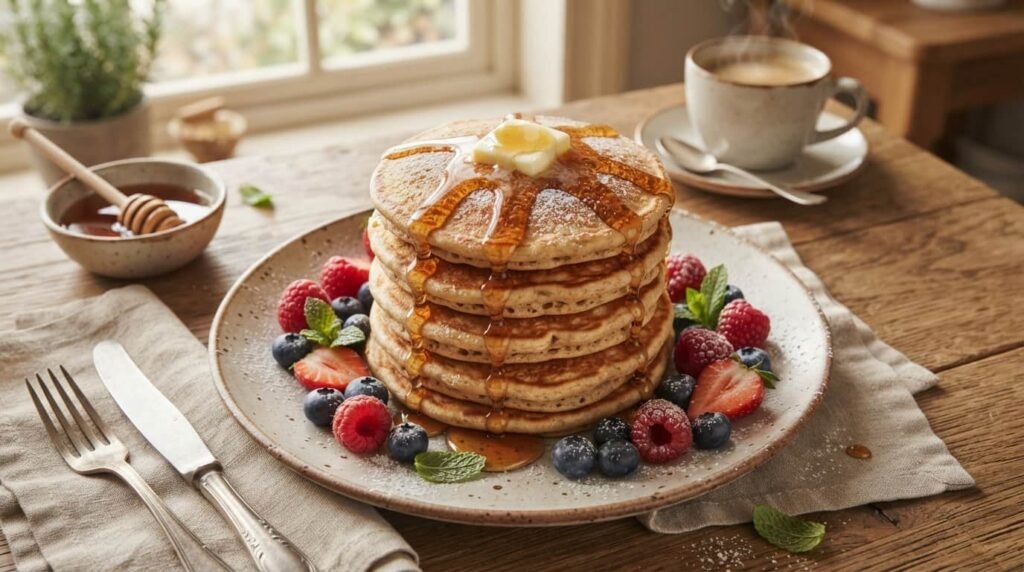
This gluten free pancake recipe is the one I keep coming back to on weekend mornings when my family wants a real stack, not a sad, gritty imitation. It comes together in one bowl with a flour blend you can grab at almost any grocery store, and it turns out soft and fluffy enough that nobody at the table clocks it as gluten-free. If you have tried gluten-free pancakes before and ended up with something flat, dense, or oddly gummy in the middle, the fix usually comes down to two things: the flour blend you pick and whether you let the batter rest before it hits the griddle.
Gluten Free Pancakes
Prep Time: 10 minutes
Cook Time: 15 minutes
Total Time: 25 minutes
Servings: 4 (about 8 pancakes)
Ingredients
- 1 ½ cups (210g) gluten-free 1-to-1 baking flour blend
- 2 tablespoons granulated sugar
- 2 teaspoons baking powder
- ¼ teaspoon fine salt
- 1 large egg
- 1 ¼ cups milk (dairy or non-dairy)
- 2 tablespoons unsalted butter, melted, plus more for the griddle
- ½ teaspoon vanilla extract
Instructions
- In a large bowl, whisk together the gluten-free flour, sugar, baking powder, and salt.
- In a separate bowl, whisk the egg, milk, melted butter, and vanilla until combined.
- Pour the wet ingredients into the dry ingredients and whisk until smooth. A few small lumps are fine.
- Let the batter rest for 5 to 10 minutes. Give it a quick stir before cooking, since it thickens slightly as it sits.
- Heat a nonstick griddle or skillet over medium heat, about 350°F, and lightly grease it with butter.
- Pour about ⅓ cup of batter per pancake onto the griddle. Cook for 2 to 3 minutes, until bubbles form across the surface and the edges look set.
- Flip and cook for another 1 to 2 minutes, until golden brown on the second side.
- Serve warm with butter, maple syrup, or fresh fruit.
Why This Gluten Free Pancake Recipe Actually Works
Most gluten-free pancake trouble traces back to one of two spots: the flour or the rest time. Skip either one and you end up with pancakes that are flat, gritty, or strangely rubbery in the center. This recipe is built to sidestep both problems.
I have made this with a handful of different flour blends and on plenty of rushed weekday mornings, and the pattern holds every time. Pick a flour with the right starch balance, give the batter its rest, and the rest of the process pretty much takes care of itself. There is no beating egg whites separately, no specialty ingredients you have to track down online, and no babysitting a finicky batter on the stove.
It also flexes easily. Swap in oat milk for a dairy-free version, use a flax egg if you are avoiding eggs too, or fold in blueberries or chocolate chips right before the batter hits the pan. The base recipe is forgiving enough to handle most of these changes without losing its texture.
Ingredients You’ll Need
The exact amounts live in the recipe card above. Here is what each one is doing in the batter.
Gluten-free 1-to-1 baking flour is the backbone of the whole recipe. Look for a blend built from lighter starches, like rice flour, potato starch, and tapioca starch, that already includes a gum such as xanthan or guar. That gum is what holds the pancake together so it does not fall apart on the flip.
Baking powder carries more of the workload here than it does in a wheat-based recipe, since there is no gluten structure to help trap air. Fresh baking powder makes a noticeable difference in how tall these puff up. If it has been open more than six months or so, test it in a cup of hot water first. It should fizz right away.
Egg adds structure and helps with the rise. For an egg-free version, a flax egg or a store-bought egg replacer both work, though the texture comes out a touch denser than with a whole egg.
Milk can be dairy or a plant-based swap like oat, almond, or soy. Any of them work here without changing the texture much, though a milk with a bit of fat tends to brown slightly better than a nonfat option.
Melted butter adds richness and helps the pancakes brown. A neutral oil works as a dairy-free substitute.
The Best Gluten-Free Flour for Pancakes
This is the step that trips up most home cooks, and it is worth slowing down for. Not every gluten-free flour blend behaves the same way once it hits a hot griddle.
Stick with a “1-to-1” or “measure for measure” blend built mostly from lighter starches, such as rice flour, potato starch, and tapioca starch. Blends heavy on bean flours, like garbanzo or fava, tend to bake up denser and can leave a slightly bitter aftertaste that is hard to hide in something as simple as a pancake. Two widely available options that consistently work well in this recipe are Bob’s Red Mill 1:1 Gluten-Free Baking Flour and King Arthur Measure for Measure Gluten-Free Flour.
Gum content is the other piece of the puzzle. Xanthan or guar gum stands in for gluten, giving the batter enough structure to hold together when you flip it. Most 1-to-1 blends already have gum mixed in, so check the label before adding more on top of it. Too much gum turns the batter thick and gluey, which is one of the main reasons gluten-free pancakes end up gummy instead of fluffy.
Single flours like almond flour, coconut flour, or plain rice flour will not give you this texture on their own. They need to be part of a blended mix that includes a binder to behave anything like a standard pancake.
How Do You Make Gluten-Free Pancakes Fluffy?
The two biggest levers for fluffy gluten-free pancakes are a well-balanced 1-to-1 flour blend and a 5 to 10 minute rest before cooking. The rest gives the starches time to fully absorb the liquid, which prevents both the gritty texture and the flat, dense result that gluten-free batters are prone to. Fresh baking powder matters too, since there is no gluten network to help trap air on its own.
How to Make Gluten Free Pancakes, Step by Step
Start by whisking the dry ingredients together in a large bowl. This spreads the baking powder evenly through the flour so every pancake puffs up about the same amount, instead of some rising more than others.
In a separate bowl, whisk the egg, milk, melted butter, and vanilla. Pour the wet mixture into the dry ingredients and whisk just until smooth. A few small lumps are completely fine here. Overmixing gluten-free batter tends to make it gummy rather than smoother, which is the opposite of what happens with wheat flour.
Here is the step people skip, and it is the one that matters most: let the batter rest for 5 to 10 minutes before cooking. Gluten-free flours and starches need that window to fully hydrate, and it is what keeps the pancakes from turning out flat or slightly gritty in the middle. Give it a quick stir right before you start cooking, since it thickens a bit as it sits.
Cook on a griddle set to medium heat, around 350°F, with a light coat of butter. Pour roughly ⅓ cup of batter per pancake and wait for bubbles to form across the top and the edges to look set before flipping, usually 2 to 3 minutes. The second side only needs another minute or two to turn golden brown.
Pro Tips for a Better Stack
- Don’t skip the rest time. Out of everything in this recipe, that one step does the most for texture.
- Measure your flour by spooning it into the cup and leveling it off with a knife, rather than scooping straight from the bag. Scooping packs in extra flour and leaves the batter too thick.
- Keep the heat moderate. Too hot and the outside browns before the middle sets. Too low and the pancakes come out pale and dense.
- Resist pressing down on the pancakes while they cook. It feels productive, but it squeezes out the air pockets that make them fluffy in the first place.
Common Mistakes That Wreck Gluten-Free Pancakes
The most frequent complaint with gluten-free pancakes is a gummy or crumbly texture, and it almost always comes down to the flour blend. Too much xanthan or guar gum, or an overmixed batter, leads to gummy pancakes. Too little binder, or a blend with no gum at all, leads to crumbly ones that fall apart on the flip.
Skipping the rest time is another frequent misstep. It only takes 5 to 10 minutes, but that window lets the starches hydrate fully, which is a big part of what separates a fluffy pancake from a flat, dense one.
Cooking straight from the fridge is a smaller but real issue too. If the batter has been chilling, let it sit at room temperature for a few minutes before cooking so it spreads more evenly on the griddle instead of sitting in a thick mound.
Dairy-Free and Egg-Free Variations
This batter adapts easily if you are working around more than one restriction at a time.
For dairy-free pancakes, swap the milk for any unsweetened plant-based milk and use a neutral oil in place of butter.
For egg-free pancakes, a flax egg (1 tablespoon ground flaxseed mixed with 2 ½ tablespoons water, rested for 5 minutes) or a store-bought egg replacer both work. Expect a slightly denser pancake than the egg version, but still a perfectly good one.
For add-ins, fold blueberries, mini chocolate chips, or mashed banana into the batter right before it hits the griddle.
Storage and Reheating
Cooked pancakes keep in the fridge for up to 3 days in an airtight container. For longer storage, lay them flat on a baking sheet until frozen solid, then transfer to a freezer bag for up to 3 months.
To reheat, skip the microwave if you can, since it tends to make gluten-free pancakes rubbery. A toaster, air fryer, or a 325°F oven for about 10 minutes brings the texture much closer to fresh off the griddle.
What to Serve With Gluten-Free Pancakes
Keep it classic with butter and maple syrup, or pile on fresh berries and a dusting of powdered sugar for a weekend brunch. They also pair well with crispy bacon or sausage for a full breakfast spread, or a dollop of yogurt and sliced banana for something a little lighter.
Do I need xanthan gum for gluten-free pancakes?
Yes, in some form. It stands in for gluten and holds the batter together so the pancakes do not fall apart when you flip them. Most 1-to-1 gluten-free flour blends already include it, so check the label before adding more on top.
Why are my gluten-free pancakes gummy?
Gummy usually means too much xanthan gum in the blend or an overmixed batter. Crumbly usually points to too little binder, or a flour blend with no gum at all. Letting the batter rest before cooking helps prevent both outcomes.
Can I make gluten-free pancakes dairy-free?
Yes. Swap in any unsweetened plant-based milk and use oil or a dairy-free butter alternative in place of butter. The texture stays nearly the same as the dairy version.
Can I freeze gluten-free pancakes?
Yes. Freeze them in a single layer until firm, then transfer to a freezer bag for up to 3 months. Reheat in a toaster or oven rather than the microwave to keep the edges from turning soggy.
Once you have the flour and the rest time down, this gluten free pancake recipe turns into one of those things you can make on autopilot. Try it this weekend, and let us know in the comments what you topped your stack with.