
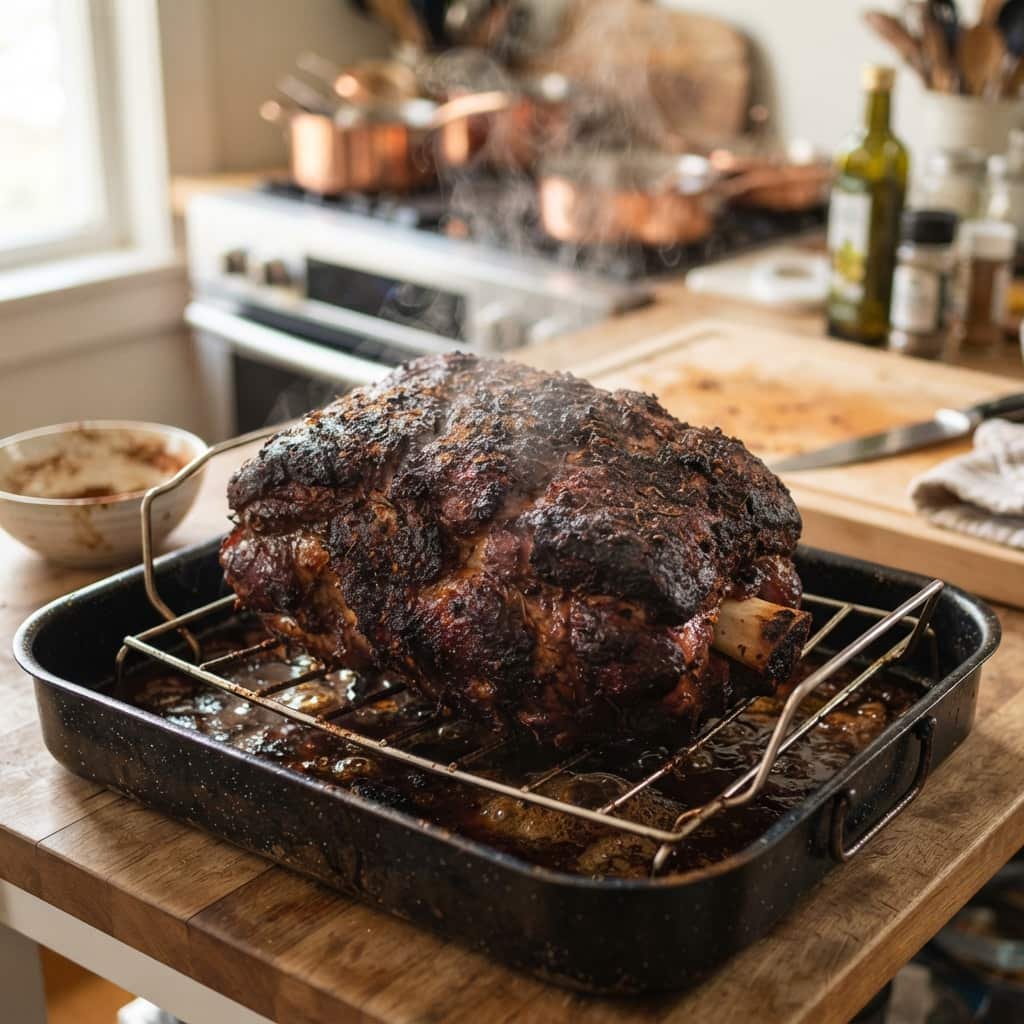
How to Cook a Boston Butt Pork Roast (Fall-Apart Tender)
A boston butt pork roast is one of the most forgiving cuts you can put in your oven, and it rewards you with hours of that irresistible smell filling the kitchen. If you’ve ever pulled a dry, stringy roast out of the oven and wondered what went wrong, the fix usually comes down to one thing: temperature, not time. This guide walks you through picking the right cut, seasoning it, and cooking it low and slow until it shreds with nothing more than a fork.
I’ve made this roast more times than I can count for Sunday dinners, game day sandwiches, and freezer meals, and the method below is the one I come back to every time.
What Is a Boston Butt Pork Roast?
Despite the name, a boston butt has nothing to do with the rear of the pig. It comes from the upper part of the shoulder, near the neck and shoulder blade. The name actually goes back to colonial New England, where butchers packed this cut into barrels called butts for storage and shipping. Over time, the cut and the name stuck together.
What matters for your dinner is the marbling. A boston butt is well laced with fat and connective tissue, which sounds like a downside until you cook it low and slow. That fat melts into the meat over hours in the oven, and the connective tissue breaks down into gelatin, giving you juicy, tender pork instead of something tough and dry.
Boston Butt vs. Pork Shoulder: What’s the Difference?
You’ll often see “pork shoulder” and “boston butt” used interchangeably at the grocery store, but they’re technically two different sections of the same primal cut.
- Boston butt sits higher on the foreleg, closer to the neck. It’s more heavily marbled, rectangular in shape, and usually sold with a thick fat cap and no skin.
- Pork shoulder (also called picnic shoulder or picnic roast) sits lower, is more triangular, leaner, and often sold with the skin still on.
For pulled pork, reach for the boston butt every time. The extra marbling is exactly what gives you that rich, fall-apart texture. Pork shoulder works fine for sliced pork or dishes where you want the skin to crisp up, but it isn’t as forgiving during a long cook.
How to Choose the Best Boston Butt at the Store
A few things to look for before you check out:
- Size: Plan for about a third of a pound of raw pork per person, since the weight drops significantly after cooking and shredding. Most butts run 6 to 8 pounds, which comfortably feeds a crowd with leftovers.
- Bone-in or boneless: Bone-in butts take a little longer to cook but tend to hold more flavor and moisture. When the meat is done, the bone should twist and pull away easily.
- Fat cap: Look for good marbling throughout, not just a thick cap on one side. That internal fat is what bastes the meat as it cooks.
- Color and texture: The meat should be pink to light red, never gray or slimy.
- Watch for sales: Because it’s such a large cut, boston butt is often discounted, especially around summer holidays. It freezes well, so it’s worth stocking up.
Ingredients for a Boston Butt Pork Roast
You genuinely don’t need much to make this work. A simple spice rub built from pantry staples does most of the heavy lifting.
- One 6 to 8 pound boston butt pork roast, bone-in or boneless
- 2 tablespoons brown sugar
- 2 tablespoons smoked paprika
- 1 tablespoon kosher salt
- 1 tablespoon garlic powder
- 1 tablespoon onion powder
- 1 teaspoon black pepper
- 1 teaspoon chili powder
- Optional: apple cider vinegar, for spritzing during the cook
You can dress this rub up with cayenne, cumin, or mustard powder depending on the flavor direction you’re after, whether that’s a classic barbecue profile or something with more Southwestern heat.
How to Cook a Boston Butt Pork Roast in the Oven (Step by Step)
Here’s the method I rely on for consistent, fall-apart results without a smoker.
- Pat the pork dry and season generously. Mix the spice rub in a small bowl and rub it over every side of the roast, pressing it into the fat cap. For deeper flavor, do this the night before and refrigerate uncovered.
- Preheat the oven to 450°F. Place the roast fat side up on a rack set inside a roasting pan. The rack keeps the bottom from steaming and helps the crust, often called the bark, form evenly.
- Sear at high heat for 30 minutes. This kicks off a deep, browned crust before the long, slow cook begins.
- Drop the oven to 250°F. Without opening the door, lower the temperature and let the roast cook undisturbed for 7 to 9 hours, depending on size. Resist the urge to peek often, since every time the oven door opens, you lose heat and add cooking time.
- Cook until the internal temperature hits 195 to 205°F. This is the range where connective tissue fully breaks down and the meat shreds easily. A digital meat thermometer takes the guesswork out of this step.
- Rest before shredding. Tent the roast loosely with foil and let it rest for at least 20 to 30 minutes. This lets the juices redistribute so the meat stays moist once you pull it apart.
- Shred with two forks. Discard the bone and any large pockets of fat, then toss the shredded pork with a spoonful of the pan drippings to keep it juicy.
If the roast is pulling apart easily at any point, it’s a sign your oven runs a little hot, and it’s worth double-checking the internal temperature before assuming it’s done early.
What Temperature Should a Boston Butt Pork Roast Reach?
Quick answer: For pulled pork, cook a boston butt to an internal temperature of 195 to 205°F. It’s technically safe to eat at 145°F, but at that temperature the meat is still tough. The extra hours in the oven give the fat and connective tissue time to render, which is what makes pulled pork tender instead of chewy.
If you’re planning to slice the roast instead of shredding it, you can pull it a bit earlier, around 180 to 190°F, for meat that holds its shape better while still being tender.
Common Questions About Boston Butt Pork Roast
How long does it take to cook a boston butt pork roast? Plan on roughly 1.5 hours per pound at 250°F after the initial sear, so a 7 pound roast typically takes 7 to 9 hours total. Always cook to temperature rather than the clock, since factors like bone-in versus boneless and your oven’s actual temperature can shift the timing.
Should I cook it covered or uncovered? Uncovered on a rack gives you the best bark, but if you notice the outside darkening too quickly, a loose foil tent partway through will slow that down without stopping the cook.
Can I cook a boston butt in a slow cooker instead of the oven? Yes. Season it the same way, then cook on low for 8 to 10 hours until it reaches the same 195 to 205°F range. You’ll lose some of the crisp bark, but the texture is just as tender.
Does wrapping the roast in foil speed things up? It can. Wrapping creates a steam effect that pushes the meat through the temperature plateau faster, though it will soften the crust. If bark matters to you, leave it unwrapped and just be patient.
Tips for Extra-Juicy Pulled Pork
A few small habits make a noticeable difference in the final texture:
- Spritz during the low and slow stage. Every hour or so after the first three hours, mist the roast with apple cider vinegar or apple juice using a spray bottle. It keeps the surface from drying out while the fat renders.
- Don’t rush the rest. Cutting into the roast right out of the oven pushes the juices out onto the cutting board instead of back into the meat. A full 20 to 30 minutes of resting time under foil makes a real difference.
- Save the drippings. The liquid left in the roasting pan is loaded with flavor. Skim off excess fat and stir the rest back into the shredded pork, or use it as the base for a quick gravy.
- Trim, but don’t over-trim. A thin layer of fat cap helps baste the meat as it cooks. Trimming it down to almost nothing removes moisture you’ll want later.
- Use a reliable meat thermometer. Time is only a rough guide. An 8 pound bone-in roast and an 8 pound boneless one can finish at noticeably different times, so the internal temperature is what actually tells you it’s ready.
Storing, Reheating, and Using Leftover Pulled Pork
Once your boston butt pork roast is shredded, store leftovers in an airtight container with a bit of the reserved pan juices to keep everything moist. It keeps well in the fridge for up to 4 days, or in the freezer for up to 3 months.
To reheat, add the pork to a skillet with a splash of broth or barbecue sauce and warm it over medium heat, stirring occasionally, until it’s heated through and slightly crisped at the edges. The oven and microwave both work too, as long as you add a little liquid so the meat doesn’t dry out.
Leftover pulled pork is endlessly useful. Pile it onto sandwiches with coleslaw, fold it into tacos or burritos, stir it into mac and cheese, or use it as a topping for loaded baked potatoes. However you serve it, a well-cooked boston butt gives you far more meals than the effort of one long oven day would suggest.
Give this method a try for your next family dinner or weekend gathering, and don’t be surprised if it becomes your go-to the way it’s become mine.



Pingback: Best Breakfast in Austin: Where Locals Actually Eat