
Martha Stewart Banana Bread Recipe (Tested & Reviewed)
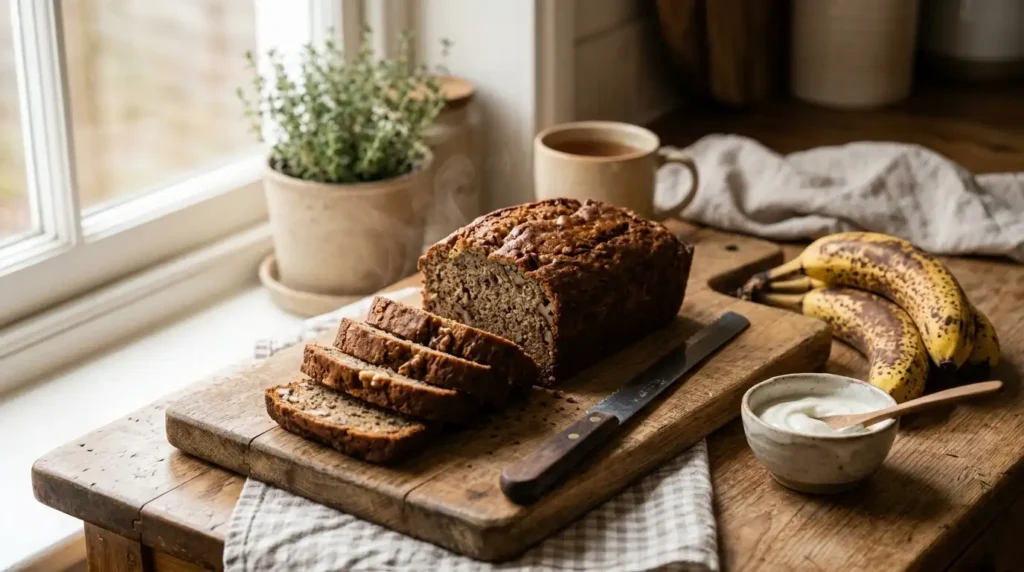
Martha Stewart banana bread has one thing most home versions don’t: sour cream folded right into the batter. It’s the small swap that turns an ordinary quick bread into the dense, tender, tangy-sweet loaf people have been baking from her 1982 cookbook, Entertaining, for more than forty years. I made it in my own kitchen to see if it lives up to the hype, and this is everything I learned, plus the exact steps, the ingredient swaps that actually work, and answers to the questions bakers ask most.
What Makes Martha Stewart’s Banana Bread Different
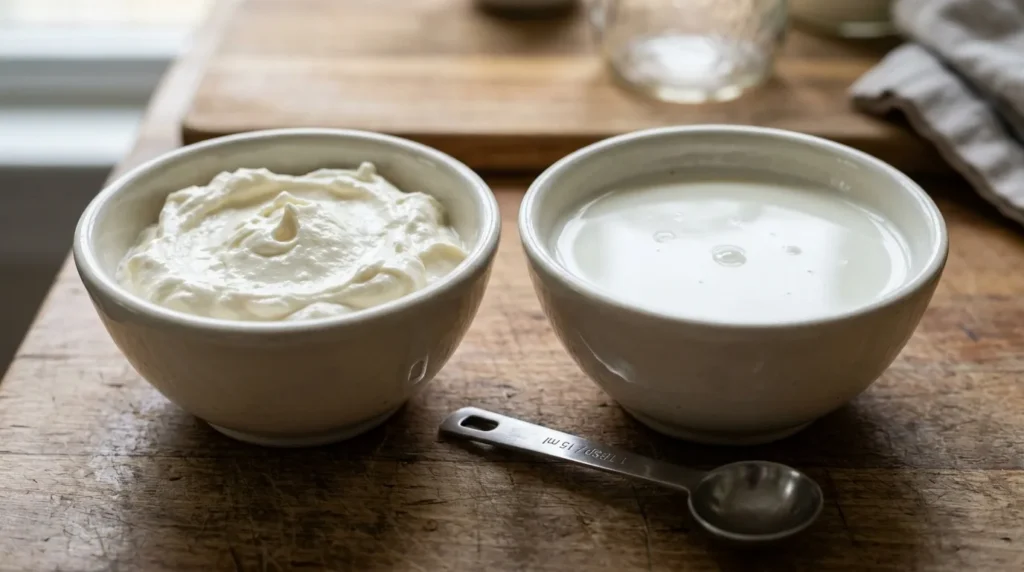
Most banana bread recipes lean on butter, milk, or buttermilk for moisture. Martha Stewart’s version leans on sour cream instead, and that one change does more work than you’d expect. Sour cream brings fat, protein, and acid to the batter. The fat adds richness, the protein helps the crumb hold together, and the acid tenderizes the gluten in the flour while also reacting with the baking soda to help the loaf rise. The result is a bread that’s noticeably denser and moister than a basic banana bread, with a faint tang that keeps the sweetness from feeling flat.
The recipe itself is refreshingly simple. There’s no yeast, no proofing, and no fussy technique. It’s a classic creaming method: butter and sugar first, then eggs, then the dry and wet ingredients folded in stages. If you’ve made any quick bread before, you already know most of what you need.
It also helps to understand why the recipe has stuck around so long. It first appeared in Entertaining, Martha Stewart’s debut cookbook, back in 1982, and it’s been reprinted and referenced in her magazines and on her website ever since. Longevity like that in the recipe world usually means one thing: it’s been tested by thousands of home bakers over decades, in every kind of kitchen, with every kind of oven, and it keeps working. That track record is part of why it’s worth trying even if you already have a go-to banana bread recipe.
Martha Stewart Banana Bread Ingredients You’ll Need
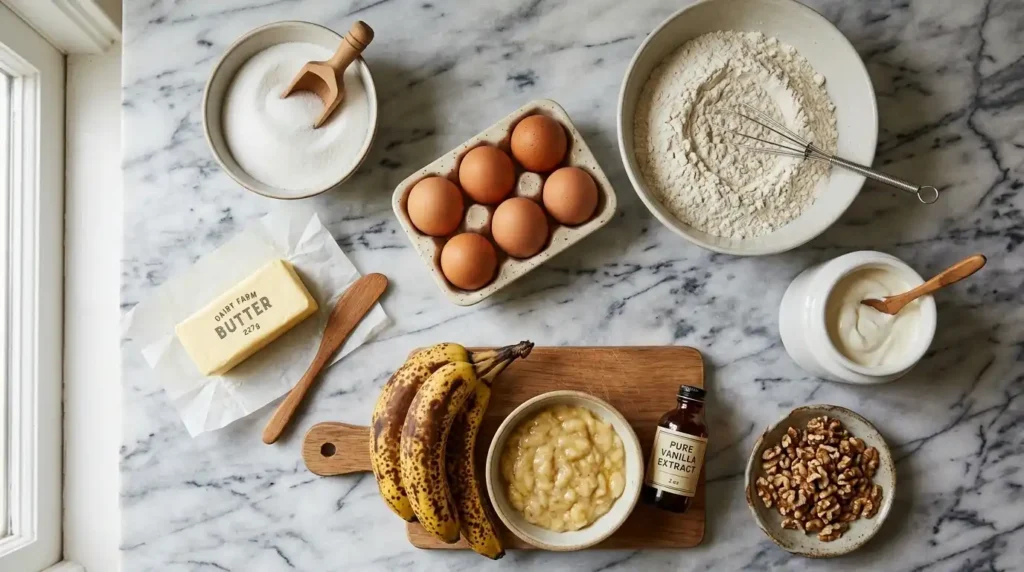
This recipe makes one standard loaf and comes together with pantry staples plus very ripe bananas:
- 1/2 cup (1 stick) unsalted butter, softened, plus extra for the pan
- 1 cup granulated sugar
- 2 large eggs
- 1 1/2 cups all-purpose flour
- 1 teaspoon baking soda
- 1 teaspoon salt
- 1 cup mashed very ripe bananas (about 2 to 3 medium bananas)
- 1/2 cup sour cream
- 1 teaspoon pure vanilla extract
- 1/2 cup chopped walnuts or pecans (optional)
The banana quantity matters more than people think. You want bananas that are heavily speckled with brown, or even mostly black. Underripe bananas won’t mash smoothly and won’t give you that concentrated banana flavor the recipe depends on. If your bananas aren’t quite there yet, roasting them whole at 300°F for about 15 minutes will soften and sweeten them quickly.
How to Make Martha Stewart Banana Bread Step by Step
- Preheat and prep. Set your oven to 350°F and butter a 9×5-inch loaf pan generously, including the corners.
- Cream the butter and sugar. Using a stand mixer or hand mixer, beat the butter and sugar together until the mixture is pale and fluffy, about 3 to 4 minutes. This step builds air into the batter, so don’t rush it.
- Add the eggs. Beat in the eggs one at a time, mixing well after each addition.
- Combine the dry ingredients. In a separate bowl, whisk together the flour, baking soda, and salt.
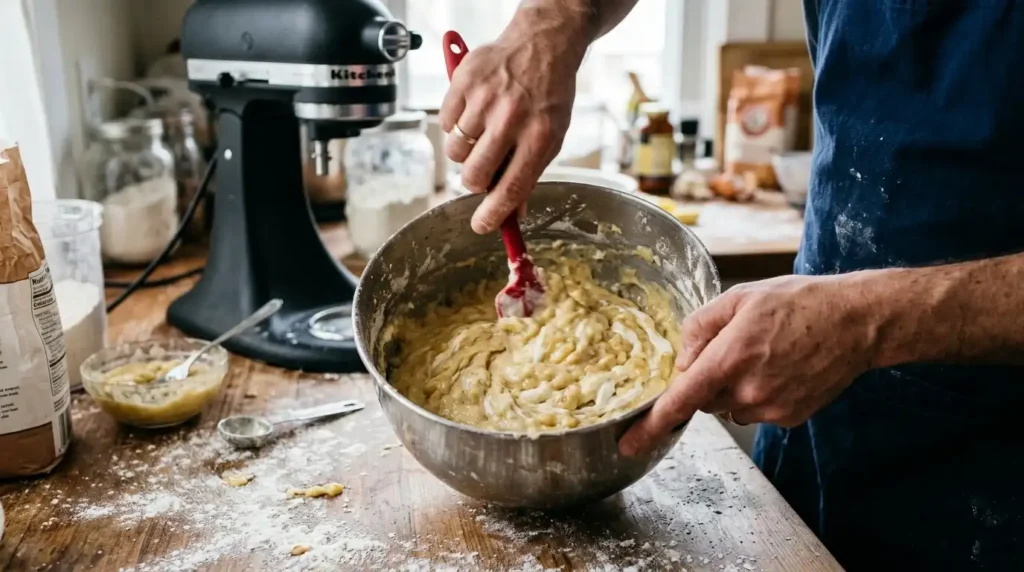
- Alternate wet and dry. Add the flour mixture to the butter mixture and mix until just combined, being careful not to overwork the batter. Then stir in the mashed bananas, sour cream, and vanilla until everything is evenly incorporated.
- Fold in the nuts. If using walnuts or pecans, stir them in gently at the end.
- Bake. Pour the batter into the prepared pan and bake for 1 hour to 1 hour 10 minutes, until a cake tester or toothpick inserted into the center comes out clean. If the top is browning too fast, tent it loosely with foil around the 40-minute mark.
- Cool completely before slicing. Let the loaf rest in the pan for 10 minutes, then turn it out onto a wire rack. Resist cutting into it while it’s warm. A loaf that’s still hot will look gummy and tear instead of slicing cleanly, and letting it cool fully also keeps condensation from making the crust soggy.
Why Does Martha Stewart Add Sour Cream to Banana Bread?
Sour cream replaces some of the milk or oil in a traditional recipe because its fat, protein, and acid work together to make the crumb both moist and structurally sound. The acid also tenderizes gluten and boosts the baking soda’s leavening power, which is why this version of martha stewart banana bread bakes up dense but never dry, with a subtle tang that balances the sweetness of the ripe bananas.
Tips for the Best Martha Stewart Banana Bread
- Use bananas that are almost too ripe to eat. The blacker the peel, the more concentrated the flavor and natural sweetness in the loaf.
- Don’t skip creaming the butter and sugar properly. A pale, fluffy mixture is what gives the crumb its structure, so give it the full 3 to 4 minutes rather than stopping early.
- Mix the dry ingredients into the wet ones just until combined. Overmixing develops gluten and can make the loaf tough or gummy instead of tender.
- Room-temperature ingredients blend more smoothly. Cold sour cream or eggs straight from the fridge can make the batter look curdled and uneven.
- Check doneness with a cake tester, not just time. Ovens vary, and a few dry crumbs on the tester are fine, but wet batter means it needs more time.
- Swap in what you have. No sour cream on hand? Full-fat plain Greek yogurt works as a near one-to-one substitute and keeps the same tangy, moist result.
Common Mistakes to Avoid
Even a foolproof recipe can go sideways. A few issues come up again and again with banana bread, Martha Stewart’s version included.
A sunken center usually means the loaf came out of the oven too early, or the batter was overmixed and lost the air needed to hold its rise. Always test the center, not just the edges.
A dry, crumbly texture is often a sign of too much flour, which happens easily if you scoop straight from the bag instead of spooning flour into the measuring cup and leveling it off.
A loaf that’s dense in a bad way, not a good way, can come from using bananas that weren’t ripe enough, since underripe bananas add less moisture and less flavor.
Chocolate chips or nuts sinking to the bottom happens when mix-ins go into a batter that’s too thin. Tossing them lightly in flour before folding them in helps keep them suspended through the bake.
Storing and Freezing Banana Bread
Once fully cooled, wrap the loaf tightly in plastic wrap or foil and store it at room temperature for up to 4 days. For longer storage, refrigerate it for up to a week, though the texture is best enjoyed within the first few days.
Banana bread freezes exceptionally well, which makes it a good candidate for doubling the recipe. Wrap the cooled loaf, whole or in slices, in plastic wrap and then a layer of foil, and freeze for up to 3 months. Thaw at room temperature for a few hours, or slice off individual pieces and thaw them as needed for a quick breakfast.
If you’re baking ahead for a gathering or gifting a loaf, mini loaf pans are worth considering too. Divide the batter among 4 to 6 mini pans instead of one large loaf pan, and check for doneness starting around 30 to 35 minutes, since the smaller loaves bake faster. They also thaw quicker from the freezer, which makes them a convenient option for portioned breakfasts or last-minute gifts.
Final Thoughts
What makes this recipe worth returning to isn’t a complicated technique or a rare ingredient. It’s the way a simple swap, sour cream in place of milk, quietly changes the texture of a bread most of us have made a dozen different ways. If you’ve got overripe bananas on the counter right now, this is the version worth trying next. Bake it once, and there’s a good chance it becomes the only banana bread recipe you keep coming back to.
Can I substitute the sour cream in this recipe?
Yes. Full-fat plain Greek yogurt is the closest swap and keeps the same moisture and tang. Buttermilk or crème fraîche will also work, though the texture may be slightly less dense.
Why is my banana bread dense and gummy in the middle?
This almost always points to underbaking. Because banana bread is naturally moist, it can look done on the outside while the center is still wet. Test with a cake tester in the very middle of the loaf, and give it extra time if the tester comes out with any batter clinging to it.
How many bananas equal one cup mashed?
Two to three medium bananas typically mash down to about 1 cup, depending on their size. Weigh or measure the mashed bananas rather than guessing by banana count for the most consistent results.
Can I add chocolate chips to Martha Stewart’s banana bread?
Yes, and it’s a popular variation. Toss about 1/2 cup of chocolate chips in a little flour before folding them into the batter so they don’t all sink to the bottom during baking.