Japanese Pink Salt Recipe: The Real Way to Make It
If you have scrolled past a video promising that a Japanese pink salt recipe can melt fat overnight, you are not alone, and you are right to be skeptical. The real version of this drink is simple: warm water, a small pinch of pink Himalayan salt, and often a squeeze of lemon, stirred together and sipped slowly. It will not burn fat or detox your body, but it is an easy, low-calorie ritual that can support hydration when you make it the right way. Here is exactly how to make it, why it went viral, and what it actually does once it hits your system.
What Is the Japanese Pink Salt Trick, Really?
The name is catchy, but it is worth clearing up right away: the salt itself is not from Japan. It is Himalayan pink salt, mined mostly in Pakistan, and the “Japanese” label is a marketing hook that took off on TikTok and Instagram. What does have Japanese roots is the idea behind it. In places like Okinawa, lightly salted water has long been used after physical work or in summer heat to replace fluids and ease bloating, not to chase rapid weight loss.
Social media blurred those two ideas together. A hydration habit with a long, low-key history got repackaged as a weight-loss hack, complete with before-and-after photos and, in some cases, AI-generated celebrity endorsements that fact-checkers have since debunked. Some clips have even circulated using a well-known daytime TV host’s likeness to sell the trend, which she never actually endorsed. Strip away the hype, and what is left is a genuinely simple recipe worth understanding on its own terms.
Japanese Pink Salt Recipe: Ingredients and Steps
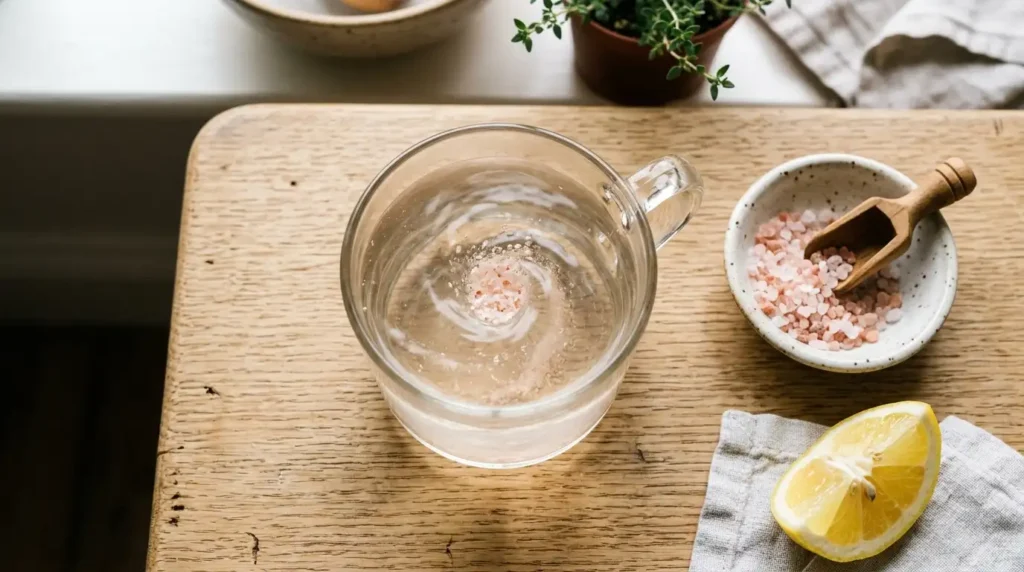
This is the base version most people mean when they search for a Japanese pink salt recipe. It makes one serving and takes about two minutes, so it is easy to test in your own kitchen before deciding whether it is worth keeping around.
Ingredients:
- 8 to 12 ounces of warm water (not boiling)
- Up to 1/8 teaspoon of fine pink Himalayan salt
- 1 to 2 teaspoons of fresh lemon juice, optional
Steps:
- Warm the water until it is comfortably warm, not hot. Boiling water can break down some of the vitamin C in the lemon juice, so let it cool slightly first if you boiled it.
- Add up to 1/8 teaspoon of pink salt to the glass.
- Stir until the salt is fully dissolved. This usually takes about 20 to 30 seconds.
- Add lemon juice if you are using it, and stir again.
- Sip it slowly over 10 to 15 minutes rather than drinking it all at once.
This drink does not store well, so make it fresh each time rather than batching it ahead for the week.
Common Variations You Will See Online
Once you understand the base recipe, the variations circulating online are easy to make sense of. Here is how the popular versions compare.
| Variation | What’s Added | What It Actually Changes |
|---|---|---|
| Classic | Water, pink salt, lemon | Mild hydration boost, a touch of vitamin C |
| With honey | Above, plus 1 teaspoon raw honey | Adds roughly 20 calories and natural sugar |
| With ginger | Above, plus a thin ginger slice | Ginger has real, mild anti-nausea properties |
| With apple cider vinegar | Above, plus 1 teaspoon ACV | Limited evidence it affects appetite, and it can be harsh on tooth enamel |
| Sole water | A fully saturated salt brine, diluted | Much higher sodium per serving than the base recipe |
None of these add-ins turn the drink into a fat-loss tool. Pick whichever version you would actually enjoy drinking regularly, and keep the salt dose modest no matter which one you choose.
Does the Pink Salt Trick Actually Work?
It works as a low-calorie hydration habit, but it does not work as a weight-loss method. There is no credible research showing that pink salt water burns fat, boosts metabolism, or detoxes the body. Any weight lost in the first few days of trying it is almost always water weight from shifts in sodium and hydration, and it typically returns once you stop.
What the drink can genuinely do is replace a sugary morning coffee or soda with something close to zero calories, encourage you to drink more water, and give you a simple ritual that anchors other healthy habits like a better breakfast or a morning walk. Those changes help. The salt itself is not doing the heavy lifting, and treating it like a shortcut is where most people get disappointed.
Why Pink Himalayan Salt Isn’t Nutritionally Special
Pink Himalayan salt is marketed as richer in minerals than regular table salt, and it does contain trace amounts of iron, potassium, magnesium, and calcium, which is what gives it that pale pink color. In practice, those minerals show up in amounts too small to matter. Pink salt is still close to 98 percent sodium chloride, which is nutritionally very similar to the table salt already in your cupboard.
You would need to eat an unreasonably large amount of pink salt to get any meaningful mineral benefit from it, and at that point sodium would be the far bigger problem. One more thing worth knowing: regular table salt is usually fortified with iodine, while pink salt is not. If pink salt fully replaces iodized salt in your cooking, make sure you are still getting iodine from other sources like seafood, dairy, or eggs. If you like pink salt for its taste, its texture, or the way it looks in a finishing dish, that is a fine reason to keep using it. Just do not expect it to outperform ordinary salt on health grounds.
How Much Sodium Is Actually in This Drink?
This is the part most viral recipes skip entirely, and it matters because most Americans already eat more sodium than recommended. One teaspoon of table salt contains roughly 2,300 milligrams of sodium, which is the full daily limit many health guidelines recommend.
- 1/16 teaspoon (a small pinch) adds about 144 milligrams of sodium
- 1/8 teaspoon adds about 288 milligrams of sodium
- 1/4 teaspoon, which shows up in a lot of viral versions, adds about 575 milligrams of sodium
That means a single glass made with the heavier 1/4 teaspoon dose can use up close to a quarter of your recommended daily sodium before you have eaten breakfast. Sticking to 1/8 teaspoon or less keeps this drink firmly in reasonable-habit territory rather than a hidden source of excess sodium.
Who Should Be Careful With This Drink
A small amount of salted water is harmless for most healthy adults, but it is not a good fit for everyone. Check with a doctor before adding a salted drink to your routine if you:
- Have high blood pressure
- Have kidney disease
- Have heart disease or heart failure
- Are pregnant, since sodium needs shift during pregnancy
- Take medication that affects fluid balance, such as diuretics
- Already eat a diet high in packaged or restaurant food
This is general information, not medical advice, so anyone managing a health condition should talk to a clinician before making this a daily habit.
Tips for Making It Taste Better
A pinch of pink salt and plain water can taste flat on its own, so small adjustments go a long way. Squeeze the lemon fresh instead of using bottled juice for a brighter flavor. If you find the taste too salty, cut the amount in half rather than adding more lemon or honey to mask it. Cold water works fine outside of the traditional warm-water version, especially in summer, and a few mint leaves or a thin cucumber slice can make it feel more like a refreshing drink than a chore. The goal is a habit you actually want to keep, not one you force down for a week and abandon.
Is the Japanese pink salt trick actually from Japan?
No. The salt is Himalayan pink salt, primarily mined in Pakistan. The “Japanese” name comes from marketing, though the underlying idea of a light salted-water ritual does echo traditional hydration habits from parts of Japan like Okinawa.
Can I drink this pink salt recipe every day?
You can, but keep the salt amount at 1/8 teaspoon or less and factor it into your overall daily sodium intake, especially if you also eat packaged or restaurant meals regularly. If you would rather skip the sodium question entirely, plain water or unsweetened lemon water does a similar hydration job.
Does timing matter, like drinking it first thing in the morning?
Not physiologically. There is no evidence that morning timing changes how the drink affects your body. Many people prefer mornings simply because it is easier to build a consistent habit before the day gets busy.
What is the difference between this and “sole water”?
Sole water is a much saltier version made by fully saturating water with salt and then diluting a small amount of that brine into a fresh glass of water. It delivers noticeably more sodium per serving than the basic recipe above, with no added health benefit to justify it.
How much weight can I actually lose with this drink?
None from the salt itself. Any early drop on the scale is almost always water weight from changes in sodium and hydration, and it typically comes back once you stop. Real, lasting weight change still comes from a sustainable calorie balance, regular movement, and enough sleep.