
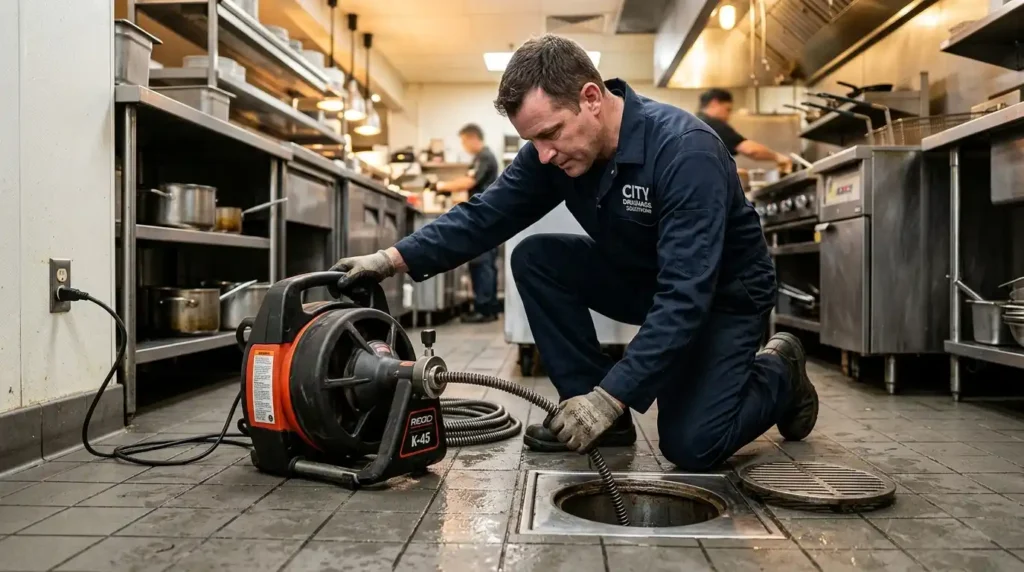
Commercial Drain Cleaning Service: What Every Business Owner Needs to Know
A commercial drain cleaning service is what stands between your business and a shift you’ll never forget for the wrong reasons. If you manage a restaurant, office building, retail space, or industrial facility, a slow floor drain or a gurgling sink isn’t a minor annoyance. It’s an early warning that your plumbing system is heading toward a backup that can shut the doors for a day, or longer. This guide covers what these services actually do, what they cost, how often you need them, and how to pick a company that won’t leave you dealing with the same clog again in three weeks.
What a Commercial Drain Cleaning Service Actually Involves
Commercial plumbing carries far more volume and far more waste than a home ever will. A restaurant kitchen alone can push hundreds of gallons of greasy wastewater through its drains every day, which is a different job than clearing a bathroom sink at home. A commercial drain cleaning service is built around that reality, using heavier equipment and a more structured process than a typical residential call.
Most jobs follow a similar sequence. A technician starts with an inspection, often a video camera run through the line, to find exactly where the blockage sits and what’s causing it. From there, they’ll choose mechanical clearing (a motorized drain snake or auger), high-pressure water jetting, or a combination of both, depending on what the camera shows. Once the line is clear, a good provider tests the drain under real flow conditions and talks through a maintenance schedule so you’re not calling back next month.
When Do You Need to Call One?
Call a commercial drain cleaning service as soon as you notice slow drainage in more than one fixture, a sour or sulfur-like odor near floor drains, or gurgling sounds when water runs. Any one of these on its own can wait for a scheduled visit. Two or more happening at once usually means a main line problem, and that’s worth an emergency call before it turns into standing water on your floor.
7 Signs Your Business Needs a Commercial Drain Cleaning Service
Most commercial drain emergencies don’t come out of nowhere. There are usually warning signs for days, sometimes weeks, before a full backup:
- Water draining slower than usual in sinks, floor drains, or toilets
- A foul, rotten-egg or sour smell coming from drains, even after cleaning
- Gurgling or bubbling noises when you run water nearby
- Fruit flies or gnats clustering around floor drains (a classic grease sign in kitchens)
- Water backing up into a different fixture when you flush or run another one
- Visible grease or oily film pooling near drain openings
- Frequent, repeat clogs in the same spot despite regular cleaning
If you’re seeing two or more of these, treat it as urgent rather than routine. A main sewer line problem rarely announces itself with a single clear symptom, and waiting almost always turns a same-day fix into an emergency call that costs more and shuts down part of your operation.
How Much Does Commercial Drain Cleaning Cost?
Pricing depends heavily on the size of the facility, the type of blockage, and whether the job needs to happen after hours. As a rough guide for 2026:
- Small commercial spaces (a single restaurant, retail shop, or small office): roughly $250 to $600 per visit
- Medium-sized properties (schools, medical offices, multi-unit buildings): about $500 to $1,200
- Large industrial sites or multi-building complexes: $1,000 to $5,000 or more, depending on line length and access
Hydro jetting typically adds $300 to $600 on top of a standard snaking visit, since it requires specialized equipment and more labor time. Camera inspections, when billed separately, usually run $100 to $300. Emergency or after-hours service commonly adds 50% to 100% to the base rate, which is the single biggest reason preventive maintenance contracts tend to pay for themselves. A business that schedules routine cleaning rarely pays emergency rates, because the clog never gets the chance to become a full backup in the first place.
Snaking, Hydro Jetting, and Camera Inspection: How the Work Gets Done
Not every clog calls for the same tool, and a provider that only offers one method probably isn’t the right fit for a commercial account.
Drain snaking (mechanical augering) uses a motorized cable to physically break up and pull out a blockage. It’s fast and affordable, and it’s the right call for straightforward clogs near the surface, like a single blocked floor drain.
Hydro jetting sends high-pressure water through the pipe to scour the walls clean, not just punch a hole through the clog. This is the method most commercial kitchens need for grease buildup, since a snake can push a hole through hardened grease without actually removing the coating that caused the clog in the first place.
Camera inspection isn’t a cleaning method on its own, but it’s often the step that saves money. Sending a camera down the line first tells the technician whether they’re dealing with grease, tree roots, a collapsed section of pipe, or a foreign object, so they don’t waste time on the wrong tool.
Businesses with recurring problems, particularly restaurants and food service operations, usually end up on a hybrid schedule: routine jetting on a set interval, with camera inspections every year or two to catch structural issues before they become expensive.
How Often Different Businesses Should Schedule Drain Cleaning
Anyone who has worked a dinner rush knows exactly how fast a slow floor drain in the dish pit turns into a five-alarm problem. Cleaning frequency isn’t one-size-fits-all. It depends heavily on what’s going down the drain in the first place.
- Restaurants and food service: Grease traps generally need service every 30 to 90 days, following the common “25% rule”: clean the trap once fats, oils, and grease fill about a quarter of its capacity. Kitchens with heavy fry or grill volume often land at the shorter end of that range, and many local health departments set a mandatory maximum interval regardless of how full the trap looks.
- Healthcare facilities: Quarterly to twice-yearly cleaning is typical, since hygiene standards leave little room for slow drains or odors.
- Offices and retail: Twice a year is usually enough for spaces without heavy kitchen or industrial use.
- Industrial facilities: Schedules are custom, built around production volume and what’s actually entering the waste stream.
Skipping a scheduled cleaning to save money almost never works out. A missed grease trap service, for example, doesn’t just risk a clogged sink. It can trigger a health code citation, a forced closure, or a fine from the local sewer authority if FOG makes it into the municipal system.
How to Choose a Commercial Drain Cleaning Service
Not every plumber who advertises commercial work actually specializes in it. A few questions separate the providers worth hiring from the ones that will leave you calling again next month:
- Do they carry equipment sized for commercial lines, including hydro jetting and camera inspection, or only residential-scale tools?
- Are their technicians licensed and trained to meet local plumbing codes and OSHA requirements?
- Can they offer true 24/7 emergency response, not just a call center that books you for the next business day?
- Will they document what they find, including camera footage or photos, so you have a record for compliance or warranty purposes?
- Do they offer a preventive maintenance contract, and what’s actually included in it?
A written scope before work begins is worth insisting on every time, especially for larger jobs. It’s the easiest way to avoid the on-site upsells that can quietly double a quote once a technician is already on-site and your business is already shut down. The right commercial drain cleaning service should feel less like a one-time emergency fix and more like an ongoing part of keeping your business running without interruption.
How do professionals clean commercial sewer lines?
The process typically starts with a camera inspection to locate and identify the blockage. From there, technicians use a motorized drain machine to break up debris and roots, followed by hydro jetting if grease or heavy buildup is involved. The line is tested under real water flow before the technician leaves.
Is hydro jetting safe for older commercial pipes?
In most cases, yes, when a licensed technician adjusts the water pressure for the pipe’s age and material. Older or already-damaged pipes sometimes call for a lower-pressure setting or a different method entirely, which is exactly why a camera inspection beforehand matters so much.
How much does emergency commercial drain cleaning cost compared to scheduled service?
Emergency and after-hours calls typically run 50% to 100% higher than a scheduled daytime visit. That gap is the main financial argument for a standing maintenance contract rather than waiting for a crisis.
Can I use chemical drain cleaners in a commercial kitchen?
Most plumbing professionals advise against it. Chemical cleaners can damage older commercial pipe lining, and they don’t remove the grease coating that causes repeat clogs. Enzyme-based maintenance products are a gentler option between professional visits, but they’re not a substitute for scheduled cleaning.