
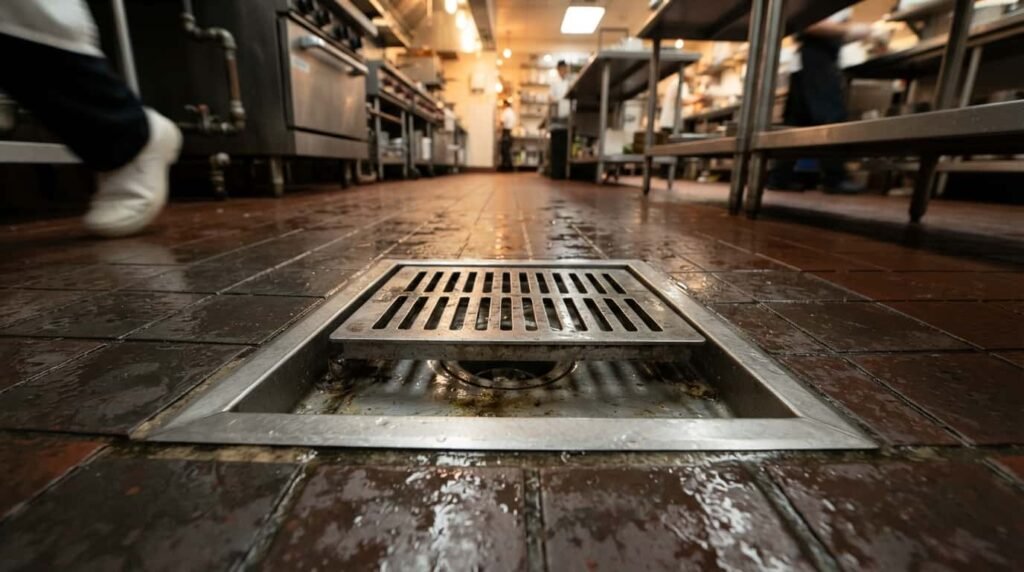
Commercial Drain Cleaning Services: What Every Kitchen Needs to Know
Commercial drain cleaning services cover the maintenance and emergency work that keeps drains, floor traps, grease interceptors, and sewer lines flowing in restaurants, retail stores, offices, and industrial buildings. If you run a commercial kitchen, you already know how fast a slow drain turns into a shut prep line, a failed health inspection, or standing water where your staff is trying to work. This guide walks through what these services actually include, how often a busy kitchen or facility should book them, the real difference between snaking and hydro jetting, what grease trap upkeep has to do with your drains, roughly what you’ll pay, and what to ask before you hire anyone. None of it is theoretical. It’s the same maintenance rhythm that keeps a working kitchen’s plumbing boring, which is exactly how you want it.
What Do Commercial Drain Cleaning Services Include?
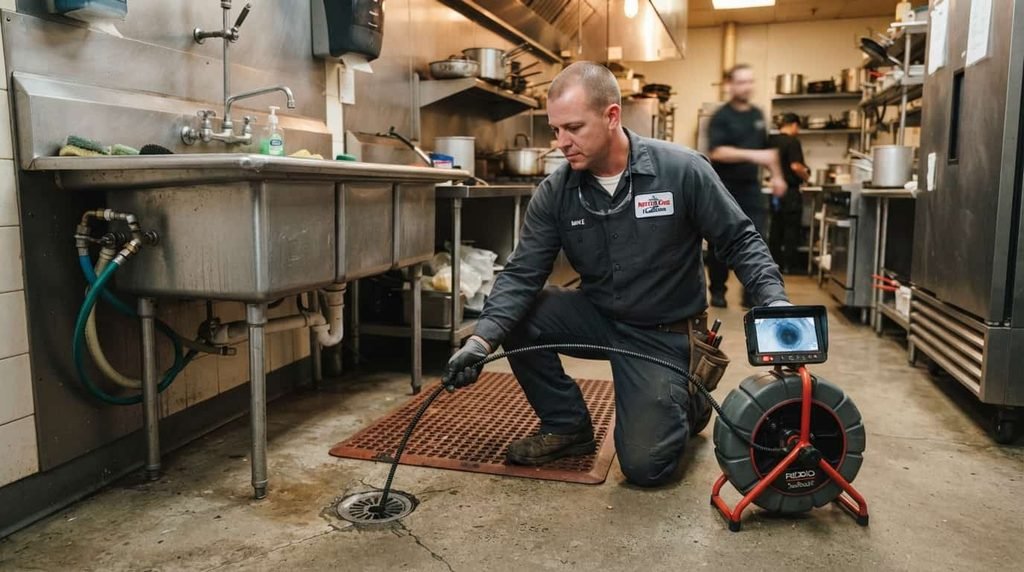
A commercial provider handles more than one clogged sink. A typical service call can cover kitchen, bathroom, and laundry drains, where grease, soap, and food debris build up fastest. It also covers main drains and sewer lines, the pipes carrying wastewater out of the building, along with floor and area drains that need regular attention to avoid pooling water. Roof drains and downspouts, parking lot drains, catch basins, and vent stack lines round out the list for larger properties.
Most commercial jobs start with a video camera inspection so the technician can see exactly where the blockage sits and how bad the buildup is before choosing a tool. Reputable companies send licensed, insured technicians and many offer 24 hour emergency response, since a backed up drain rarely waits for business hours. For a kitchen, that emergency piece matters more than almost anything else on the list. A clogged floor drain during dinner service isn’t a maintenance item, it’s a shutdown.
5 Signs Your Kitchen Drains Need Professional Attention
Most commercial drain problems announce themselves before they become emergencies. Watch for these:
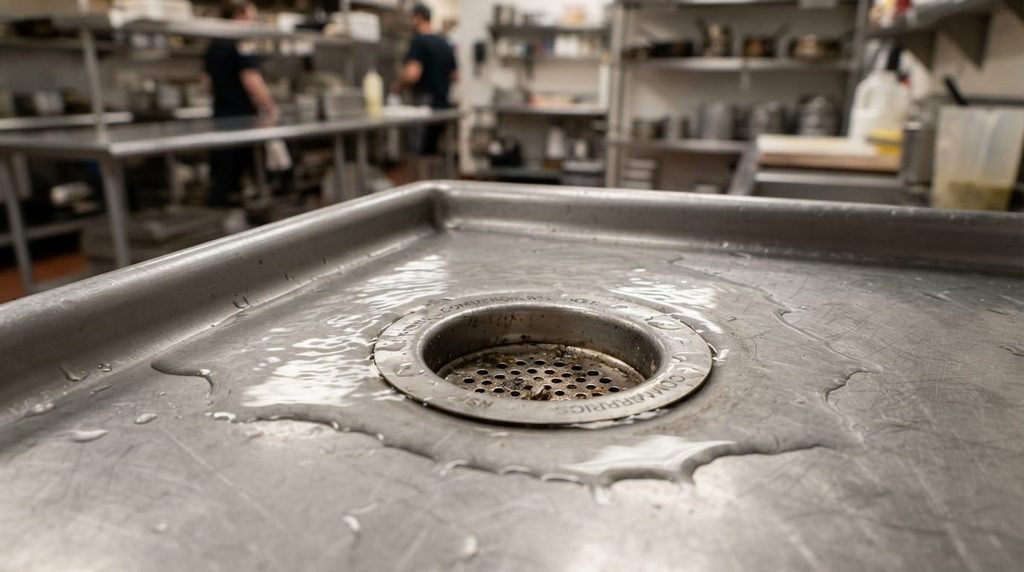
- Slow drainage. Water sitting in a sink or floor drain longer than it should usually means grease or food debris is narrowing the pipe.
- Recurring clogs. If the same drain clogs every few weeks, there’s sludge buildup that a plunger or store bought cleaner won’t fix.
- Gurgling or bubbling. Strange noises from a drain mean trapped air is fighting past a partial blockage, often deeper in the line than you can reach.
- Persistent odors. Bacteria feeding on trapped grease and food waste produce the smell. Masking it doesn’t remove it.
- Water backing up. Water rising in a sink, floor drain, or toilet instead of draining is a sign of a serious blockage, often in the main line, and it needs same-day attention.
Catching these early is what separates a routine cleaning from an emergency call at 9pm on a Friday.
How Often Should You Schedule Commercial Drain Cleaning?
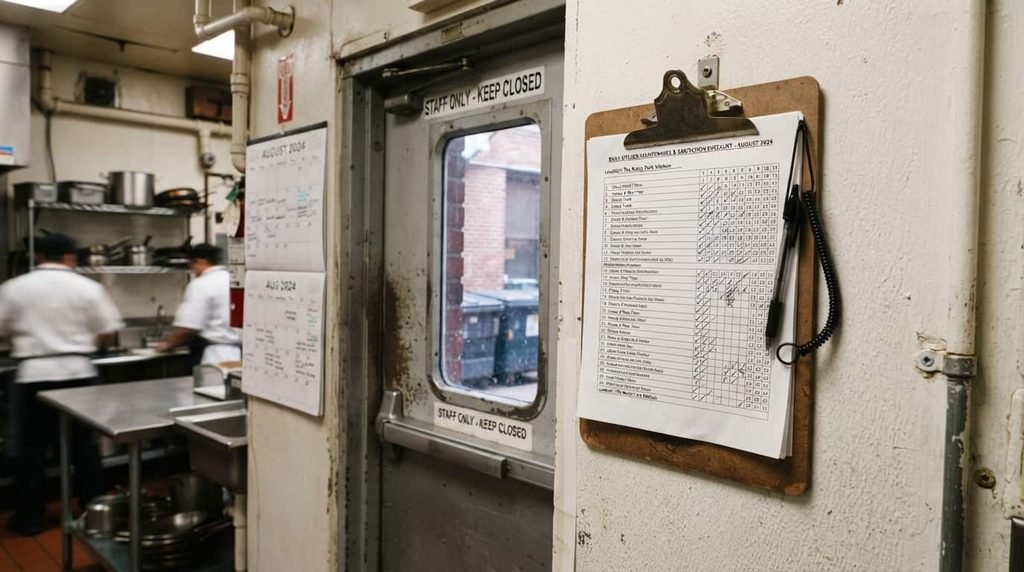
Most commercial properties should have drains professionally cleaned every three to six months, and high-volume kitchens or restaurants often need monthly or quarterly service instead. Lower-use spaces, like storage facilities or rarely occupied buildings, can typically stretch that interval to once a year.
The right cadence depends on what’s actually going down the drain. A restaurant kitchen running grease, food particles, and heavy dishwashing all day builds up debris far faster than an office bathroom. Facilities with a history of clogs, older plumbing, or floor drains near cooking equipment should lean toward the shorter end of that range. A short walkthrough with a plumber, looking at your fixtures and usage patterns, is usually enough to set a schedule that fits your building instead of guessing.
Snaking vs. Hydro Jetting for Commercial Drains
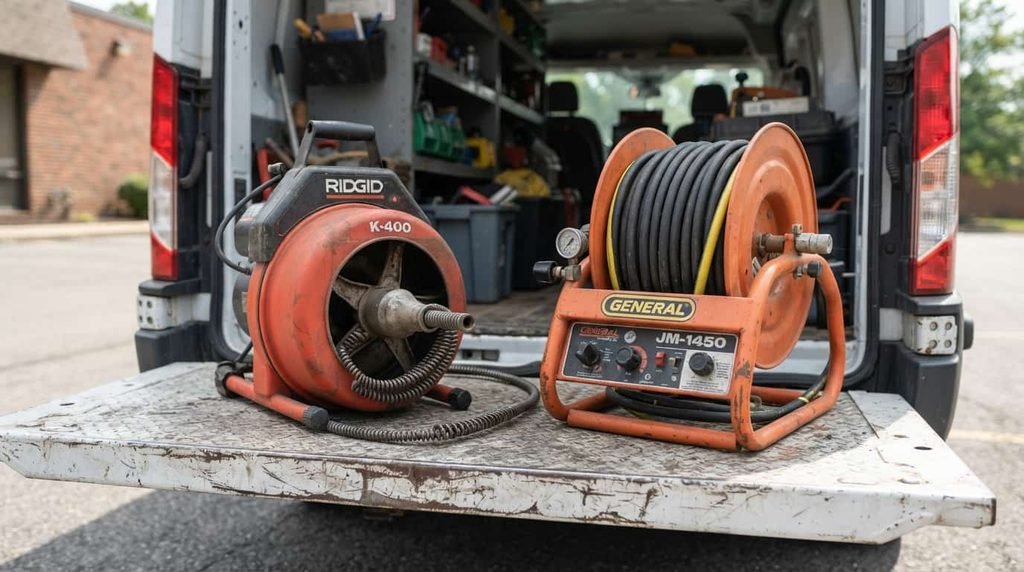
Commercial technicians rely on two main tools, and knowing the difference helps you understand what you’re paying for.
Drain snaking uses a flexible steel cable with a rotating cutting head to punch through a blockage. It’s fast, effective for a single clog, and usually the first response to an active backup. The tradeoff is that snaking clears a channel through the clog rather than cleaning the whole pipe, so buildup along the walls stays behind and clogs tend to return sooner.
Hydro jetting uses a hose fed into the line and connected to a pump that blasts water at 1,500 to 4,000 PSI. Instead of punching a hole, it scours the entire interior of the pipe, stripping grease, scale, and sludge from the walls. That’s why hydro jetting is the go-to for high-use kitchen lines, grease-heavy drains, and recurring clog situations. It typically keeps a line clear for two to three years, compared to a few months for repeat snaking. Technicians usually run a camera inspection first, since that much pressure isn’t safe on pipes that are already cracked or deteriorated.
For an occasional, isolated clog in sound pipes, snaking is usually the more cost-effective call. For a kitchen dealing with the same drain problem every few months, hydro jetting tends to pay for itself by cutting down on repeat visits.
Grease Traps and FOG Compliance for Restaurants
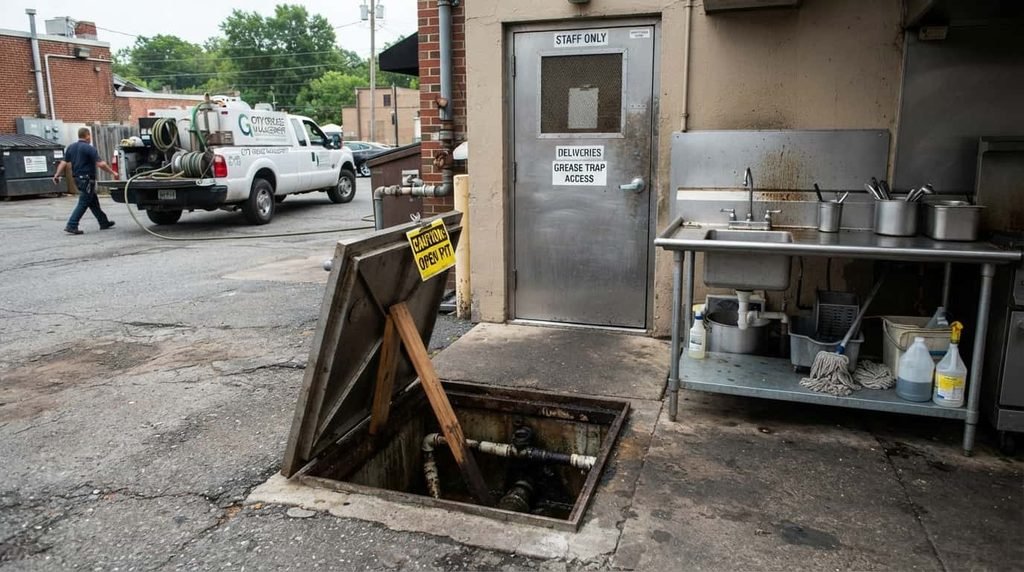
If you’re running any kind of food service operation, your drains and your grease trap are the same conversation. Fats, oils, and grease, usually shortened to FOG, are a normal byproduct of cooking, and they’re also the single biggest cause of commercial kitchen drain clogs and sewer backups. A grease trap or grease interceptor sits between your kitchen sinks and the sewer line specifically to catch FOG before it reaches the pipe.
Most municipalities legally require grease traps in food establishments, and most also require documented cleaning logs that a health inspector can request on the spot. A trap is generally due for cleaning once it’s about 25 percent full of grease, which for a typical point-of-use trap in a busy kitchen often works out to monthly service, while larger in-ground interceptors are commonly serviced quarterly. Skipping this isn’t just a drain issue. Neglected traps lead to floor drain backups, kitchen odors, pest problems, and in some cities, fines that run into the thousands.
Kitchen floor drains benefit from a daily habit too: pulling the grate, clearing food debris, and flushing with hot water at closing. It’s a small routine that noticeably slows how fast grease builds up between professional cleanings.
How often should a restaurant grease trap be cleaned?
Most point-of-use grease traps need cleaning about once a month, while larger in-ground grease interceptors are usually serviced quarterly. High-volume kitchens, like those running a fryer line all day, may need it more often, since cleaning frequency really depends on how much FOG the kitchen generates.
What’s the Best Way to Choose a Commercial Drain Cleaning Service?
Look for a licensed and insured provider that offers 24/7 emergency response, upfront flat-rate pricing, and a camera inspection before recommending hydro jetting. A company that answers those three things clearly, without pushing you toward the most expensive option first, is usually a safe bet.
Beyond that, ask how long they’ve worked with commercial or restaurant clients specifically, since kitchen plumbing behaves differently than a residential bathroom line. A provider comfortable with grease traps, floor drains, and health code documentation will save you time you’d otherwise spend explaining your own building.
What Commercial Drain Cleaning Services Cost
Pricing varies by region and severity, but general ranges hold up across most markets. Commercial drain snaking typically runs $150 to $300 per visit for a straightforward clog. Commercial hydro jetting is more involved and generally costs $500 to $2,500 or more, depending on pipe length, clog severity, and access. A standalone camera inspection, when it’s not bundled into the service, usually adds $200 to $400. Emergency or after-hours calls commonly add another 50 to 100 percent on top of standard rates.
It’s worth running the math over time rather than just comparing one invoice to another. Three snaking visits at $200 each adds up to $600 within a year, and the pipe is still coated and narrowing. One hydro jetting service at $800 to $1,200 that keeps the line clear for two to three years is often the cheaper option once you count the repeat calls it prevents.
Questions to Ask Before You Hire
A few direct questions upfront can save a lot of frustration later.
Who’s responsible for a clogged sewer line, my building or the city?
Generally, the municipality maintains the main sewer line under the street, while the property owner is responsible for the lateral line running from the building to that connection point. If wastewater is backing up inside your building, that’s almost always your responsibility to fix, not the city’s.
Can I do commercial drain cleaning myself?
Minor clogs in accessible fixtures can sometimes be handled with a plunger or a basic hand auger, but hydro jetting equipment is not safe for DIY use. Water at 1,500 to 4,000 PSI can cause serious injury and damage aging pipe joints if it’s used incorrectly, so that part of the job is worth leaving to a licensed technician.
What’s the difference between drain cleaning and a plumbing repair?
Drain cleaning removes a blockage or buildup so water flows normally again. A plumbing repair fixes something physically wrong with the pipe itself, like a crack, a break, or root intrusion. A camera inspection during a drain cleaning visit is often how a damaged pipe gets caught before it turns into a bigger repair.
A working kitchen runs on plumbing nobody thinks about until it stops working. Building a simple schedule around commercial drain cleaning services, paired with routine grease trap upkeep, is the difference between a five-minute maintenance visit and a closed kitchen on a Friday night. Get a few quotes from licensed local providers, ask the questions above, and set a cleaning cadence that actually matches how hard your drains work.


Pingback: Commercial Drain Cleaning Service: 2026 Guide