
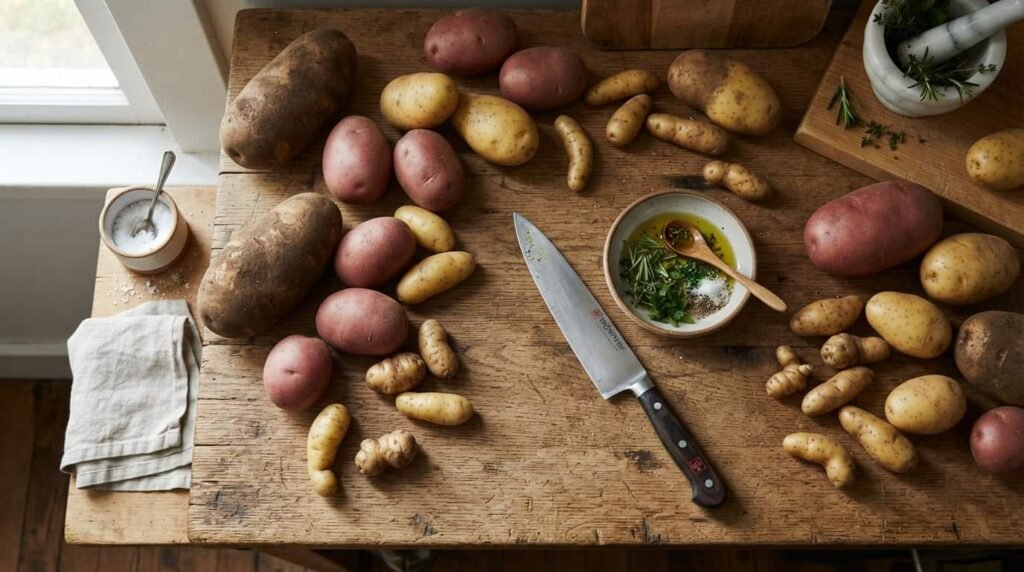
9 Ways to Cook Potatoes (And How to Pick the Right Method)
There are more ways to cook potatoes than most home cooks realize, and the method you choose changes everything about the final dish, from texture to how long dinner takes. Whether you want a crispy side in twenty minutes or a hands-off pot of mash, this guide breaks down the nine most useful ways to cook potatoes, which potato type works best for each one, and how to avoid the mushy, undercooked, or bland results that trip up so many kitchens.
I’ve tested every method below in my own kitchen more times than I can count, usually while figuring out what to do with a five-pound bag that was about to sprout. The short version: starchy potatoes like russets want dry heat, waxy potatoes like red or fingerling want moisture, and Yukon Golds are the flexible middle ground that work almost anywhere.
What’s the Best Way to Cook Potatoes?
There isn’t one single best method, it depends on what you’re making. For crispy edges and a fluffy center, oven-roasting at 425 to 450°F wins. For the fastest result, the microwave gets a potato tender in under ten minutes. For mashed potatoes or potato salad, boiling is still the standard. Match the method to the dish, not the other way around.
1. Oven-Roasted Potatoes
Roasting is the method most home cooks reach for first, and for good reason. High, dry heat caramelizes the potato’s natural sugars on the outside while keeping the inside creamy. Yukon Golds are the sweet spot here, though waxy red and fingerling potatoes roast well too. Skip starchy russets for roasting since they tend to fall apart into a soft pile instead of holding their shape.
Cut the potatoes into even pieces so they cook at the same rate, and don’t crowd the pan. A crowded baking sheet traps steam, and steam is the enemy of crispiness.
Basic method: Toss 1 to 2 pounds of halved or wedged potatoes with olive oil, salt, and pepper. Arrange them cut-side down in a single layer on a sheet pan. Roast at 450°F for 20 to 30 minutes, flipping once, until golden and fork-tender.
2. Baked Potatoes
Baking is different from roasting because the potato stays whole. This is where starchy russets shine, their high starch content breaks down into that fluffy, cloud-like interior that soaks up butter and sour cream so well. Poke a few holes in the skin before baking so steam can escape as it cooks; skip this step and you risk a genuine potato explosion in your oven.
Basic method: Preheat the oven to 400°F. Prick each potato a few times with a fork and place directly on the oven rack. Bake for 40 to 60 minutes, until a knife slides in easily. For a shortcut, microwave for 5 minutes first, then finish in the oven for 20 to 30 minutes.
3. Boiled Potatoes
Boiled potatoes get a bad reputation for being bland on their own, but that’s actually their strength. Once the excess starch is drawn out in the water, the potato becomes a blank canvas that soaks up whatever you pair it with, whether that’s a tangy potato salad dressing or the butter and cream in a batch of mash. Waxy and Yukon Gold potatoes hold their shape best in the pot; starchy russets are more prone to falling apart.
Basic method: Cover potatoes with about 2 inches of cold, salted water. Bring to a boil, then reduce to a simmer and cook until fork-tender, roughly 10 to 30 minutes depending on size. Starting in cold water instead of dropping potatoes into already-boiling water helps them cook more evenly all the way through.
4. Air-Fryer Potatoes
An air fryer is essentially a small, powerful convection oven, and it’s become one of the fastest ways to get roasted-style crispiness without heating up a full oven. The same potato guidelines from roasting apply: Yukon Golds and waxy varieties work best, and starchy russets are more likely to turn mushy inside the basket.
The one rule that actually matters here is not overcrowding the basket. Potatoes need room for hot air to circulate around them, so cook in batches if needed rather than piling everything in at once.
Basic method: Toss cut potatoes with a light coating of oil and seasoning. Air-fry at 400°F for 15 to 20 minutes, shaking the basket every 5 minutes, until golden and tender.
5. Instant Pot and Pressure Cooker Potatoes
A pressure cooker is the closest thing to a hands-off way to cook potatoes. Because it needs added liquid to build pressure, this method won’t give you crispy edges, but it’s excellent for boiled potatoes, mashed potatoes, or a whole baked-style potato in a fraction of the usual time.
Basic method: Add 1 to 1.5 pounds of halved baby potatoes and 1 cup of water or broth to the pot. Seal the lid and cook on high pressure for 12 minutes, then quick-release. Drain and toss with butter and herbs.
6. Microwaved Potatoes
When time is genuinely short, the microwave is the fastest way to cook potatoes, full stop. It won’t produce a crispy skin, but it’s a legitimate shortcut for softening potatoes before finishing them in the oven, air fryer, or skillet, and it works fine as a standalone method for a quick weeknight side.
Basic method: Prick a whole potato a few times and microwave on high for 5 to 6 minutes for a medium potato, flipping halfway. For cut pieces, place them in a microwave-safe dish with a splash of water, cover partially, and microwave for 3 to 5 minutes until tender.
7. Steamed Potatoes
Steaming sits between boiling and roasting: potatoes cook in hot vapor rather than submerged water, which means fewer water-soluble nutrients like vitamin C and B vitamins get lost compared to boiling. It’s a favorite for waxy potatoes that need to hold their shape for a salad or side dish.
Basic method: Fill a pot with an inch or two of water and bring to a boil. Place potatoes in a steamer basket above the waterline, cover, and steam for 15 to 20 minutes until tender. A drizzle of olive oil and fresh herbs after steaming adds flavor without extra fat.
8. Pan-Fried and Sautéed Potatoes
Pan-frying gives you crispy, golden edges in a skillet, which makes it a solid choice for breakfast hash or quick side dishes when the oven feels like overkill. Par-boiling the potatoes first, even for just a few minutes, helps them crisp up faster and more evenly once they hit the hot oil.
Basic method: Heat oil in a skillet over medium-high heat. Add diced or sliced potatoes in a single layer and let them sit undisturbed for a few minutes before flipping. Cook 10 to 15 minutes total, stirring occasionally, until golden and tender throughout.
Choosing the Right Potato for Each Method
Not every potato behaves the same way once it hits heat, and matching the variety to the method makes a bigger difference than most recipes let on.
- Starchy potatoes (russet, Idaho): best for baking, mashing, and French fries. High starch content means a fluffy interior but a tendency to fall apart when boiled or roasted.
- Waxy potatoes (red, new, fingerling): best for boiling, steaming, roasting, and potato salad. They hold their shape well and have a firmer, creamier bite.
- All-purpose potatoes (Yukon Gold): the most flexible option, they roast, mash, and boil well, which makes them a safe default when a recipe doesn’t specify.
However you decide to cook your potatoes tonight, the biggest lesson from testing all of these methods side by side is that there’s no single wrong choice, just a better fit for whatever you’re serving them with. Start with the potato you already have in the pantry, match it to the method above, and go from there.
Common Questions About Cooking Potatoes
Should you peel potatoes before cooking?
It depends on personal preference more than anything else. Even with the skin left on, a potato keeps most of its nutrients, and the skin itself adds fiber and extra potassium. Roasted and baked potatoes often turn out crispier with the skin left on, so unless a recipe specifically calls for peeling, leaving it on is usually the easier and more nutrient-friendly choice.
What’s the healthiest way to cook potatoes?
Baking a potato whole with the skin on is generally considered the healthiest approach, since it uses no added water or oil and keeps nutrient loss to a minimum. Boiling and steaming come next, though boiling does pull some water-soluble vitamins into the cooking water. Frying adds the most extra calories and fat, so it’s better saved as an occasional treat than an everyday habit.
How long does it take to cook a potato?
Cooking time depends heavily on the method and the size of the potato. A whole baked russet takes 40 to 60 minutes in the oven, while the same potato cooks in 5 to 6 minutes in the microwave. Cut, boiled pieces are usually done in 10 to 20 minutes, and roasted or air-fried wedges typically take 20 to 30 minutes.
Can you cook potatoes without oil?
Yes. Baking, boiling, steaming, and microwaving all cook potatoes without any oil at all. Even roasting and air-frying can be done with just a splash of water or broth instead of oil, though the texture will be softer rather than crispy.

Pingback: How to Freeze Zucchini So It Doesn't Turn Mushy - kitchennista.com
Pingback: Ina Garten Potato Salad: Why the Buttermilk Trick Works