
How to Freeze Zucchini Without Getting Mushy
If your zucchini harvest suddenly gives you more squash than you can cook, freezing is one of the easiest ways to save it. The catch is that zucchini contains a lot of water, so simply cutting it up and tossing it into a freezer bag usually leads to soft, watery pieces later.
The good news is that you don’t need complicated equipment. For zucchini slices and cubes, a quick blanch followed by an ice bath gives you a much better result. For shredded zucchini destined for bread, muffins, or cake, you can skip blanching and focus on removing excess moisture.
I’ve found that the biggest difference isn’t actually the freezer itself. It’s what happens before the zucchini goes into the freezer: choosing firm squash, cutting it for its eventual use, stopping the cooking quickly, and getting the surface as dry as possible.
Here’s how to freeze zucchini in a way that makes sense for the recipe you’ll eventually make.
What’s the Best Way to Freeze Zucchini?
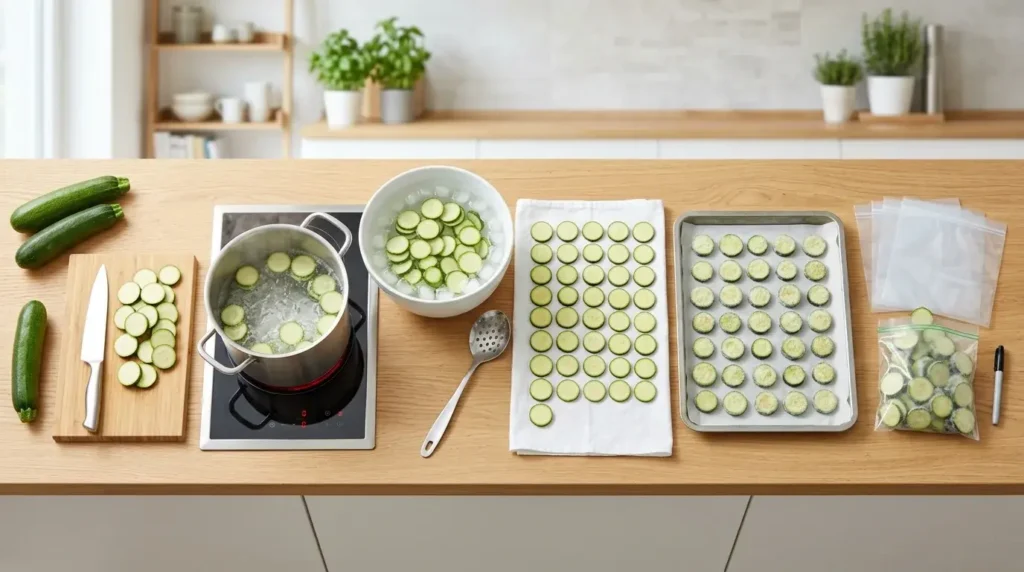
For zucchini that you want to use in soups, stews, casseroles, or cooked vegetable dishes, the most reliable method is:
- Wash and cut the zucchini.
- Blanch the pieces briefly in boiling water.
- Cool them immediately in ice water.
- Drain and dry them thoroughly.
- Freeze the pieces in a single layer.
- Transfer them to airtight freezer bags or containers.
Blanching briefly heats the zucchini enough to slow the enzyme activity that contributes to changes in color, flavor, and texture during frozen storage. The ice bath is just as important because it stops the cooking process.
There is one important exception: zucchini you’re freezing specifically for baking doesn’t need the same treatment. Shredded zucchini can be frozen without blanching because it will eventually be mixed into a batter and baked.
That distinction makes the whole process easier. Don’t prepare every batch of zucchini the same way. Freeze it according to how you’re actually going to use it.
What Kind of Zucchini Freezes Best?
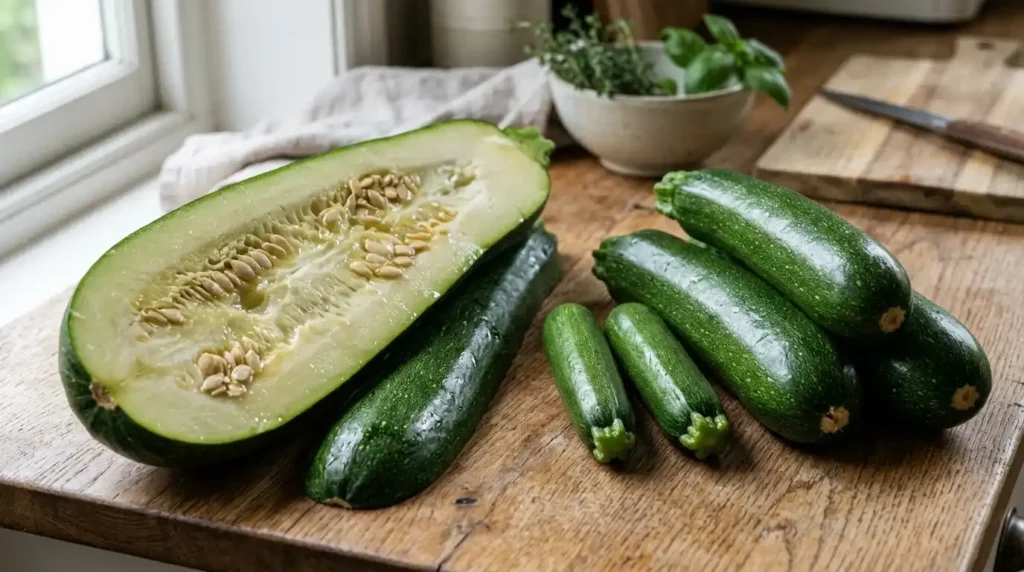
Fresh, firm zucchini gives you the best starting point.
Look for squash with:
- Firm flesh
- Smooth, unblemished skin
- No soft or sunken spots
- A fresh appearance rather than wrinkled skin
- Relatively small to medium size when possible
Small and medium zucchini are particularly convenient because they usually have fewer large seeds and a less watery center.
That doesn’t mean oversized garden zucchini has to go to waste. Large squash can still be frozen, but the center often becomes more fibrous and watery. Cut the zucchini lengthwise and scoop out the soft, seedy middle before slicing or shredding it.
This is one of those small preparation steps that pays off later. If the center already looks like a watery sponge, freezing won’t improve it.
How to Freeze Zucchini Slices Step by Step
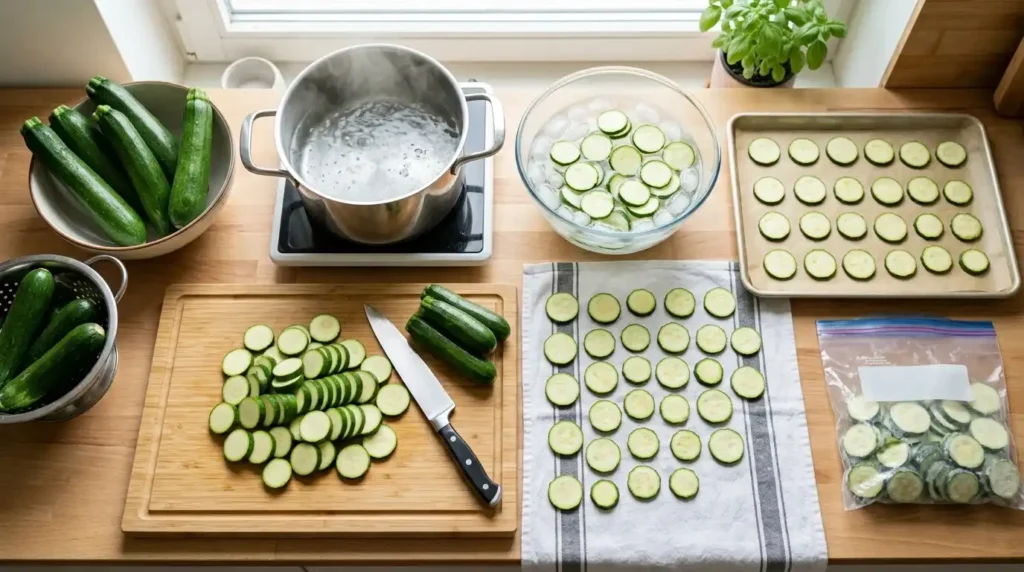
This is the method I’d use when I want recognizable zucchini pieces later rather than zucchini that disappears into a recipe.
1. Wash and Trim the Zucchini
Rinse the zucchini under cool running water and gently remove any dirt from the skin.
Trim off both ends. You can leave the skin on; there is generally no reason to peel fresh zucchini before freezing.
Cut the squash into the shape that fits your future meals. Half-inch rounds work well for many dishes, while half-moons or cubes can be more practical for soups and casseroles.
Think about this before cutting everything. If you usually make vegetable soup, cubes may be more useful than rounds. If you sauté zucchini as a side dish, slices may make more sense.
2. Blanch the Pieces
Bring a large pot of water to a full boil.
Add the prepared zucchini in manageable batches. The goal is to heat the pieces quickly without leaving them in the pot long enough to cook them through.
For sliced or chopped zucchini, about 1 to 2 minutes is generally enough, depending on the size of the pieces. The zucchini should still be firm when you remove it.
Don’t wait for it to become tender enough to eat. You’re preparing it for the freezer, not finishing the cooking process.
A common mistake is putting too much zucchini into a small pot. The water temperature can drop significantly, making the timing less predictable. Use plenty of water and work in batches if necessary.
3. Move It Straight Into an Ice Bath
As soon as the blanching time is up, remove the zucchini and place it into a large bowl of ice water.
This is called shocking the vegetables. It rapidly cools them and prevents residual heat from continuing to cook the zucchini.
Leave the pieces in the ice water for roughly as long as they were in the boiling water, then drain them.
If you’re tempted to skip this step because it seems like extra work, don’t. Overcooking before freezing is one of the easiest ways to start with soft zucchini.
4. Dry the Zucchini Really Well
Drain the zucchini and spread it over clean kitchen towels or several layers of paper towels.
Gently pat the pieces dry.
This step is easy to underestimate. Water sitting on the outside of the zucchini freezes into additional ice. More surface ice means more moisture to deal with when the zucchini eventually thaws.
You don’t need to make the zucchini bone-dry inside. The goal is to remove as much loose water from the surface as practical.
5. Flash-Freeze the Pieces
Line a baking sheet or tray with parchment paper.
Spread the zucchini across the tray in a single layer. Try not to let the pieces pile on top of each other.
Place the tray in the freezer until the pieces are firm, usually around 1 to 3 hours depending on the amount and your freezer.
Flash-freezing has a practical advantage: the zucchini pieces stay separate instead of freezing together into one large block.
That means you can remove one cup for dinner without having to break apart a frozen mass.
6. Pack, Remove Air, and Label
Once the zucchini is frozen solid, transfer it to freezer bags or airtight freezer containers.
Press out as much excess air as you reasonably can before sealing the bag. If you’re using a container, leave appropriate headspace rather than cramming it completely full.
Write the date on the package.
It sounds basic, but labels become surprisingly useful after a few months. A freezer full of identical bags makes it difficult to remember which batch was packed first.
How to Freeze Shredded Zucchini for Bread and Muffins
Shredded zucchini is a different situation.
If you’re freezing it for zucchini bread, muffins, cakes, fritters, or similar recipes, blanching usually isn’t necessary. The zucchini will be cooked later, and maintaining the texture of individual pieces isn’t the goal.
1. Wash and Trim
Wash the zucchini and cut off both ends.
For very large zucchini, cut it open and remove the soft, seedy center before shredding.
2. Shred It
Use a box grater or food processor to shred the zucchini.
There’s no need to turn it into a puree. Medium shreds are usually easier to portion and handle later.
3. Remove Excess Moisture
Place the shredded zucchini in a clean kitchen towel, cheesecloth, or fine strainer and press out some of the liquid.
You don’t necessarily want to squeeze every drop of moisture out at this stage. The right amount depends on how the zucchini will be used.
The important thing is to avoid freezing a bag filled with shredded zucchini floating in a large amount of free liquid.
4. Freeze in Recipe-Size Portions
This is where a little planning saves work later.
If your favorite zucchini bread uses about two cups of shredded zucchini, freeze the zucchini in two-cup portions.
Place each portion into a freezer bag, flatten it into a thin layer, remove excess air, and seal.
Flat bags freeze faster and stack neatly. More importantly, you can break off or thaw exactly the amount you need instead of defrosting the entire harvest.
5. Thaw and Drain Before Baking
When you’re ready to bake, thaw the shredded zucchini.
It may release additional liquid as it thaws. Drain or squeeze out excess moisture before adding it to your batter.
The amount of liquid you remove matters because adding a large quantity of extra zucchini water can change the consistency of a baking recipe.
Can You Freeze Zucchini Without Blanching?
Yes. You can freeze raw zucchini without blanching it.
The question is whether that’s the best method for what you plan to cook.
Raw-frozen zucchini generally loses more of its fresh texture than properly blanched zucchini. Once thawed, it can be noticeably softer and wetter.
That’s not necessarily a problem if you’re going to blend or thoroughly cook it.
Raw freezing can make sense for:
- Smoothies
- Purées
- Sauces
- Soups that will be blended
- Some baked recipes
- Other dishes where the original zucchini texture isn’t important
If you want zucchini pieces that still hold their shape reasonably well in a cooked dish, blanching is the better preparation.
So the shortcut isn’t wrong. It just comes with a texture tradeoff.
Should You Freeze Zucchini Raw or Blanched?
| Method | Best For | Main Advantage | Main Drawback |
|---|---|---|---|
| Blanched slices | Soups, casseroles, cooked dishes | Better quality during storage | Takes more preparation |
| Raw slices | Quick cooking or blended dishes | Fast and simple | Softer texture |
| Shredded raw | Bread, muffins, cakes | Easy to portion | Must manage moisture after thawing |
| Frozen zoodles | Emergency use | Convenient | Usually very soft after thawing |
The most useful question isn’t “Which method is best?”
It’s “What am I going to make with this zucchini?”
That answer should determine how you prepare it.
How Long Does Frozen Zucchini Last?
For best quality, aim to use frozen zucchini within several months rather than treating the freezer as permanent storage.
Proper packaging makes a major difference. Zucchini that is well sealed and protected from air will generally retain its quality better than zucchini sitting in a loosely closed bag.
Over time, frozen vegetables can develop freezer burn. Freezer-burned zucchini isn’t automatically unsafe, but the affected areas may have a dry, tough texture and weaker flavor.
For that reason, write the freezing date on every package and use older batches first.
If you have a large harvest, freeze it in smaller portions rather than putting everything into one enormous bag. You’ll get better day-to-day convenience and won’t repeatedly expose the entire batch to warm air while searching for what you need.
Do You Need to Thaw Frozen Zucchini?
Not always.
For soups, stews, casseroles, and many cooked dishes, frozen zucchini can go straight into the pot or pan.
Adding it frozen can actually be more convenient because you don’t have to deal with a bowl of watery thawed zucchini on the counter.
For sautéing, add the frozen zucchini to a hot pan and give the released moisture time to evaporate. Don’t expect the pieces to behave exactly like fresh zucchini. Frozen zucchini will generally be softer.
For shredded zucchini used in baking, thaw it first and drain excess liquid before adding it to the batter.
How to Use Frozen Zucchini
Frozen zucchini works particularly well in recipes where tenderness is expected.
Soups and Stews
Add frozen zucchini directly to simmering soups or stews. Since the pieces will soften as they cook, this is one of the easiest ways to use a large freezer stash.
Casseroles
Frozen zucchini can work well in casseroles, but remember that it may release moisture during cooking. If the recipe is already very wet, avoid adding unnecessary thawing liquid.
Stir-Fries and Sautéed Dishes
You can cook frozen zucchini in a hot skillet, but don’t crowd the pan. A crowded pan traps steam and makes it harder for excess water to evaporate.
For better browning, use a wide pan and cook in smaller batches.
Zucchini Bread and Muffins
Thawed shredded zucchini is ideal here. Drain excess liquid after thawing, then follow your recipe.
Smoothies
Frozen zucchini can go directly into a blender. Because the texture changes after freezing, smoothies are a good place to use zucchini that wouldn’t be appealing as a standalone vegetable.
What About Freezing Zucchini Noodles?
You can freeze zucchini noodles, but don’t expect them to come back with the firm texture of freshly spiralized zucchini.
Zoodles contain a lot of water, and freezing damages their delicate structure. After thawing, they can become soft and limp.
If you have leftover zoodles and don’t mind a softer result, freezing can still prevent waste. They are more suitable for cooked dishes than for recipes where you want crisp, noodle-like texture.
If your goal is fresh-tasting zoodles, spiralizing zucchini shortly before cooking is the better approach.
Common Mistakes That Make Frozen Zucchini Mushy
Blanching for Too Long
The zucchini should only be briefly heated. If you cook it until tender before freezing, the freezer won’t somehow restore its firmness.
Skipping the Ice Bath
Removing blanched zucchini from boiling water isn’t enough. Residual heat continues cooking the pieces.
Freezing Wet Zucchini
Surface water becomes ice. Excess ice means more moisture when the zucchini thaws.
Freezing Everything in One Big Bag
A giant frozen block is difficult to portion and can encourage repeated thawing and refreezing.
Leaving Too Much Air in the Package
Air exposure increases the chance of freezer burn and quality loss. Press out excess air from freezer bags before sealing.
Freezing Oversized Zucchini Without Preparing the Center
Large zucchini can have a soft, seedy middle. Removing that portion before freezing usually gives you more useful pieces later.
Expecting Frozen Zucchini to Taste Fresh
This is probably the most important expectation to set.
Freezing is a preservation method, not a way to pause zucchini at exactly its fresh-from-the-garden texture. Even when you prepare it carefully, thawed zucchini will generally be softer.
Use frozen zucchini where that texture works in your favor.
The Simple Freezing Routine That Works
If you’re standing in the kitchen with more zucchini than you know what to do with, don’t overcomplicate it.
For slices and cubes, blanch briefly, cool immediately in ice water, dry thoroughly, flash-freeze on a tray, and then package in airtight portions.
For shredded zucchini, skip the blanching, remove excess moisture, portion it according to your favorite baking recipes, and freeze it flat.
And for both methods, label the bags with the date.
The best frozen zucchini isn’t the batch that spends the most time being prepared. It’s the batch prepared specifically for the meal you plan to make later. Once you start freezing it in useful portions instead of treating the whole harvest as one giant freezer project, dealing with a bumper crop becomes much easier.
Can you freeze zucchini raw?
Yes. Raw zucchini can be frozen, but it generally becomes softer after thawing. For slices that you want to use in cooked dishes, blanching first usually gives better quality.
Do you peel zucchini before freezing?
Usually, no. The skin can stay on fresh zucchini. Just wash it well and trim the ends.
For very large zucchini, removing the soft, seedy center can be more useful than peeling the skin.
Can you freeze shredded zucchini without blanching?
Yes. Shredded zucchini intended for bread, muffins, or other baked goods can be frozen without blanching. Remove excess moisture, portion it according to your recipes, and freeze it in airtight packaging.
Can frozen zucchini be cooked without thawing?
Yes. Frozen zucchini can usually go directly into soups, stews, casseroles, and other cooked dishes. Shredded zucchini for baking should generally be thawed and drained first.
Can you freeze zucchini noodles?
Yes, but the texture will usually become softer and less noodle-like. Frozen zoodles are better suited to cooked dishes than recipes that depend on fresh, firm noodles.
Why does my frozen zucchini turn mushy?
The main causes are overcooking during blanching, skipping the ice bath, freezing zucchini with too much surface moisture, or expecting frozen zucchini to retain the texture of fresh zucchini.
The type of zucchini matters too. Large, watery squash naturally starts with a softer texture than young, firm zucchini.