Who Invented Orange Chicken? The Real Story Behind the Dish
Who invented orange chicken? The dish came from Chef Andy Kao, a Taiwanese-born, French-trained cook working for Panda Express, who created it in 1987 at the chain’s first Hawaii location. It wasn’t copied from a Chinese restaurant menu or handed down through generations. It was built on the spot, in a mall food court kitchen, and it went on to become the most-ordered dish at the largest Chinese restaurant chain in America. Here’s how one chef’s experiment with citrus and fried chicken turned into a fixture of American dinner tables.
Who Invented Orange Chicken?
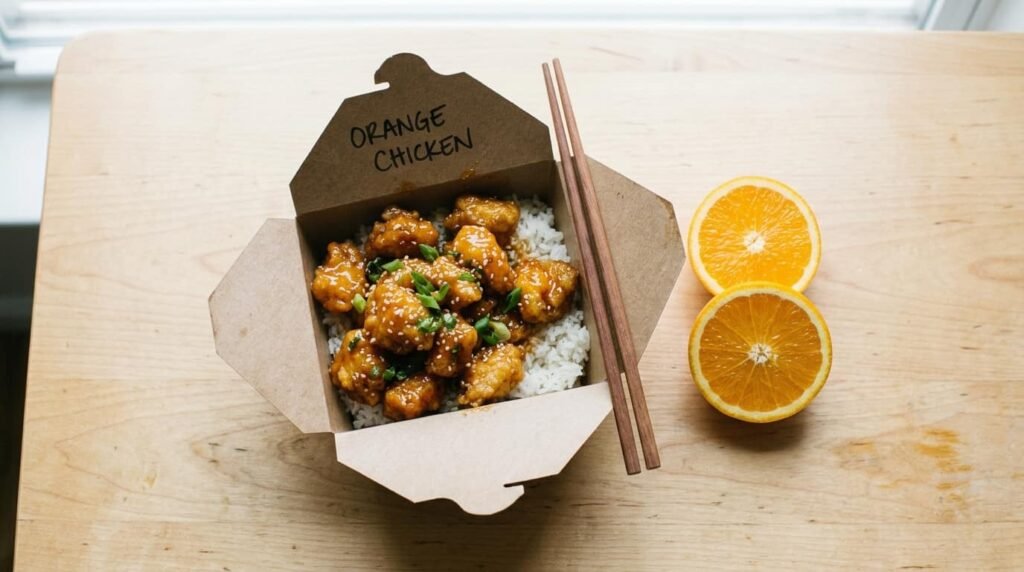
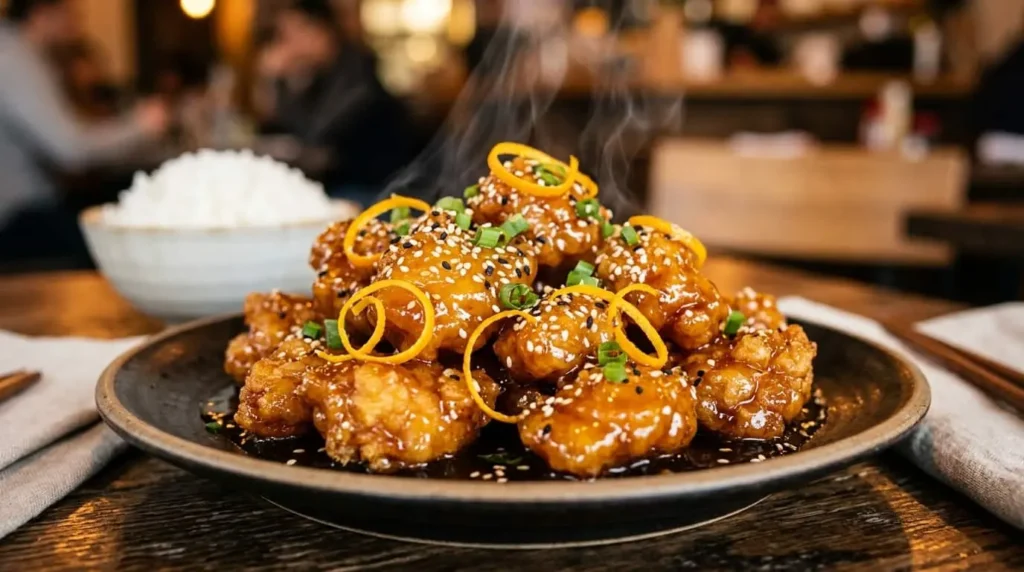
Orange chicken was invented by Chef Andy Kao for Panda Express in 1987, at the company’s first restaurant outside California, inside Hawaii’s Ala Moana Center. Kao based the dish on a tangy, spicy tangerine chicken from China’s Hunan province, then reworked it with the same boneless, battered, and fried technique the chain already used for its General Tso’s chicken. The result was sweeter, less spicy, and built for American tastes from day one.
The Chef Who Actually Created It
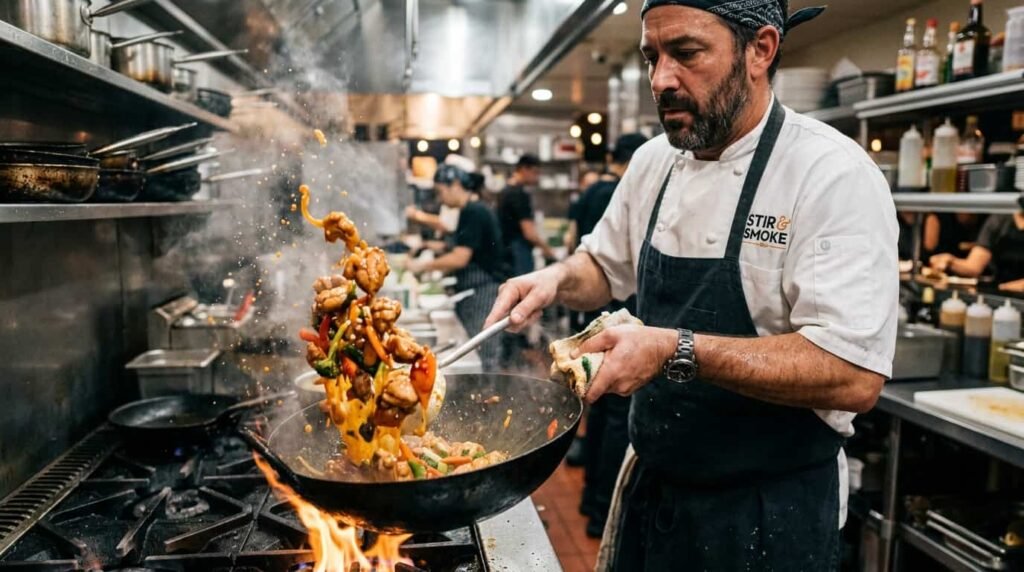
Andy Kao is the answer most food writers and even Panda Express itself point to when this question comes up. He was Panda Express’s executive chef in 1987, sent to Hawaii to help open the chain’s first location outside its California home base. Panda Express co-founder Andrew Cherng has described orange chicken as a variation on General Tso’s chicken, a dish the company was already serving. Kao took that same frying technique and paired it with a completely different sauce.
Kao’s inspiration wasn’t a memory of home cooking. It was a specific regional dish: a sour, citrusy tangerine chicken from Hunan province that he’d encountered and wanted to adapt. He started by serving a bone-in version in Hawaii, closer to the traditional preparation, and it caught on quickly. Once he switched to boneless, battered, deep-fried chicken pieces, coated in a thick, sweet orange glaze, the dish took the shape people recognize today.
Why Hawaii, Not Mainland China or California?
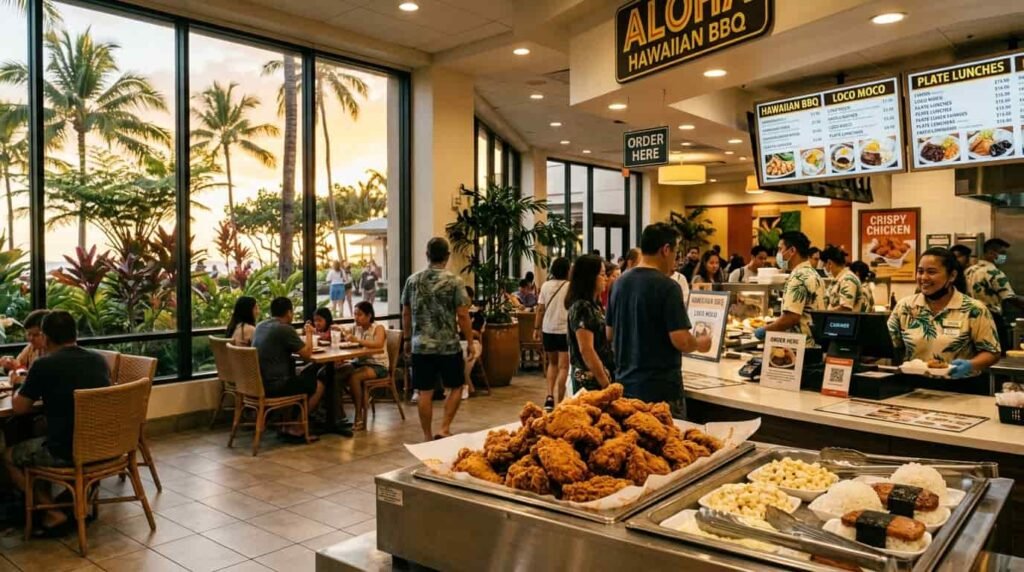
It’s a fair question, and it trips up a lot of people searching for this topic. Orange chicken wasn’t invented in a Chinese restaurant in China, and it wasn’t invented at Panda Express’s original Southern California locations either. It came together during the chain’s 1987 expansion into Hawaii, where Kao was working to launch the Ala Moana Center store.
Hawaii’s food culture likely shaped the dish more than people realize. Some accounts trace an early influence back to mochiko chicken, a Hawaiian fried chicken dish, which may have shaped the initial texture and format before Kao layered in the citrus sauce. Combine that local influence with Hunanese flavor inspiration and General Tso’s frying method, and you get a dish that’s really a three-way fusion: Chinese regional cooking, Hawaiian technique, and American flavor preferences, all filtered through one chef’s kitchen.
From Tangerine Chicken to Orange Chicken: What Changed
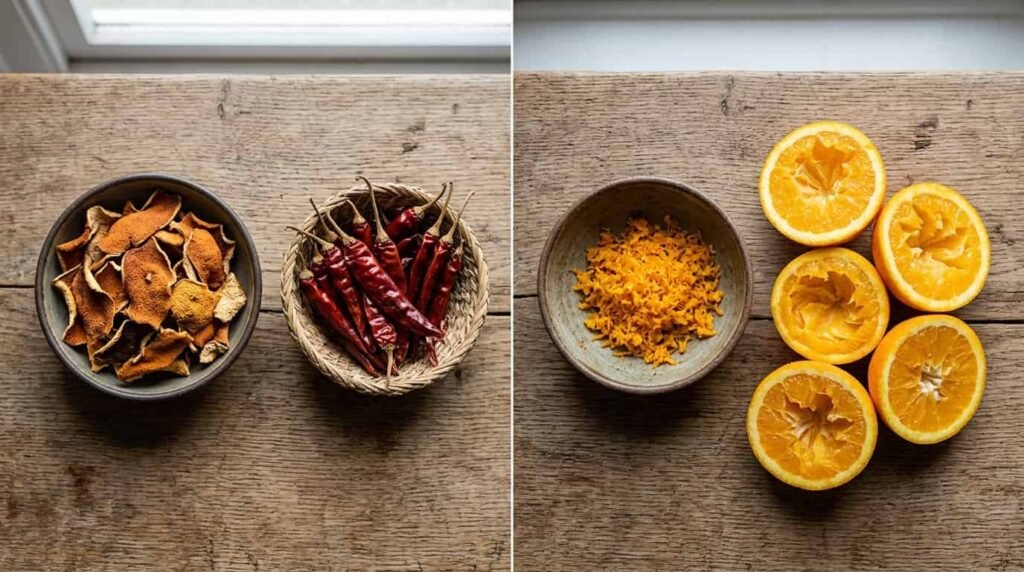
The dish Kao was riffing on has a real name and a real history. In Chinese, it’s called chen pi ji, which translates to “dried citrus peel chicken,” and it’s associated with Hunan cooking. That original dish uses dried tangerine or orange peel, prized in Chinese cooking (and in traditional Chinese medicine) for its concentrated, slightly bitter aromatic quality. It’s meant to taste fresh and sharp, with real heat.
American orange chicken swapped almost every one of those qualities. Dried peel gave way to fresh orange juice or zest, sometimes both. The spice level dropped substantially. The sauce went from a light, vinegar-forward glaze to a thick, sugary coating that clings to deep-fried chicken pieces. None of this happened by accident. Kao built the sweetness in deliberately, because it tested well with American diners who weren’t used to the more restrained, savory-sour profile of the original.
Is Orange Chicken Real Chinese Food?
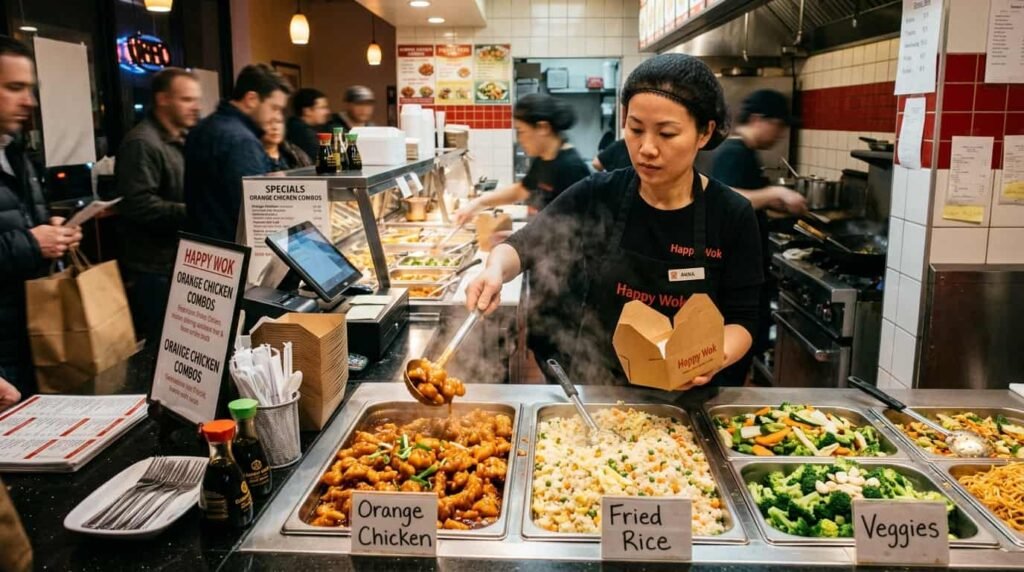
Here’s the direct answer: no, not in the way most people mean when they ask. Orange chicken is barely found on menus in mainland China, and when Chinese diners have been shown the dish, reactions have ranged from confusion to outright rejection of the idea that it’s Chinese food at all. It belongs to a category called American Chinese cuisine, which is its own culinary tradition with roots going back roughly 160 years, to the first wave of Chinese immigrants who opened “chow chow” restaurants in California during the Gold Rush era.
That doesn’t make orange chicken fake, though, and it’s worth pushing back on that framing. Panda Express’s own head chef of culinary innovation has argued that the dish is authentic to a different experience entirely: the immigrant experience and the American Chinese food experience specifically. For millions of Americans, orange chicken was their first real exposure to anything resembling Chinese cooking, and that cultural footprint is genuine even if the recipe itself is an invention. Chinese American food, chop suey included, has always evolved by adapting to the ingredients and palates available in a new country. Orange chicken just happens to be the most successful example of that pattern in the last 40 years.
Orange Chicken vs. General Tso’s Chicken: What’s the Difference?
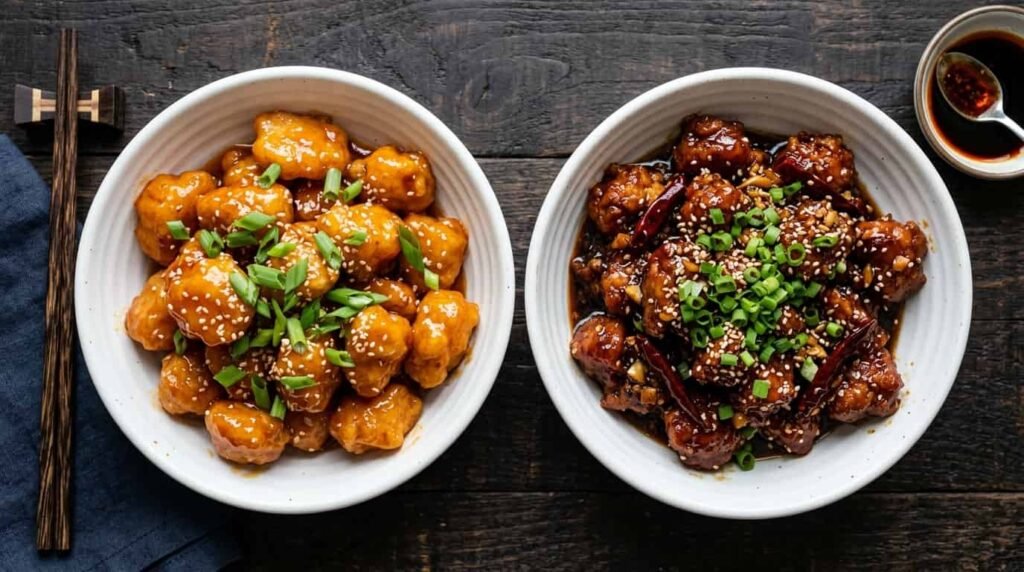
Since Panda Express describes orange chicken as a spinoff of General Tso’s chicken, it’s worth breaking down how the two actually differ, because the base preparation is nearly identical.
The chicken itself: Both dishes typically start with chicken pieces marinated, coated in a cornstarch or egg-white batter, and deep-fried until crispy. Some versions of General Tso’s use thigh meat for extra richness, while orange chicken more commonly uses breast meat.
The sauce: This is where the dishes really split. General Tso’s sauce leans savory and spicy, built on soy sauce, hoisin, dried red chilies, and often a noticeably darker color. Orange chicken’s sauce is built around orange juice and zest, sugar, and a much lighter chili presence, sometimes none at all. The flavor lands sweeter and more citrus-forward, while General Tso’s keeps more heat and umami depth.
The name: General Tso’s chicken is named after Zuo Zongtang (anglicized as Tso Tsung-t’ang), a 19th-century Qing dynasty military leader who had nothing to do with creating the dish. It was actually developed by Chef Peng Chang-kuei, a Taiwanese chef, and later adapted for American diners in New York in the 1970s. Orange chicken carries no such historical namesake. It’s named exactly for what’s in the sauce.
Nutritionally, the two dishes land in a similar place: both are fried, both are high in sodium and carbohydrates, and neither is meant to be a light option. Orange chicken tends to skew slightly sweeter due to its sugar content, while General Tso’s carries a bit more starch from its thicker, cornstarch-heavy sauce.
How Orange Chicken Became Panda Express’s Signature Dish
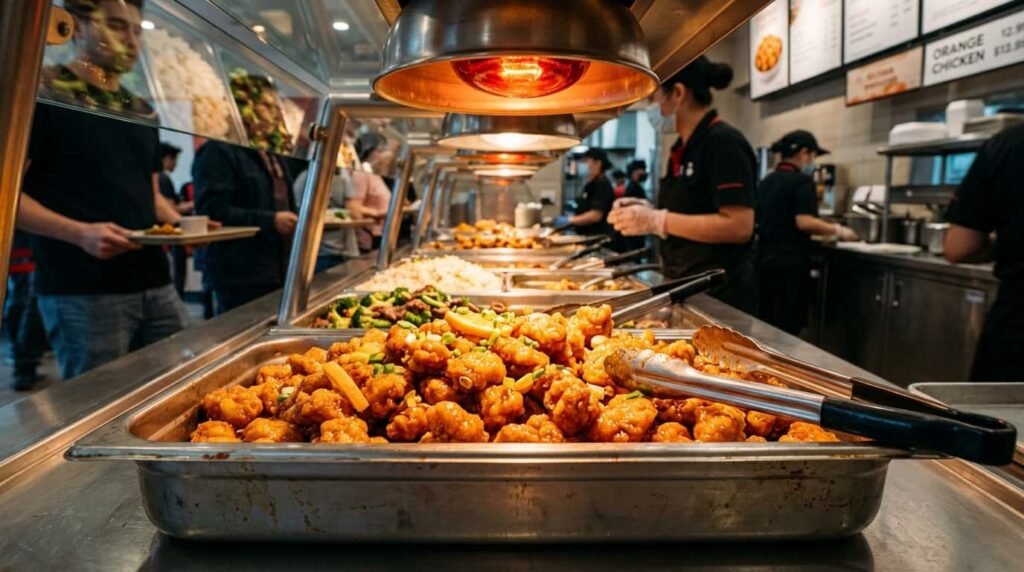
Orange chicken didn’t stay a regional Hawaii item for long. Panda Express rolled it out across its growing footprint, and it’s now sold in more than 2,200 locations, making the company the largest family-owned Chinese restaurant chain in the country. The chain reportedly moves well over 100 million pounds of orange chicken a year, and it consistently accounts for roughly a third of total sales, making it by a wide margin the best-selling item on the menu.
Its reach goes beyond restaurant counters. Orange chicken shows up as a frozen dinner staple in grocery stores, in military chow halls, and even in school cafeteria lunch lines through government nutrition programs. That kind of distribution is unusual for a dish that’s barely three and a half decades old, and it’s a big part of why so many home cooks now search for ways to recreate it rather than just ordering it.
Can You Make Orange Chicken at Home?
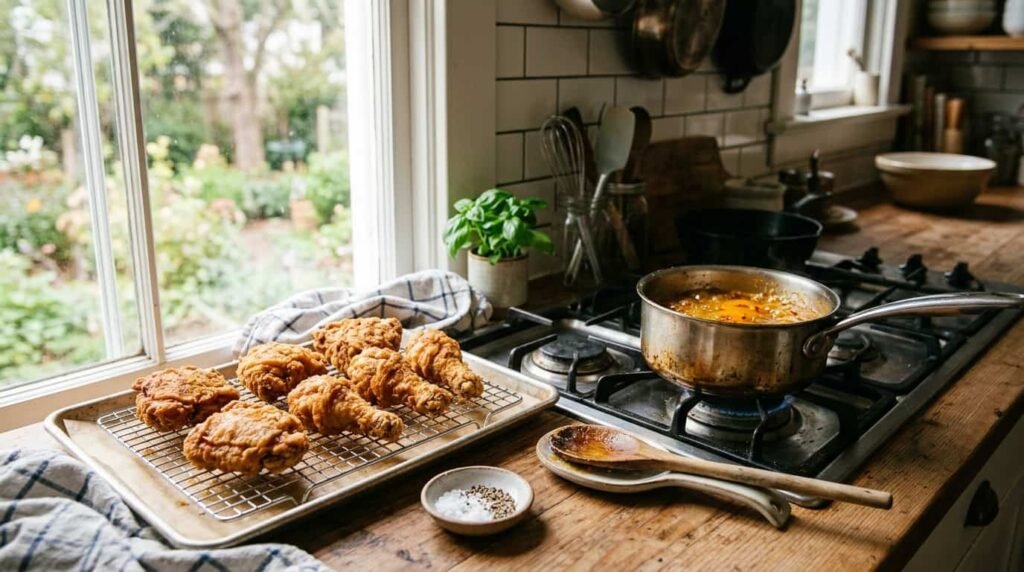
Absolutely, and it’s one of the more forgiving Chinese American takeout dishes to recreate in a home kitchen. The two components, crispy fried chicken and a sweet-citrus sauce, can each be made ahead and combined right before serving so the coating stays crunchy. Using fresh orange zest alongside the juice makes a noticeable difference over juice alone, since the zest carries most of the aromatic orange flavor that bottled juice tends to lack. A short rest on a wire rack after frying, rather than stacking the pieces on paper towels, also helps keep the crust from steaming and going soft before the sauce goes on.
Orange chicken’s story is really a reminder that some of the most iconic “Chinese” dishes on American menus were never trying to be authentic in the first place. They were built to solve a specific problem, in this case, introducing a new market to a new flavor, and they succeeded well beyond what their creators probably expected. Next time you order it, or make it yourself, you’re eating a very specific piece of 1987 Hawaii food history
When was orange chicken invented?
Orange chicken was invented in 1987 by Chef Andy Kao, coinciding with Panda Express opening its first Hawaii location at Ala Moana Center. It wasn’t adapted from an older family recipe. It was created specifically for that restaurant launch.
Did Panda Express really invent orange chicken?
Panda Express is where the dish as most people know it was created, through Chef Andy Kao, and the company holds the trademark on “The Original Orange Chicken.” Similar orange-glazed fried dishes exist in parts of Guangdong, China, but the specific boneless, battered, sweet American version traces directly back to Kao’s 1987 recipe.
Is orange chicken the same as orange peel chicken?
Not exactly. Orange peel chicken (and its close relatives, “orange-flavored chicken” and “tangerine chicken”) often keeps more of the bitter, aromatic peel flavor and can carry more heat, staying closer to the original Hunan-style dish. Orange chicken, especially the Panda Express version, is sweeter, glossier, and milder.
Why is orange chicken not found in China?
Because it isn’t a Chinese dish in the traditional sense. It was created in the United States for American palates, using far more sugar and far less spice than the Hunanese tangerine chicken that inspired it. When it has been served to diners in China, many don’t recognize it as anything resembling Chinese food.