Garlic Herb Butter Beef Tenderloin Roast
Ingredients
Instructions
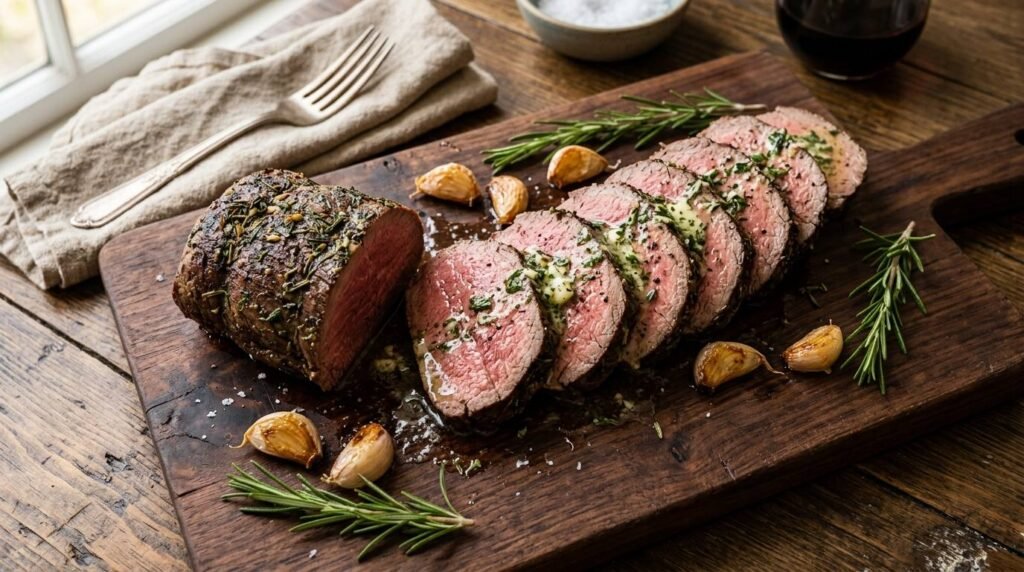
Tenderloin Recipe – Nothing says special occasion quite like a beef tenderloin roast pulled from the oven with a deep brown crust and a rosy pink center from edge to edge. It’s the cut people request by name for Christmas dinner, and it has a reputation for being intimidating that it honestly doesn’t deserve. Once you understand a few basics about temperature and timing, this is one of the easiest impressive things you’ll ever cook.
Why You’ll Love This Beef Tenderloin Roast -Tenderloin Recipe
This is the most tender cut on the entire animal, the same muscle that gives you filet mignon, so there’s very little chewing required and almost no fat to trim around. The sear-then-roast method here builds a proper crust in the skillet before the oven finishes the job gently, which means you get that steakhouse contrast of crisp outside and buttery-soft inside without babysitting a grill. It also cooks fast. Even a 3-pound roast is done start to finish in under an hour, which frees up your oven and your attention for side dishes when you’re hosting a crowd.
Ingredients You’ll Need
The ingredient list is short on purpose. This cut doesn’t need much help.
Start with a whole center-cut beef tenderloin, sometimes labeled Chateaubriand at the butcher counter. Ask them to trim the silverskin (that tough, silvery membrane along one side) and tie it with butcher’s twine at even intervals. If your roast tapers noticeably at one end, tuck that thin tail underneath and tie it in so the whole thing cooks at a uniform thickness. Kosher salt and coarsely cracked pepper are the entire seasoning base, and that’s intentional; a cut this good doesn’t need a spice rub burying its flavor.
For the finish, softened butter mixed with minced garlic and chopped rosemary and thyme melts over the hot meat right out of the skillet, so it bastes the roast as it rests instead of scorching in the pan. If you’d rather skip fresh herbs, dried rosemary and thyme work at about a third of the amount. For a dairy-free version, swap the butter for a good olive oil whisked with the same garlic and herbs.
How to Make Beef Tenderloin Roast
Pull the meat out of the fridge well before you start cooking. A cold roast straight from the fridge cooks unevenly, with an overdone exterior by the time the center catches up, so give it 45 minutes on the counter and pat it bone dry with paper towels. Moisture is the enemy of a good sear.
Season generously, then get your skillet ripping hot before the meat goes in. You want it searing the second it touches the pan, not steaming. Give it two to three minutes a side until you have a genuinely dark crust on all sides, not just golden. That crust is where most of the flavor lives.
Once it’s seared, slather on the garlic herb butter and slide the whole skillet into a 425°F oven. This is a fast, high-heat roast rather than the slow-and-low method some recipes use, and for a piece of meat this size it works beautifully because there’s so little mass to heat through. Start checking the internal temperature at the 20-minute mark with an instant-read thermometer inserted into the thickest part. Pull it at 125°F for medium-rare; it’ll coast up a few more degrees while it rests.
Pro Tips for the Best Results
Buy your tenderloin a day ahead if you can, and salt it uncovered on a rack in the fridge overnight. That dry brine seasons the meat all the way through and dries out the surface so it sears even better the next day. If you’re short on time, even 30 minutes of salting on the counter is better than none.
A probe thermometer left in the meat while it roasts takes all the guesswork out and saves you from opening the oven repeatedly. Resting is not optional. Fifteen minutes under a foil tent lets the juices redistribute through the meat instead of pooling on your cutting board the second you slice in.
If your tenderloin came from a big, uneven piece, don’t be afraid to cut it into two shorter roasts before tying. Two shorter pieces cook more evenly than one long, tapered one and are easier to maneuver in a standard skillet.
Common Mistakes to Avoid
The single biggest mistake is pulling the meat too late. Beef tenderloin has almost no fat to protect it, so it goes from perfect to overcooked in a matter of minutes, and carryover heat during resting will keep raising the internal temperature after it leaves the oven. Pull it earlier than you think you should.
A close second is skipping the sear or rushing it. A pale, gray crust means the pan wasn’t hot enough or the meat was wet when it went in. Pat it dry, get the pan properly hot, and don’t crowd it.
Slicing too thin or too soon also causes trouble. Cut into the roast before it’s rested and you’ll watch all that flavorful juice run out onto the board instead of staying in the meat. Aim for slices about an inch thick; thinner cuts fall apart and lose the texture that makes this cut worth the price tag.
Variations and Substitutions
For a smoky version, this roast takes beautifully to a low, indirect smoke on a pellet grill at around 180°F until it hits about 110°F internally, then a hard sear at the end for the crust. If you want a richer sauce to go alongside, deglaze the empty skillet with red wine and beef broth after searing, reduce it while the roast is in the oven, and finish it with a knob of cold butter for a simple pan sauce.
Peppercorn lovers can press coarsely cracked pepper into the crust before searing for a steakhouse-style au poivre crust. For a smaller gathering, a center-cut filet portion of the same tenderloin works with the identical method, just watch the timing since a thinner cut will hit temperature faster.
Storage and Reheating Instructions
Leftovers keep well in an airtight container in the fridge for up to four days. To reheat without turning it gray and tough, warm slices gently in a low 250°F oven just until heated through, or eat it cold sliced thin over salad, which is genuinely one of the best ways to use leftovers from this roast.
You can freeze cooked tenderloin, tightly wrapped, for up to three months, though the texture is noticeably better fresh. If freezing raw, an uncooked tenderloin holds up well for two to three months; just thaw it fully in the fridge before cooking, since starting from frozen leads to an overcooked exterior before the center is done.
What to Serve With It
Classic steakhouse sides are the natural pairing here: creamy mashed potatoes, a simple green like sautéed spinach or roasted asparagus, and something rich like a mushroom gratin or twice-baked potatoes for a holiday table. A horseradish cream sauce on the side is traditional and cuts nicely through the richness of the butter. For something lighter, a sharp arugula salad with shaved parmesan balances the meal well.
Frequently Asked Questions
How long does it take to cook a 3-pound beef tenderloin?
At 425°F, plan on 20 to 25 minutes after searing, plus a 15-minute rest. Total time from fridge to table is close to an hour once you factor in resting the meat at room temperature beforehand.
Is beef tenderloin the same as prime rib?
No. Prime rib comes from the rib section of the animal, while tenderloin comes from the loin. Both roast well, but tenderloin is leaner and more tender, with far less marbling than prime rib.
Can I cook beef tenderloin from frozen?
It’s not recommended. A frozen roast will overcook on the outside before the center reaches a safe internal temperature. Thaw it fully in the refrigerator first, which typically takes about 24 hours for every 5 pounds.
Why did my tenderloin turn out dry?
Overcooking is almost always the cause with this cut, since there’s so little fat to keep it moist. Pull it at 125°F for medium-rare and trust the resting process to finish the job.
Can I make this ahead for a dinner party?
You can prep and tie the roast, and even mix the herb butter, a day in advance and keep both refrigerated. The actual searing and roasting is quick enough that it’s best done just before serving, so the crust stays crisp and the center stays juicy.

Sakina writes kitchen and food content for Kitchennista. She focuses on clear, practical ideas that help readers in the kitchen and at home. Her work aims to make everyday cooking and kitchen choices easier to understand.