
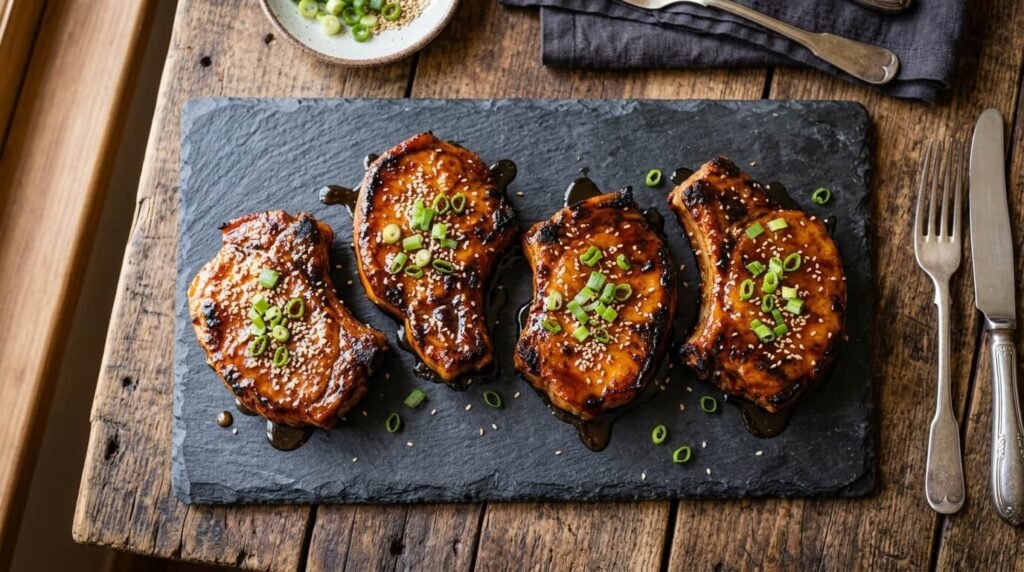
Sweet Glazed Pork Chops
Ingredients
Instructions
Sweet glazed pork recipes are one of those dinners that feel far more impressive than the effort they actually take. A handful of pantry staples turn plain pork chops into something sticky, caramelized, and deeply savory in under thirty minutes, no marinating required. If you’ve got a skillet and fifteen spare minutes, you’re closer to dinner than you think.
Why You’ll Love This Sweet Glazed Pork
This recipe leans on a classic combination: brown sugar for sweetness, soy sauce for salt and depth, and a splash of vinegar to cut through the richness. The glaze reduces right in the same pan you sear the chops in, so it picks up all the browned bits left behind, which is where most of the flavor lives. You get a glossy, caramelized crust with a juicy center, and the whole thing comes together in one pan.
It’s also forgiving. Bone-in or boneless, thick-cut or thin, the method barely changes. That flexibility is part of why glazed pork chops show up on so many weeknight rotations. They reheat well, scale up easily for a crowd, and taste just as good the next day tucked into a sandwich.
Compared to more involved sweet and savory pork dishes like miso glazed pork or slow cooker balsamic pork loin, this version skips the marinating time entirely. The glaze does its job in minutes, not hours, which makes it a better fit for a Tuesday night than a special occasion, though it’s plenty good enough for one.
Ingredients You’ll Need
The ingredient list is short on purpose. Brown sugar is the backbone of the glaze, light or dark both work, though dark brown sugar gives a slightly deeper, more molasses-forward flavor if that’s what you prefer. Low-sodium soy sauce keeps the glaze from tipping into overly salty territory, since the sugar reduces and concentrates as it cooks. Apple cider vinegar adds brightness so the glaze doesn’t taste flat or one-note, and it’s an easy swap for rice vinegar or even a squeeze of fresh lemon juice if that’s what’s on hand.
Fresh garlic makes a real difference here, but garlic powder works in a pinch if you’re out. Smoked paprika adds a subtle background warmth, while the cayenne is entirely optional, leave it out if you’re cooking for kids or anyone sensitive to heat. A pat of butter stirred in at the end rounds out the glaze and gives it a glossy sheen rather than a sticky, taffy-like texture.
For the pork itself, boneless chops around three-quarters of an inch thick cook the most evenly. Thinner chops work too, just shave a minute or two off the sear time so they don’t dry out.
How to Make Sweet Glazed Pork Chops
Start by patting the chops completely dry before seasoning. This step gets skipped a lot, but a dry surface is what actually lets the pork brown instead of steaming in the pan. Season simply with salt and pepper. The glaze is where the flavor complexity comes from, so the chops themselves don’t need much.
Sear over medium-high heat until each side is a deep golden brown, then pull the chops out of the pan entirely. This matters more than it seems. Cooking the chops all the way through in the glaze tends to burn the sugar before the pork finishes cooking. Building the glaze separately, then bringing the chops back in for the last few minutes, keeps both the sugar and the meat from overcooking.
Once the glaze has reduced and thickened enough to coat the back of a spoon, return the chops and spoon the glaze over them as they finish. Pull them at 145°F internal temperature and let them rest for a few minutes. The residual heat finishes the job, and resting keeps the juices from running straight out onto the cutting board.
Pro Tips for a Perfect Glaze
A glaze that’s too thin will just run off the chops instead of clinging to them. If yours looks watery after a few minutes of simmering, keep it on the heat a little longer rather than adding more sugar. It should coat a spoon and hold a line when you drag a finger through it.
Watch the pan temperature once the glaze goes in. Brown sugar burns fast, and a scorched glaze turns bitter instead of sweet. Medium heat, not high, is the right zone for this stage. If you notice dark specks forming quickly or a burnt smell, pull the pan off the heat immediately and start the glaze over rather than trying to salvage it.
Use a meat thermometer instead of guessing by color. Pork doesn’t need to be cooked until it’s pale throughout anymore, and pulling it too late is the most common reason glazed pork chops turn out tough.
Common Mistakes to Avoid
The most frequent issue is crowding the pan. If the chops are touching or the skillet is too small, they steam instead of sear, and you lose that caramelized crust entirely. Cook in batches if needed.
Another common mistake is adding the glaze ingredients straight into the pan with the raw pork still in it. Building the glaze separately, then combining it with already-seared meat, gives you far more control over both the browning and the sugar reduction.
Skipping the rest period is another one. Cutting into the chops right off the heat lets all the moisture escape onto the plate instead of staying in the meat.
Variations and Substitutions
Honey works as a full or partial swap for the brown sugar if you want a slightly different sweetness profile, closer to what you’d find in honey glazed pork chops. For a Japanese-inspired twist, whisk a spoonful of white miso paste into the glaze along with a splash of sake, which adds a savory, umami-rich edge similar to miso glazed pork. Swap the apple cider vinegar for balsamic vinegar for a deeper, slightly tangier glaze reminiscent of a balsamic glazed pork loin.
This method also translates well to other cuts. Pork tenderloin works with the same glaze, just sear in medallions or sear the whole tenderloin and finish it in the oven. Bone-in chops need a couple of extra minutes per side but follow the same steps.
For anyone avoiding soy, coconut aminos are a reliable one-to-one substitute that keeps the glaze’s depth without the gluten or the extra sodium of regular soy sauce.
Storage and Reheating Instructions
Leftover glazed pork chops keep well in an airtight container in the fridge for up to three days. The glaze actually thickens further as it cools, so expect a slightly stickier texture the next day.
To reheat, a skillet over medium-low heat works best. Add a splash of water or chicken broth to loosen the glaze back up, and warm the chops gently so they don’t dry out. Microwaving works in a pinch, but the texture suffers compared to stovetop reheating.
These chops don’t freeze especially well once glazed, since the sugar can crystallize and separate on thawing. If you want to make ahead, it’s better to freeze the seared, unglazed chops and make a fresh batch of glaze when you’re ready to serve.
What to Serve With Sweet Glazed Pork
Something plain and starchy balances the sweetness of the glaze nicely. Steamed rice, mashed potatoes, or a simple couscous all soak up extra glaze well. On the vegetable side, roasted broccoli, sautéed green beans, or a crisp cabbage slaw add a bit of crunch and cut through the richness.
If you’re serving a crowd, a big platter of glazed pork chops alongside roasted sweet potatoes and a green salad turns this quick weeknight recipe into something that could easily pass for a Sunday dinner.
Frequently Asked Questions
Can I make this with pork tenderloin instead of chops?
Yes. Sear tenderloin medallions the same way, or sear the whole tenderloin on all sides and finish it in a 400°F oven for about 15 minutes, brushing with glaze as it cooks.
Why did my glaze turn out too thin?
It likely needs more time on the heat. A thin glaze usually means it was pulled before the sugar had a chance to reduce and thicken properly.
Is this recipe gluten-free?
Use tamari or coconut aminos in place of regular soy sauce and the recipe is naturally gluten-free, since the rest of the ingredients don’t contain gluten.
Can I prepare the glaze ahead of time?
Yes, the glaze mixture can be whisked together and refrigerated up to two days ahead. Bring it to room temperature before adding it to the hot pan so it reduces evenly.
What internal temperature is safe for pork chops?
145°F, followed by a three-minute rest, is the USDA-recommended safe internal temperature for pork chops. At this point the meat may still have a faint blush of pink, which is normal and not a sign of undercooking.
Can I double this recipe for a bigger group?
Yes, just sear the chops in batches so the pan isn’t crowded, and double the glaze ingredients. The glaze may take slightly longer to reduce with the larger volume.


Pingback: Honey Glazed Pork Chops: Easy Sticky Glaze Recipe