What Is Beef Tenderloin? A Complete Guide to This Prized Cut
Beef tenderloin is the long, boneless muscle that runs along the cow’s spine, stretching from the short loin to the sirloin. It’s the leanest, most tender cut of beef you can buy, prized for a texture so soft it can practically be cut with a fork. If you’ve ever ordered filet mignon at a restaurant, you’ve already eaten a slice of it. This guide covers exactly what beef tenderloin is, where it comes from, how it compares to filet mignon, and how to pick and cook one so it turns out right every time.
What Is Beef Tenderloin, Exactly?
Beef tenderloin is the psoas major, a muscle that sits beneath the ribs, next to the backbone, near the kidneys. Because this muscle barely gets used as the animal moves, it never develops much connective tissue or toughness. That’s the whole reason tenderloin earns its name and its reputation as the most tender cut on the entire carcass.
Each cow has two tenderloins, and each one is an oblong, tapered muscle about 18 to 24 inches long, weighing roughly 4 to 6 pounds untrimmed. The wide end sits closer to the sirloin and is called the butt. The narrow end, closer to the ribs, is called the tail. Between them is the center-cut, the most uniform section and the one most often turned into steaks.
Where Beef Tenderloin Comes From on the Cow
The tenderloin spans two primal cuts of beef: the short loin and the sirloin. Butchers refer to the whole muscle, before it’s cut into steaks, as the “whole tenderloin” or “full tenderloin.” It’s sold a few different ways at the meat counter:
- Unpeeled: the fat cap and silver skin are still attached.
- Peeled: the fat is trimmed off, but the silver skin remains.
- PSMO: short for “peeled, side muscle on,” meaning the fat is removed but the side muscle (the chain) is still attached.
Buying an unpeeled tenderloin is cheaper per pound, but you’ll spend time trimming silver skin and fat before cooking. A peeled or PSMO tenderloin costs more but saves prep work, which is worth it if you’re feeding guests and short on time.
Beef Tenderloin vs. Filet Mignon: What’s the Difference?
This is the question that trips up most home cooks, and the short answer is: they’re the same muscle, just different portions of it. Beef tenderloin refers to the whole cut, the entire 4 to 6 pound muscle. Filet mignon is a small, individual steak sliced from the narrower, more tender end of that same tenderloin.
Filet mignon steaks typically run 1 to 2.5 inches thick and weigh 6 to 8 ounces. Because they come from the leanest, most tender section, filet mignon is the priciest steak on the menu, often served simply, with a pan sauce or a compound butter, since the meat’s texture is really the star.
Regional names add to the confusion. What Americans call beef tenderloin goes by eye fillet in Australia and New Zealand, filet in France, and fillet or fillet steak in the United Kingdom and South Africa. In Brazil, individual steaks are called filet mignon just like in the U.S. If a recipe or a butcher uses one of these terms, they’re talking about the same cut.
The Different Cuts You Get From a Whole Tenderloin
A whole tenderloin isn’t just one uniform piece. Depending on which section you’re working with, it’s suited to different preparations:
- Butt end: the thickest section, often cut into Chateaubriand, a thick roast traditionally carved tableside and served for two.
- Center-cut (Chateaubriand or tenderloin roast): the most even in diameter, which makes it ideal for slicing into filet mignon steaks or roasting whole.
- Tail (tenderloin tips): the thin, pointed end. It cooks unevenly as a steak because of its shape, so it’s usually cubed for skewers, stir-fry, or a quick pan sauce dish instead.
Buying a whole tenderloin and breaking it down yourself, using the center for steaks, the butt for a roast, and the tail for tips, is one of the more budget-friendly ways to enjoy this cut, since you’re not paying the premium that comes with pre-portioned filet mignon.
How to Choose the Best Beef Tenderloin at the Store
A few things separate a great tenderloin from a mediocre one:
- Grade. USDA Prime has the most marbling and is the most tender and flavorful, though it’s harder to find and pricier. USDA Choice is a solid, more widely available middle ground. Select tends to be leaner and less forgiving if you overcook it.
- Color. Look for a deep, even red color without gray or brown patches.
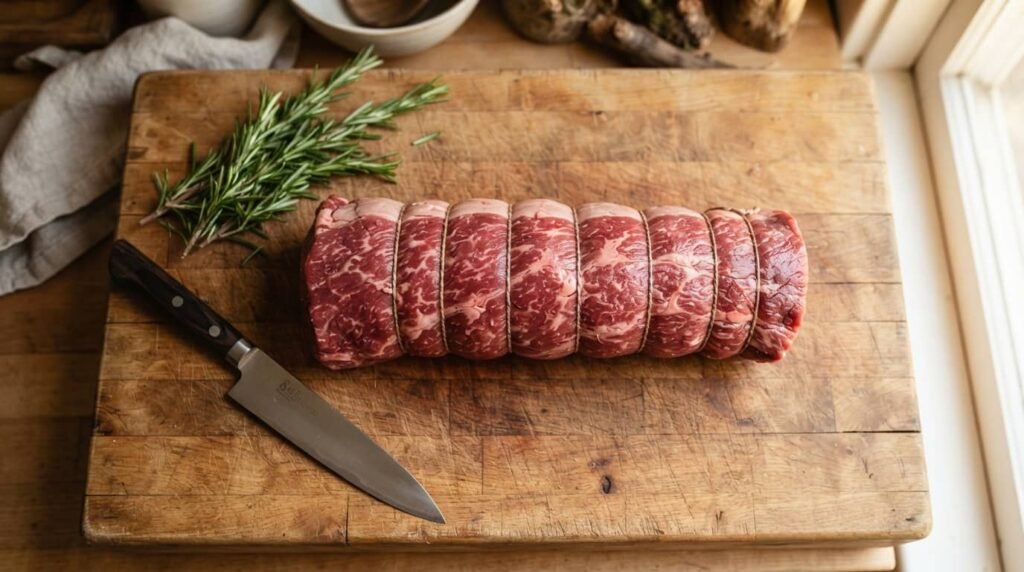
- Shape. A tenderloin with a fairly consistent diameter cooks more evenly. If the one you’re buying is uneven, plan on tying it with butcher’s twine to even it out before roasting.
- Trim level. Decide whether you want to pay more for a peeled tenderloin or save money and do the trimming yourself.
Quick Answer: Is Beef Tenderloin Worth the Price?
Beef tenderloin runs anywhere from about $15 to $30 or more per pound depending on grade and trim, making it one of the pricier cuts at the counter. It’s worth the splurge when tenderness matters more than deep beefy flavor, think holidays, anniversaries, or a dinner where you want a foolproof, quick-cooking centerpiece. If bold flavor is the priority and budget is tight, a ribeye or New York strip delivers more richness for less money.
How to Cook Beef Tenderloin for the Best Results
Because tenderloin is so lean, it has very little fat to protect it from drying out, which makes correct technique more important than with fattier cuts.
- Bring it to room temperature. Let the meat sit out for about 30 minutes before cooking so it cooks evenly from edge to center.
- Season simply. Salt and freshly cracked black pepper are usually all this cut needs. Its natural flavor and texture do the heavy lifting.
- Sear first. Two to three minutes per side in a hot skillet or on a grill builds a flavorful crust before the meat finishes cooking.
- Finish low and slow, or keep grilling. Whole roasts typically finish in a 425°F oven; steaks can stay on the stovetop or move to the oven to finish.
- Pull it by temperature, not time. Use an instant-read thermometer: 120 to 125°F for rare, 130 to 135°F for medium-rare, 140 to 145°F for medium. Tenderloin dries out fast past medium, so medium-rare is generally the sweet spot.
- Rest before slicing. Tent the meat loosely with foil and let it rest 5 to 10 minutes. The internal temperature will climb another 5 degrees or so as it rests, and the juices redistribute instead of running out onto the cutting board.
Whole roasts do well smoked, grilled, oven-roasted, or cooked sous vide. Steaks and filet mignon are best seared in a skillet and finished in the oven or on the grill. Tenderloin tips are quick enough for a hot skillet alone.
The Bottom Line
Beef tenderloin is the most tender cut beef has to offer, a lean, boneless muscle that spans the short loin and sirloin and gives us everything from Chateaubriand to filet mignon. It costs more than most cuts, but a little technique, room-temperature meat, a hot sear, and a thermometer, goes a long way toward making that cost feel worth it. Whether you’re roasting a whole tenderloin for a holiday table or pan-searing a couple of filets for a weeknight treat, this is one cut where getting the basics right makes all the difference.
Next up, try pairing your tenderloin with a few simple sides from the kitchennista recipe box and see how far a good sear and a reliable thermometer can take your next dinner.
Common Questions About Beef Tenderloin
Is beef tenderloin the same as filet mignon?
Not exactly. Beef tenderloin is the whole muscle, while filet mignon is a specific steak cut from the narrower end of that muscle. Every filet mignon comes from a tenderloin, but not every cut of tenderloin is a filet mignon.
What’s another name for beef tenderloin?
Depending on where you are, it might be called eye fillet, filet, fillet steak, or beef fillet. When the whole muscle is left intact, it’s also referred to as “the filet.”
How much beef tenderloin do I need per person?
Plan on about 6 ounces per person for a typical dinner, or 8 ounces if you’re serving bigger appetites. Because it’s boneless and lean, very little goes to waste, so this estimate holds up well compared to bone-in roasts.
What temperature should beef tenderloin be cooked to?
Medium-rare, around 130 to 135°F, is the most popular target because it keeps the meat juicy without letting the lean muscle dry out. Pull it from the heat a few degrees early and let it rest, since the temperature keeps rising after it comes off the heat.
Storing Beef Tenderloin
Raw tenderloin keeps in the refrigerator for up to 3 days in its original packaging. Cooked leftovers should go into an airtight container and get used within 3 to 4 days. If you need to freeze it, uncooked tenderloin holds up well for up to 6 months in an airtight wrap, though freezing can pull some moisture out, so buying only what you plan to cook soon is the better move when possible. Thaw frozen tenderloin slowly in the refrigerator overnight rather than on the counter.