
How to Grill Korean BBQ at Home: A Complete Beginner’s Guide
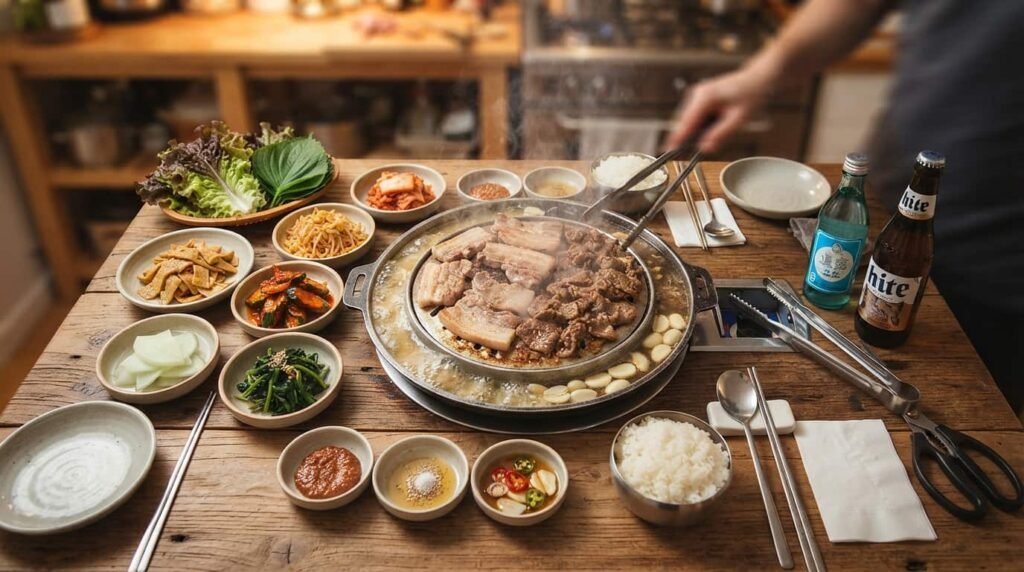
If you have ever wondered how to grill Korean BBQ at home, the good news is you do not need a restaurant-style table grill or a plane ticket to Seoul. All it takes is a portable stove, a good grill plate, the right cuts of meat, and a few side dishes. This guide walks you through exactly what to buy, how to set your table, and how to grill everything so it comes out juicy instead of dry or burnt.
I tested this setup in my own kitchen with a butane stove and a simple round grill plate, and it fed four people with leftovers to spare. Here is everything you need to pull off a Korean BBQ night that tastes like the real thing.
What Is Korean BBQ, Exactly?
Korean BBQ, sometimes called KBBQ or gogi-gui, is a style of grilling where meat gets cooked right at the table instead of in the kitchen. Restaurants usually build a gas or charcoal grill into the middle of each table so diners can cook their own food and eat it hot off the grill. At home, you recreate that setup with a portable stove and a grill plate.
The meal is built around a few core parts: the meat, a spread of banchan (small Korean side dishes), lettuce or perilla leaves for wrapping, and a couple of dipping sauces. It is meant to be shared, so it works best with two or more people around the table.
Best Meats for Korean BBQ (and What to Grill First)
You do not need every cut on this list. Pick two or three and you will have plenty of variety.
- Bulgogi – thin, marinated beef or pork in a soy and pear based sauce. Sweet, tender, and beginner friendly.
- Galbi (short ribs) – beef short ribs marinated in a similar sweet soy sauce. Butterflied thin so they cook fast.
- Samgyeopsal (pork belly) – thick, unmarinated pork belly slices. This is the classic KBBQ order and one of the easiest to grill since there is no marinade to burn.
- Chadol baegi (brisket) – super thin, unmarinated beef that cooks in under a minute per side.
- Chicken bulgogi or gochujang chicken – marinated chicken thigh, a good option if you want something other than beef or pork.
A simple rule for grilling order: cook the unmarinated meats first (pork belly, brisket), then move to the marinated cuts (bulgogi, galbi) last. Marinades contain sugar, which blackens and sticks to the grill quickly, so saving them for the end keeps your grill plate cleaner for longer.
For shopping, a Korean grocery store like H-Mart, Zion Market, or a local Korean butcher will have pre-sliced, ready-to-grill meat. If you are not near one, ask your regular butcher to slice beef or pork thin, or look for pre-cut stir-fry or shabu-shabu meat at a regular grocery store as a substitute.
Setting Up Your Grill and Table
Choosing a heat source
- Portable butane stove: The most common choice for home KBBQ. Inexpensive, widely available at Asian grocery stores, and easy to control. Just make sure the room is well ventilated.
- Small charcoal grill: Gives you that smoky, restaurant-style flavor, but it needs to stay outside and takes longer to set up.
- Electric smokeless grill: A solid indoor option if you do not want to deal with butane canisters, though it will not get quite as hot as a gas flame.
The grill plate
Look for a round grill plate with a channel or drip tray around the edge to catch rendered fat. Round plates heat more evenly than square ones, which matters once you have several cuts of meat going at once.
Tools you actually need
- Two to three pairs of tongs (keep raw and cooked meat separate)
- Kitchen scissors for cutting meat and trimming fat directly on the grill
- Small dipping bowls for sauces
- Individual plates and chopsticks for each guest
Ventilation matters
Whatever heat source you use, open a window or turn on a range hood before you start. Korean BBQ produces a lot of smoke, and a stuffy room will leave your clothes smelling like it for the rest of the night.
How to Grill Korean BBQ at Home, Step by Step
Quick answer: to grill Korean BBQ at home, heat your grill plate over medium-high to high heat, cook unmarinated meats first, flip each piece only once or twice, and move cooked pieces to the edge of the grill to keep them warm while you cook the next batch.
Here is the full process, from prep to plate:
- Marinate ahead of time. If you are using bulgogi or galbi, marinate the meat the night before for the best flavor. Unmarinated cuts like pork belly and brisket need no prep beyond slicing.
- Prep your sides first. Wash lettuce and perilla leaves, slice garlic and onion, portion out banchan, and mix your dipping sauces before anyone sits down. Once the grill is hot, you want to be cooking and eating, not chopping.
- Heat the grill. Turn the stove to medium-high and let the plate heat for a couple of minutes before adding anything. A properly hot grill should sizzle the moment meat touches it.
- Grill unmarinated meat first. Start with pork belly or brisket in the center of the plate, where the heat is most even. Flip once the underside browns, usually 1 to 2 minutes per side for thin cuts.
- Move to marinated meats. Once the non-marinated cuts are done, grill the bulgogi and galbi. Watch these closely since the sugar in the marinade burns fast.
- Grill your vegetables on the side. Onion, garlic, mushrooms, and kabocha squash can go on the cooler edges of the grill while the meat cooks in the center.
- Cut and serve as you go. Use scissors to cut larger pieces into bite-sized portions right on the grill, then move cooked meat to a serving plate so the next batch has room to cook.
- Wipe the grill between rounds. A quick wipe with a paper towel keeps burnt marinade from flavoring your next batch of meat.
Don’t overcrowd the plate. Cooking in smaller batches keeps the temperature even and gives every piece a proper sear instead of steaming in its own juices.
Sauces, Wraps, and Banchan That Make It Taste Right
Dipping sauces
- Ssamjang: a thick, savory-spicy paste made from doenjang (soybean paste) and gochujang (chili paste), plus garlic and sesame oil. The default sauce for wrapped bites.
- Sesame oil, salt, and pepper: simple and classic, especially good with unmarinated pork belly.
- Wasabi soy sauce: a sweet, tangy option that pairs well with marinated beef.
Wraps
Lettuce and perilla leaves are the traditional choice. Lay a leaf flat, add a piece of grilled meat, a dab of sauce, and any toppings like garlic or pickled radish, then fold it into a single bite. Rice paper wraps have also become popular at home, especially on the West Coast, and work well if you want a change from lettuce.
Banchan (side dishes)
A good spread includes four to six small side dishes. Kimchi is non-negotiable, and beyond that you can mix in pickled radish, a Korean cucumber salad, japchae (glass noodles), corn cheese, or a steamed egg. Most of these can be bought pre-made at a Korean grocery store if you are short on time.
Common Mistakes When Grilling Korean BBQ at Home
- Cooking marinated meat first. It burns onto the grill and makes cleanup, and every dish after it, messier.
- Skipping ventilation. Even a small electric grill produces noticeable smoke once you get a few rounds in.
- Overfilling the grill. A crowded plate cooks unevenly and steams the meat instead of searing it.
- Flipping too often. Constant flipping dries the meat out. Let each side develop a sear before turning it.
- Forgetting the sides. Korean BBQ is built around the banchan and wraps as much as the meat itself. Skimping on sides makes the meal feel incomplete.
FAQs
How much meat do I need per person for Korean BBQ?
Plan for about half a pound to three-quarters of a pound of meat per person for a normal appetite, and closer to a full pound per person if you are feeding bigger eaters. Mix two or three cuts so there is variety across the table.
What meat do you grill first at Korean BBQ?
Grill unmarinated cuts first, like pork belly or beef brisket. Save marinated meats like bulgogi and galbi for later since their sugary marinade burns onto the grill quickly and makes it harder to clean between rounds.
Can you make Korean BBQ without a special grill?
Yes. A cast iron pan, a nonstick griddle, or a regular stovetop grill pan will all work in a pinch. A dedicated Korean BBQ grill plate just makes it easier to cook multiple cuts and vegetables at once and drains fat more effectively.
Is Korean BBQ healthy?
It can fit into a balanced diet. Grilling renders out fat instead of frying it in, and the meal comes with plenty of vegetables and fermented sides like kimchi. Portion size and how much marinade or sauce you use are what swing it toward heavier or lighter, just like any other meal.
Once you have the setup down, Korean BBQ at home becomes one of those easy, repeatable dinners you can throw together for a weeknight or a full-on gathering with friends. Grab a couple of cuts of meat, prep a few sides, and get grilling.