Seafood and Spaghetti: The Ultimate Guide (2026)
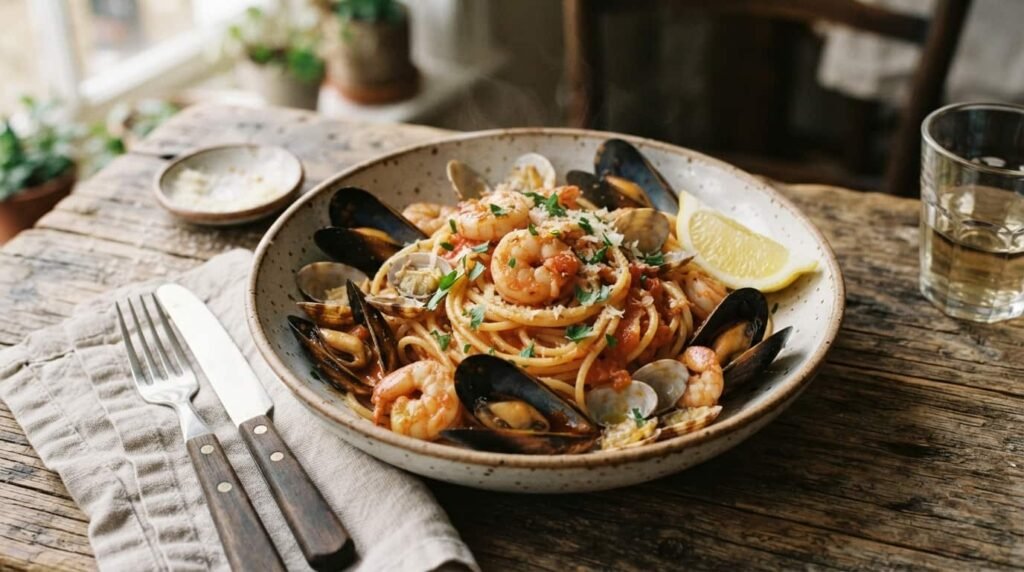
Seafood and spaghetti is one of those dinners that looks like it took hours but really comes together in about 30 minutes. Shrimp, mussels, clams, and a little garlic and tomato turn a box of dried pasta into something you’d happily serve to guests. This guide walks through the seafood that works best, the timing that keeps everything tender instead of rubbery, and a few sauce options so you can make this dish your own on a weeknight or for a special occasion.
What Goes Best With Seafood and Spaghetti?
Shrimp, mussels, clams, and scallops are the classic mix for seafood and spaghetti, cooked in a garlic tomato or white wine sauce. Long pasta shapes like spaghetti, linguine, or angel hair hold the sauce well without overwhelming the delicate seafood. The trick is adding each seafood at a different point in cooking, since shrimp and scallops finish in a couple of minutes while mussels and clams need a bit longer to open.
What Seafood Works Best in Spaghetti
Not every seafood behaves the same way in a hot pan, so it helps to know what you’re working with before you start cooking.
Shrimp cooks fast and holds its shape, which makes it the easiest entry point if you’re new to seafood pasta. Look for peeled, deveined shrimp in the 31 to 40 count range so it cooks evenly alongside scallops.
Mussels and clams bring briny depth and a bit of drama to the plate once their shells pop open. Buy them live, store them loosely covered in the fridge, and give them a soak in cold water before cooking to release any trapped sand.
Scallops add a sweet, buttery bite. Pat them dry before searing so they brown instead of steaming in their own liquid.
Squid or calamari is optional but common in Italian versions of this dish. It cooks in under two minutes, so add it late and pull it the moment it curls.
You don’t need all four. A simple shrimp and mussel combination is plenty for a weeknight, while the full mix feels closer to a restaurant-style frutti di mare for company.
How to Make Seafood and Spaghetti
This method works whether you’re making a light garlic version or a heartier tomato-based one.
- Start the sauce first. Sauté garlic in olive oil, then build your base, whether that’s crushed tomatoes, a splash of white wine, or both. Let it simmer gently while you prep the seafood.
- Cook the pasta separately. Boil spaghetti in well-salted water until just shy of al dente. It will finish cooking in the sauce, so pulling it a minute early keeps it from turning mushy.
- Sear the sturdier seafood first. Scallops and shrimp go in a hot pan for one to two minutes per side, then come back out while you handle the shellfish.
- Steam the mussels and clams. Add them to the sauce with a splash of the seafood’s own liquid or a bit of reserved pasta water, cover, and cook until the shells open. Toss anything that stays closed.
- Bring it all together. Return the shrimp and scallops to the pan, add the drained spaghetti, and toss everything with a little pasta water to loosen the sauce so it clings to every strand.
- Finish and serve. A scatter of fresh parsley, a drizzle of good olive oil, and a squeeze of lemon at the end brightens the whole dish.
Serve it hot, straight from the pan if you can, since seafood loses its texture quickly once it sits.
Best Sauce for Seafood Spaghetti
There isn’t one right sauce, and the seafood you choose can help you decide.
- Garlic and olive oil (aglio e olio style): Lets the seafood’s natural flavor lead. Best with fresh, high-quality shrimp or scallops.
- Tomato sauce: A classic pomodoro or marinara base adds acidity and body, and it’s forgiving if your seafood is frozen rather than fresh.
- White wine and butter: Adds richness without masking the seafood. A dry Pinot Grigio or Sauvignon Blanc works well here.
- Cream-based sauce: Less traditional in Italy but popular in American kitchens, especially with shrimp or crab.
Whichever direction you go, keep the sauce light enough that it coats the pasta rather than drowning the seafood.
Timing Guide: How Long to Cook Each Seafood
Overcooked seafood is the single biggest reason a seafood spaghetti recipe falls flat, so timing matters more here than in almost any other pasta dish.
- Shrimp: 2 to 3 minutes, until pink and just opaque
- Scallops: 1 to 2 minutes per side, until browned outside and just opaque in the center
- Mussels: 3 to 5 minutes, until the shells open
- Clams: 4 to 6 minutes, until the shells open
- Squid or calamari: 1 to 2 minutes, until it curls slightly
Add seafood to the pan in reverse order of how long it takes to cook, so everything finishes at roughly the same time.
Common Mistakes to Avoid
A few small missteps show up again and again in home versions of this dish.
- Overcrowding the pan. Too much seafood at once steams instead of sears, which leaves it watery.
- Skipping the mussel and clam soak. Grit in the final dish is almost always a sign this step got skipped.
- Overcooking the pasta before it hits the sauce. Since spaghetti keeps cooking once it’s tossed with the hot sauce, pull it slightly underdone.
- Adding cheese without thinking it through. Many Italian cooks skip cheese entirely on seafood pasta because it can compete with the seafood’s flavor. It’s a personal call, not a rule, but it’s worth trying the dish without it first.
Variations and Substitutions
Seafood and spaghetti is flexible once you understand the basic method. Swap in crab meat or chunks of firm white fish like cod for the shrimp. Use a frozen seafood medley when fresh isn’t available, just thaw it fully and pat it dry so the sauce doesn’t turn watery. Vegetarian nights in the same household can get a similar treatment with mushrooms and artichokes standing in for the seafood, cooked in the same garlic and tomato base. If spaghetti isn’t in the pantry, linguine, angel hair, or fettuccine all work just as well.
Buying and Storing Fresh Seafood
The quality of your seafood matters more than any technique in this recipe, so it’s worth a few extra minutes at the store or fish counter.
For shrimp and scallops, look for a mild, clean ocean smell rather than anything sharp or fishy. Scallops should look slightly translucent and feel firm, not mushy or sitting in a pool of milky liquid. If you can find dry-packed scallops instead of wet-packed, they’ll sear far better since they haven’t been treated with a water-retaining solution.
For mussels and clams, buy them live and use them within a day or two. Tap any open shells gently; if they close on their own, they’re still alive and fine to cook. Store them in the fridge in a bowl covered with a damp towel, never sealed in plastic or sitting in water, since they need to breathe. Discard any shells that stay open before cooking or that don’t open after cooking.
If a fishmonger isn’t nearby, a bagged frozen seafood medley from the grocery store works well for this dish and is often more budget-friendly than buying each type separately.
Storage and Reheating Leftovers
Seafood spaghetti is best eaten the day it’s made, since the seafood continues to lose texture the longer it sits. If you do have leftovers, cool them quickly and store them in an airtight container in the fridge for up to two days.
To reheat, warm the pasta gently in a covered pan over low heat with a splash of water or broth to loosen the sauce. Avoid the microwave if you can, since it tends to overcook shrimp and scallops and can turn mussels tough. Reheat just until warmed through, not simmering, to keep the seafood from cooking any further.
Bring It to the Table
Seafood and spaghetti rewards a little planning, mostly around timing, but it’s genuinely one of the easier ways to make a weeknight dinner feel special. Pick two or three types of seafood, keep the sauce simple, and add everything to the pan in the right order. Once you’ve made it a couple of times, you’ll be able to build your own version without measuring a thing.
Frequently Asked Questions
What is the best pasta for seafood?
Long, thin shapes like spaghetti, linguine, and angel hair are the traditional choice because they don’t overpower delicate seafood the way thicker shapes can. Fettuccine or pappardelle can work too if you’re going with a richer, creamier sauce.
Can you use frozen seafood for seafood spaghetti?
Yes. Thaw it overnight in the fridge, then drain and pat it dry before cooking so excess water doesn’t dilute the sauce. Frozen seafood also tends to cook a little faster than fresh, so keep an eye on it.
Do you put cheese on seafood spaghetti?
Traditionally, no. Many Italian cooks consider cheese and seafood a mismatch, since it can mute the briny, delicate flavors of the shellfish. That said, it’s not an official rule, and a light grating of Pecorino is common in some regional versions.
What wine pairs with seafood spaghetti?
A crisp, dry white wine works best, both in the glass and in the pan. Sauvignon Blanc, Pinot Grigio, and Vermentino are all solid choices that won’t overpower the seafood.
Is seafood and spaghetti healthy?
It can be, especially if you lean on olive oil, garlic, tomatoes, and a moderate amount of pasta rather than a heavy cream sauce. Shrimp, mussels, clams, and scallops are all lean sources of protein, so the dish tends to be lighter than most pasta mains while still feeling indulgent