Is Acai Bowl Healthy? What Dietitians Actually Say
Is an acai bowl healthy? The honest answer is: it depends entirely on what goes into the bowl. The acai berry itself is a nutrient-dense, antioxidant-rich fruit that’s genuinely good for you, but a lot of the acai bowls sold at cafes and juice bars quietly pack in as much sugar as a candy bar by the time the granola, honey, and fruit sorbet get layered on top. In our KitchenNista test kitchen, we’ve made dozens of acai bowls at home, and the difference between a “clean” bowl and a “dessert in disguise” almost always comes down to portion size and toppings, not the acai itself.
Here’s the quick version if you’re short on time, followed by everything you need to know to build a bowl that actually earns the healthy label.
Are Acai Bowls Actually Healthy?
Yes, acai bowls can be healthy, but most store-bought versions aren’t as light as they look. A homemade 6-ounce acai bowl runs around 200 to 250 calories with roughly 10 to 15 grams of sugar, mostly from the fruit. Commercial bowls from juice bars, on the other hand, often land between 500 and 800 calories and can carry 50 to 75 grams of sugar in a single serving, more than double what the American Heart Association recommends for a woman’s entire day. The fruit is the healthy part. The portion size and toppings are where things go wrong.
What’s Actually in an Acai Bowl
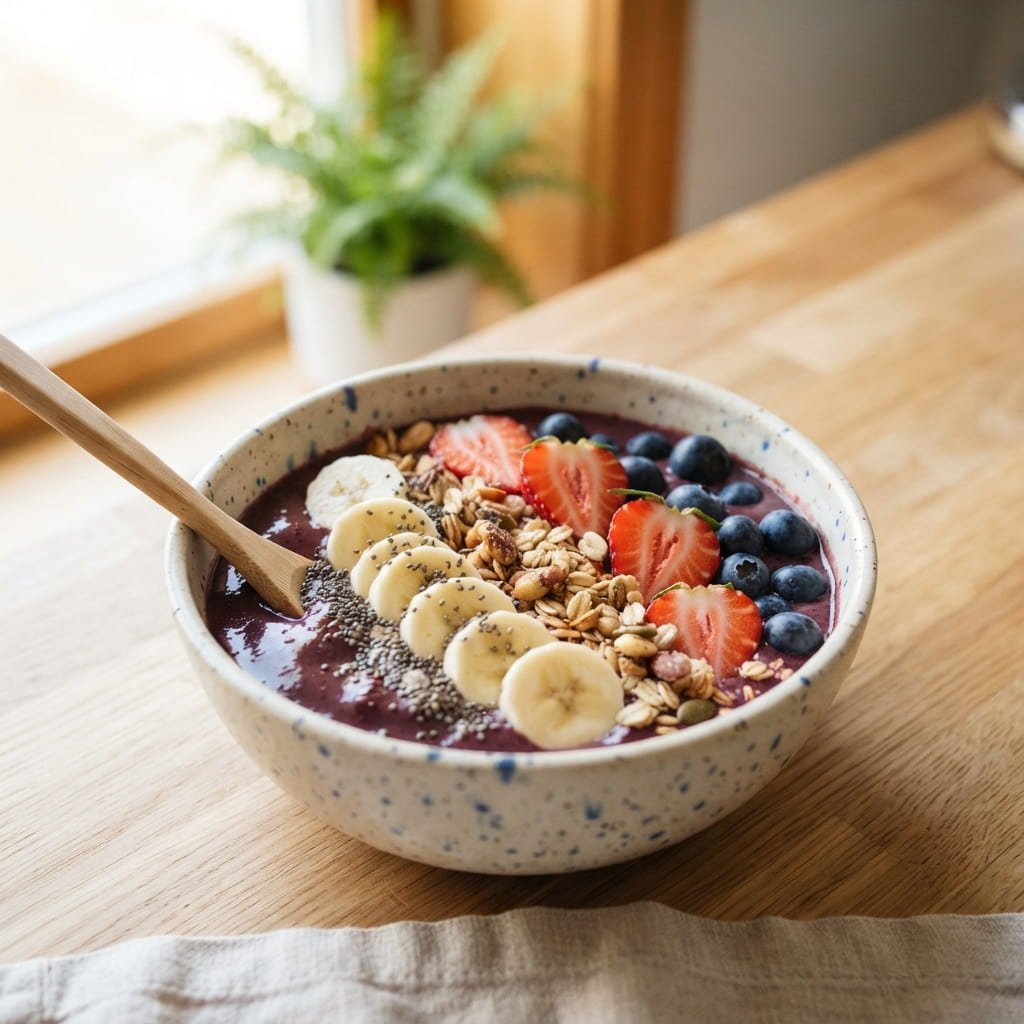
An acai bowl starts with pureed acai berries, small purple fruits grown on palm trees in the Amazon rainforest. The frozen puree gets blended into a thick, sorbet-like base, then topped with things like granola, sliced banana, berries, coconut flakes, honey, and nut butter. On its own, acai has a mildly tart, almost chocolatey flavor and a texture close to sorbet, which is part of why it’s so easy to dress up with sweet toppings.
The base itself is relatively low in sugar. It’s what gets piled on top, and how much of it, that determines whether a bowl functions as a nutritious breakfast or an elaborately garnished dessert.
The Nutrition Case for Acai Bowls
Acai berries carry a genuinely strong nutritional profile. A basic homemade bowl is typically high in fiber, healthy fats, and micronutrients like vitamin C, manganese, and potassium, and it comes packed with antioxidants that help protect your cells from everyday wear and tear.
Acai is especially rich in plant compounds called anthocyanins, the same antioxidant family found in blueberries and red cabbage, and research suggests these compounds may support heart, gut, kidney, liver, and nervous system health. One study of healthy adults found that drinking acai juice raised blood antioxidant levels and boosted HDL cholesterol, the “good” kind that helps clear other cholesterol from your bloodstream. Some animal and lab studies also point to potential brain and anti-cancer benefits from acai’s antioxidant content, though researchers note that human studies are still limited.
A typical 6-ounce homemade acai bowl also delivers around 6 to 7 grams of fiber, which is a meaningful chunk of your daily target and helps you feel full for longer, especially when the bowl includes protein from nut butter, chia seeds, or Greek yogurt.
Where Acai Bowls Go Wrong: Sugar and Portion Size
This is the part that trips most people up. The acai bowl calories and sugar problem isn’t really about acai. It’s about everything added to it, and how much of it you’re served.
A basic 6-ounce bowl made with unsweetened acai puree has roughly 200 to 250 calories and about 10 to 15 grams of sugar, most of it naturally occurring from the fruit. That’s a reasonable snack by almost any standard. The trouble starts when you order from a juice bar or smoothie shop, where portions routinely run two to four times that size and toppings are added with a heavy hand.
Commercial acai bowls frequently land between 500 and 800 calories, and some fully loaded versions push past 1,000 calories with 50 to 75 grams of sugar in one sitting. For context, the American Heart Association recommends capping added sugar at about 25 grams a day for women and 36 grams for men, so a single large acai bowl can blow past an entire day’s sugar budget before lunch. Many shops also sweeten the acai blend itself with juice or syrup to offset its naturally tart flavor, which adds sugar before a single topping goes on.
None of this makes acai bowls bad. It just means the label “acai bowl” doesn’t automatically mean “healthy,” the same way “smoothie” or “granola” don’t. The nutrition depends entirely on the build.
Are Acai Bowls Good for Weight Loss?
Acai bowls aren’t a magic weight-loss food, and no credible research supports the idea that acai alone burns fat or speeds up metabolism. What acai bowls can do is support weight management indirectly, through fiber and protein that help you stay full, provided the bowl isn’t loaded with sugary extras that undo the benefit.
If weight management is your goal, treat a well-built acai bowl as a filling breakfast or post-workout meal rather than an occasional treat. A bowl with a moderate acai base, a scoop of Greek yogurt or protein powder, a tablespoon of nut butter, and a light hand on the granola can genuinely function as a balanced meal. A bowl piled with honey, chocolate chips, and multiple servings of granola functions more like dessert, no matter how many berries are on top.
How to Build a Genuinely Healthy Acai Bowl
The easiest way to control what’s in your bowl is to make it yourself. Here’s what we’ve found works well after testing acai bowls at home:
- Start with unsweetened acai. Blend frozen, unsweetened acai puree or powder with a splash of water, milk, or a milk alternative. Skip pre-sweetened acai packets, which add sugar before you’ve topped anything.
- Add protein. A scoop of Greek yogurt, protein powder, or a spoonful of nut butter turns a snack into a meal and helps you stay full longer.
- Go easy on granola. A tablespoon or two is plenty. Granola is calorie-dense, and it’s easy to pour on far more than a single serving.
- Choose whole fruit over syrup toppings. Fresh berries, banana slices, or kiwi add natural sweetness and fiber without the added sugar of honey or agave.
- Watch your portion size. A 6- to 8-ounce bowl is a reasonable single serving. Restaurant bowls are often two to three times that.
- Boost the fiber further. Chia seeds, flaxseed, or a handful of spinach blended into the base add nutrients without noticeably changing the flavor.
Built this way, a homemade bowl can land around 250 to 350 calories with a healthy balance of fiber, protein, and natural sugar, closer to a smart breakfast than a dessert.
The Bottom Line
So, is acai bowl healthy? The acai berry itself, yes, without much debate. It’s rich in antioxidants, fiber, and beneficial plant compounds, and a modest, thoughtfully built bowl makes a genuinely nutritious breakfast or snack. Where things go sideways is portion size and toppings: oversized servings, sweetened acai blends, and a heavy hand with granola and honey can turn a nutrient-dense fruit into a 700-calorie dessert. The fix isn’t avoiding acai bowls. It’s building your own, watching your portions, and treating the sugary extras as an occasional indulgence rather than a daily habit.
Next time you’re craving one, try making it at home first. Once you see how a well-built bowl compares to the juice,bar version, it’s hard to go back.
Frequently Asked Questions
Is it OK to eat an acai bowl every day?
It depends on how the bowl is built. A homemade bowl with a moderate portion, whole fruit, and light toppings can be a reasonable daily breakfast. A large, heavily topped bowl from a juice bar, eaten daily, can add up to more sugar and calories than most people should be consuming regularly, and may not be ideal if you’re managing blood sugar or watching your weight.
How many calories are in a typical acai bowl?
A basic 6-ounce homemade bowl runs about 200 to 250 calories. Commercial versions from cafes and juice bars typically range from 500 to 800 calories, and heavily topped bowls can exceed 1,000 calories depending on portion size and toppings.
Are acai bowls high in sugar?
The acai berry itself is relatively low in sugar. Most of the sugar in a finished acai bowl comes from added fruit, honey, sweetened acai blends, and granola. A homemade bowl might have 10 to 15 grams of sugar, while a fully loaded commercial bowl can carry 50 to 75 grams, most of it added rather than naturally occurring.
Are acai bowls better than smoothies?
Nutritionally, they’re similar, since both are typically fruit-based and blended. Acai bowls tend to be thicker and are eaten with a spoon alongside solid toppings like granola and nuts, which can add more calories than a simple smoothie unless you’re intentional about portions.