How to Clean Chicken the Safe Way
Knowing how to clean chicken properly is different from what most of us grew up doing at the kitchen sink. For decades, home cooks rinsed raw chicken under the tap out of habit, but food safety experts now say that step does more harm than good. Cleaning chicken the right way means trimming, prepping, and handling the meat safely, not running it under water. This guide walks through exactly how to clean chicken before cooking it, why rinsing is the wrong move, and how to keep your kitchen safe from cross-contamination the whole time.
Should You Wash Raw Chicken?
No. The USDA, the CDC, and food safety researchers all advise against washing or rinsing raw chicken before cooking it. Rinsing doesn’t kill bacteria like salmonella or campylobacter, it just splashes contaminated water onto your sink, countertops, and anything sitting nearby. Cooking chicken to an internal temperature of 165°F is what actually makes it safe to eat, not a rinse under the faucet.
What “Cleaning Chicken” Actually Means
Here’s where a lot of the confusion starts. When most people say they’re going to clean chicken, they picture holding it under running water. But in a professional kitchen, cleaning chicken means something closer to prepping it: trimming fat, removing giblets, cutting away silverskin, and getting the meat ready for the pan. I’ve made this switch in my own kitchen and honestly never looked back. Skipping the rinse doesn’t just protect against cross-contamination, it also cuts prep time, since you’re not standing at the sink managing splashing water and soggy paper towels.
That distinction matters because it changes what “clean chicken” should actually involve:
- Trimming excess fat, skin, and connective tissue
- Removing the giblets and any leftover organs from a whole bird
- Patting the surface dry with a paper towel
- Wiping down every surface the raw chicken touched
None of that requires water contact with the meat itself.
How to Clean a Whole Chicken Before Cooking
If you bought a whole chicken, here’s how to prep it safely, step by step.
- Clear your workspace first. Move other ingredients, cutting boards, and dish towels away from the area. You want one dedicated zone for raw poultry.
- Remove the giblets. Reach into the cavity and pull out the small bag of organs (usually the neck, heart, liver, and gizzard). Set them aside to roast alongside the bird or discard them, depending on your recipe.
- Trim the excess fat and skin. Fat deposits tend to collect around the neck and tail area. Grip the loose tissue with one hand and use a sharp knife or kitchen shears to trim it away.
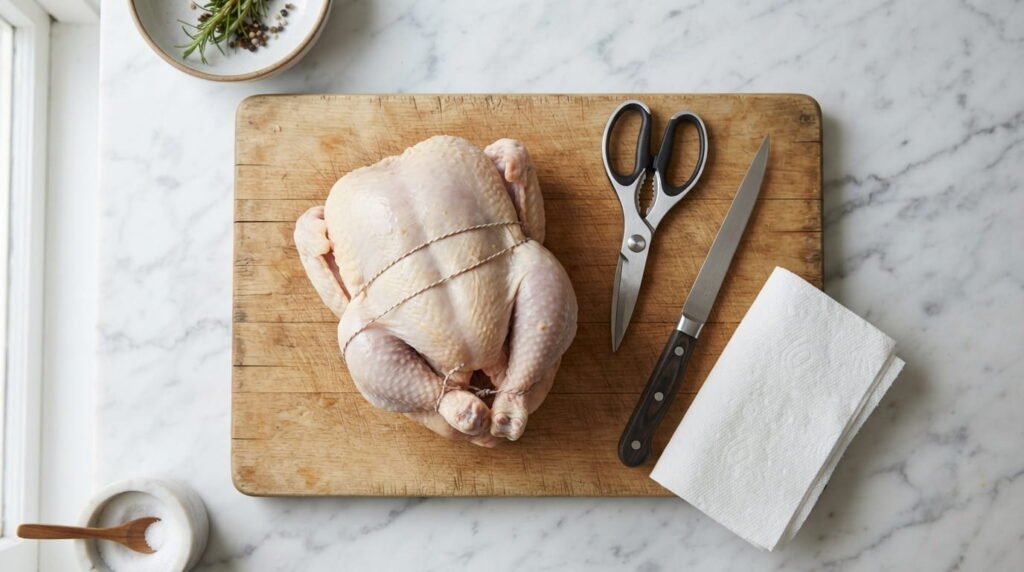
- Tuck the wing tips underneath the bird so they don’t burn during roasting, and tie the legs together with kitchen twine for more even cooking.
- Pat the chicken dry with a paper towel to remove surface moisture. This isn’t a food-safety step, it’s a texture one: a drier surface browns and crisps better in the oven or pan.
- Discard the paper towel and packaging immediately, then wash your hands with soap for 20 seconds before touching anything else.
How to Clean Chicken Breasts, Thighs, and Other Cuts
Cut-up chicken pieces need a lighter touch than a whole bird, but the same principles apply.
- Trim visible fat and silverskin from breasts and thighs using a sharp boning knife. Silverskin is the thin, pearly membrane that won’t break down during cooking and can leave a chewy bite if left on.
- Check for stray bone fragments or cartilage, especially on cuts from a butcher rather than pre-packaged trays.
- Pat each piece dry before seasoning or marinating. A dry surface helps seasoning stick and gives you a better sear.
- Skip the rinse here too. Boneless, skinless cuts in particular don’t need any water contact. If the tray liquid bothers you, a light pat with a paper towel handles it.
Why Food Safety Experts Say Skip the Rinse
This part surprises a lot of people, especially anyone who watched a parent or grandparent rinse chicken as a kitchen ritual. But the science behind the recommendation is consistent across every major health agency.
Raw chicken can carry bacteria like salmonella and campylobacter. Rinsing it under the tap doesn’t wash that bacteria away, since the meat’s surface isn’t smooth enough for water alone to remove it. What rinsing does instead is create tiny droplets that travel through the air and land on your countertops, sponge, faucet handle, and any nearby produce. In one USDA-funded study, roughly 60 percent of home cooks who washed their poultry ended up with bacteria in their sink afterward, and about a quarter of them transferred bacteria onto ready-to-eat lettuce nearby. That’s the cross-contamination risk in a nutshell: the bacteria doesn’t disappear, it just relocates.
The good news is that cooking chicken to 165°F, checked with a food thermometer in the thickest part of the meat, kills any bacteria present. That single step does the job that rinsing never could.
If You Still Want to Rinse Your Chicken
Washing chicken is a deeply rooted habit in many culinary traditions, including Caribbean, West African, and South Asian home cooking, often involving a rinse with water, vinegar, or citrus juice before seasoning. That history is worth acknowledging rather than dismissing outright. If you’re not ready to give up the habit entirely, the safest approach is to run the water gently to reduce splashing, immediately clean and sanitize the sink and surrounding counter afterward, and wash your hands for a full 20 seconds before touching anything else. It’s a compromise, not a food-safety endorsement, but it’s far safer than a full-force rinse with no cleanup plan.
One thing worth knowing: neither vinegar, lemon juice, nor a saltwater brine actually kills bacteria on chicken. They can affect flavor and texture, but none of them are a substitute for proper cooking temperature.
Keeping Your Kitchen Safe After Handling Raw Chicken
Cleaning chicken safely isn’t just about the bird itself, it’s about everything the bird touches on its way to the pan.
- Use a separate cutting board for raw chicken, ideally a dishwasher-safe one, and never reuse it for produce or ready-to-eat food without washing it first.
- Wash your hands with soap and warm water for 20 seconds after any contact with raw chicken or its packaging.
- Sanitize surfaces the chicken touched, including countertops and the sink, with hot soapy water followed by a sanitizing spray or wipe.
- Store leftovers promptly. Raw chicken should go in the fridge in a sealed container and be used within one to two days, or frozen for longer storage.
- Check the temperature, not the color. A food thermometer reading of 165°F is the only reliable way to know chicken is fully cooked.
Tools That Make Cleaning Chicken Easier
Having the right setup on hand makes the whole process faster and safer, and it’s one of those small kitchen habits that pays off every single time you cook poultry.
- A dedicated cutting board. Many home cooks use a color-coded set, with red or a distinct color reserved only for raw meat and poultry, so there’s never a question of which board is safe for produce.
- Kitchen shears. These make trimming fat, cutting through joints, and removing wing tips far easier than trying to force a chef’s knife through cartilage.
- A sharp boning knife. Ideal for trimming silverskin and separating meat from bone cleanly.
- Paper towels, used once and discarded. Never reuse a paper towel that touched raw chicken for anything else, including wiping your hands or another surface.
- A digital food thermometer. This is the single most important tool in the whole process, since it’s the only way to confirm the chicken actually reached a safe 165°F.
- A basic kitchen sanitizer, whether that’s a bleach solution or a store-bought disinfecting spray, kept specifically for post-poultry cleanup.
Keeping these within arm’s reach of your cutting board means you’re less likely to cut corners on the safety steps that actually matter.
Frequently Asked Questions
Does washing chicken with vinegar or lemon juice kill bacteria?
No. Acidic ingredients like vinegar, lemon juice, or buttermilk can add flavor and slightly change texture, but they don’t reach a high enough concentration to kill salmonella or campylobacter. Only cooking chicken to 165°F reliably kills these pathogens.
Why does raw chicken feel slimy?
That slippery texture comes from natural proteins on the surface of the meat, not dirt or bacteria buildup. It’s completely normal and disappears once the chicken is cooked, so there’s no need to rinse it away.
Is it OK to soak chicken in salt water or buttermilk before cooking?
Brining and buttermilk soaks are fine for flavor and tenderness, but they’re a personal culinary choice, not a food safety step. If you do soak chicken, pour out the liquid afterward rather than reusing it, and sanitize the container and any surfaces it touched.
How long can raw chicken sit in the fridge before cooking?
Raw chicken keeps safely in the refrigerator for one to two days after purchase. If you’re not cooking it within that window, freezing it in a sealed, airtight bag is the better option.
Should you use dish soap on raw chicken?
No. Soap isn’t approved for use on food and can leave a residue on the meat that isn’t fully rinsed away, plus it doesn’t kill the bacteria you’re trying to avoid in the first place. Soap belongs on your hands, cutting board, and utensils after handling raw chicken, never on the chicken itself.
Once your chicken is trimmed, patted dry, and ready to go, the rest is just cooking. Browse more of our kitchen prep guides on Kitchennista for the next step, whether that’s roasting, marinating, or breaking down a whole bird.