

How Long Can Steak Stay in the Fridge?
How long can steak stay in the fridge before it stops being safe to cook? For raw steak, the answer is three to five days when your fridge sits at or below 40°F. Cooked steak has a shorter window of three to four days. That’s the number that matters most, but the full picture changes depending on whether your steak is raw, cooked, thawed, or sitting in a marinade, and getting it wrong is an easy way to either waste good beef or take a risk you don’t need to take.
I’ve pulled steak out of my own fridge more times than I’d like to admit, squinting at it and trying to decide if today is the day or if it’s already too late. After testing storage methods on everything from thick ribeyes to thin flank steak in my own kitchen, here’s the breakdown that actually holds up, backed by USDA guidelines and what I’ve seen firsthand.
Quick Answer: Steak Storage Times at a Glance
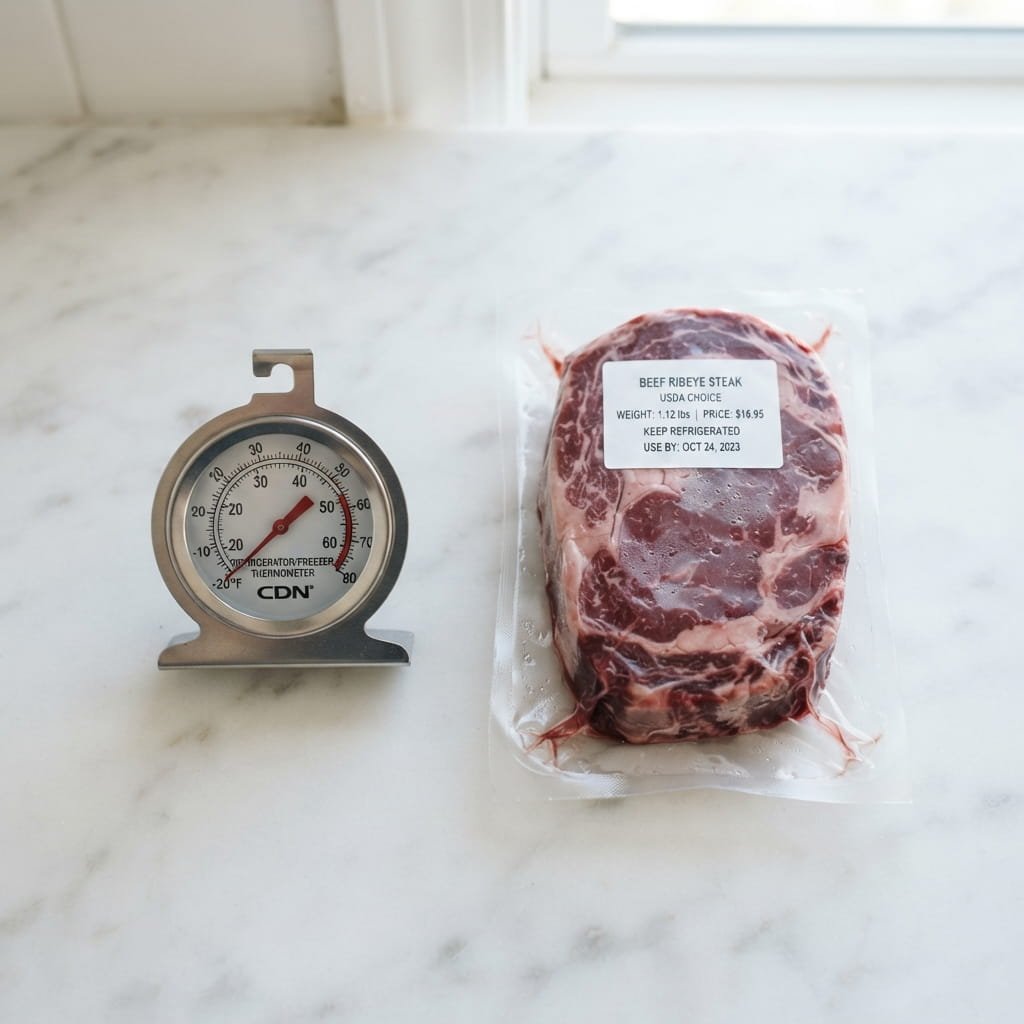
Raw steak lasts three to five days in the fridge. Cooked steak lasts three to four days. Thawed steak, if defrosted in the refrigerator, follows the same three-to-five-day rule as fresh raw steak. Marinated steak can technically sit for up to five days, though two to three days gives you the best texture. All of these numbers assume your fridge stays at or below 40°F, which is the temperature the USDA sets as the upper limit for safe cold storage.
If you remember nothing else from this guide, remember this: when a steak smells sour, feels slimy, or turns gray or green, the day count doesn’t matter anymore. Throw it out.
How Long Can Raw Steak Stay in the Fridge?
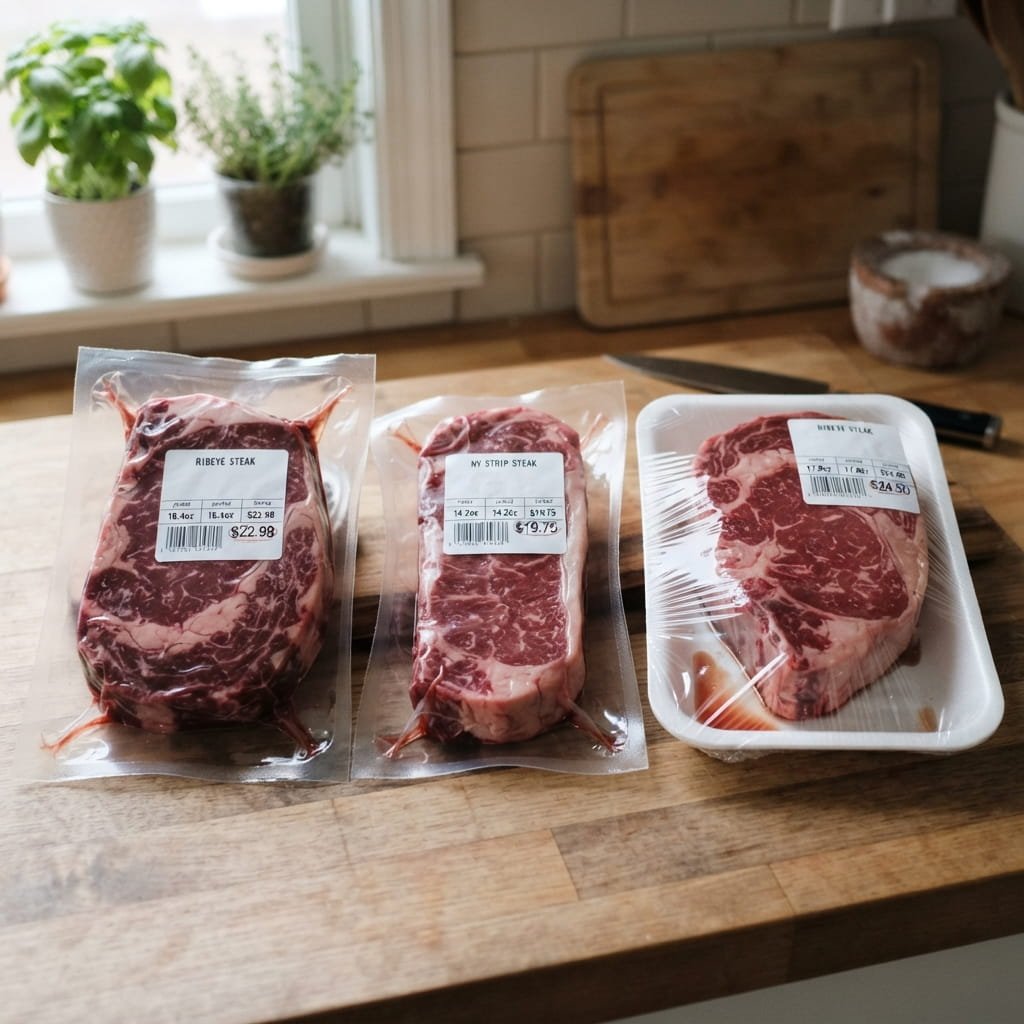
Fresh, uncooked steak stays good in the fridge for three to five days. That applies to whole muscle cuts like ribeye, New York strip, sirloin, and T-bone, the kind of steak you’d buy at a butcher counter or in a vacuum-sealed package from the grocery store. Ground beef is a different animal entirely and only holds up for one to two days, because grinding exposes far more surface area to bacteria.
How you package the steak affects where it lands in that three-to-five-day range. Vacuum-sealed cuts tend to reach the five-day mark comfortably, sometimes longer, since the lack of oxygen slows bacterial growth. A steak sitting in a foam tray under thin plastic wrap, the kind you’ll find in most supermarket meat cases, is exposed to more air and tends to lean closer to the three-day side.
Keep raw steak on the bottom shelf of the fridge, not the door and not a shelf above other food. This keeps any juices from dripping onto produce or ready-to-eat items. If the steak is still in its original store packaging, you can leave it as is. If you’ve opened it, rewrap it tightly in plastic wrap, butcher paper, or a zip-top bag with the air pressed out.
One thing that trips people up is color. It’s completely normal for raw steak to turn a duller brown in spots, especially toward the center of a thick cut or wherever the meat isn’t exposed to air. That happens because myoglobin, the protein responsible for red color, reacts differently depending on oxygen exposure. It’s not a sign of spoilage on its own. The sell-by date printed on the package is a guideline for the store, not a hard expiration date. If the steak still looks and smells right, it’s typically fine to cook within that three-to-five-day window even after that date has passed.
How Long Can Cooked Steak Stay in the Fridge?
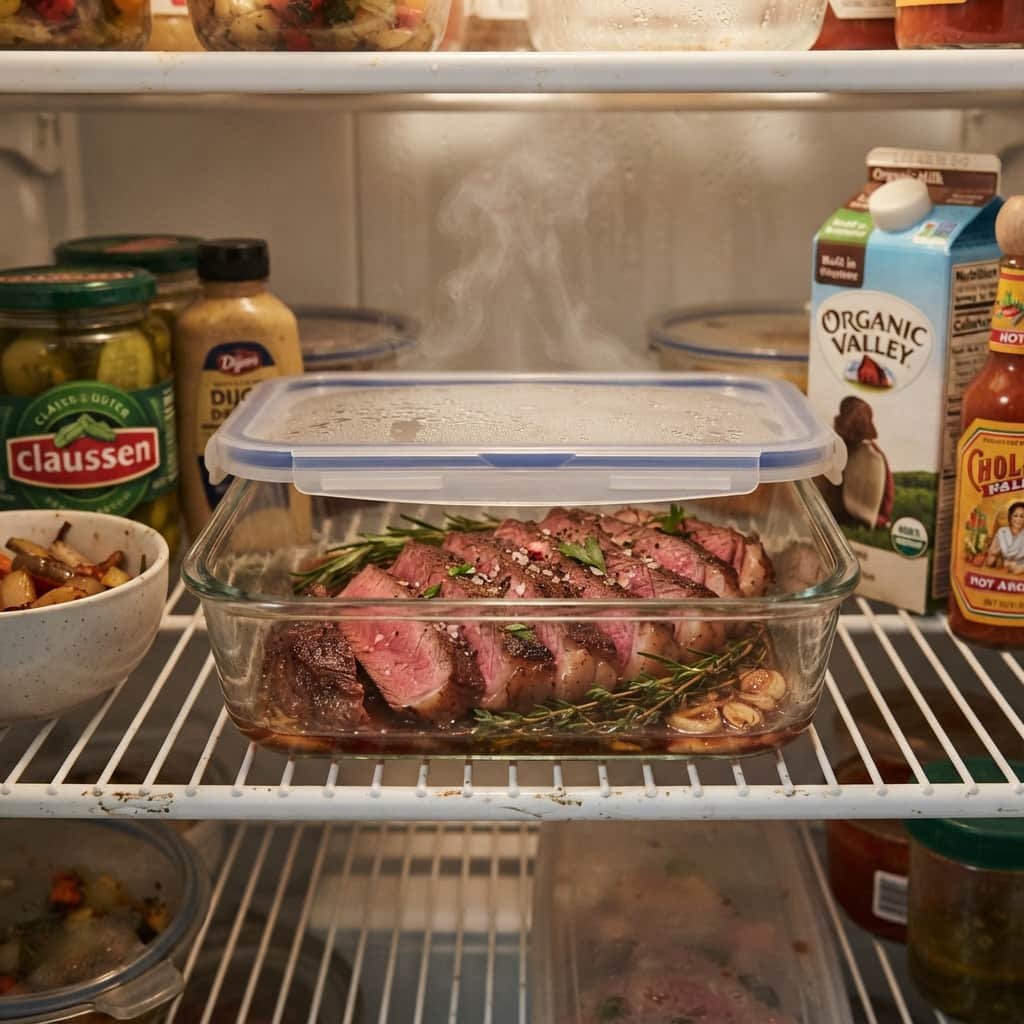
Cooked steak lasts three to four days in the fridge, whether you pan-seared it, grilled it, or slow-cooked it. The cooking method itself doesn’t change the storage window in any meaningful way. What matters is how quickly you got it into the fridge and how well it’s sealed once it’s in there.
Get cooked steak into the refrigerator within two hours of cooking. If it sat out at room temperature longer than that, or longer than one hour on a hot day above 90°F, it’s safer to toss it than to risk it. Once refrigerated, store it in an airtight container or wrap it tightly in foil or plastic wrap to hold onto moisture and keep it from picking up smells from other foods.
For the best eating experience rather than just technical safety, aim to finish cooked steak leftovers within two to three days. After that, the texture starts to slide, drier, tougher, less like the steak you originally cooked, even though it’s still within the safe window. When you do reheat it, bring it back up to an internal temperature of 165°F to make sure any bacteria that could have developed during storage gets killed off.
How Long Can Thawed or Defrosted Steak Stay in the Fridge?
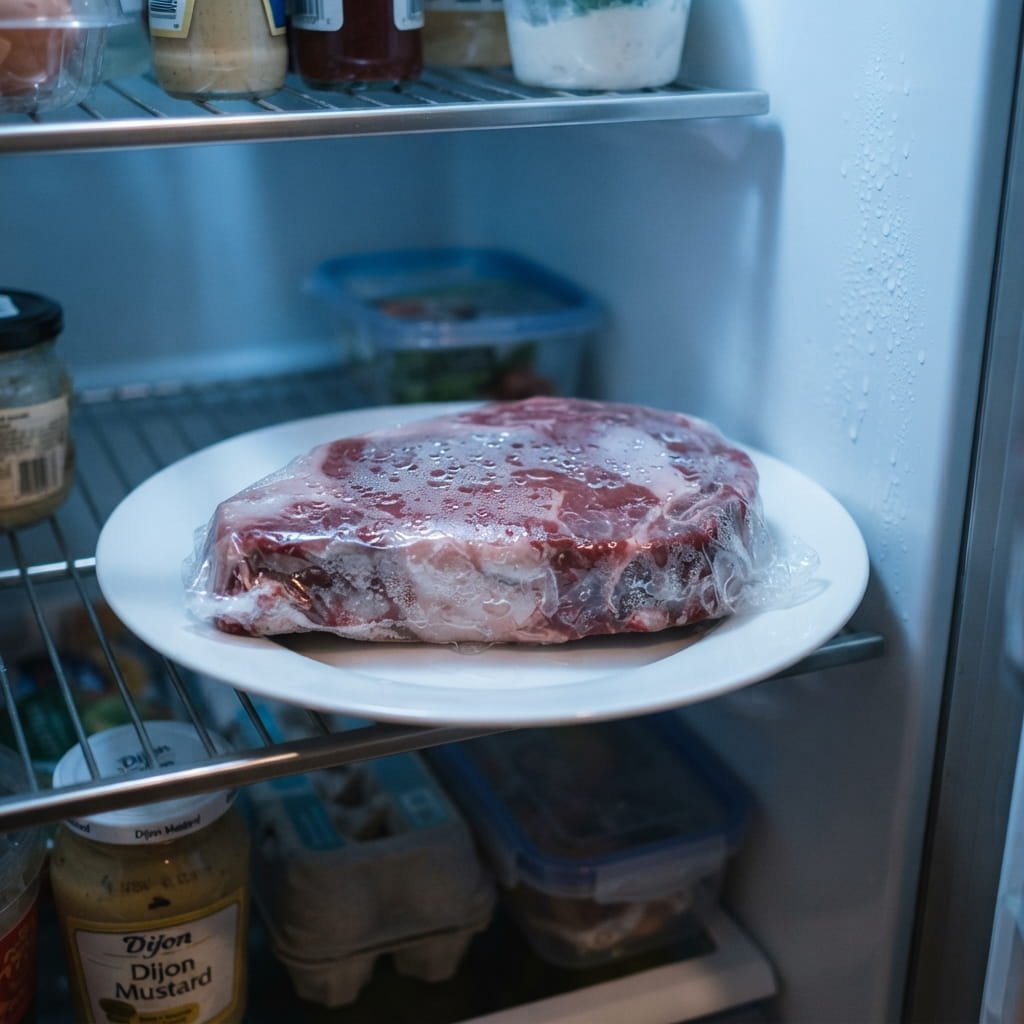
This is where the method you used to thaw the steak actually changes the rules. If you moved a frozen steak into the refrigerator and let it thaw slowly and safely, it follows the same three-to-five-day window as fresh raw steak, counted from when it finishes thawing. This is the method food safety experts recommend, and it’s the one that gives you the most flexibility if your dinner plans shift.
Cold-water thawing or microwave thawing are faster, but they come with a catch. Both methods expose parts of the steak to temperatures above 40°F while it defrosts, which is why steak thawed this way needs to be cooked immediately. You can’t cold-water-thaw a steak in the afternoon, change your mind about dinner, and put it back in the fridge raw for later. It has to go straight to the pan.
Wondering whether you can refreeze a thawed steak? If it was thawed in the refrigerator and never left safe temperatures, USDA guidance says yes, you can refreeze it raw. Each freeze-thaw cycle does cost you some texture and moisture as ice crystals rupture the muscle fibers, so it’s worth doing sparingly. If you know you won’t cook it in time, cooking it first and then freezing the cooked portion holds up better than refreezing it raw.
How Long Can Marinated Steak Stay in the Fridge?

Marinated steak can technically stay in the fridge for up to five days, matching the general raw steak window, but the marinade itself puts a practical limit on that. Acidic marinades built around citrus juice, vinegar, or wine start breaking down the surface proteins after roughly 24 to 48 hours. Leave the steak in one of those marinades too long and you’ll end up with a mushy, mealy texture instead of the tender bite you were going for.
For most marinade recipes, two days is the sweet spot between flavor development and texture. If your marinade is oil-based with little to no acid, you have more room to work with and can push closer to the full three-to-five-day range without the same texture concerns. If you’re not sure you’ll cook the steak in time, freeze it directly in the marinade. It’ll keep for up to three months that way, and the marinade continues doing its job slowly while frozen.
How to Tell If Steak Has Gone Bad
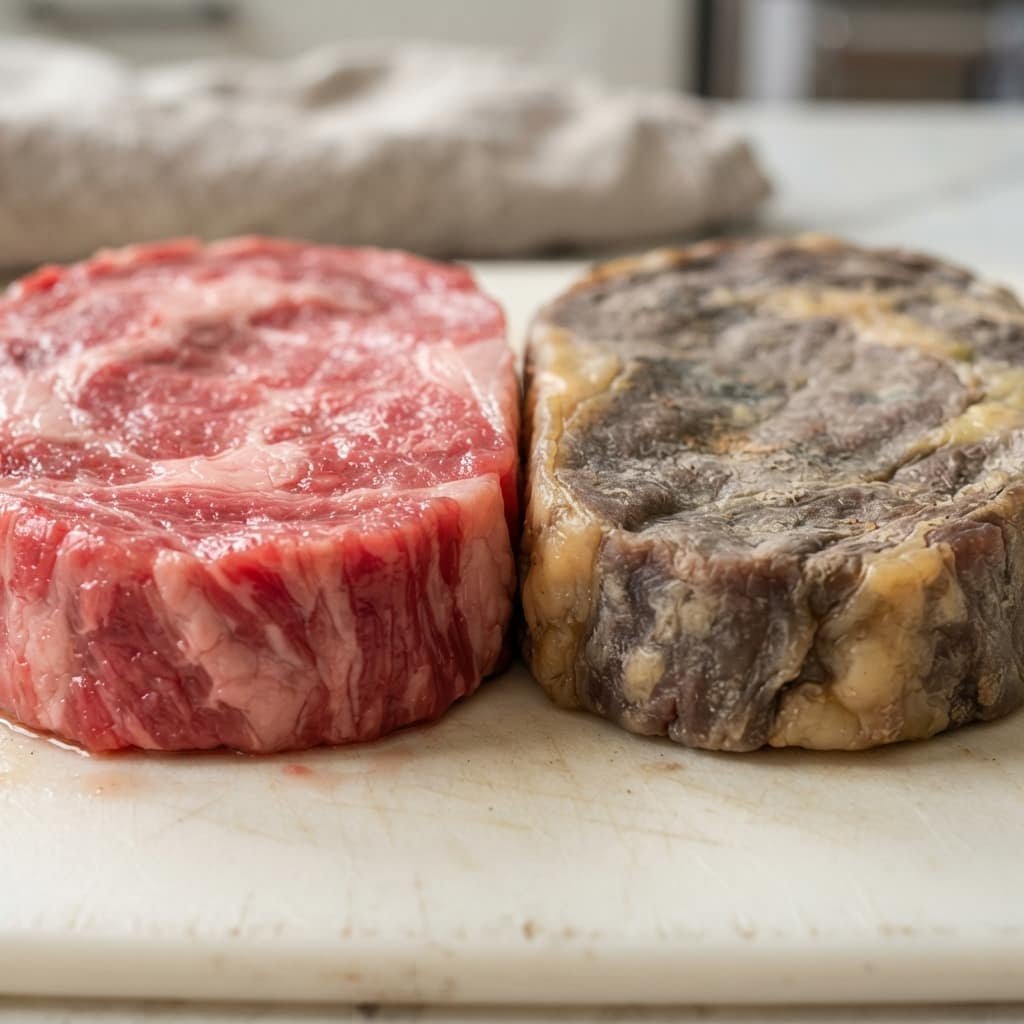
Day counts are a helpful guideline, but your senses are the final check. A few signs mean it’s time to throw the steak out regardless of how many days have passed:
- Slimy or sticky texture. Fresh steak should feel firm and just slightly moist, never tacky or slick.
- Off color. Brown patches are normal, but gray, green, or a dull blue-ish tint are not.
- Sour or sulfurous smell. Fresh beef has a mild, clean, meaty scent. Anything sour, like spoiled milk, or anything reminiscent of rotten eggs or ammonia, is a clear red flag.
- Visible mold. If you see it, the steak goes straight in the trash, no exceptions.
When any of these show up, the safe answer is always the same: when in doubt, throw it out. Food poisoning from spoiled beef isn’t worth saving a few dollars of meat.
Tips to Make Steak Last Longer in the Fridge

A little extra care at home stretches every day out of that storage window:
- Keep your fridge at or below 40°F, and check it with an actual thermometer rather than trusting the dial.
- Store raw steak on the bottom shelf, sealed tightly, away from produce and ready-to-eat food.
- Don’t open store packaging until you’re ready to cook or rewrap it.
- Cool cooked steak briefly before refrigerating, but don’t leave it out past the two-hour mark.
- When freezing is the better option, do it before the fridge window runs out, not after.
Frequently Asked Questions

Is it OK to eat steak that’s a week old?
Generally, no. Raw steak past five days in the fridge falls outside the USDA’s recommended safety window, even if it still looks and smells okay. Bacteria can be present without any obvious signs, so a week-old raw steak is a risk that isn’t worth taking.
Can you eat steak after the sell-by date has passed?
Often, yes. The sell-by date is meant for store inventory, not a strict safety cutoff. If the steak was purchased within the last few days, has been refrigerated properly, and still looks and smells normal, it’s typically safe to cook within the standard three-to-five-day window.
Why does raw steak turn brown in the fridge?
It’s usually just oxygen exposure, not spoilage. The myoglobin in beef reacts to air, turning bright red where it’s exposed and duller brown where it isn’t, like the inside of a thick cut or a tightly wrapped package. Spoilage looks different: gray, green, or slimy, often paired with a bad smell.
Can you refreeze steak that was thawed in the fridge?
Yes, as long as it thawed in the refrigerator and stayed at a safe temperature the entire time. The texture may suffer slightly from the second freeze-thaw cycle, but it’s safe to do. Steak thawed in cold water or the microwave should not be refrozen raw.
Getting the timeline right means less guessing every time you open the fridge, and a lot less good beef ending up in the trash. Keep these windows in mind, trust your nose and eyes when something feels off, and that steak dinner you’ve been planning will turn out exactly the way it should.