
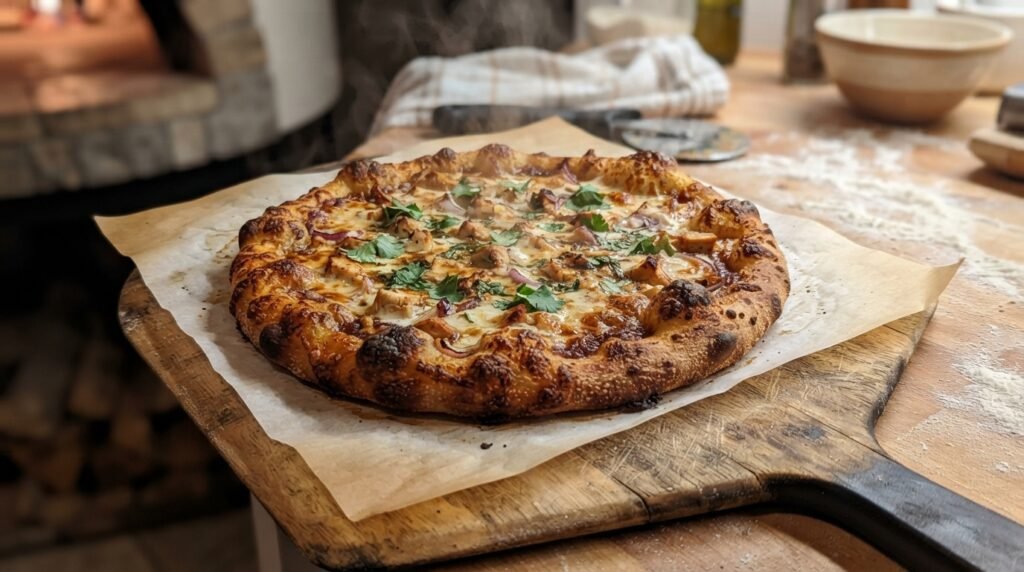
Canned Chicken Pizza Crust: A Crispy 4-Ingredient Recipe
If you want pizza without flour, complicated dough, or a long list of specialty ingredients, canned chicken pizza crust is worth trying. Instead of turning chicken into a topping, you use it as the base. Mix well-drained canned chicken with egg, Parmesan, and seasonings, press it thin, and bake until firm and golden.
The result is not an exact copy of traditional bread-based pizza crust. It has a savory chicken-and-Parmesan flavor and a denser texture, but it can become surprisingly crisp around the edges and sturdy enough to hold a generous layer of sauce, cheese, and toppings.
The biggest lesson with this recipe is simple: moisture is the enemy of crispness. If the chicken is wet, the crust can stay soft in the middle. If you squeeze it dry and spread the mixture thin, you get a much better base.
This recipe also works well when you need a quick dinner from pantry staples. There is no yeast, rising time, kneading, or rolling. From opening the can to putting a finished pizza on the table, you can have dinner ready in roughly 30 minutes.
What Is Canned Chicken Pizza Crust?
Canned chicken pizza crust is a flourless pizza base made primarily from canned chicken, egg, and Parmesan cheese. Seasonings can be added for extra flavor.
Rather than forming a conventional dough, you combine the ingredients into a thick mixture and press it directly onto parchment paper. The egg helps bind the mixture while the Parmesan contributes structure and browning. The chicken provides most of the body of the crust.
Once baked, the mixture becomes firm enough to support pizza toppings. The edges can become browned and crisp, while the center remains more substantial and tender.
One thing to keep in mind is that this is chicken-based pizza crust, not a traditional crust made to imitate wheat dough. You should expect a savory flavor rather than the neutral taste of bread. That is actually one of its strengths: it works particularly well with bold toppings such as pepperoni, barbecue sauce, buffalo-style toppings, mushrooms, or roasted vegetables.
It is also naturally gluten-free when the individual ingredients are gluten-free. If you need to avoid gluten strictly, check the labels of canned chicken, seasonings, sauces, and other packaged ingredients for cross-contact or gluten-containing additives.
Why Does This Pizza Crust Work?
The recipe succeeds because each ingredient has a different job.
Canned chicken forms the bulk of the crust. Its shredded texture gives you something that can be pressed into a pizza shape.
Egg acts as a binder. Without a binder, the chicken mixture would have a much harder time holding together after baking.
Parmesan adds flavor and helps the crust firm and brown as it cooks.
Seasonings make the base taste more like pizza rather than simply baked chicken. Garlic powder, Italian seasoning, black pepper, or similar savory seasonings work well.
The technique matters just as much as the ingredient list. A thick chicken crust contains more moisture in the center and takes longer to become firm. A thin, evenly pressed crust has more surface area exposed to the oven, which helps it brown and crisp.
That is why simply adding more cheese or baking the crust much longer is not always the answer. If the chicken is excessively wet or the crust is too thick, you are fighting the basic structure of the recipe.
Ingredients You Need
For one pizza crust, gather:
- 12 ounces canned chicken, drained and pressed very dry
- 1 large egg
- Finely grated Parmesan cheese
- Garlic powder, Italian seasoning, or black pepper, to taste
The exact amount of Parmesan can be adjusted depending on the consistency of your chicken. You want a mixture that holds together when pressed rather than a loose, wet mixture.
Choose the Right Canned Chicken
Canned chicken varies considerably in moisture, texture, and saltiness. This matters more than you might expect.
If your canned chicken contains a lot of liquid, drain it first and then press out additional moisture. A lower-sodium variety can also be helpful because Parmesan and pizza sauce bring plenty of salt on their own.
Do not judge the chicken by how dry it looks immediately after opening the can. The chicken can still contain enough moisture to make the finished crust soft.
For the best results, put the drained chicken in a fine-mesh strainer and press it firmly with the back of a spoon. You can also use paper towels to blot or press away excess liquid.
How to Make Canned Chicken Pizza Crust
1. Heat the oven and prepare the pan
Preheat your oven to 400°F (200°C).
Line a baking sheet or pizza pan with parchment paper. This is more than a convenience. The chicken mixture can stick firmly to an unlined pan, making it difficult to remove the crust without breaking it.
If you have a pizza stone, you can use one, but parchment and a standard baking sheet are perfectly practical for this recipe.
2. Get the chicken as dry as possible
Drain the canned chicken thoroughly.
Next, press it in a strainer or use paper towels to remove additional moisture. Take your time here. This is one of the easiest places to improve the finished crust.
If the chicken is dripping wet when you mix it with the egg, you are starting with too much moisture. The oven then has to evaporate that water before the crust can properly brown.
3. Break up the chicken
Place the drained chicken in a mixing bowl and break apart any large pieces with a fork.
You want reasonably small pieces so the mixture spreads evenly. If you prefer a more cohesive texture, pulse the chicken briefly in a food processor. Do not turn it into a completely smooth paste; a little texture is useful.
4. Mix the crust ingredients
Add the egg, Parmesan, and your chosen seasonings.
Mix until everything is evenly distributed. The mixture should be moist enough to press together but not watery.
If it looks unusually loose, give the mixture a minute to absorb the egg and cheese before deciding whether it needs adjustment.
5. Press it into a thin circle
Transfer the mixture to your parchment-lined pan.
Use your hands, a spatula, or the back of a spoon to press it into a thin, even circle.
Aim for roughly ¼ inch thick.
Try not to make the center significantly thicker than the edges. Uneven thickness is one of the easiest ways to end up with crisp edges and a soft middle.
If the mixture sticks to your hands, lightly wet your fingers and continue pressing.
6. Bake the plain crust
Bake for approximately 15 to 20 minutes, watching for the edges to become firm and lightly browned.
The exact time will depend on the thickness of your crust, how much moisture remained in the chicken, and how your oven heats.
Do not rely only on the timer. Look at the crust. You want it visibly set and beginning to brown rather than pale and wet.
7. Let it rest
Remove the crust from the oven and let it rest for about 10 minutes before adding sauce.
This step is easy to skip when you are hungry, but it helps the crust firm up before the toppings are added.
If you immediately spread wet sauce over a very hot, freshly baked crust, the surface can soften.
8. Add toppings and bake again
Spread on a moderate layer of pizza sauce. Add shredded mozzarella and your preferred toppings.
Return the pizza to the oven for another 8 to 12 minutes, or until the cheese is melted and the toppings are hot.
For extra browning, you can finish the pizza under the broiler briefly. Watch it closely because cheese can go from browned to burnt quickly.
How Do You Make the Crust Extra Crispy?
If your main goal is a crisp canned chicken pizza crust, focus on three things: dry chicken, thin spreading, and controlled toppings.
First, remove as much liquid as possible from the chicken. This has a bigger effect than simply increasing the oven temperature.
Second, press the crust thinly and evenly. A thick base may be easier to shape, but it takes longer to dry out.
Third, do not drown the crust in sauce. A heavy layer of wet sauce adds moisture just when you want the surface to stay firm.
A preheated pizza stone can also help the bottom brown more effectively. However, you do not need specialized equipment to make this recipe work.
One practical trick is to make the crust slightly smaller rather than trying to stretch it across an oversized baking sheet. A manageable pizza is easier to keep at an even thickness.
Common Mistakes That Make Chicken Pizza Crust Soggy
Using wet chicken
This is the most common problem. Draining the can is not necessarily enough. Press the chicken firmly to remove additional liquid.
Making the crust too thick
A thick center can remain soft even when the edges look finished. Spread the mixture evenly rather than piling it into the middle.
Adding toppings too soon
Let the first-baked crust rest before adding sauce and cheese. That short pause gives the structure time to firm.
Using too much sauce
Chicken crust does not behave exactly like a thick wheat crust. Excess sauce can soften the surface quickly.
Overloading the pizza
A mountain of cheese, meat, and vegetables adds weight and moisture. Keep the toppings balanced, especially the first time you make the recipe.
Adding salt automatically
Canned chicken and Parmesan may already provide plenty of salt. Taste your other ingredients before adding more.
What Toppings Work Best?
The crust has a savory flavor, so it pairs naturally with toppings that complement chicken and Parmesan.
Classic Pepperoni
Use pizza sauce, mozzarella, and pepperoni for a familiar combination. Keep the sauce layer moderate so the crust stays firm.
Garlic Alfredo Chicken Pizza
For a creamy option, spread a thin layer of Alfredo sauce over the baked crust, then add mozzarella, spinach, red onion, and a little extra chicken if desired.
BBQ Chicken Pizza
Use barbecue sauce instead of traditional pizza sauce and top with shredded chicken, red onion, and cheddar or mozzarella.
Vegetable Pizza
Try tomato sauce with mushrooms, bell peppers, olives, onions, and mozzarella. Slice watery vegetables thinly so they do not release excessive moisture during baking.
Caesar-Style Pizza
Bake the crust with a small amount of cheese, then add a Caesar-style salad after baking. The contrast between the warm crisp base and cool salad makes this a particularly different way to use the crust.
Can You Use Fresh Chicken Instead of Canned?
Yes. Cooked shredded chicken can be used in place of canned chicken.
Rotisserie chicken or cooked chicken breast is a practical alternative. Remove excess skin and very large pieces of fat, then shred the meat finely before mixing it with the other ingredients.
The important comparison is not simply canned versus fresh. Moisture and texture matter more.
Freshly cooked chicken that is still very moist can create the same problem as poorly drained canned chicken. On the other hand, relatively dry shredded chicken can produce a firmer crust.
Raw ground chicken is a different situation. Because it starts uncooked, it should not simply be treated as an identical substitute for cooked canned chicken. The cooking process and required temperature are different.
Is Canned Chicken Pizza Crust Actually Low Carb?
The crust itself contains no traditional flour or grain. Its main ingredients—chicken, egg, and Parmesan—are generally very low in carbohydrates.
However, the finished pizza is not automatically low carb. The sauce and toppings you choose can add carbohydrates.
For example, a pizza topped with a sugary barbecue sauce or a conventional pizza sauce containing added sugar will have a different carbohydrate profile from one made with a lower-carbohydrate sauce.
If carbohydrate intake matters to you, check the labels on your canned chicken, sauce, cheese, and toppings rather than assuming every version of the recipe has the same nutrition.
Can You Make the Crust Ahead of Time?
Yes. One of the easiest ways to make this recipe more convenient is to bake the plain crust ahead of time.
Allow it to cool completely, then store it in an airtight container in the refrigerator. When you are ready for pizza, add your sauce, cheese, and toppings and bake until hot.
This works particularly well for meal prep because the most time-consuming part—making and baking the base—has already been completed.
For longer storage, the baked plain crust can also be frozen. Place parchment between individual crusts or wrap them well to reduce sticking and freezer exposure.
When you want pizza, you can add toppings to the frozen crust and bake it until heated through. The exact reheating time will depend on the thickness of the crust and the amount of topping.
How Should You Store Leftovers?
Store leftover pizza in an airtight container in the refrigerator and use it within about 3 to 4 days.
For the best texture, reheat it in an oven, toaster oven, or air fryer rather than relying on the microwave alone. Microwaving tends to make many pizza crusts softer because of the way moisture is redistributed during heating.
If you are reheating several slices, place them in a single layer so the bottom has a chance to become firm again.
Canned Chicken Pizza Crust vs. Traditional Pizza Crust
The biggest difference is texture.
Traditional wheat dough gives you a chewy, bread-like crust with a neutral flavor. Canned chicken crust is denser, more savory, and much more protein-focused because chicken forms the base.
| Feature | Canned Chicken Crust | Traditional Flour Crust |
|---|---|---|
| Main ingredient | Canned chicken | Wheat flour |
| Yeast required | No | Often |
| Rising time | None | Often required |
| Flavor | Savory and chicken-forward | Mild and bread-like |
| Texture | Firm and dense | Chewy and airy |
| Gluten | Naturally flour-free | Usually contains gluten |
| Preparation | Mix, press, bake | Mix, knead, rise, shape |
| Best use | Quick alternative pizza base | Classic pizza |
Neither option needs to replace the other. If you want traditional chewy pizza dough, make traditional dough. If you want something quick, flourless, and protein-rich, chicken crust offers a useful alternative.
Why I Would Make This Recipe Again
The appeal is not that it magically becomes regular pizza dough. It does not.
The appeal is that it solves several practical problems at once. You can keep canned chicken in the pantry, combine it with a few refrigerator staples, and have a pizza base without waiting for dough to rise.
The technique also becomes easier after the first attempt. Once you see how dry the chicken needs to be and how thin the mixture should be, you can adjust the next batch based on the texture you prefer.
For a first attempt, I would keep the crust relatively thin, use a modest amount of sauce, and choose simple toppings. That makes it much easier to judge the crust itself.
Then, once you know how your oven handles it, experiment with thicker or thinner bases, different seasonings, and new topping combinations.
Final Thoughts
A good canned chicken pizza crust does not try to pretend that chicken is wheat dough. It takes a different route to the same dinner: a firm, savory base that can carry sauce, melted cheese, and your favorite toppings.
The recipe is especially useful when you want a quick flourless pizza and already have canned chicken in the pantry. Start with very dry chicken, press the mixture thinly, bake the crust before topping it, and give it a few minutes to rest.
Those small details make the difference between a soft chicken mixture and a sturdy pizza base you can actually pick up and eat
Does canned chicken pizza crust taste like chicken?
Yes, there is a savory chicken flavor, but the Parmesan, seasoning, sauce, cheese, and toppings can balance it considerably. It is better to think of the crust as a savory pizza base rather than expecting it to taste exactly like bread.
Why is my canned chicken pizza crust falling apart?
The mixture may contain too much moisture, the crust may not have baked long enough, or it may have been cut before it had time to firm up. Drain and press the chicken thoroughly, bake until the crust is visibly set, and allow it to rest before topping or slicing.
Why is my chicken crust soft in the middle?
The most likely causes are excess moisture and excessive thickness. Press the mixture thinner and remove more liquid from the chicken before mixing.
Can I make canned chicken pizza crust without Parmesan?
Parmesan contributes both flavor and structure, so removing it changes the recipe substantially. You can experiment with another finely grated hard cheese, but you should expect a difference in texture and flavor.
Can I use mozzarella in the crust?
Mozzarella can be incorporated into variations, but it behaves differently from Parmesan because it contains more moisture and melts differently. For a first batch, keeping Parmesan as the primary cheese makes it easier to achieve a firm base.
Can I freeze canned chicken pizza crust?
Yes. The plain baked crust can be cooled, wrapped well, and frozen. Freezing individual crusts between sheets of parchment makes them easier to separate when you need a quick meal.
How thin should chicken pizza crust be?
About ¼ inch is a useful starting point. Thinner crusts generally have an easier time becoming crisp, while thicker crusts produce a softer, denser center.
Can I make this recipe gluten-free?
The crust ingredients themselves are naturally flour-free, but check packaged ingredients such as canned chicken, seasoning blends, sauces, and toppings if you need to avoid gluten strictly.


Pingback: California Pizza Kitchen Menu: Prices & Best Picks 2026