Can You Freeze Chicken Noodle Soup? Yes, Here’s How
Can you freeze chicken noodle soup? Yes, and it holds up better than most home cooks expect. A big pot of chicken noodle soup is one of those recipes that almost always makes more than one meal, and the freezer is the easiest way to keep the extra from going to waste. The short version: cool it fast, store it in freezer-safe containers, and think carefully about what you do with the noodles. The long version, including exactly how to do it and where people usually go wrong, is below.
Can You Freeze Chicken Noodle Soup? Quick Answer
Yes, chicken noodle soup freezes well. The broth, chicken, and vegetables hold their flavor and texture for up to three months in the freezer, sometimes longer if you’re not too picky about texture. The one ingredient that doesn’t freeze gracefully is the noodles themselves, since they soak up broth as they sit and can turn soft and swollen once thawed. Freeze the base without noodles when you can, and you’ll get soup that tastes freshly made every time you reheat it.
That’s the whole answer in a nutshell. Here’s how to actually do it.
How to Freeze Chicken Noodle Soup the Right Way
Freezing soup isn’t complicated, but a few small steps make a real difference in how it tastes three months from now.
Cool it down first. Never put hot soup straight into the freezer. It raises the temperature inside the appliance, which can put other frozen food at risk, and it also encourages condensation and freezer burn in the container itself. Let the pot sit at room temperature for up to two hours, then move it to the fridge to finish cooling before it goes into the freezer. If you’re in a hurry, set the pot in an ice bath and stir occasionally to speed things along.
Choose freezer-safe containers. Rigid plastic containers, freezer-safe mason jars, and heavy-duty freezer bags all work. Freezer bags are great for saving space since they lay flat and stack neatly once frozen. Glass jars work too, but always leave extra headspace, since liquid expands as it freezes and a full jar can crack.
Portion before you freeze. Divide the soup into single servings or family-sized portions, whatever matches how you’ll actually eat it later. Small silicone freezer trays or reusable soup cubes are handy for this, and they make thawing just one bowl at a time much easier than defrosting an entire batch.
Leave room for expansion. Fill containers no more than three-quarters full. That extra space at the top keeps the container from bulging or cracking as the liquid freezes and expands.
Press out the air. For bags, squeeze out as much air as possible before sealing. Less air means less freezer burn and a soup that tastes fresher when you finally reheat it.
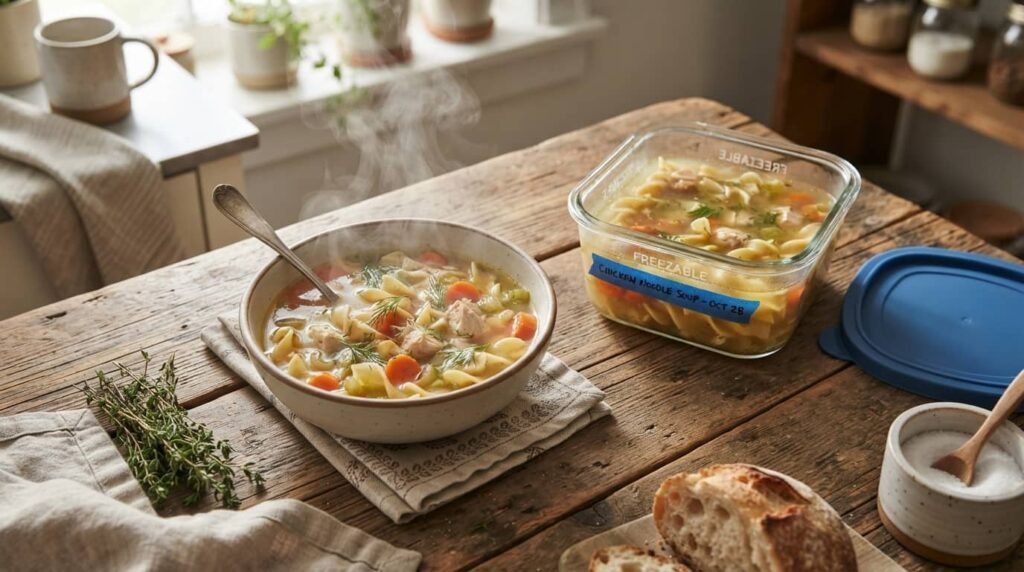
Label everything. Write the date and contents on each container. Chicken noodle soup keeps its quality for a few months, but it’s easy to lose track of what’s what once your freezer starts filling up with other freezer-safe containers of soup, stock, and leftovers.
Freeze bags flat. Lay filled freezer bags on a baking sheet until solid, then stack them upright. It saves freezer space and helps the soup freeze evenly.
Should You Freeze Chicken Noodle Soup With the Noodles In It?
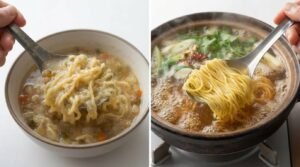
You can, but most people who cook chicken noodle soup regularly will tell you not to. Noodles are mostly starch, and starch keeps absorbing liquid even after cooking. Once frozen and thawed, noodles that were simmered in the soup often turn mushy, swollen, or downright disintegrated by the time you reheat everything.
The fix is simple: cook the soup base, chicken, and vegetables, then freeze that without the pasta. Cook fresh noodles, or a fresh batch of egg noodles, orzo, or ditalini, right before serving and stir them into the hot soup at the end. If you already have a pot with noodles in it and don’t want to fuss with separating them, you can still freeze it as-is. Under-cooking the noodles to al dente before freezing helps limit how mushy they get, and the soup will still be perfectly edible, just softer than fresh.
If you’re freezing vegetables along with the broth and chicken, a quick blanch on anything like carrots or celery before adding them to the pot can also help preserve a bit more bite once the soup is reheated.
How Long Does Chicken Noodle Soup Last in the Freezer?
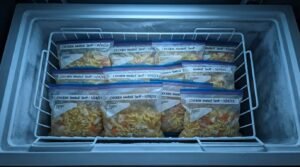
Properly stored chicken noodle soup stays safe to eat for months in the freezer, but quality is what actually declines over time, not safety. For the best flavor and texture, aim to use it within three months. Many home cooks stretch that to five or six months without much noticeable difference, especially if the soup was well sealed with minimal air exposure.
Compare that to the fridge, where chicken noodle soup only keeps for about three to five days. If you know you won’t finish a batch that quickly, freezing is the better call every time.
A quick way to judge quality once you pull soup from the freezer: check for ice crystals, freezer burn (dry, discolored patches), or an off smell after thawing. None of those make the soup unsafe on their own, but they’re a sign the flavor and texture have taken a hit.
Can You Freeze Store-Bought or Canned Chicken Noodle Soup?
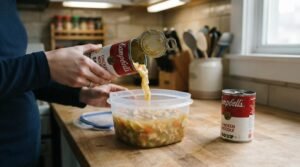
Yes, with one caveat. Canned chicken noodle soup can technically be frozen, but the can itself should never go in the freezer. Metal cans can bulge, crack, or even burst as the contents expand. Pour the soup into a freezer-safe container or bag first, then freeze it the same way you would homemade soup.
Store-bought soup from the deli counter or a carton also freezes fine using the same rules: cool it if it’s still warm, portion it, leave headspace, and label the container. The noodles in canned or packaged soup will go through the same texture change as homemade noodles, so don’t expect them to bounce back perfectly after thawing.
How to Thaw Frozen Chicken Noodle Soup
The safest way to thaw chicken noodle soup is in the refrigerator. Move the container from the freezer to the fridge the night before you plan to eat it, and let it thaw slowly over 12 to 24 hours depending on the size of the portion. This keeps the soup at a safe temperature the entire time.
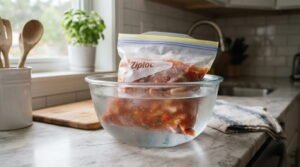
If you’re short on time, place the sealed container or bag in a bowl of cold water on the counter. Change the water every 30 minutes or so, and most single-serving portions will thaw within an hour or two. Avoid thawing soup at room temperature for extended periods, since that gives bacteria a window to grow.
You can also skip the thawing step entirely and reheat straight from frozen on the stovetop over low heat, breaking up the frozen block as it warms.
How to Reheat Frozen Chicken Noodle Soup Without Ruining It
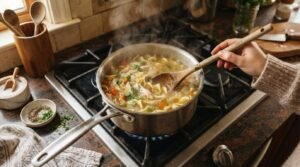
Once thawed, chicken noodle soup reheats best on the stovetop. Pour it into a saucepan over medium-low heat, stirring occasionally so it warms evenly and doesn’t scorch on the bottom. Bring it to a gentle simmer rather than a hard boil, then stir in freshly cooked noodles if you froze the base without them.
The microwave works fine for single servings. Cover the bowl loosely, heat in 30 to 60 second bursts, and stir between each one so the soup heats evenly instead of staying cold in the middle. For a larger batch, an oven set to a low temperature with the soup covered in a baking dish will reheat it gently without drying it out, though the stovetop is faster for most weeknight dinners.
Taste and adjust the seasoning after reheating. Soup often tastes slightly milder after freezing, so a pinch more salt, pepper, or fresh herbs at the end brings the flavor back to where it started.
Frequently Asked Questions
Can you freeze chicken noodle soup with noodles already in it?
Yes, but the noodles will likely turn soft and slightly mushy after thawing since they continue absorbing broth in the freezer. For the best texture, freeze the soup base without noodles and add freshly cooked ones when you reheat it.can you freeze chicken noodle soup
How long can you freeze chicken noodle soup?
Chicken noodle soup stays good in the freezer for up to three months at peak quality, and it’s generally still safe and tasty for up to six months if it’s well sealed in a freezer-safe container.
Can you freeze chicken noodle soup twice?
It’s best to avoid refreezing soup that has already been thawed. Each freeze-thaw cycle breaks down texture further and increases the risk of bacterial growth if the soup sits out too long during thawing. Only refreeze soup that’s been thawed in the refrigerator and hasn’t been left at room temperature.can you freeze chicken noodle soup.
Does freezing chicken noodle soup change the taste?
Not significantly. The broth, chicken, and vegetables generally taste very close to fresh after freezing and reheating. The main change people notice is in the noodles, which is why cooking them fresh at serving time makes such a difference.
A Few Mistakes to Avoid
A handful of small missteps are responsible for most disappointing freezer soup. Skipping the cooling step and freezing soup while it’s still warm is one of the biggest, since it leads to ice crystals and a watery texture later. Overfilling containers without leaving headspace is another common one, and it can crack glass jars or split freezer bags. Freezing a huge, single batch instead of individual portions also means you end up thawing far more soup than you actually want to eat in one sitting.
The fix for all of it comes down to the same handful of habits: cool completely, portion smart, leave room to expand, and freeze the noodles separately whenever you can.
Next time you make a big batch of chicken noodle soup, don’t let the extra sit in the fridge until it goes to waste. A little prep before it goes into the freezer means a comforting, homemade bowl of soup is always just a reheat away.