Boneless Lamb Leg Recipe That Turns Out Juicy Every Time
If you’ve been putting off a boneless lamb leg recipe because bone-in roasts intimidate you, this is the easier route to the same holiday-worthy centerpiece. A boneless leg of lamb is already trimmed, rolled, and tied, which means less carving guesswork and a shorter ingredient list: garlic, fresh rosemary, olive oil, salt, and pepper are really all you need. I’ve made this one for Easter, for a random Sunday in February, and for a dinner party where I was trying to look far more capable than I actually am. It worked every time.
This guide walks through picking the right cut, building a simple garlic-herb rub, exact roasting times by weight, and the internal temperatures that separate a rosy, tender slice from a gray, chewy one.
How Do You Cook a Boneless Leg of Lamb?
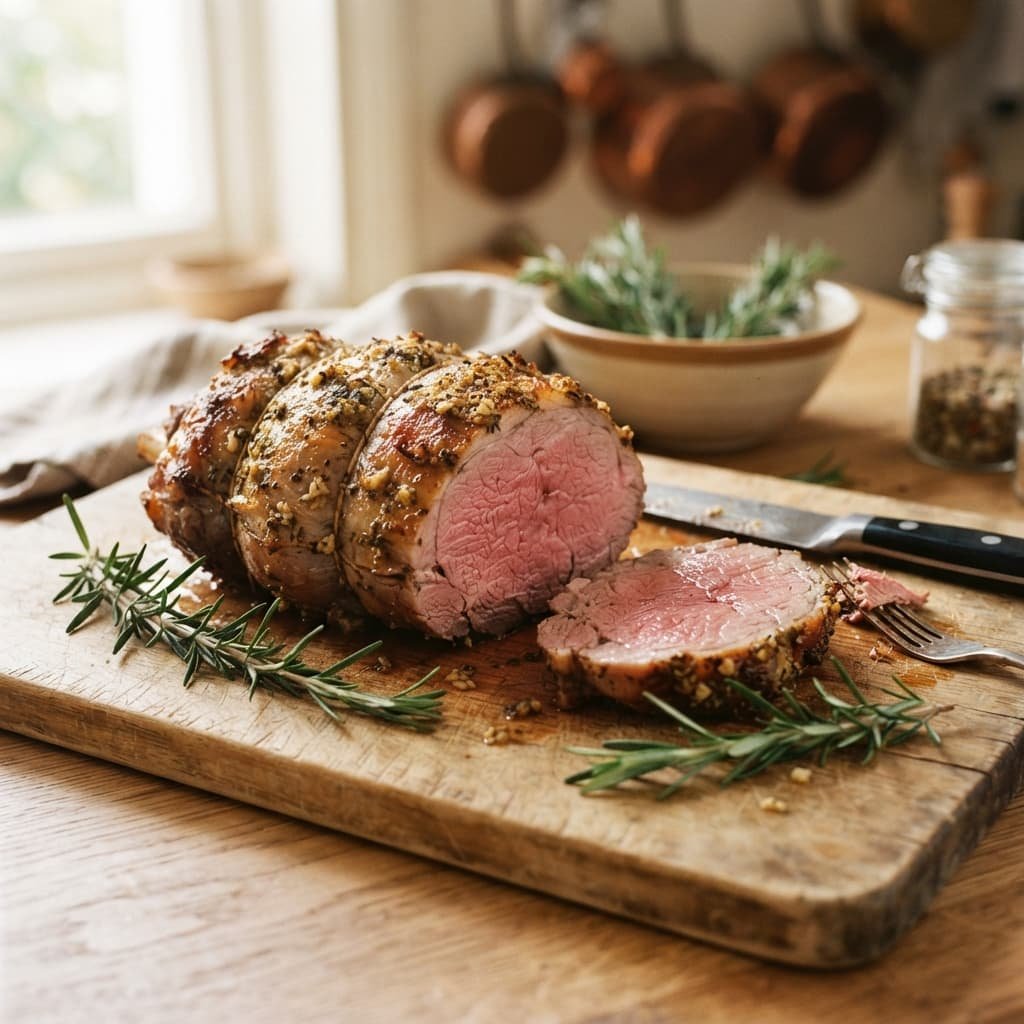
Rub the lamb with olive oil, garlic, salt, pepper, and rosemary, then roast it at 450°F for 15 minutes before dropping the oven to 350°F. Cook until an instant-read thermometer reads 130-135°F for medium-rare, which usually takes 15 to 20 minutes per pound. Rest it for 15 minutes before slicing. That’s the whole method in one paragraph; the details below explain why each step matters.
What Is Boneless Leg of Lamb?
A boneless leg of lamb is exactly what it sounds like: the leg cut with the bone removed, then rolled into a compact cylinder and tied with butcher’s twine so it cooks evenly. It typically weighs 3 to 5 pounds, a couple pounds lighter than a bone-in leg since there’s no bone taking up space. You’ll find it fresh or frozen at most grocery stores, and many come pre-rolled in netting, though your butcher can also debone and tie one for you on request.
Compared to bone-in, a boneless leg is easier to season (you can open it up and rub garlic and herbs on the inside, not just the surface) and much easier to carve at the table, since there’s no bone to work around. The tradeoff is that it cooks slightly less evenly than a bone-in roast, so a reliable meat thermometer matters more here than almost any other cut.
Ingredients for This Boneless Lamb Leg Recipe
- One boneless leg of lamb, 4 to 5 pounds
- 15 cloves garlic (5 minced into a paste, 10 sliced into slivers)
- 5 tablespoons fresh rosemary, chopped
- 1/4 cup fresh parsley, minced
- 2 tablespoons olive oil
- Kosher salt, about 3/4 to 1 teaspoon per pound of meat
- Freshly cracked black pepper
Rosemary and garlic are the backbone of nearly every version of this dish, but lamb is forgiving. Thyme and oregano both stand in well for rosemary if that’s what’s in your fridge, and a spoonful of Dijon mustard whisked into the oil adds a sharper, slightly tangy crust. If you like a brighter finish, add lemon zest to the rub; the citrus cuts through the richness of the meat nicely.
How to Season and Tie a Boneless Leg of Lamb
Seasoning a boneless leg is different from seasoning a steak, because you get to work flavor into the inside of the meat before it’s rolled shut, not just the surface.
- Pat the lamb completely dry with paper towels. A dry surface browns better than a damp one.
- Open the lamb up so the interior is facing up on a cutting board. Drizzle it with olive oil, then rub in half the salt, pepper, garlic paste, rosemary, and all of the parsley.
- Roll the lamb into a tight cylinder, then tie it with kitchen twine at 1 to 2 inch intervals. A snug roll cooks more evenly than a loose one, so don’t rush this part.
- Cut small slits across the outside of the roast and tuck a garlic sliver into each one. This is optional, but it’s the detail that makes people ask what your secret is.
- Rub the outside with the remaining olive oil, salt, pepper, and rosemary.
If your lamb already comes netted or pre-tied from the store, you can season the outside only and skip the untying, though you’ll miss out on getting flavor into the center of the roast.
Step-by-Step: Roasting a Boneless Lamb Leg
- Preheat your oven to 450°F with the rack in the middle position.
- Place the seasoned, tied lamb on a wire rack set inside a roasting pan. Pour about 1 1/2 cups of water into the bottom of the pan, keeping the level below the lamb itself; this catches drippings and keeps the pan from smoking.
- Roast for 15 minutes at 450°F, then lower the oven to 350°F and continue roasting until the internal temperature reaches your target.
- Check the temperature with an instant-read or probe thermometer inserted into the thickest part of the roast, avoiding the twine and any pockets of fat.
- Pull the lamb 5 to 10 degrees before your target temperature, since it will keep climbing while it rests.
- Tent the roast loosely with foil and let it rest for 15 minutes before removing the twine and slicing.
Resting isn’t optional if you want juicy slices. Cutting into the lamb right out of the oven sends all that liquid straight onto the cutting board instead of back into the meat.
Boneless Leg of Lamb Cooking Time and Temperature Chart
How long to cook a boneless leg of lamb depends on its weight and how well-done you like it. As a general rule, plan on 15 to 20 minutes per pound at 350°F after the initial high-heat sear, though a full 20 to 25 minutes per pound is safer if your oven runs cool or your roast is on the thicker side.
| Doneness | Pull Temperature | Final Resting Temperature |
|---|---|---|
| Rare | 115-120°F | 120-125°F |
| Medium-rare | 125-130°F | 130-135°F |
| Medium | 135-140°F | 140-145°F |
| Medium-well | 145-150°F | 150-155°F |
The USDA’s official minimum safe temperature for whole cuts of lamb is 145°F with a three-minute rest, which lands right around medium. Most chefs and longtime lamb cooks pull it earlier, at medium-rare, because the flavor and texture hold up better than well-done lamb, which can turn tough and take on a stronger gamey taste. If you’re serving a crowd with mixed preferences, the ends of the roast finish more done than the center, so everyone can find a slice they like.
Common Mistakes to Avoid
Skipping the thermometer. Timing alone is a rough guide, not a guarantee, since oven calibration and the exact shape of your roast both affect cook time. An instant-read thermometer is the only way to know for sure you’ve hit your target doneness instead of guessing and cutting into it to check, which lets juices escape.
Rolling the lamb too loosely. A loose roll cooks unevenly, with thin edges drying out long before the thick center reaches temperature. Tie it snugly enough that it holds a firm cylinder shape on the cutting board.
Not resting the meat. Even a perfectly cooked roast turns disappointing if you slice into it immediately. Fifteen minutes under a foil tent lets the juices redistribute and gives you cleaner, juicier slices instead of a puddle on the cutting board.
Cooking it well-done. Lamb leg has less fat marbling than something like a ribeye, so pushing it past medium tends to dry it out and intensify the gamey flavor some people already find polarizing. Medium-rare to medium is where this cut is at its best.
Buying a roast without checking the label. “Boneless leg of lamb” and “boneless lamb shoulder” are cooked very differently, and grocery store labeling isn’t always consistent. Look for a lean, tied cylinder shape with a thin fat cap rather than a chunkier, more marbled cut.
What to Serve With Boneless Leg of Lamb
Lamb pairs naturally with garlicky roasted potatoes cooked in the pan drippings, a bright green salsa verde with parsley and mint, and simple roasted vegetables like green beans or broccoli. A crisp salad with lemon vinaigrette helps balance the richness of the meat, and if you want to lean into the Mediterranean flavors already in the rub, a side of rice pilaf or warm flatbread rounds out the table.
Storing and Reheating Leftover Lamb
Sliced leftover lamb keeps in an airtight container in the refrigerator for 3 to 4 days. To reheat without drying it out, wrap slices in foil and warm them at 250-300°F until just heated through rather than blasting them in a hot oven or microwave. For longer storage, the roast freezes well, whole or sliced, for up to 3 months; thaw it in the fridge overnight before reheating.
Leftover lamb is genuinely one of the best reasons to make this recipe. It’s excellent chopped into a grain bowl, tucked into a pita with the leftover salsa verde, or simmered into a quick soup with white beans and greens.
This boneless lamb leg recipe is simple enough for a Tuesday and impressive enough for Easter, which is exactly why it’s become the one I reach for whenever lamb is on the menu. Give it a try this weekend, and don’t be shy with the garlic.
Frequently Asked Questions
How long does it take to cook a 4-pound boneless leg of lamb?
A 4-pound boneless leg of lamb takes roughly 1 hour to 1 hour 20 minutes total at 350°F after the initial 15-minute sear at 450°F, aiming for 15 to 20 minutes per pound. Start checking the internal temperature at the 50-minute mark so you don’t overshoot your target doneness.
What temperature should boneless leg of lamb be cooked to?
For medium-rare, pull the lamb at 125-130°F and let it rest up to 130-135°F. The USDA’s minimum safe temperature for whole cuts of lamb is 145°F with a three-minute rest, which is closer to medium doneness. Both are safe; the choice comes down to personal preference.
Should I cover boneless leg of lamb while roasting?
No, roast it uncovered so the exterior browns and the herb crust crisps up. Covering it traps steam and gives you a paler, softer surface instead of a proper roasted crust.
Can I cook boneless leg of lamb from frozen?
It’s best to thaw it fully in the refrigerator first, which usually takes 24 to 48 hours for a 4 to 5 pound roast. Cooking from frozen makes it nearly impossible to season the interior and leads to uneven cooking between the outside and center.