Mason Jar Salad Recipes: The Layering Method for Lunches That Stay Fresh
Mason jar salad recipes solve a real problem: regular salads turn into a soggy mess by day two in the fridge. Pack the same ingredients in a jar in the right order, though, and they’ll stay crisp for up to five days. This guide walks through the exact layering method, seven flavor combinations to try, and the small mistakes that ruin an otherwise good jar.
What Is a Mason Jar Salad?
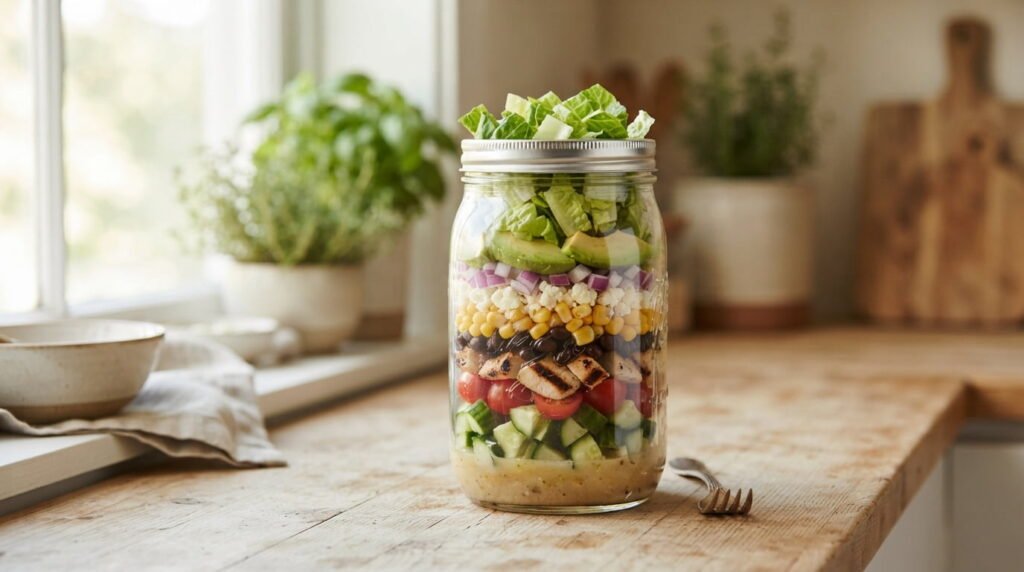
A mason jar salad is a layered, make-ahead salad built inside a glass jar instead of a bowl or container. The dressing sits at the bottom, the greens sit on top, and everything in between is arranged by how well it holds up to moisture. Because the lettuce never touches the dressing until you’re ready to eat, it stays crisp instead of wilting.
I tested this in my own kitchen for a full work week, swapping proteins and dressings each day, and the jars genuinely held up better than any Tupperware salad I’ve packed before. It’s less about a specific recipe and more about a formula you can apply to almost anything already in your fridge.
This kind of meal prep works especially well for office lunches, school days, or anyone who wants a healthy option ready to grab on the way out the door. Prep five jars on a Sunday afternoon and you’ve got the whole workweek covered without touching a cutting board again until Friday.
The Right Way to Layer Mason Jar Salad Recipes
Layering order is the whole trick behind mason jar salad recipes that actually last. Build from the bottom up like this:
- Dressing goes in first, 2 to 3 tablespoons per jar. Keep it as far from the greens as possible.
- Hearty vegetables come next, since they can sit in dressing without going limp. Think carrots, cucumbers, bell peppers, onions, radishes, and corn.
- Protein follows, whether that’s grilled chicken, chickpeas, taco meat, shrimp, or leftover salmon.
- Watery vegetables and fruit go after the protein, since they release moisture and shouldn’t sit in the dressing directly. This includes tomatoes, mushrooms, and berries.
- Eggs and cheese come next. They’re sturdy enough to handle being packed but soft enough that you don’t want them at the very bottom.
- Nuts, seeds, or croutons sit near the top so they keep their crunch.
- Greens go on last, filling whatever room is left. Spinach, romaine, kale, or arugula all work.
Don’t mix the dressing into the jar before sealing it. It’s tempting, but dressing that splashes up the sides will make your other layers soggy before you even get to the fridge. When you’re ready to eat, shake the closed jar hard to coat everything, then dump it into a bowl rather than trying to eat straight from the jar.
What Size and Type of Jar to Use
A wide-mouth quart jar (32 ounces) is the most practical size for a full meal-sized mason jar salad, since it gives greens enough room without crushing anything underneath. A pint jar (16 ounces) works better for a lighter lunch or a side salad, and you’d use about half the ingredient amounts.
Wide-mouth jars are worth the small extra cost over regular-mouth ones because they make layering and eating far easier. Glass is also the better choice over plastic containers since it won’t absorb smells or stain from dressing over time. If you don’t have mason jars on hand, any tall, narrow container with a tight lid, including cleaned-out pasta sauce jars, will work using the same layering formula.
The shape of the container matters more than the brand. A short, wide container gives the ingredients too much surface area to slide around and mix before you’re ready, which defeats the whole point of layering. Tall and narrow keeps everything stacked and separated until you deliberately shake it up at lunchtime.
7 Mason Jar Salad Recipes to Try This Week
These mason jar salad recipes all follow the same layering formula above. Swap the dressing or protein for whatever you already have on hand.
Greek Chicken Salad. Greek dressing, cucumber, red onion, grilled chicken, cherry tomatoes, feta, and romaine. Tangy and simple, and one of the easiest to prep ahead.
Taco Salad. Salsa mixed with a little sour cream, bell peppers, red onion, seasoned ground beef or turkey, cherry tomatoes, shredded cheddar, and romaine. Skip the tortilla chips until serving so they stay crunchy.
Chef Salad. Thousand island dressing, cucumber, diced deli ham, cherry tomatoes, cubed cheddar and swiss, a sliced hard-boiled egg, walnuts, and romaine. This one is closer to a full meal than a side dish.
Caprese Chicken Salad. Olive oil and balsamic whisked right in the jar bottom, grilled chicken, cherry tomatoes, fresh mozzarella, romaine, and torn basil. No separate dressing to make.
Strawberry Spinach Salad. Poppy seed dressing, cooked salmon or grilled chicken, sliced strawberries, goat cheese, sliced almonds, and spinach. The fruit needs to stay a layer or two above the dressing so it doesn’t get crushed.
Chicken Caesar Salad. Caesar dressing, grilled chicken, cherry tomatoes, parmesan, croutons, and chopped romaine. Add the croutons the morning you plan to eat it if you’re prepping several days ahead.
Mediterranean Chickpea Salad. Olive oil and lemon dressing, cucumber, chickpeas, red onion, kalamata olives, crumbled feta, and chopped romaine. A solid vegetarian option that holds up just as well as the meat-based versions.
How Long Mason Jar Salads Last in the Fridge
Most mason jar salad recipes stay fresh for 3 to 5 days when layered correctly and stored upright with the lid sealed tight. Some people push that to 6 or 7 days depending on the ingredients, but produce freshness and the specific protein used both play a role. Salads with tuna, seared steak, or avocado tend to hold up for a shorter window than ones built around sturdier ingredients like chickpeas or roasted chicken.
Keep the jars on a higher fridge shelf where air circulates better rather than tucked in the back or bottom drawer. And always store them standing upright. If a jar tips over, dressing can work its way up into the greens well before you’re ready to eat.
It also helps to prep dressings and proteins in batches ahead of the actual assembly day. Homemade dressing keeps in the fridge for one to two weeks on its own, and cooked chicken or grains can be made two or three days in advance. Just build the jars themselves closer to when you plan to eat them if you’re working from ingredients that were already sitting in the fridge for a few days, since the five-day countdown starts from assembly, not from when the chicken was cooked.
Can You Turn Any Salad Into a Mason Jar Salad?
Yes. Almost any salad recipe can be converted into a mason jar version by following the same layering order: dressing first, hearty vegetables next, then protein, watery ingredients, eggs or cheese, crunchy toppings, and greens on top. The formula matters more than the specific ingredients, so use whatever salad you already like.
Mistakes That Ruin Mason Jar Salad Recipes
A few small missteps account for most soggy or wilted jars:
- Packing avocado in advance. It browns fast once cut. Add it fresh right before eating instead of layering it days ahead.
- Skipping the barrier layer. Watery ingredients like tomatoes need something dry, like cheese or eggs, between them and the greens, or the lettuce will still wilt even with the dressing safely at the bottom.
- Overpacking the jar. Cramming in too many ingredients leaves no room to shake and mix later, which means an uneven bite every time.
- Using a jar that’s too narrow or short. A squat jar makes it hard to keep layers separated. Tall and narrow beats wide and short.
- Forgetting to chop everything beforehand. Mason jar salad recipes come together fastest when every ingredient is already prepped and just needs to go in the jar in order.
Frequently Asked Questions
How long do mason jar salads stay fresh? Most last 3 to 5 days in the fridge when layered properly and sealed tightly. Ingredients like fresh berries or delicate herbs may start to soften sooner, while heartier vegetables and grains hold up closer to the full five days.
What size mason jar should I use? A wide-mouth quart jar (32 ounces) works best for a full meal salad. A pint jar (16 ounces) is a better fit for a lighter lunch or side portion.
Do I need a special dressing for mason jar salad recipes? No. Any dressing you already like works, homemade or store-bought. Thicker dressings like ranch or Caesar tend to stay put a little better than thin vinaigrettes if you’re traveling with the jar, but both work fine for everyday meal prep.
How do I eat a mason jar salad? Turn the sealed jar upside down and shake it well to coat the ingredients in dressing, then dump everything into a bowl. Eating straight from the jar works in a pinch, but a bowl makes it much easier to actually mix and reach the bottom layers.
Once you’ve got the layering order down, mason jar salad recipes stop being a recipe you follow and start being a formula you can build lunch around all week. Pick a dressing, grab what’s in the fridge, and layer away.