
Gluten Free Alfredo Sauce (Easy Homemade Recipe)
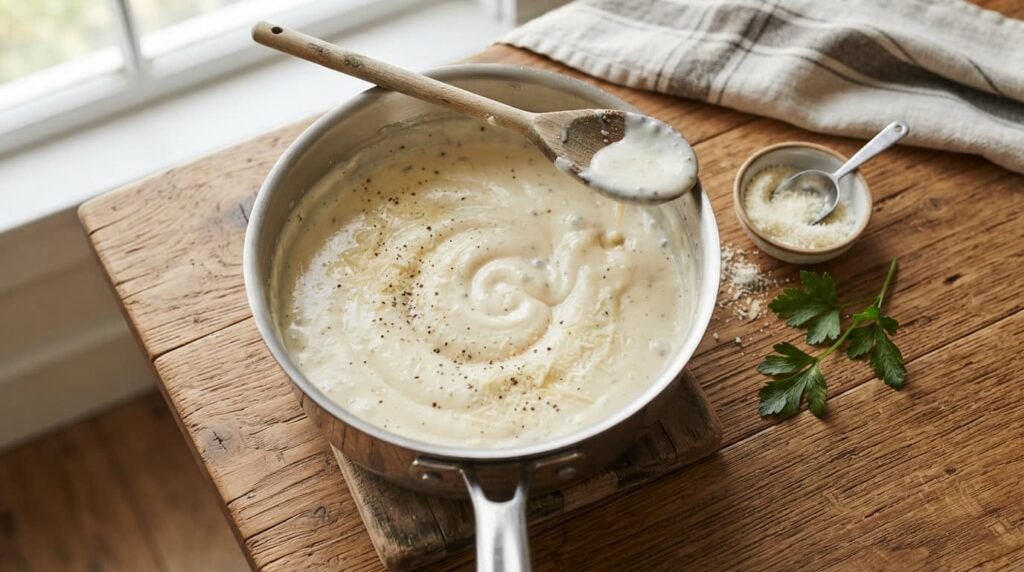
Gluten free Alfredo sauce is easier to make than most people expect, because a real Alfredo is naturally free of wheat to begin with. This version comes together in one pan with butter, cream, and Parmesan, no flour and no jar required, and it is ready in about 15 minutes. If you have been staring at store shelves trying to figure out which jarred sauce is safe, or you just want a version you know is trustworthy because you made it yourself, this recipe covers both.
Is Alfredo Sauce Naturally Gluten Free?
Quick answer: yes, classic Alfredo sauce is naturally gluten free, because it is traditionally just butter, cream, and Parmesan cheese with no flour involved at all. The confusion usually starts with restaurants and jarred brands, some of which add a flour or wheat-based thickener to save on cheese costs. If you are cooking at home, a homemade gluten free Alfredo sauce lets you control every ingredient, so there is no guesswork and no fine print to read.
That said, cross-contamination is worth thinking about if you or someone you are cooking for has celiac disease rather than a mild sensitivity. Use a clean pan, check your Parmesan for shared-facility warnings if you need to be strict, and always pair the sauce with a certified gluten-free pasta rather than assuming the pasta is automatically safe just because the sauce is.
Ingredients for This Gluten Free Alfredo Sauce
This is a short, honest ingredient list. Nothing here is trying to disguise itself as something fancier than it is.
- Unsalted butter
- Fresh garlic, minced
- Heavy cream (or a mix of milk and cream cheese if that is what you have)
- Freshly grated Parmesan cheese, plus more Parmigiano Reggiano if you want a sharper edge
- Salt and black pepper
A couple of notes from testing this in my own kitchen more times than I can count. Freshly grated Parmesan melts smoother than the pre-shredded bag kind, because the bagged stuff is coated in a starchy anti-caking agent that can leave the sauce a little grainy. Heavy cream gives the richest, most stable texture, but if you only have milk on hand, whisking in a few cubes of cream cheese gets you most of the way there without needing any thickener at all.
How to Make Gluten Free Alfredo Sauce
- Melt the butter. In a medium saucepan or skillet over medium-low heat, melt the butter completely.
- Add the garlic. Stir in the minced garlic and cook for about a minute, just until fragrant. Do not let it brown, or it turns bitter fast.
- Pour in the cream. Slowly whisk in the heavy cream. Let it come to a gentle simmer, not a hard boil, and let it reduce slightly for 3 to 4 minutes so it starts to thicken naturally.
- Melt in the cheese. Lower the heat and add the Parmesan a handful at a time, whisking constantly so it melts into the sauce instead of clumping at the bottom of the pan.
- Season and finish. Add salt and pepper to taste. If the sauce looks thinner than you want, keep it on low heat for another couple of minutes, since it will also continue to thicken slightly as it cools.
- Toss with pasta. Add your favorite gluten-free pasta directly into the pan, or spoon the sauce over the top and toss gently to coat.
The whole process takes about the same amount of time as boiling a pot of pasta, so you can genuinely have this ready before your fettuccine is drained.
How to Thicken Gluten Free Alfredo Sauce Without Flour
A classic roux uses equal parts butter and flour, which is off the table here, but you have several gluten-free ways to get the same creamy body.
- More cheese. The simplest fix. Whisk in extra freshly grated Parmesan a little at a time until the sauce coats the back of a spoon.
- Cream cheese. A few cubes whisked into warm sauce add both thickness and a subtle tang, and it melts in smoothly without any grainy texture.
- Cornstarch slurry. Whisk a teaspoon of cornstarch with a tablespoon of cold water, then stir it into the simmering sauce. It thickens within a minute or two and does not change the flavor.
- Tapioca starch or arrowroot powder. Both work as a 1:1 swap for cornstarch if that is what is in your pantry, and both hold up well even after the sauce cools.
- A gluten-free flour blend. If you want a slightly thicker, more restaurant-style consistency, a teaspoon or two of a gluten-free all-purpose blend whisked into a splash of cream before adding it to the pan works the same way a traditional roux would.
Whichever route you pick, add the thickener gradually. It is much easier to thicken a thin sauce further than to loosen up one that has gone too thick.
Can You Make Gluten Free Alfredo Sauce Dairy Free?
Yes, though it does change the texture and flavor a bit from the classic version. Swap the butter for a plant-based butter alternative, use a full-fat dairy-free milk like canned coconut milk or a cashew-based cream for richness, and replace the Parmesan with a dairy-free Parmesan-style cheese or a few tablespoons of nutritional yeast for that savory, cheesy note. The sauce will not taste identical to the dairy version, but it lands close enough that most people serving it to a mixed table of dairy-free and dairy-eating guests are happy with it.
One thing worth knowing before you swap ingredients: regular dairy milk on its own, without any cream or cream cheese backup, tends to make a thin, watery sauce no matter how long you simmer it. If you are cutting the fat content, lean on a cornstarch slurry to hold the sauce together.
Store-Bought Gluten Free Alfredo Sauce Brands to Trust
Homemade is always going to be the most reliable option, but on a weeknight when you need something from a jar, a few widely available brands are naturally gluten free without any hidden thickeners. Rao’s Alfredo Sauce is a favorite among gluten-free home cooks for its short, simple ingredient list. Prego’s Alfredo line and Classico’s Alfredo sauces are also commonly cited as gluten free, though formulas do change from time to time. For a dairy-free and gluten-free combination, cashew or cauliflower-based Alfredo sauces from brands like Vegan Valley are worth a look.
The one habit worth building regardless of brand: check the label every time, not just the first time. Manufacturers reformulate products, and a sauce that was safe last year is not guaranteed to be safe today.
Serving, Storing, and Reheating Gluten Free Alfredo Sauce
This sauce is at its best fresh, since the high dairy content means it is happiest served right away over hot pasta, but leftovers are easy to save. Refrigerate it in an airtight container for up to 3 days. When you reheat it, use low heat on the stovetop and whisk constantly, since the sauce naturally separates a bit in the fridge and needs to be brought back together gently. The microwave tends to make it split, so stick to a pan if you can.
Freezing is possible but not ideal. Dairy-heavy sauces like this one can turn slightly grainy after thawing, so if you do freeze it, expect to freeze it for up to a month, thaw it overnight in the fridge, and whisk it hard while reheating to bring it back to a smoother consistency.
Beyond pasta, this sauce works well spooned over roasted vegetables, used as a dip for gluten-free breadsticks, or spread thin as a base for a white pizza.
Frequently Asked Questions
Is Alfredo sauce gluten free?
Traditional Alfredo sauce made from butter, cream, and Parmesan is naturally gluten free, since none of those ingredients contain wheat. The exceptions are restaurant versions and some store-bought jars that add a flour-based thickener, so it is worth checking the ingredient list or making your own if you want certainty.
Can gluten free Alfredo sauce be made dairy free?
Yes. Swapping in a plant-based butter, a rich dairy-free milk like coconut or cashew cream, and a dairy-free Parmesan or nutritional yeast gets you close to the same flavor and texture, though the result will be slightly different from the classic version.
How long does homemade gluten free Alfredo sauce last in the fridge?
Stored in an airtight container, homemade Alfredo sauce keeps for up to 3 days in the refrigerator. Reheat it gently on the stovetop over low heat, whisking as you go, since it will separate slightly during storage.
Can you freeze gluten free Alfredo sauce?
You can, for up to about a month, though the texture may turn slightly grainy once thawed because of the high dairy content. Thaw it overnight in the fridge and whisk it well while reheating on low heat to help it come back together.
Once you have made this a couple of times, it stops feeling like a recipe and starts feeling like a five-minute reflex you reach for whenever pasta night comes around. Keep a block of Parmesan and a carton of cream on hand, and you are always one pan away from dinner.


Pingback: Canned Chicken Pizza Crust: An Easy 4-Ingredient Recipe