
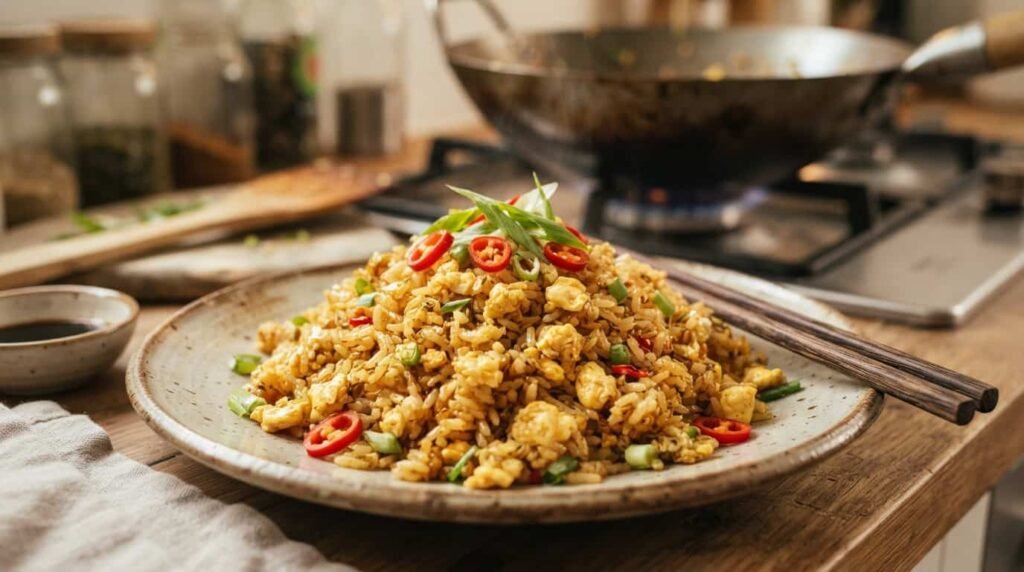
Uncle Roger Fried Rice: The Viral Egg Fried Rice Recipe
Uncle Roger fried rice is the egg fried rice recipe inspired by comedian Nigel Ng’s viral alter ego, who became internet-famous in 2020 for roasting a BBC cooking video over soggy, mismeasured rice. If you’ve ever watched one of his reaction videos and wondered what “doing it right” actually looks like in your own kitchen, this is the version that follows his rules: day-old rice, real wok heat, and no shortcuts on the aromatics.
You don’t need a professional kitchen or a blazing-hot commercial burner to pull this off. What you need is a few basic techniques most fried rice recipes skip over, and about 20 minutes once your rice has had time to chill. Below is a full breakdown of how to make it, why each step matters, and how to fix the most common mistakes people make the first time around.
Who Is Uncle Roger, and Why Does His Fried Rice Matter?
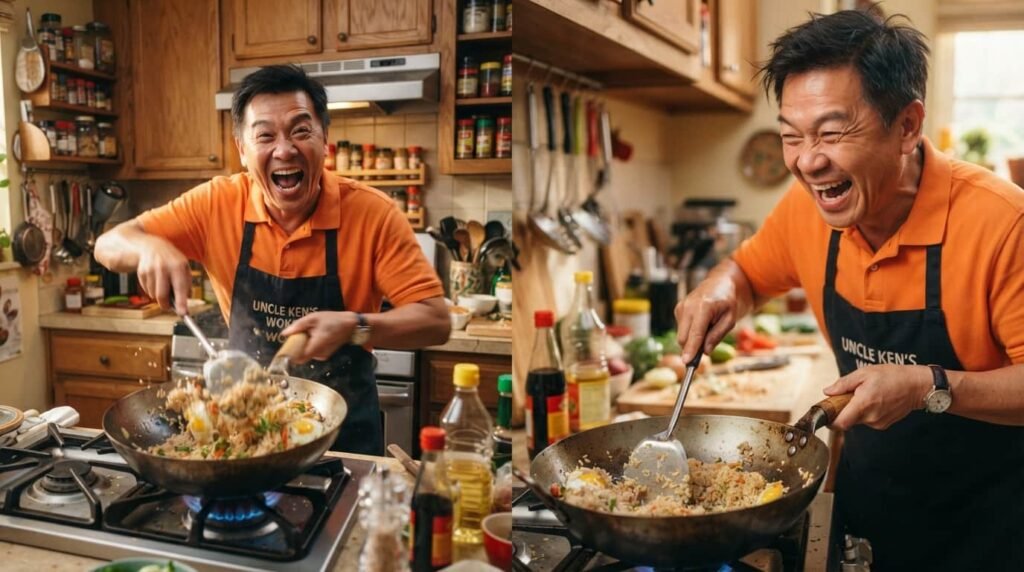
Uncle Roger is a comedy character created by Malaysian stand-up comedian Nigel Ng, a former data scientist turned full-time performer. Ng uploaded a reaction video in July 2020 responding to a BBC Food segment where host Hersha Patel measured rice water with a teacup and drained cooked rice through a colander like pasta. The clip exploded online, eventually racking up tens of millions of views, and it turned Uncle Roger’s exaggerated “haiyaa” into a catchphrase recognized well beyond the food world.
What made the video resonate wasn’t just the comedy. For a lot of home cooks, especially in Asian households, the mistakes Uncle Roger called out were genuinely familiar ones passed down as kitchen common sense: wash your rice, never drain it in a colander, and always use the rice from yesterday, not today. Since then, Ng has cooked alongside Gordon Ramsay, reviewed dozens of celebrity chefs’ fried rice attempts, and even opened his own restaurant. But the fried rice recipe that started it all is still the one people search for most.
What Makes This Different From Regular Fried Rice
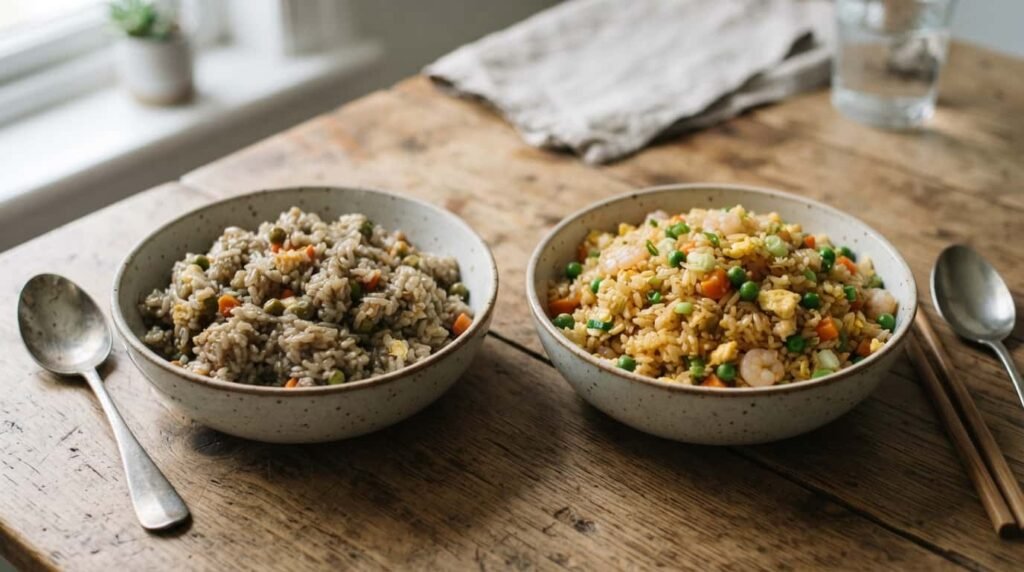
Most fried rice recipes tell you to throw in whatever rice you have and hope for the best. This one doesn’t, because texture is the entire point. Uncle Roger fried rice leans hard into three things a lot of recipes gloss over: properly dried-out rice, a genuinely hot pan, and a short ingredient list that doesn’t drown the rice in sauce. The result is fried rice with separated, slightly chewy grains instead of a mushy, clumped-together side dish.
Ingredients You’ll Need in Uncle Roger fried rice
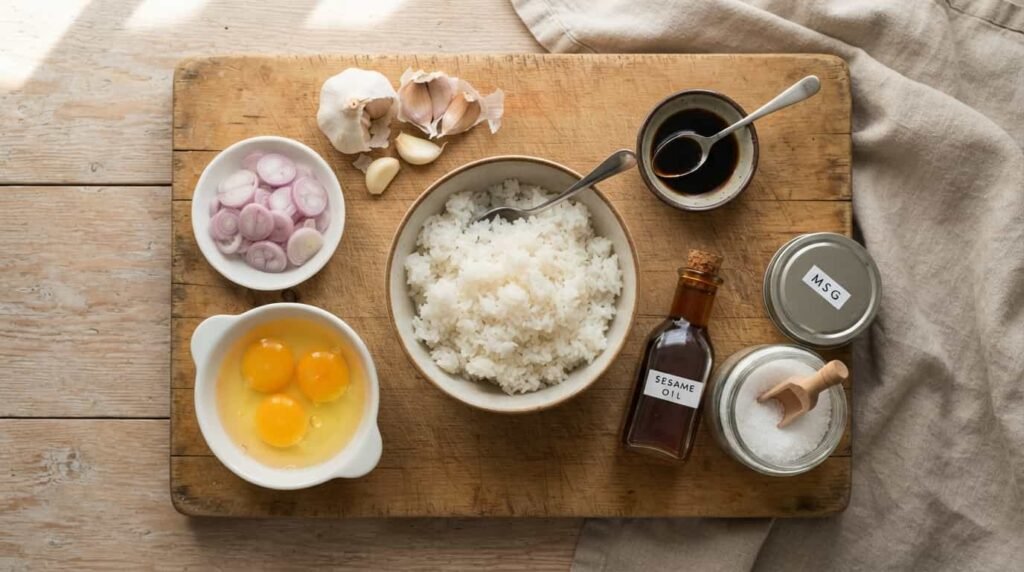
This recipe keeps things simple on purpose. Here’s what goes into a classic Uncle Roger style egg fried rice:
- 2 tablespoons peanut oil
- 4 to 5 cloves garlic, minced or smashed
- 1 shallot, sliced
- 2 eggs (plus 1 extra egg yolk for richer color and flavor)
- 4 cups cooked rice, refrigerated overnight
- 2 tablespoons soy sauce
- 1 to 2 tablespoons sesame oil
- 1/2 teaspoon MSG (optional, but traditional)
- 2 to 3 stalks spring onion, sliced
- 1 red chili, sliced (optional, for heat)
- White pepper, to taste
A note on the rice: any short or medium-grain white rice works, but rice cooked in chicken stock with a bit of ginger and garlic gives you a closer match to what Uncle Roger actually uses. Plain white rice is perfectly fine too.
How to Make Uncle Roger Fried Rice
Step 1: Prep the Rice a Day Ahead
Cook your rice the day before and spread it on a baking sheet to cool completely, then refrigerate it uncovered or loosely covered overnight. This is the step people skip most often, and it’s the one that matters most. Freshly cooked rice is too moist and starchy to fry properly. It just clumps and turns gummy the moment it hits a hot pan.
If you forgot to plan ahead, you’re not completely out of luck. Cooking the rice with slightly less water than usual, then spreading it out to cool for 20 to 30 minutes before refrigerating for another 20 to 30 minutes, can get you a decent approximation of day-old texture in under an hour.
Step 2: Heat the Wok Properly
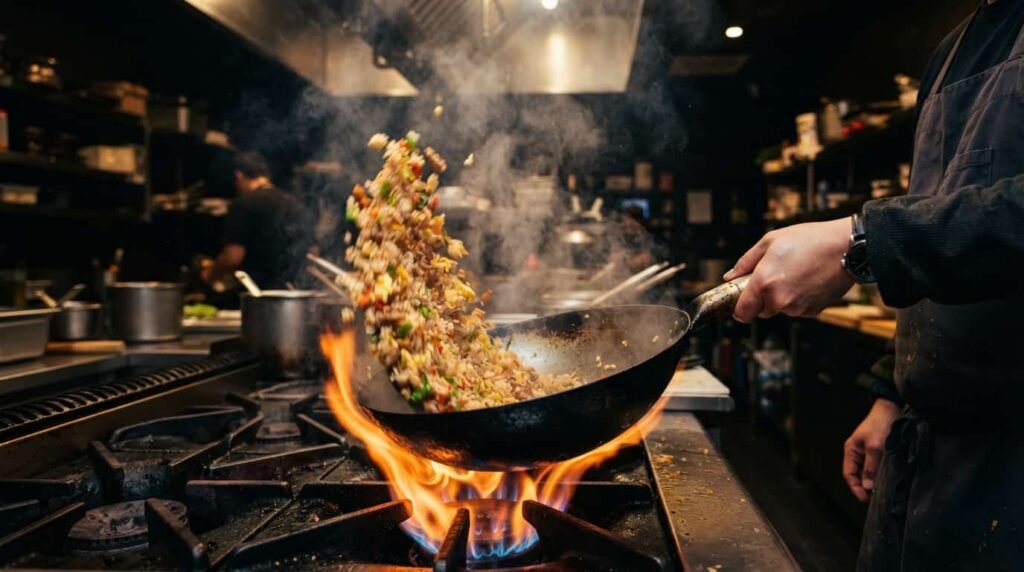
Place a wok or large skillet over medium-high heat and add the peanut oil. Let it heat until it’s just starting to shimmer, close to smoking. This step builds the base layer of flavor, so don’t rush it, but don’t walk away either. Peanut oil is the traditional choice because of its high smoke point and neutral flavor.
Step 3: Fry the Aromatics
Add the garlic and shallot and stir-fry for about a minute, until fragrant and just starting to pick up color. This is where a lot of the dish’s flavor comes from, so keep the ingredients moving so they don’t burn.
Step 4: Scramble the Eggs
Push the aromatics to one side of the wok, or remove them briefly, and pour in the beaten eggs and extra yolk. Let them sit for a few seconds before scrambling, so they set into soft curds rather than becoming watery.
Step 5: Add the Rice and Break Up Clumps
Add the cold rice straight from the fridge, breaking up any clumps with your spatula or, if you’re following Uncle Roger’s method, with your hands before it goes in the pan. Toss everything together over high heat so the rice picks up the oil and egg evenly and starts to develop light color at the edges.
Step 6: Season and Finish
Add the soy sauce, sesame oil, MSG if using, and a pinch of white pepper. Toss to coat everything evenly, then fold in the spring onion and chili in the last 30 to 60 seconds of cooking so they stay bright and slightly crisp rather than wilting completely.
Serve immediately, ideally straight from the wok, while the rice still has some heat and bite to it.
Common Mistakes That Ruin Fried Rice
Even simple recipes go wrong in predictable ways. A few things to watch for:
Using fresh, warm rice. This is the single biggest culprit behind mushy fried rice. Freshly cooked rice hasn’t had time to dry out, so it releases moisture and turns gluey the second it hits oil.
Overcrowding the pan. A cold, overloaded wok drops in temperature fast, which means your rice steams instead of fries. Work in batches if you’re doubling the recipe.
Skipping the pan-heating step. A lukewarm wok can’t build the slightly smoky “wok hei” flavor that makes restaurant fried rice taste different from home versions. Give the oil time to properly heat before adding anything else.
Drowning the rice in soy sauce. Too much liquid softens the grains and turns everything brown and salty instead of letting the rice, egg, and aromatics stand out. Two tablespoons is usually enough for four cups of rice; add more a little at a time if needed.
Quick Answer: What Rice Should You Use for Uncle Roger Fried Rice?
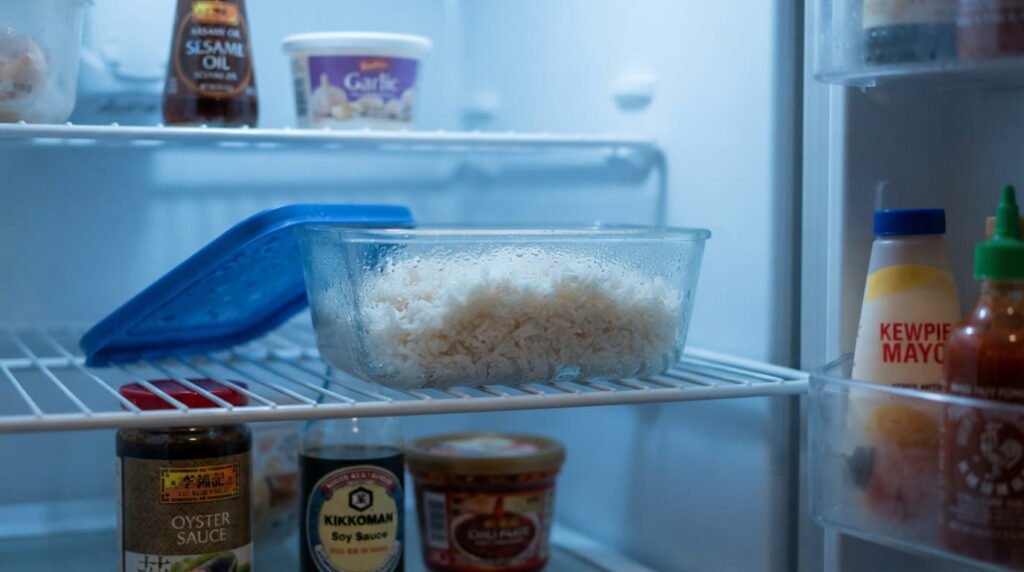
Use day-old, refrigerated cooked rice, ideally a short or medium-grain white rice like jasmine. Overnight chilling dries the surface of each grain through a process called retrogradation, which keeps the rice from turning mushy when it hits the hot wok. If you don’t have leftover rice, cook a fresh batch with slightly less water, spread it out to cool, then chill it in the fridge for at least 30 minutes before using it.
Frequently Asked Questions in Uncle Roger fried rice

Why does fried rice need to use day-old rice?
Freshly cooked rice holds too much surface moisture and turns soft and gluey when stir-fried. As rice sits in the fridge overnight, its starches firm up through retrogradation, drying out the surface of each grain just enough that it fries instead of steams. This is why restaurant fried rice typically has that separated, slightly chewy texture that’s hard to replicate with rice straight out of the pot.
Is MSG safe to use in fried rice?
Yes. The FDA classifies MSG as generally recognized as safe, and reviews from the Federation of American Societies for Experimental Biology have found it doesn’t reliably trigger symptoms in controlled studies, even among people who report sensitivity to it. A typical serving in a recipe like this contains a fraction of a gram, well below the amount linked to any short-term symptoms in research. If you’d rather skip it, the recipe still works fine without it, just slightly less savory.
What oil does Uncle Roger use for fried rice?
Peanut oil is the standard choice because of its high smoke point and neutral flavor, which lets the garlic, shallot, and rice do the talking. If you have a peanut allergy or don’t have any on hand, a neutral oil like vegetable or avocado oil is a reasonable substitute, though you’ll lose a little of the traditional flavor.
Can you make Uncle Roger fried rice without a wok?
Yes, a large, heavy skillet or cast iron pan works, as long as it can hold high heat evenly. A wok’s sloped sides make it easier to toss ingredients and control heat zones, but the fundamentals, hot pan, dry rice, and quick cooking, matter more than the exact vessel.
How long does leftover Uncle Roger fried rice last?
Stored in an airtight container, fried rice keeps in the refrigerator for about five to seven days. For longer storage, freeze it in a freezer-safe bag or container for up to three months. Reheat it in a hot skillet or wok rather than the microwave for the best texture, stirring frequently so it heats evenly without drying out.
Wrapping It Up
Uncle Roger fried rice earned its viral fame from comedy, but the technique behind it holds up on its own merits. Chilled rice, real heat, and restraint with the sauce are the three things separating great fried rice from a mushy stir-fried side dish. Once you’ve made it a couple of times, you’ll understand exactly why draining rice through a colander was never going to fly.
Try it this week, and don’t be surprised if it becomes your go-to way to use up leftover rice.

Pingback: Spicy Tuna Crispy Rice Recipe (Better Than Nobu)