
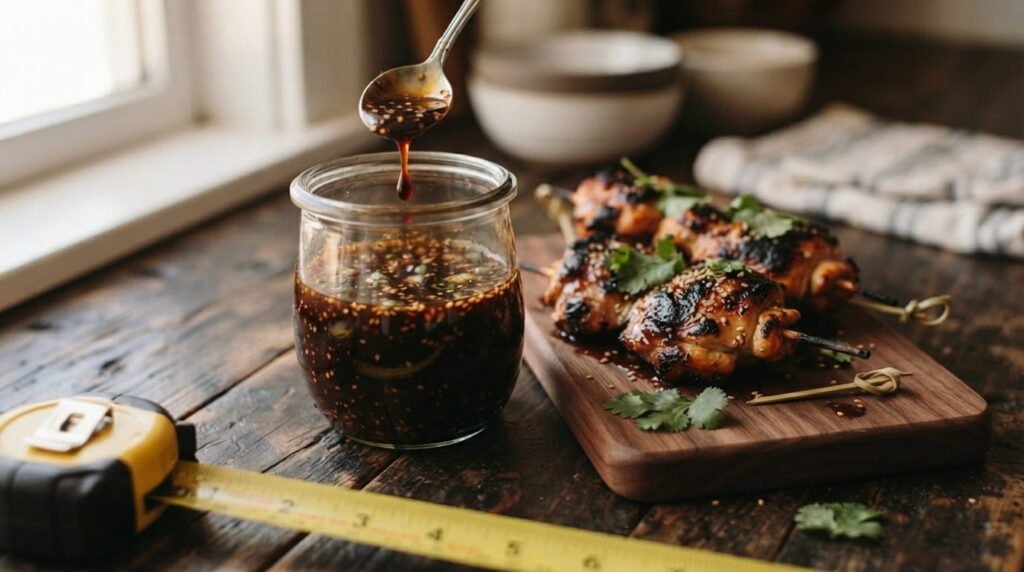
Easy Japanese BBQ Sauce Recipe You’ll Make on Repeat
This Japanese BBQ sauce recipe turns four pantry staples into a glossy, umami-rich glaze in about 15 minutes, and it beats anything you’ll find on a grocery shelf. If you’ve ever squeezed the last drop out of a bottle of Bachan’s and wondered whether you could just make your own, the answer is yes, and it’s easier than you think. Soy sauce, mirin, a little sugar, garlic, and ginger simmer together into a sauce that’s salty, sweet, and deeply savory all at once. It works as a marinade, a glaze, or a dip, and it keeps in the fridge for whenever the grill comes out.
What Is Japanese BBQ Sauce?
Japanese BBQ sauce is a soy sauce based glaze built on mirin, sugar, garlic, and ginger, used to marinate, baste, or dip grilled meat, chicken, salmon, or vegetables. It’s related to yakiniku no tare, the dipping sauce served at Japanese grill restaurants, and to teriyaki, though it’s usually thinner and less sweet than a classic teriyaki glaze. Unlike American barbecue sauce, it skips the tomato and smoke entirely and leans on soy, aromatics, and a touch of sesame for its flavor.
Japanese BBQ Sauce vs. Teriyaki: What’s the Difference?
They’re cousins, not twins. Teriyaki sauce is built to reduce into a thick, glassy glaze, so it usually carries more sugar and sometimes a cornstarch slurry to help it cling. Japanese BBQ sauce, closer to yakiniku tare, stays a bit thinner and leans harder into umami from ingredients like miso, a splash of Worcestershire, or grated apple, which round out the soy sauce base without making it cloying. Some home cooks like to think of it this way: teriyaki is what you brush on before the food goes on the grill, while a yakiniku-style Japanese BBQ sauce is what you dip the finished, charred bite into at the table. In practice, most homemade versions do double duty as both a marinade and a dipping sauce, and that’s exactly how this recipe is built.
Ingredients for the Best Japanese BBQ Sauce
You likely have most of these already, and the rest are easy to find at any grocery store with an international aisle.
- Soy sauce – the backbone of the sauce, giving it saltiness, color, and umami depth. Regular Japanese soy sauce (koikuchi shoyu) works best, though tamari is a good gluten-free swap.
- Mirin – a sweet Japanese rice wine that adds gloss and a mellow sweetness you can’t quite get from sugar alone.
- Brown sugar and a spoonful of honey – for sweetness and the sticky, caramelized texture that makes this sauce cling to grilled meat.
- Garlic and fresh ginger – the aromatic backbone that keeps the sauce from tasting one-note.
- Toasted sesame oil – just a small amount, added for a nutty top note rather than to carry the whole dish.
- Sake (optional but recommended) – rounds out the flavor and helps tenderize meat if you’re using the sauce as a marinade.
Optional additions like a spoonful of miso paste, a dash of rice vinegar, or a bit of grated apple can push the sauce toward the more traditional yakiniku tare style, adding fermented depth or fruity brightness. None of these are required for a great everyday sauce, but they’re worth trying once you’ve made the base recipe a few times.
The Best Japanese BBQ Sauce Recipe (Step-by-Step)
This method makes about three-quarters of a cup of sauce, enough for one batch of skewers or a couple of marinated proteins. Double it if you’re feeding a crowd or want extra for the fridge.
- Combine the base. In a small saucepan, whisk together the soy sauce, mirin, sake, brown sugar, and honey over medium heat.
- Add the aromatics. Stir in minced garlic and grated ginger, then bring the mixture to a gentle simmer, not a rolling boil.
- Simmer to thicken. Let the sauce bubble gently for 8 to 10 minutes, stirring occasionally, until it reduces slightly and coats the back of a spoon.
- Finish off the heat. Remove the pan from the stove and stir in the toasted sesame oil. Adding it off heat keeps the aroma from cooking off.
- Cool and store. Let the sauce cool to room temperature before transferring it to a clean jar. It will thicken slightly as it cools, and the flavor actually improves after a few hours in the fridge.
The sauce is ready to use right away, but if you have the patience to let it rest overnight, the salty, sweet, and savory notes settle into each other and taste noticeably more balanced by the next day.
How to Customize Your Japanese BBQ Sauce
Once you’ve made the base recipe, it’s easy to nudge it in different directions.
- Spicier: Whisk in a teaspoon of gochujang or a pinch of red pepper flakes for heat that plays well against the sweetness.
- More umami: A half teaspoon of miso paste dissolved into the warm sauce adds a deeper, fermented backbone. Pull back the soy sauce slightly to keep the salt balanced.
- Tangier: A splash of rice vinegar stirred in after cooling brightens the sauce, which is especially good with fattier cuts like pork belly or short rib.
- Gluten-free: Swap the soy sauce for tamari or a certified gluten-free soy sauce, and double check that your mirin doesn’t contain wheat-based additives.
- Lower sugar: Cut the brown sugar and honey by a third, or swap in maple syrup, and reduce the simmer time slightly since there’s less sugar to caramelize.
Tips for the Best Results
A few small details separate a good batch from a great one.
- Keep the heat gentle. A hard boil can make the sauce taste sharp and slightly bitter as the sugars scorch. A slow, steady simmer gives you a smoother, more rounded flavor.
- Add sesame oil at the end. Toasted sesame oil loses its aroma quickly under heat, so stirring it in after the pan comes off the stove keeps that nutty top note intact.
- Taste before you add salt. Soy sauce brands vary a lot in sodium, so taste the sauce once it’s simmered before reaching for extra salt or more soy sauce.
- Let it rest. This sauce tastes good the moment it’s made, but it tastes better after a few hours in the fridge, once the garlic and ginger have had time to mellow into the base.
- Use a nonreactive pan. Stainless steel or enamel-coated pans work best, since the acidity and salt in soy-based sauces can react with some uncoated metals over time.
What to Serve with Japanese BBQ Sauce
This sauce earns its place in the fridge because it works in more ways than a typical bottled condiment.
- Marinade for chicken thighs, flank steak, or salmon before grilling or broiling.
- Glaze brushed onto skewers during the last few minutes on the grill, so the sugars caramelize without burning.
- Dipping sauce for grilled or pan-seared meat, tofu, or vegetables, served on the side the way yakiniku restaurants do.
- Stir-fry finisher tossed with rice, noodles, or vegetables for a fast weeknight dinner.
- Rice bowl drizzle over a simple donburi with grilled protein, sesame seeds, and green onion.
How to Store Japanese BBQ Sauce
Once cooled, keep the sauce in a clean, airtight glass jar in the refrigerator. Because this version is made without commercial preservatives, it’s best used within about one to two weeks for the freshest flavor, similar to most homemade condiments. Give it a stir before each use, since the aromatics can settle at the bottom. If you want to keep a larger batch on hand longer, freeze it in small portions and thaw what you need in the fridge overnight.
Japanese BBQ Sauce FAQ
Is Japanese BBQ sauce the same as yakiniku sauce?
They’re closely related but not identical. Yakiniku sauce, or yakiniku no tare, is traditionally served as a table-side dipping sauce for grilled meat in Japan, while what’s marketed in the US as “Japanese BBQ sauce” is often a slightly thicker, more marinade-friendly version of the same soy, mirin, and aromatics base. You can use this recipe for both purposes without any changes.
Can I make Japanese BBQ sauce gluten-free?
Yes. Replace the soy sauce with tamari or a certified gluten-free soy sauce, and check that your mirin is labeled gluten-free, since some brands use wheat in the fermentation process. Every other ingredient in this recipe is naturally gluten-free.
How long does homemade Japanese BBQ sauce last?
Stored in an airtight container in the refrigerator, homemade Japanese BBQ sauce is best used within one to two weeks, since it doesn’t contain the preservatives found in store-bought bottles. It can also be frozen in small portions for longer storage.
What’s the difference between Japanese BBQ sauce and Korean BBQ sauce?
Japanese BBQ sauce leans on soy sauce, mirin, and a light touch of sesame and ginger for a clean, umami-forward flavor. Korean BBQ sauce, like bulgogi marinade, often adds pear or apple for sweetness along with gochujang or gochugaru for a fermented, chili-forward heat that Japanese versions typically skip.
Can I use this sauce as an overnight marinade?
Yes, and it works especially well on chicken thighs, flank steak, or pork. Because the sauce contains sugar, avoid marinating for much longer than 12 to 24 hours, since the sugar and salt can start to break down the texture of the meat if left too long. For fish or shrimp, keep the marinating time closer to 30 minutes, since delicate proteins pick up flavor fast and can turn mushy if left in an acidic, salty marinade too long.
Once you’ve got a jar of this in the fridge, it’s hard to go back to the bottled stuff. Try it on your next batch of grilled chicken skewers or salmon, and keep the recipe handy, because you’ll likely be making it on repeat all summer.



Pingback: Sweet and Spicy Bacon Burger Recipe: The Ultimate Guide