Sun Dried Tomato Pasta: Creamy, Flavorful, and Ready in 30 Minutes
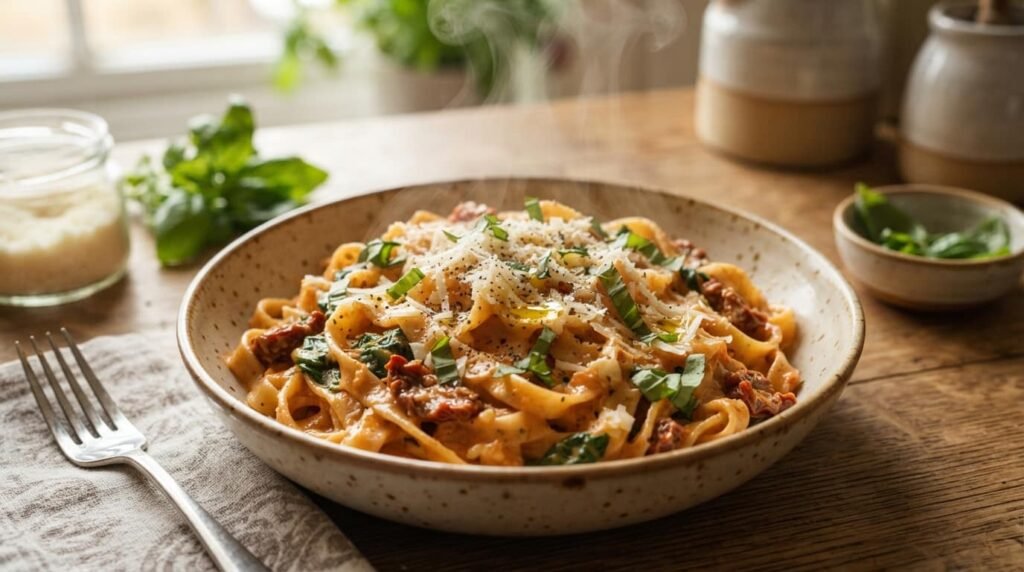
When you want a pasta dinner that tastes far more impressive than the effort it takes, sun dried tomato pasta is a great one to keep in your back pocket. Tender pasta is coated in a creamy Parmesan sauce filled with garlic, sweet-tangy sun-dried tomatoes, and wilted spinach. The sauce comes together while the pasta cooks, so dinner can be on the table in about 30 minutes.
The trick is not complicated. Use oil-packed sun-dried tomatoes, save some of their flavorful oil for the skillet, and reserve a little pasta water before draining. Those three small details make a noticeable difference in the finished sauce.
This recipe makes four servings and works beautifully as a meatless main dish. If you want something heartier, grilled chicken, shrimp, or Italian sausage can easily be added.
Ingredients
-
12 ounces rigatoni, penne, or fusilli
-
2 tablespoons butter
-
3 garlic cloves, minced
-
⅔ cup oil-packed sun-dried tomatoes, chopped
-
2 tablespoons oil from the sun-dried tomato jar
-
1 cup heavy cream
-
½ cup chicken or vegetable broth
-
¾ cup freshly grated Parmesan, plus extra for serving
-
2 cups fresh baby spinach
-
½ teaspoon Italian seasoning
-
Salt, to taste
-
Black pepper, to taste
-
Red pepper flakes, optional
Instructions
-
Bring a large pot of salted water to a boil. Cook the pasta until al dente. Reserve ½ cup of pasta water, then drain.
-
While the pasta cooks, melt the butter with the sun-dried tomato oil in a large skillet over medium heat.
-
Add the garlic and cook for about 30 seconds, stirring so it does not brown.
-
Add the chopped sun-dried tomatoes and Italian seasoning. Cook for 1 to 2 minutes.
-
Pour in the broth and heavy cream. Bring to a gentle simmer and cook for 3 to 4 minutes.
-
Stir in the freshly grated Parmesan until the cheese melts and the sauce becomes smooth.
-
Add the spinach and cook just until wilted, about 1 to 2 minutes.
-
Add the drained pasta and toss until coated. If the sauce is too thick, add reserved pasta water a little at a time.
-
Season with black pepper, salt if needed, and red pepper flakes if desired.
-
Serve immediately with extra Parmesan.
The best version of sun dried tomato pasta is not necessarily the one with the most ingredients. It is the one where the sauce has enough flavor to stand on its own, the pasta is cooked just until tender, and the final consistency is creamy without being heavy. Keep an eye on the garlic, save the pasta water, and use the tomato oil when you have it—those small details are what turn a simple skillet pasta into a dinner worth making again.
Why This Sun Dried Tomato Pasta Works
Sun-dried tomatoes have a concentrated flavor that fresh tomatoes simply cannot provide. They are naturally sweet, tangy, and savory, which means you do not need a long list of ingredients to build a flavorful sauce.
Here, the tomatoes are combined with garlic, butter, cream, broth, and Parmesan. The result is rich without relying on cream alone for flavor. Spinach is added at the end to bring freshness and color.
Another advantage is timing. There is no separate tomato sauce to simmer for an hour. While the pasta cooks in one pot, the creamy tomato sauce develops in a skillet. By the time the pasta is ready, the sauce is ready too.
What Ingredients Do You Need?
You only need a handful of everyday ingredients, but each one has a specific job.
Pasta
Rigatoni and penne are particularly good choices because their ridges and hollow centers catch the creamy sauce. Fusilli also works well.
You can use spaghetti or another long pasta if that is what you have, but shorter shapes generally make this thick sauce easier to eat.
Oil-Packed Sun-Dried Tomatoes
Use about ⅔ cup of chopped oil-packed sun-dried tomatoes, along with 2 tablespoons of the oil from the jar.
The tomatoes are already soft, so they can go directly into the skillet. More importantly, their oil carries some of that tomato flavor into the butter and garlic as the sauce starts cooking.
If your jar contains a lot of herbs or garlic, the oil can add even more flavor.
Garlic
Fresh minced garlic gives the sauce its aromatic base. Three cloves are enough to make the garlic noticeable without overwhelming the tomatoes and Parmesan.
Keep the heat moderate when cooking it. Garlic can go from fragrant to burnt surprisingly quickly.
Butter
Butter adds richness and helps create a smooth base for the sauce. Combined with the sun-dried tomato oil, it gives the skillet plenty of flavor before the cream even goes in.
Heavy Cream and Broth
Heavy cream provides the creamy texture, while chicken or vegetable broth keeps the sauce from becoming excessively thick and heavy.
Use vegetable broth if you want to keep the dish vegetarian.
Parmesan
Freshly grated Parmesan is the better choice here. It melts into the warm sauce and helps thicken it while adding a salty, savory flavor.
Pre-shredded Parmesan can sometimes melt less smoothly, so grating it yourself is worth the small extra step.
Baby Spinach
Two cups may look like a lot when you first add it, but spinach wilts quickly. It adds color and a fresh contrast to the rich sauce.
Italian Seasoning
A small amount of Italian seasoning rounds out the tomato and garlic flavors. You can also add red pepper flakes if you like a little heat.
How to Make Sun Dried Tomato Pasta
The process is straightforward, but the order of the steps matters.
1. Cook the Pasta
Bring a large pot of generously salted water to a boil. Add the pasta and cook until al dente according to the package directions.
Before draining, scoop out at least ½ cup of the pasta water.
This is one of those small cooking habits that is easy to skip but useful when making creamy pasta. The starchy water can loosen the finished sauce while helping it cling to the noodles.
Drain the pasta and set it aside briefly.
2. Start the Flavor Base
Place a large skillet over medium heat. Add 2 tablespoons of butter and 2 tablespoons of the oil from the sun-dried tomato jar.
Once the butter has melted, add the minced garlic.
Cook for roughly 30 seconds, stirring frequently. You want the garlic to become fragrant, not brown.
If the garlic starts turning dark, reduce the heat immediately. Burnt garlic can make the entire sauce taste bitter.
3. Add the Sun-Dried Tomatoes
Stir the chopped sun-dried tomatoes and Italian seasoning into the skillet.
Cook them for another 1 to 2 minutes. This gives the tomatoes a chance to warm through and release more of their flavor into the butter and oil.
This short sauté is worth doing rather than simply pouring everything into the pan at once.
4. Build the Cream Sauce
Pour in the broth and heavy cream. Stir everything together and bring the mixture to a gentle simmer.
Let it cook for about 3 to 4 minutes.
The goal is a slight reduction, not a thick sauce at this point. The Parmesan and pasta will help give it more body later.
Avoid a hard boil. A gentle simmer gives you more control over the cream and reduces the chance of the sauce becoming too thick before the cheese is added.
5. Melt in the Parmesan
Lower the heat if necessary and stir in the freshly grated Parmesan.
Keep stirring until the cheese melts into the sauce.
At this stage, the sauce should look creamy and smooth. If it seems very thick, you can add a small splash of reserved pasta water.
6. Wilt the Spinach
Add the baby spinach and stir it through the sauce.
It should wilt within 1 to 2 minutes. There is no need to cook it until it becomes completely soft.
Once the leaves have wilted, the sauce is ready for the pasta.
7. Toss Everything Together
Add the drained pasta to the skillet and toss until every piece is coated.
If the sauce seems too thick, add reserved pasta water a tablespoon or two at a time. Stop when the sauce looks glossy and coats the pasta comfortably.
Taste before adding salt. Parmesan and sun-dried tomatoes can both be salty, so you may need less additional salt than expected.
Finish with black pepper and red pepper flakes if you want some heat.
The Pasta Water Trick Is More Useful Than It Sounds
Creamy pasta sauces often look perfect in the skillet and then become too thick once they sit for a few minutes.
That is where pasta water helps.
Because pasta water contains starch from the noodles, a small amount can loosen a sauce without making it taste watery. It also helps the sauce spread across the pasta instead of remaining in a thick layer at the bottom of the pan.
You do not need half a cup in the recipe. Reserve that much so you have it available, then add only what the sauce needs.
A practical approach is to add one tablespoon at a time while tossing the pasta.
Oil-Packed vs. Dry-Packed Sun-Dried Tomatoes
For this particular recipe, oil-packed sun-dried tomatoes are the easiest option.
| Type | Advantages | What to Do |
|---|---|---|
| Oil-packed | Soft, flavorful, ready to use | Chop and add directly |
| Dry-packed | Less oily and useful for other dishes | Soak in warm water until softened, then drain |
If you only have dry-packed tomatoes, they can still work. Soak them in warm water for around 10 minutes, or until they are flexible enough to chop comfortably. Drain them well before using.
The finished dish may not have quite the same tomato-infused flavor because you will not have the seasoned tomato oil from the jar.
How Do You Keep the Sauce Smooth?
The cheese is usually the part that causes trouble.
A creamy Parmesan sauce can become grainy if the cheese is added to an unsuitable mixture or melts unevenly. For a smoother result, use freshly grated Parmesan and allow the cream and broth mixture to reduce slightly before adding it.
Do not dump a large amount of cold cheese into a rapidly boiling sauce.
Instead, keep the heat moderate and stir the Parmesan in gradually.
If the sauce becomes too thick, loosen it with reserved pasta water rather than adding a large amount of cream.
Common Mistakes That Can Ruin the Pasta
Burning the Garlic
Garlic only needs a short time in the skillet. Thirty seconds can be enough to make it fragrant.
If it becomes brown and bitter, there is no easy way to remove that flavor from the sauce.
Overcooking the Spinach
Spinach does not need several minutes of cooking. Add it near the end and stir just until wilted.
Forgetting the Tomato Oil
The oil from an oil-packed tomato jar is not just something to throw away. A little of it gives the sauce another layer of tomato flavor.
If the oil in your jar looks cloudy, contains unusual ingredients, or has been stored improperly, use your judgment and follow the storage directions on the jar.
Adding Too Much Salt Too Early
Parmesan and sun-dried tomatoes can contribute plenty of salt. Taste the sauce after adding the cheese before seasoning aggressively.
Letting the Sauce Get Too Thick
Remember that the sauce will continue to cling to the pasta after everything is tossed together. If it already looks extremely thick in the skillet, it may be too thick once served.
Keep some pasta water nearby and adjust gradually.
Easy Ways to Change the Recipe
One of the best things about this creamy pasta is how easily you can adapt it.
Add Chicken
For a more filling dinner, use sliced grilled or pan-seared chicken.
Cook the chicken separately, season it simply, slice it, and toss it with the finished pasta. Adding cooked chicken near the end keeps it from sitting in the creamy sauce longer than necessary.
Add Shrimp
Shrimp cooks quickly, so it is a good choice when you want a seafood version.
Sear the shrimp separately until cooked through, then add it to the pasta just before serving.
Add Mushrooms
Sliced mushrooms pair naturally with garlic, Parmesan, and sun-dried tomatoes. Sauté them before building the cream sauce so they have a chance to brown instead of simply steaming in the liquid.
Add Artichokes
Chopped artichoke hearts bring a slightly tangy flavor that works particularly well with sun-dried tomatoes.
Add Red Pepper Flakes
If you like spicy pasta, add red pepper flakes with the sun-dried tomatoes. Start with a small amount and add more at the table if needed.
Make It Lighter
You can replace some or all of the heavy cream with half-and-half, although the sauce will be less rich and may need more careful simmering.
Another option is to use less Parmesan and rely on pasta water for some of the sauce’s body.
Make It Dairy-Free
Use olive oil instead of butter, a dairy-free cream alternative instead of heavy cream, and a suitable plant-based Parmesan or no cheese.
The texture and flavor will be different from the original recipe, but the sun-dried tomato, garlic, and spinach combination still works well.
What Pasta Shape Is Best?
Short, ridged pasta is my first choice for this sauce.
Rigatoni gives you large tubes that hold sauce inside and around the ridges.
Penne is slightly smaller and easy to find, making it a reliable everyday option.
Fusilli is also excellent because the twists catch bits of tomato, spinach, and Parmesan sauce.
Smooth long noodles can still be used, but they do not hold a thick sauce in quite the same way.
What Should You Serve With Sun Dried Tomato Pasta?
Because the pasta is creamy and rich, simple sides work best.
A crisp green salad with a light vinaigrette provides acidity and freshness. Crusty bread or garlic bread is useful for any sauce left in the bowl.
For a larger meal, roasted vegetables or simply cooked chicken can round out the plate without competing with the tomato-Parmesan sauce.
You do not need several heavy side dishes. One fresh side is usually enough.
Can You Make Sun Dried Tomato Pasta Ahead of Time?
This pasta is best served immediately because the sauce is at its smoothest when freshly made.
If you are preparing it for later, expect the sauce to thicken as it cools. When reheating, add a small splash of milk, broth, or water and warm it gently while stirring.
Avoid aggressively boiling the leftovers. High heat can cause a cream-based sauce to separate.
For the best texture, prepare the pasta and sauce close to serving time rather than making the entire dish hours ahead.
How Do You Store Leftovers?
Place leftover pasta in an airtight container and refrigerate it. It is best eaten within about 3 days.
When reheating on the stovetop, use low to medium-low heat and add a splash of broth or milk. Stir occasionally until warmed through.
A microwave can work for small portions, but use shorter heating intervals and stir between them. This gives you more control over the sauce and helps prevent overheating.
Freezing is not the best option for this recipe. Cream-based sauces can change texture after freezing and thawing, so the dish is better enjoyed fresh or refrigerated for a few days.
Can I use sun-dried tomatoes without oil?
Yes. Dry-packed sun-dried tomatoes can be used, but soften them in warm water first. Drain them well before chopping.
You will also need another cooking oil because you will not have tomato-infused oil from the jar.
Can I use milk instead of heavy cream?
You can, but the sauce will be noticeably lighter and less rich. Because milk contains much less fat, it may also need more help from Parmesan and pasta water to achieve a satisfying consistency.
Why is my sun dried tomato pasta too thick?
The sauce may have reduced too much, or the pasta absorbed more liquid than expected.
Add reserved pasta water a little at a time while tossing. This is usually a better fix than pouring in a large amount of cream.
Why did my Parmesan become clumpy?
The sauce may have been too hot, the cheese may have been added too quickly, or the Parmesan may not have melted evenly.
Freshly grate the cheese, reduce the heat, and stir it gradually into a slightly thickened sauce.
Can I make this recipe vegetarian?
Yes. Use vegetable broth instead of chicken broth and check that the Parmesan you use fits your dietary requirements.
Is sun dried tomato pasta spicy?
The basic recipe is not particularly spicy. Red pepper flakes are optional, so you can leave them out completely or add enough to suit your taste.
Can I add chicken to sun dried tomato pasta?
Absolutely. Cooked sliced chicken is an easy way to turn this meatless pasta into a more substantial dinner. Add it after the pasta and sauce have been combined.
What can I use instead of spinach?
Kale, arugula, or another quick-cooking leafy green can work, although each will change the texture and flavor slightly. You can also leave the greens out and add another vegetable such as mushrooms or roasted red peppers.