Master Scone Recipe (10 Easy Scone Varieties)
Ingredients
Instructions
I used to think I needed a different recipe for every scone flavor until I actually broke down what makes a good scone: cold fat, minimal mixing, and a wet-to-dry ratio that holds together without turning gummy. Once I nailed that ratio, scone varieties stopped being a research project and became a Tuesday afternoon thing. This is the base dough I reach for whether I’m making a plain batch for jam and butter or stuffing it with cheddar and chives for soup night.
Why You’ll Love This Master Scone Recipe
This dough isn’t fussy. It comes together in one bowl, bakes in under 20 minutes, and holds up to almost anything you fold into it, sweet or savory. The edges crisp up while the inside stays tender, not the dry, crumbly texture that gives scones a bad name. And because it’s one formula, you only have to learn the technique once. After that, blueberry scones one weekend and cheese scones the next are just a matter of swapping mix-ins.
Ingredients You’ll Need
The base list is short on purpose. All-purpose flour gives the structure, cold butter creates the flaky layers, and a mix of egg and heavy cream keeps the crumb rich without making the dough heavy. A few notes on substitutions:
- Butter: keep it cold, even frozen and grated works well if your kitchen runs warm. Warm butter melts into the flour instead of staying in distinct pieces, and those pieces are what create steam pockets and flaky layers as the scones bake.
- Heavy cream: buttermilk is a solid swap if you want more tang, common in classic English scones. Half-and-half works in a pinch, though the scones will be slightly less rich.
- Sugar: drop it to 2 tablespoons for savory versions like cheese or herb scones, since a third of a cup reads sweet against cheddar or bacon.
- Egg: it’s there for structure and a bit of lift. If you’re out, an extra tablespoon of cream can stand in, though the crumb will be a touch denser.
How to Make Scones From One Base Dough
Whisk your dry ingredients first, then work the cold butter in with your fingertips or a pastry cutter until it looks like coarse crumbs with some pea-sized pieces still visible. That unevenness is the point. In a separate bowl, whisk the egg, cream, and vanilla, then pour it into the dry mix and stir with a spatula just until the dough clumps together. It should look shaggy and a little rough, not smooth.
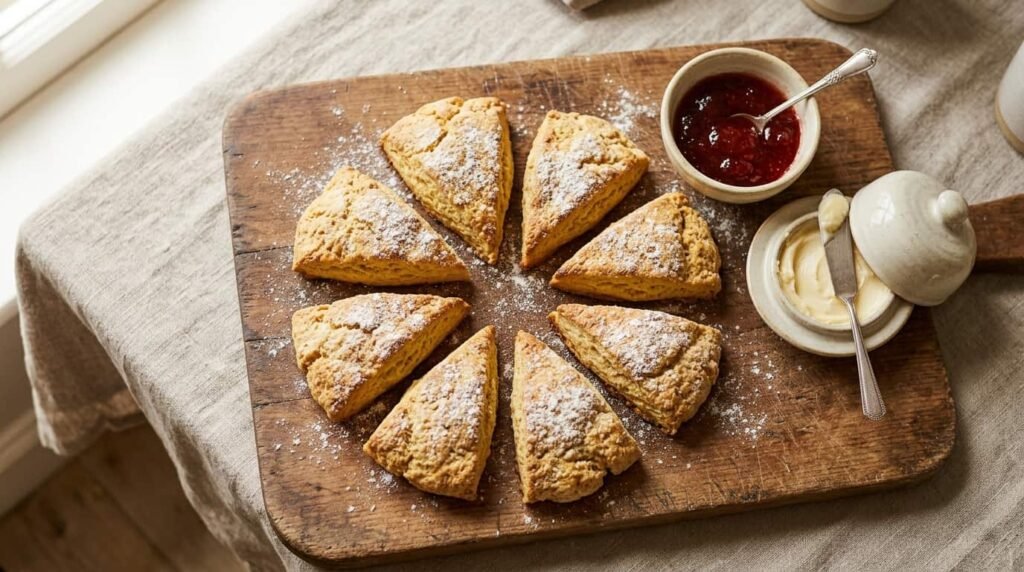
Pat it into a disc rather than rolling it with a pin, which compresses the layers you just worked so hard to create. Cut it into wedges, space them out on the pan so the sides get direct heat, and brush the tops with cream before baking. That brushed-on cream is what gives you the deep golden color, plain milk browns much less.
10 Scone Varieties to Try
Once the base dough is mixed but before you pat it into a disc, fold in one of these combinations. Add them gently so you don’t overwork the dough.
- Blueberry lemon: 1 cup frozen blueberries plus the zest of one lemon.
- Cranberry orange: 2/3 cup dried cranberries and 2 teaspoons orange zest.
- Cinnamon raisin: 1 teaspoon ground cinnamon mixed into the dry ingredients, plus 2/3 cup raisins.
- Chocolate chip: 3/4 cup mini chocolate chips, which distribute more evenly than full-size.
- Pumpkin spice: swap the cream for 1/3 cup pumpkin puree and add 1 1/2 teaspoons pumpkin pie spice.
- Lemon poppy seed: zest of one lemon and 1 tablespoon poppy seeds.
- Cheddar chive: drop the sugar to 2 tablespoons, add 1 cup shredded sharp cheddar and 2 tablespoons chopped chives.
- Bacon and cheese: 1/2 cup cooked, crumbled bacon with 3/4 cup shredded gruyere or cheddar.
- Sundried tomato and herb: 1/2 cup chopped sundried tomatoes, 1 tablespoon chopped rosemary, sugar reduced to 1 tablespoon.
- Maple pecan: replace 2 tablespoons of the cream with maple syrup, fold in 1/2 cup chopped toasted pecans.
Sweet versions are good candidates for a simple glaze, powdered sugar thinned with a little milk, lemon juice, or leftover orange juice from the zest. Savory versions don’t need glaze, just a good crack of black pepper on top before baking.
Pro Tips for the Best Scones
Freeze your cut scones for 15 minutes before baking. This resets the butter, which means less spreading in the oven and taller, more defined layers. It’s a small step that makes a noticeable difference, especially in a warm kitchen.
Handle the dough as little as possible. Every extra minute of kneading develops more gluten, and more gluten means a tougher, less tender crumb. Mix until the dough just holds together, then stop.
Check for doneness by color, not just time. A properly baked scone is deep golden on top and along the cut edges. Pull them too early and the center stays gummy even if the outside looks done.
Common Mistakes to Avoid
The most common issue is warm butter, whether from a hot kitchen, overhandled dough, or butter that sat out too long before cutting in. If your scones spread into flat puddles instead of holding their shape, that’s almost always the cause. Chill the dough for 10 minutes before baking if you’re not sure.
Overmixing is a close second. Once the wet and dry ingredients meet, you’re working against the clock. Stir until you no longer see dry flour, then stop, even if the dough looks a bit shaggy. It will come together fine when you pat it into shape.
Skipping the egg wash or cream brush is a smaller mistake, but it matters for color. Without it, scones tend to bake pale and dry-looking even when the inside is perfectly done.
Storage and Reheating Instructions
Baked scones keep at room temperature in an airtight container for about two days, or in the fridge for up to five. To freeze baked scones, cool them completely, then wrap individually and freeze for up to three months.
For the best texture later, freeze the cut, unbaked dough wedges on a tray until solid, then transfer to a freezer bag. Bake straight from frozen, adding 3 to 5 extra minutes to the bake time. This is genuinely the better option if you want fresh-from-the-oven scones on a weekday morning without doing any prep that day.
To reheat, a 300°F oven for about 8 minutes brings back the crisp edges far better than a microwave, which tends to make them chewy.
Frequently Asked Questions
Why did my scones turn out dense instead of flaky?
This usually comes down to warm butter or overmixed dough. Cold ingredients and a light hand are what create those flaky layers.
Can I make scones without a food processor?
Yes, a pastry cutter or even two forks work fine, and honestly give you more control over how coarse the butter pieces stay.
What’s the difference between English and American scones?
English scones are generally less sweet, round, and meant to be split and topped with clotted cream and jam. American scones tend to be sweeter, wedge-shaped, and packed with mix-ins baked right in.
Can I halve or double this recipe?
Both work well. Doubling is easiest if you pat the dough into two smaller discs rather than one large one, since a bigger disc bakes unevenly.
Do I need to use a stand mixer?
No, and I’d actually avoid it. A stand mixer tends to overwork the butter and dough faster than you’d expect, which works against the texture you’re after.