Classic Beef Borscht (Ukrainian Beet Soup)
Ingredients
Instructions
Borscht Soup Recipe
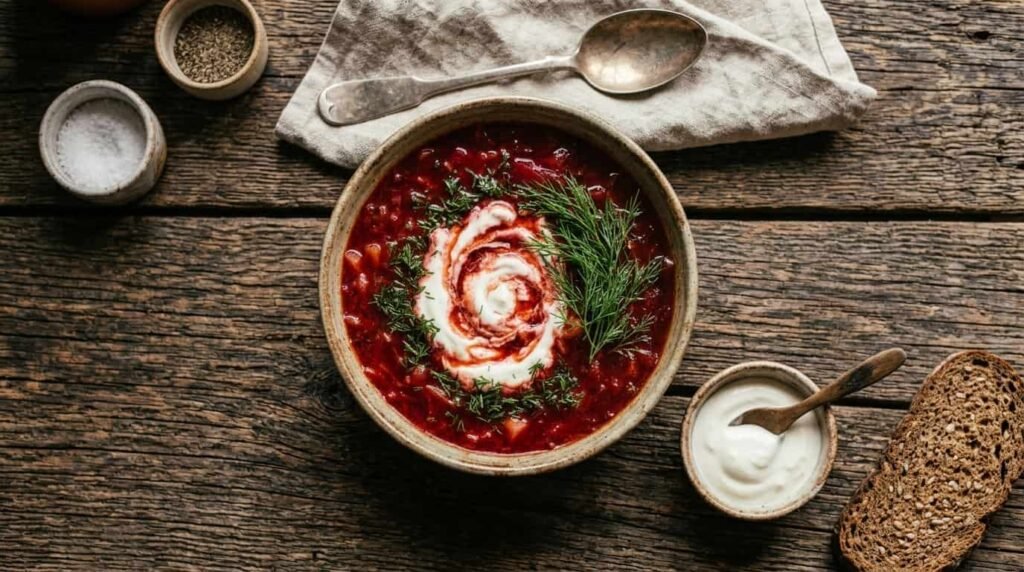
Borscht soup has a reputation for being intimidating, but once you make it once, you’ll wonder why you waited so long. This ruby-red beet soup, rooted in Ukrainian tradition, layers tender beef, earthy beets, sweet carrots, and tangy cabbage into a broth that gets better the longer it sits. If you’ve only had borscht from a can or a restaurant, homemade borscht soup is a different experience entirely: brighter, deeper, and genuinely comforting.
This recipe walks through a classic beef version, the kind most home cooks in Ukraine and Russia grew up eating, along with every tip you need to get that signature deep red color, a balanced sweet-and-sour flavor, and a broth that doesn’t turn muddy or dull.
Why You’ll Love This Borscht
Borscht earns its place in the weekly rotation for a reason. It’s a full meal in a bowl: protein from the beef, fiber and vitamin C from the beets and cabbage, potassium from the potatoes. It’s also naturally gluten-free and endlessly adaptable, since you can swap the beef for pork, chicken, or skip meat entirely for a vegetarian version.
The other reason people keep coming back to it: borscht tastes even better the next day. The flavors settle and deepen overnight, which makes it one of the few soups that’s genuinely a make-ahead dish rather than a compromise.
Ingredients You’ll Need
The backbone of any good beet soup is beets, obviously, but a few supporting ingredients make or break the final flavor.
- Beef chuck or short ribs: these cuts have enough fat and connective tissue to turn into a rich broth after an hour of simmering. Leaner cuts like sirloin will taste dry.
- Beets: fresh beets give the best color and earthiness. If you’re short on time, pre-cooked vacuum-packed beets work, though the flavor is milder.
- Cabbage: green cabbage is traditional, though some cooks use Napa cabbage for a softer bite.
- Tomato paste: this rounds out the acidity and gives the broth body. Some regional versions use fresh tomatoes instead, which works but yields a thinner sauce.
- Vinegar: the small splash added to the sautéed beets isn’t optional. It stops the beets from turning brown as they cook and keeps that vivid red color in the finished soup.
- Dill: fresh dill, added at the very end, is what makes borscht taste like borscht rather than plain beet-and-cabbage soup. Dried dill is a poor substitute here.
If you’re avoiding red meat, swap the beef broth and chuck for chicken thighs and chicken stock, or skip meat entirely and use vegetable stock with a splash of soy sauce for umami depth.
How to Make Borscht Soup
Start by browning the beef first. This step is easy to rush, but those browned bits at the bottom of the pot are where a lot of the flavor comes from. Once the meat is simmering in broth, you have time to prep everything else.
The beet-and-vinegar step is the part that separates good borscht from great borscht. Sautéing the grated beets with a splash of vinegar and a pinch of sugar before they go into the pot locks in their color and balances their earthy sweetness with a little tang. Skip this step and your soup will look more brown than red.
From there, it’s a matter of layering: potatoes go in first since they take the longest, then cabbage, then the sautéed vegetables and beets last so they don’t overcook and lose their color. A final rest off the heat, with the fresh dill stirred in, lets everything come together.
Pro Tips for the Best Beet Soup
A few small details make a noticeable difference in the final bowl.
- Grate the beets instead of dicing them. Grated beets release their color faster and cook more evenly, so you get that deep red broth without the beets turning to mush.
- Don’t skip the sugar. It’s a small amount, but it balances the vinegar and keeps the soup from tasting sharp or overly sour.
- Add the vinegar to the beets before they touch the hot broth, not after. Adding acid too late won’t preserve the color the way this timing does.
- Let the borscht rest for at least 10 minutes before serving, and ideally overnight in the fridge. The flavors need time to meld, and reheated borscht consistently tastes better than fresh.
- Salt in stages. Broth, beef bouillon, and canned tomato paste all carry sodium, so taste before adding a big pinch at the end.
Common Mistakes to Avoid
Even experienced cooks run into a few recurring issues with borscht.
Dull, brownish color instead of ruby red. This almost always comes down to skipping the vinegar step with the beets, or adding the beets too early and overcooking them. Add them toward the end and always with a splash of acid.
Watery, flavorless broth. This usually means the beef wasn’t browned first, or the soup wasn’t simmered long enough to develop depth. Give the meat its full 45 minutes before adding vegetables.
Mushy vegetables. Potatoes and cabbage turn to mush if they’re added too early or simmered too aggressively. Keep the heat at a gentle simmer once everything is in the pot, not a rolling boil.
Overly sour or overly sweet balance. Borscht should taste balanced, not sharp. If yours tastes too sour, add a touch more sugar. If it’s too sweet, another splash of vinegar or a squeeze of lemon fixes it.
Variations and Substitutions
Borscht changes from household to household, and there’s no single “correct” version. A few common directions to take it:
- Vegetarian borscht: replace the beef and broth with vegetable stock and white beans or mushrooms for heartiness.
- Pork or chicken borscht: swap the beef for pork ribs or bone-in chicken thighs, adjusting simmer time down for chicken (25-30 minutes is plenty).
- Green borscht: a completely different summer version made with sorrel instead of beets, tangy and lighter.
- Cold borscht: chilled and blended smoother, finished with buttermilk or extra sour cream, popular in warmer months.
- Instant Pot borscht: pressure cook the beef for 25 minutes on high before releasing pressure and adding the remaining vegetables to simmer on sauté mode.
Storage and Reheating Instructions
Borscht stores exceptionally well, which is part of why it’s a favorite for meal prep. Cool the soup completely before transferring to an airtight container and refrigerating for up to 4 days. The flavor actually improves on day two and three as the beets, garlic, and dill continue to mingle.
To freeze, portion the cooled soup into freezer-safe containers, leaving an inch of space at the top for expansion, and freeze for up to 2 months. Thaw overnight in the fridge before reheating. Reheat gently on the stovetop over medium-low heat, stirring occasionally, rather than microwaving in one long burst, which can make the potatoes go grainy.
What to Serve With Borscht
Borscht is traditionally served with a slice of dark rye or pumpernickel bread and a clove of raw garlic on the side to bite into between spoonfuls. A generous dollop of sour cream is non-negotiable for most Ukrainian and Russian households. For a fuller meal, pair it with pampushky (garlic bread rolls) or a simple cucumber and tomato salad dressed with dill and a little oil.
Frequently Asked Questions
Is borscht supposed to be sweet or sour?
Both. Good borscht balances the natural sweetness of the beets and carrots with the tang of vinegar and tomato. Neither flavor should dominate.
Can I make borscht ahead of time?
Yes, and it’s actually recommended. Borscht tastes better the next day once the flavors have had time to develop. Make it up to 2 days before serving and reheat gently on the stove.
Why did my borscht turn brown instead of red?
This usually happens when the beets are added too early and overcooked, or when the vinegar step is skipped. Sauté the beets separately with a splash of vinegar and add them toward the end of cooking to preserve the color.
Can I make borscht without meat?
Yes. Use vegetable broth in place of beef broth and skip the meat, or add white beans or mushrooms for extra heartiness. The rest of the recipe stays the same.
How long does borscht last in the fridge?
Properly stored in an airtight container, borscht keeps for up to 4 days in the refrigerator and up to 2 months in the freezer.
What does borscht taste like?
Borscht has an earthy, slightly sweet base from the beets, balanced by tangy vinegar and savory beef broth. Fresh dill and sour cream on top add a bright, herby finish.