Single Serving Pancakes
Ingredients
Instructions
Single Serving Pancake Recipe: Fluffy in 15 Minutes
I make pancakes for myself more often than I make them for anyone else, and for years that meant either dirtying a full mixing bowl for a stack I’d eat alone, or trying to guess how to split an egg in half. This single serving pancake recipe solves both problems. It’s built around one whole egg, so there’s no weighing out yolk, and it makes just enough batter for two good-sized pancakes or three smaller ones. No boxed mix, no leftover batter sitting in the fridge, and no dishes beyond two bowls and a skillet.
Why You’ll Love This Single Serving Pancake Recipe
This isn’t a scaled-down version of a family recipe where the math gets awkward. It’s built from the ground up for one person. The flour-to-liquid ratio is tuned so a whole egg works without making the batter too thin or too eggy tasting, which is the main thing that trips people up when they try to shrink a normal pancake recipe on their own.
The pancakes come out with a tender crumb and lightly crisp edges, similar to a classic buttermilk pancake but without needing buttermilk on hand. You get real from-scratch flavor in about the same time it takes to toast a bagel, and there’s nothing left over to store, freeze, or feel guilty about wasting.
Ingredients You’ll Need
- All-purpose flour: the base of the batter. Spoon it into your measuring cup and level it off rather than scooping directly from the bag, since scooping packs in extra flour and leads to dry, dense pancakes.
- Baking powder: this is what gives you lift and that classic fluffy texture. Check that yours isn’t expired; old baking powder is the most common reason pancakes come out flat.
- Sugar: just a tablespoon, enough for light sweetness without making the pancakes cloying, especially once syrup goes on top.
- Salt: a small pinch balances the sugar and rounds out the flavor. Skip it and the pancakes taste flat.
- One large egg: the whole thing, no splitting required. This is the detail that makes single serving pancakes practical instead of fiddly.
- Milk: room temperature milk blends into the batter more evenly than cold milk straight from the fridge. Whole milk gives the richest result, but 2% or a dairy-free milk like oat or almond works fine too.
- Melted butter: adds richness and helps the edges turn golden instead of pale. Let it cool slightly before whisking it into the egg so it doesn’t scramble.
- Vanilla extract: a small amount rounds out the flavor and makes the pancakes taste bakery-style rather than plain.
How to Make Pancakes for One
Start by whisking the dry ingredients, flour, baking powder, sugar, and salt, together in a small bowl. In a second bowl, whisk the egg, milk, melted butter, and vanilla until the mixture looks smooth and slightly frothy.
Pour the wet mixture into the dry ingredients and stir with a fork, just until you no longer see streaks of flour. The batter should still look a little lumpy. This is normal and actually necessary; overworking a small batch of pancake batter develops the gluten in the flour, and that’s what turns pancakes tough and chewy instead of soft.
Let the batter sit for a couple of minutes while your skillet heats over medium-low. This short rest lets the baking powder start working and gives the flour a moment to hydrate fully, which noticeably improves texture. Melt a small pat of butter in the pan, then pour in a scant third cup of batter per pancake. Watch for small bubbles to break the surface and the edges to look set and matte, usually around two to three minutes, then flip. The second side only needs a minute or two since the pan is already hot.
Pro Tips for Fluffy Pancakes
Medium-low heat is the right call for a batch this small. A hotter pan browns the outside before the inside has time to cook through, which is a common complaint with single pancake recipes made in a rush.
Resist the urge to press down on the pancakes with your spatula while they cook. It feels productive, but it just squeezes out the air bubbles that are giving you a fluffy texture in the first place.
If you want restaurant-style height, let the batter rest a full five minutes instead of two before you start cooking. The extra time gives the baking powder more room to activate, and you’ll notice a visibly puffier pancake once it hits the pan.
Only flip once. Multiple flips deflate the pancake and dry it out. Wait for those bubbles and set edges before you touch it.
Common Mistakes to Avoid
Overmixing is the number one issue with any small batch pancake recipe, since it’s tempting to stir a tiny amount of batter until it looks perfectly smooth. Stop as soon as the flour disappears.
Cold ingredients straight from the fridge, especially the egg and milk, can make melted butter seize into little clumps when you whisk everything together. Give your egg and milk a few minutes on the counter first, or warm the milk slightly in the microwave.
Using a pan that’s too hot leads to pancakes with a dark, almost burnt exterior and a raw, gummy center. If this keeps happening, turn your burner down a notch and give the pan a minute longer to heat evenly before the first pancake goes in.
Skipping the rest time on the batter is an easy shortcut that costs you volume. Even two minutes makes a visible difference in how much the pancakes puff up.
Variations and Substitutions
This batter takes well to mix-ins. Stir one to two tablespoons of chocolate chips, fresh blueberries, or a quarter teaspoon of cinnamon directly into the finished batter before it hits the pan.
For a dairy-free version, swap the milk for oat milk or almond milk in equal amounts; the texture stays nearly identical. Gluten-free all-purpose flour blends with xanthan gum built in also work as a one-to-one swap, though the pancakes will be very slightly denser.
If you’re out of eggs, a flax egg (one tablespoon ground flaxseed mixed with three tablespoons water, rested for five minutes) works as a substitute, though the pancakes will be a touch less fluffy.
Want to feed two people instead of one? Just double every ingredient. The ratios stay exactly the same, you’ll just end up with four to six pancakes instead of two or three, and the cook time per pancake doesn’t change.
Storage and Reheating Instructions
Pancakes are best fresh off the skillet, but if you end up with extras, let them cool completely on a wire rack before stacking them, otherwise trapped steam makes them soggy. Store in an airtight container in the fridge for up to two days.
To freeze, lay the cooled pancakes in a single layer on a baking sheet until firm, about 30 minutes, then transfer them to a freezer bag with parchment paper between each one so they don’t stick together. They’ll keep well for up to two months.
Reheat refrigerated pancakes in the microwave for 20 to 30 seconds, or pop frozen ones straight into a 350°F oven for about 8 to 10 minutes. A toaster also works well for a quick reheat if you like a slightly crisp edge.
What to Serve With Single Serving Pancakes
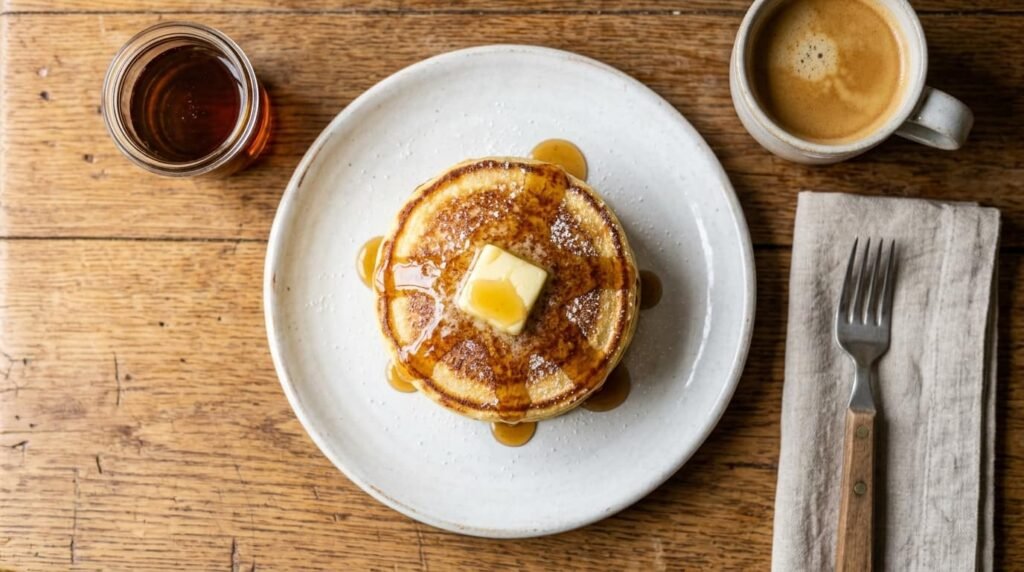
Maple syrup and a pat of butter is the classic move, but this small stack is also a good base for whatever you have on hand. A drizzle of peanut butter or Nutella, a spoonful of Greek yogurt with fresh berries, or a dusting of powdered sugar with a squeeze of lemon all work well.
If you want a heartier plate, pair the pancakes with a fried or scrambled egg on the side, or a few strips of bacon. Since this recipe is scaled for one, it’s easy to build the rest of your breakfast around whatever you’re already in the mood for.
Frequently Asked Questions
Can I use a whole egg, or do I need to split one?
You use the whole egg, no splitting needed. The rest of the recipe is scaled around a full large egg so you’re not left with an awkward half-yolk in the fridge.
Why are my single serving pancakes dense instead of fluffy?
The most common causes are overmixing the batter, using expired baking powder, or skipping the short rest time before cooking. Stir just until the flour disappears and give the batter a couple of minutes to sit before it goes in the pan.
Can I double this recipe to make pancakes for two?
Yes. Double every ingredient exactly and you’ll get four to six pancakes depending on size. The cook time per pancake stays the same.
Do I need buttermilk for this recipe?
No, this recipe uses regular milk, so there’s no need to buy or make buttermilk for a single batch. If you have buttermilk on hand and want to use it, it will make the pancakes slightly more tender and tangy.
Can I make the batter ahead and cook it later?
It’s best cooked right away since baking powder starts losing its lift as soon as it’s mixed with liquid. If you need to wait, cover the batter and refrigerate it for up to two hours, then stir gently and add a small splash of milk before cooking.
Can I cook this on a griddle instead of a skillet?
Yes, a griddle works well for this recipe and can actually give you more even heat across the pancake than a skillet.