
Polish Stuffed Cabbage Recipe (Gołąbki)
Polish stuffed cabbage, known in Polish as gołąbki, is tender cabbage leaves wrapped around a savory mix of ground meat, rice, and onion, then simmered low and slow in tomato sauce until everything is soft and comforting. It is the kind of dinner that fills the whole kitchen with smell of onions and tomato before anyone even sits down. If your family calls it golumpki, gołąbki, or just “cabbage rolls,” you are talking about the same dish, and this guide walks through every step so your rolls hold together and taste like they came from a Polish grandmother’s stove.
What Is Polish Stuffed Cabbage (Gołąbki)?

Gołąbki comes from the Polish word gołąb, meaning pigeon, because the little rolled bundles are shaped a bit like plump birds. The dish is a staple across Central and Eastern Europe, where it also goes by golumpki, holubtsi, or sarma depending on the country. Traditionally it’s made with ground beef and pork, rice, and onion, all wrapped in softened cabbage leaves and baked or simmered in a tomato-based sauce.
I’ve made this dish more times than I can count, and the version that works best in my own kitchen skips the fussy binder ingredients like egg and leans on a moist filling and a low, slow cook instead. That’s the trick that keeps the rolls from drying out or falling apart on the plate. Some families use tomato soup for a slightly sweet sauce, others stick with plain tomato sauce and a pinch of sugar. Both are correct. This is comfort food, not a competition.
Ingredients You’ll Need for Polish Stuffed Cabbage
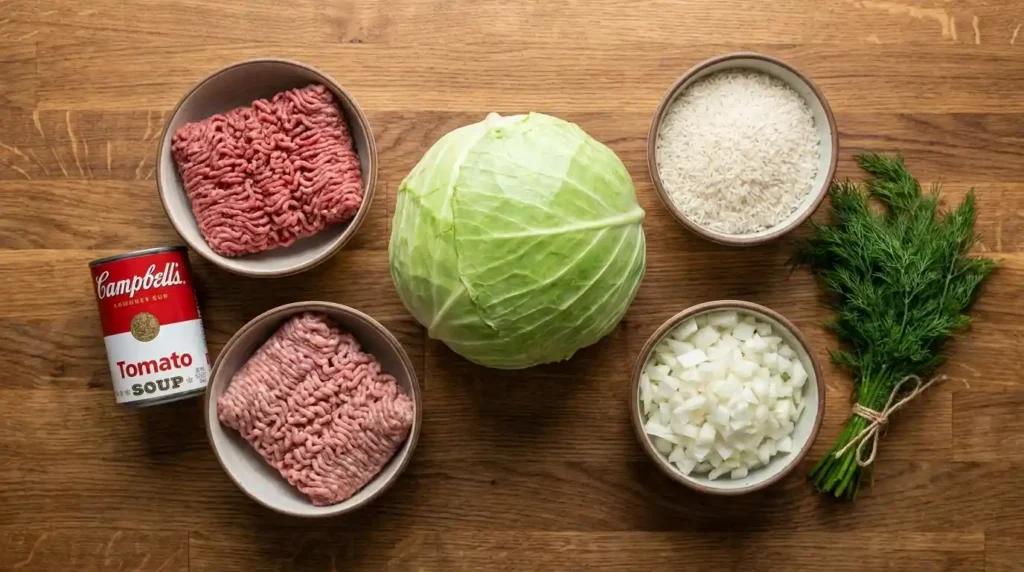
Here’s what goes into a classic batch that serves about 8 to 10 people:
- 1 large head of green cabbage (or 2 smaller heads)
- 1 pound ground beef
- 1 pound ground pork (or a meatloaf mix of beef, pork, and veal)
- 1 cup uncooked long-grain white rice, parboiled for 4 minutes
- 1 medium onion, finely chopped
- 2 tablespoons butter or bacon fat
- 1 egg (optional, for a firmer filling)
- 2 cups beef broth
- Salt and black pepper
- 1 can (23 ounces) condensed tomato soup, or 2 cups tomato sauce plus a tablespoon of brown sugar
- Fresh parsley or dill, for serving
A few notes on substitutions: savoy cabbage works beautifully here because its leaves are a little more pliable than plain green cabbage. If you want a more rustic filling, swap the rice for cooked barley, which is common in older Polish recipes. Ground turkey works in a pinch if you’re cutting back on red meat, though the filling will be a touch drier, so add extra broth.
If you like a little smokiness in the sauce, a few strips of chopped bacon fried before you sauté the onion adds real depth, and you can use the leftover bacon fat instead of butter for the onion. Garlic is optional in most old family recipes, but a clove or two minced into the filling rounds out the flavor without overpowering the cabbage. Fresh dill is a common Polish touch as well, stirred into the filling or sprinkled over the finished dish alongside the parsley.
How to Make Polish Stuffed Cabbage Rolls (Step-by-Step)
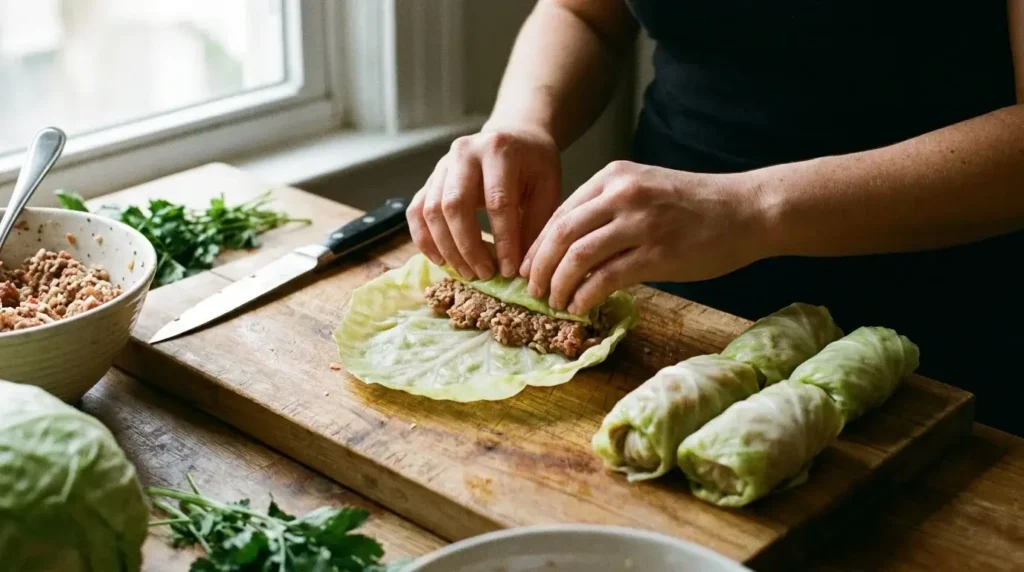
Making Polish stuffed cabbage rolls comes down to four stages: soften the leaves, mix the filling, roll, and simmer. None of the steps are hard on their own, they just take some time.
1. Soften the cabbage leaves. Cut the core out of the cabbage with a paring knife, then lower the whole head into a large pot of boiling water. Boil for 3 to 5 minutes, until the outer leaves turn bright green and pliable, then peel them off one by one and set them aside. Keep boiling and peeling in batches as the inner leaves soften. Trim the thick rib at the base of each leaf so it rolls without tearing.
2. Make the filling. In a large bowl, combine the ground beef, ground pork, parboiled rice, sautéed onion, broth, salt, and pepper. Mix just until combined. The mixture should feel loose and moist, almost like a wet meatloaf mix, not dry and packed.
3. Roll the cabbage rolls. Place about 2 to 3 tablespoons of filling near the stem end of each leaf. Fold in the sides, then roll away from you, burrito-style, until the seam is tucked underneath. Don’t roll too tightly. The rice will expand as it cooks, and a snug roll can burst open in the pot.
4. Simmer or bake. Arrange the rolls seam-side down in a Dutch oven or large baking dish, stacking as needed. Pour the tomato soup or sauce evenly over the top. Cover tightly and simmer on the stovetop over very low heat for about 1.5 to 2 hours, or bake at 350°F for roughly the same amount of time, until the rice is tender and the cabbage nearly melts when you cut into it.
How Long Does Polish Stuffed Cabbage Take to Cook?
Polish stuffed cabbage takes about 1.5 to 2 hours to cook once assembled, whether you simmer it on the stovetop or bake it at 350°F. The long, gentle cook is what makes the rice tender and lets the cabbage soften without falling apart, so resist the urge to turn up the heat to speed things along.
Tips for Rolling Cabbage Leaves That Won’t Fall Apart
A few small habits make a big difference between rolls that stay neat and rolls that unravel in the pot:
- Trim the thick center rib flat with a knife before rolling, since the rib is what usually cracks the leaf.
- Fill leaves lightly rather than heaping them, especially with smaller inner leaves.
- Roll snug but not tight, leaving a little room for the rice to expand as it cooks.
- Place any torn or extra leaves on the bottom of the pot as a cushion, and lay a few whole leaves over the top layer of rolls to help them steam evenly.
- Keep the heat low. A hard boil or a too-hot oven is the most common reason cabbage rolls split open.
What to Serve with Polish Stuffed Cabbage
Gołąbki is a rich, saucy main dish, so simple sides work best. Mashed potatoes are the classic pairing, since they soak up extra tomato sauce beautifully. Rye bread, buttered egg noodles, or a tangy side of sauerkraut round out a traditional Polish spread. For something lighter, a marinated cucumber salad or a simple green salad with vinegar dressing cuts through the richness of the meat and sauce.
How to Store, Freeze, and Reheat Gołąbki
Cooked stuffed cabbage keeps well in the refrigerator for 3 to 4 days in an airtight container. To freeze, you can either freeze the cooked rolls in a freezer-safe dish for up to 3 months, or assemble the rolls uncooked, freeze them on a tray, then transfer to a freezer bag. Uncooked rolls can go straight from the freezer into the pot with a little extra sauce and simmer time.
To reheat, thaw overnight in the fridge if frozen, then warm covered in a low oven or on the stovetop until heated through. A splash of extra tomato sauce or a little water helps loosen the sauce back up after storage. Individual portions reheat fine in the microwave in about 1 to 2 minutes.
Meal prep cooks often make a double batch on a weekend specifically so half can go straight into the freezer. Since the rolls hold their shape well after cooking, they reheat almost as well as fresh, which makes gołąbki one of the more forgiving make-ahead dinners in a Polish cook’s repertoire.
Why did my cabbage rolls fall apart?
Rolls usually fall apart for one of two reasons: the cabbage leaves were rolled too tightly, so the rice expanded and burst the seam, or the pot cooked too hot, breaking down the leaves before the filling firmed up. Rolling snugly instead of tightly, and keeping the heat low and steady, solves both problems.
Can I make Polish stuffed cabbage ahead of time?
Yes. You can assemble the rolls a day in advance, cover them in the pot or baking dish, and refrigerate overnight before cooking. Many cooks say the flavor is even better the next day, since the filling has time to absorb the tomato sauce before it hits the heat.
Do you have to boil the cabbage before stuffing it?
Boiling or steaming is the traditional method, and it’s the fastest way to get pliable leaves, but it’s not the only option. Some cooks freeze the whole head of cabbage overnight and let it thaw, which softens the leaves naturally and skips the pot of boiling water entirely.
Can I freeze Polish stuffed cabbage?
Absolutely. Both cooked and uncooked cabbage rolls freeze well for up to 3 months. Freeze uncooked rolls on a tray until solid, then transfer to a freezer bag so they don’t stick together, and cook them straight from frozen with a bit of extra time in the pot.
Polish stuffed cabbage is one of those recipes worth keeping in the regular dinner rotation, not just for holidays. Once you’ve rolled a batch or two, the process goes quickly, and you’ll likely have your own small tweaks, more garlic, a different grain, extra bacon, within a few tries. Give it a go this week, and let the low and slow simmer do the work while you set the table.