
How to Ripen Bananas in the Oven (Ready in 30 Minutes)
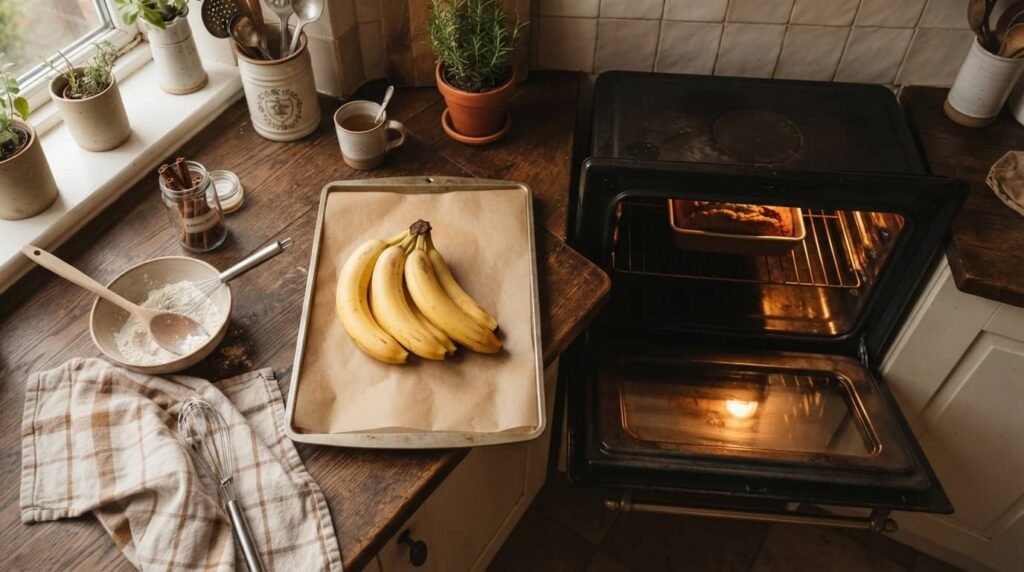
If you’re looking up how to ripen bananas in the oven, you’re probably staring down a bunch of stubbornly yellow bananas and a banana bread craving that isn’t going away. Good news: you don’t have to wait. With nothing more than a baking sheet and about 30 minutes, you can soften rock-firm bananas enough to mash, bake, and use in almost any recipe that calls for the ripe kind.
I want to be upfront with you though, because a lot of posts on this topic oversell it. The oven method is a texture fix, not a magic trick. It gets your bananas soft and dark, but it will not make them taste exactly like bananas that ripened slowly on your counter. Once you know that going in, it’s a genuinely useful trick to keep in your back pocket.
What You Need to Ripen Bananas in the Oven

This is about as low-effort as kitchen hacks get. You’ll need:
- Unpeeled bananas (yellow, not green, works best)
- A baking sheet
- Parchment paper or foil
- An oven
That’s it. No special equipment, no extra ingredients. The bananas stay in their peels the entire time, which keeps the mess contained and makes it obvious when they’re ready, since the peel darkens as the fruit inside softens.
How to Ripen Bananas in the Oven, Step by Step

Here’s the method I use whenever a banana bread craving hits faster than my fruit bowl can keep up.
- Preheat your oven to 300°F. Some recipes push closer to 325°F for a slightly faster bake, but 300°F gives you a bit more room to check on them without scorching the sugars.
- Line a baking sheet with parchment paper or foil. Bananas tend to split and leak sticky juice as they heat, and that juice burns fast on a bare pan. Trust me, you want the liner.
- Place the unpeeled bananas on the sheet, leaving a little space between each one so they heat evenly.
- Bake for 15 to 40 minutes, depending on how ripe your bananas already were and how large they are. Bananas that were already yellow and just shy of ripe will be done closer to the 15 to 20 minute mark. Firmer, greener bananas can take closer to 35 to 40 minutes.
- Watch for the peel to turn fully black and glossy, and the banana to feel soft and a little squishy when you press it. It’s normal for a small amount of syrupy juice to leak out onto the pan.
- Let them cool before handling. This part matters more than people expect. Straight out of the oven, the fruit inside is scalding hot, hot enough to burn you and hot enough to cook eggs or melt butter if you add it straight to a batter. Give the bananas at least 15 to 20 minutes to cool, or peel and mash them into a bowl to speed up the cooling.
- Peel and mash. Snip off one end of the banana and squeeze, or slice the peel open lengthwise. The fruit should come out easily and mash with almost no effort.
What Temperature Should You Use to Ripen Bananas in the Oven?

Quick answer: 300°F is the safest bet for ripening bananas in the oven. It’s low enough that the fruit softens and darkens gradually instead of scorching, and it gives you a wide enough window, usually 15 to 40 minutes, to check on the bananas without worrying about them burning if you’re a few minutes late.
Some bakers use 325°F to shave a few minutes off the process, and that works fine too, especially if your bananas are already yellow and mostly ripe. What you want to avoid is cranking the heat higher to speed things up further. High heat cooks the outside of the banana before the inside has a chance to soften, and you’ll end up with a scorched peel wrapped around fruit that’s still firm in the middle.
Do Oven-Ripened Bananas Taste the Same as Naturally Ripe Ones?
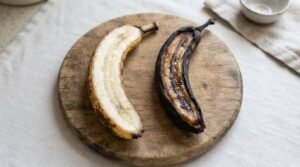
No, and this is the part most quick-fix posts skip over. When bananas ripen naturally, ethylene gas triggers an enzymatic process that slowly converts the fruit’s starches into sugars over several days. That’s what gives a properly ripe banana its deep sweetness and soft, custardy texture.
The oven doesn’t really replicate that chemistry. It’s applying direct heat, which softens the fruit and darkens the peel through caramelization, but it doesn’t fully convert the starch to sugar the way time and ethylene do. Food science writers have actually tested this with an iodine solution, which turns blue in the presence of starch. Naturally ripened banana slices test low in starch, while oven-ripened slices still show a noticeable starch reaction, meaning the fruit softened without fully sweetening.
In practical terms, that means oven-ripened bananas will taste a bit more tangy or “green” and less sweet than a banana that spent a few days going speckled and brown on your counter. They’re still perfectly good for baking, since most banana bread and muffin recipes have plenty of added sugar to make up the difference, but don’t expect them to taste amazing eaten plain off the peel.
Oven vs. Other Fast-Ripening Methods

If speed is your only goal, the oven isn’t actually the fastest option, and it’s not always the best-tasting one either. Here’s how it stacks up against the other common tricks:
- Microwave (30 seconds to 2 minutes): The fastest method by far, but also the messiest and least flavorful. Peels split, the fruit turns to mush, and the taste stays flat and starchy rather than sweet.
- Air fryer (10 to 15 minutes): Faster than the oven and, by most home cooks’ accounts, gives a slightly better texture and flavor since the circulating heat softens the fruit more evenly.
- Paper bag (1 to 2 days): Not fast, but it’s the only shortcut that actually mimics real ripening. Sealing bananas in a paper bag traps the ethylene gas they naturally give off, which genuinely converts starch to sugar. Toss in an apple or another banana and it goes even quicker. This is the method to use if you want to eat the bananas plain, not just bake with them.
- Egg yolk trick (30 minutes): An unusual but effective option for baking specifically. Mashing unripe bananas with a raw egg yolk and letting the mixture sit for 30 minutes uses the yolk’s enzymes to break down starches, resulting in noticeably sweeter banana flavor in the finished bake. It only works when the bananas are going straight into a batter, since the raw egg means you can’t taste-test it plain.
- Oven (15 to 40 minutes): The middle ground. Slower than the microwave or air fryer, but it needs zero babysitting once the bananas are in, and it’s the method most people already know how to do without buying anything.
If you’re only ripening bananas for baking, either the oven or the air fryer will get the job done with the least fuss. If you actually want to snack on the bananas afterward, skip the heat entirely and use the paper bag.
Common Mistakes When Ripening Bananas in the Oven
A few small missteps are responsible for most of the “this didn’t work for me” complaints you’ll see about this method:
- Using very green bananas. This trick softens bananas, it doesn’t fully ripen them from scratch. Start with bananas that are already yellow, even if slightly firm, for the best results.
- Skipping the liner. Bare baking sheets turn the leaked banana juice into a burnt, hard-to-scrub mess. Parchment or foil saves you the cleanup.
- Cranking the oven too hot. Higher heat doesn’t mean faster ripening, it means a scorched peel around fruit that’s still firm inside.
- Handling the bananas too soon. They hold heat well after coming out of the oven. Give them time to cool, or you risk a burn and a batter with accidentally cooked eggs.
- Expecting them to taste like counter-ripened bananas. Set your expectations at “good enough for baking,” not “as sweet as a bag of speckled bananas that sat out for a week.”
What to Do with Your Oven-Ripened Bananas
Once your bananas are cooled, peeled, and mashed, they’re ready for pretty much anything that calls for ripe or overripe bananas:
- Banana bread or banana muffins
- Pancakes or waffles
- Banana oatmeal cookies
- Smoothies
- Overnight oats
If you end up with more mashed banana than you need right now, it freezes well. Pack it into an airtight container or freezer bag and it’ll keep for up to about six months, ready to thaw whenever the next craving hits.
Frequently Asked Questions
Is it safe to eat bananas ripened in the oven?
Yes. Baking them at a low temperature simply softens the fruit and darkens the peel, it doesn’t make them unsafe to eat. Just let them cool fully before peeling, since the fruit and any leaked juice will be very hot straight out of the oven.
Can you ripen green bananas in the oven?
You can, but the results won’t be as good. Very green bananas are still starchy and firm, and while the oven will soften them, they’ll stay noticeably less sweet than bananas that started out yellow. This method works best as a last push for bananas that are already yellow but not quite ripe enough to bake with.
How long does it take to ripen bananas in the oven?
Most bananas are ready in 15 to 40 minutes at 300°F, depending on their starting ripeness and size. Bananas that are already close to ripe will finish faster, while firmer, greener bananas need the longer end of that range.
Do you need to poke holes in the banana peel before baking?
It’s not strictly necessary, but some bakers do it to help steam escape and reduce splitting. If you skip it, don’t worry, a little leaking juice on the parchment paper is completely normal and won’t affect the bananas inside.
Next time your banana bread plans get ahead of your fruit bowl, you’ll know exactly what to do. Preheat that oven, line a pan, and you’ll have baking-ready bananas before your oven even finishes heating up for the loaf pan.


Pingback: Martha Stewart Banana Bread Recipe (Tested & Reviewed)