Tropical Smoothie Nutrition Facts: What’s Really in Your Glass
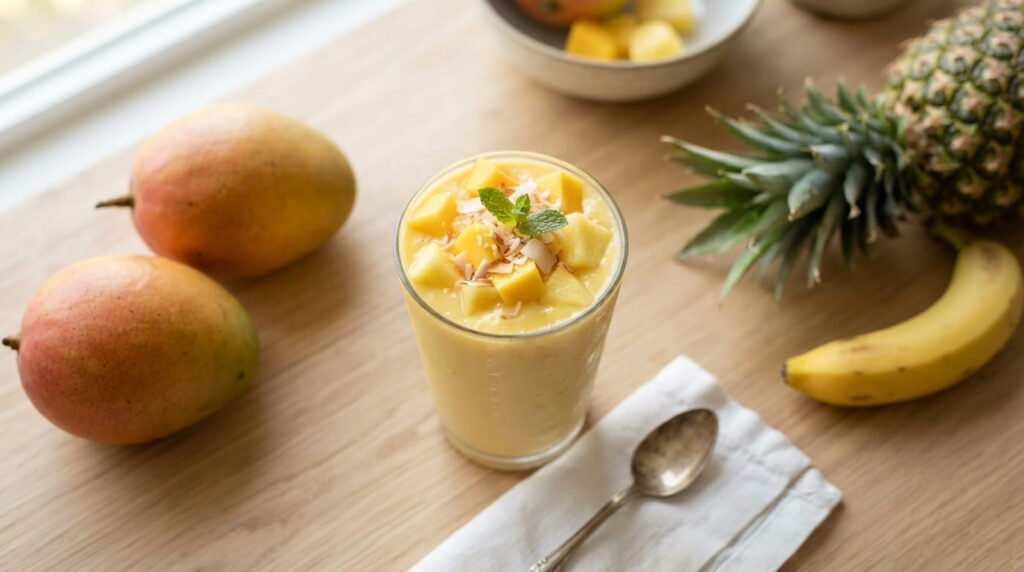
If you’ve ever blended mango, pineapple, and coconut milk together and wondered what you’re actually drinking, the tropical smoothie nutrition facts are more interesting than you’d think. A typical 12 to 16 ounce homemade tropical smoothie runs somewhere between 150 and 350 calories, depending on your fruit-to-liquid ratio and whether you add protein or healthy fats. That’s a wide range, and the ingredients you choose matter far more than the fact that it’s “tropical.” I’ve made this exact style of smoothie in my own kitchen more times than I can count, swapping fruits in and out to see how the numbers shift, so let’s break down what’s in the glass and what it means for your body.
What Are Tropical Smoothies Made Of?
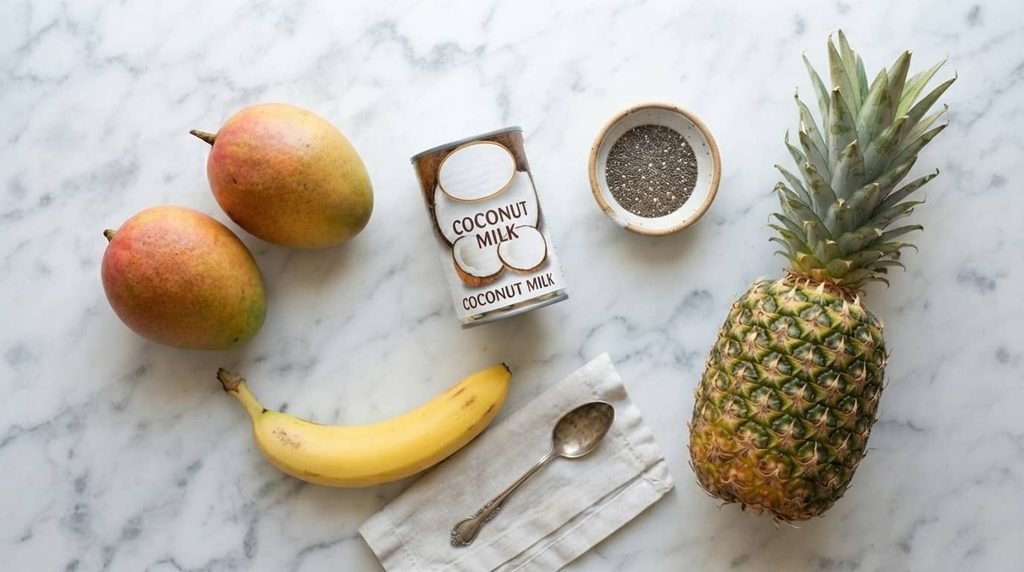
Most tropical smoothies build on the same core: a frozen fruit base, a liquid, and something creamy to hold it together. Mango and pineapple show up in almost every version because they blend smooth and add natural sweetness without needing added sugar. Banana is the usual thickener. From there, recipes branch out with papaya, passion fruit, guava, or kiwi for extra tang, and coconut milk, coconut water, or Greek yogurt for the base liquid.
Some people stir in spinach or kale, which barely changes the flavor but adds a real nutritional boost. Others add chia seeds or flax for fiber and omega-3s, or a scoop of protein powder to turn a snack into something closer to a meal. Every one of these swaps changes the numbers below, which is why two “tropical smoothies” can look completely different on paper.
Tropical Smoothie Nutrition Facts: Calories, Carbs, and Protein
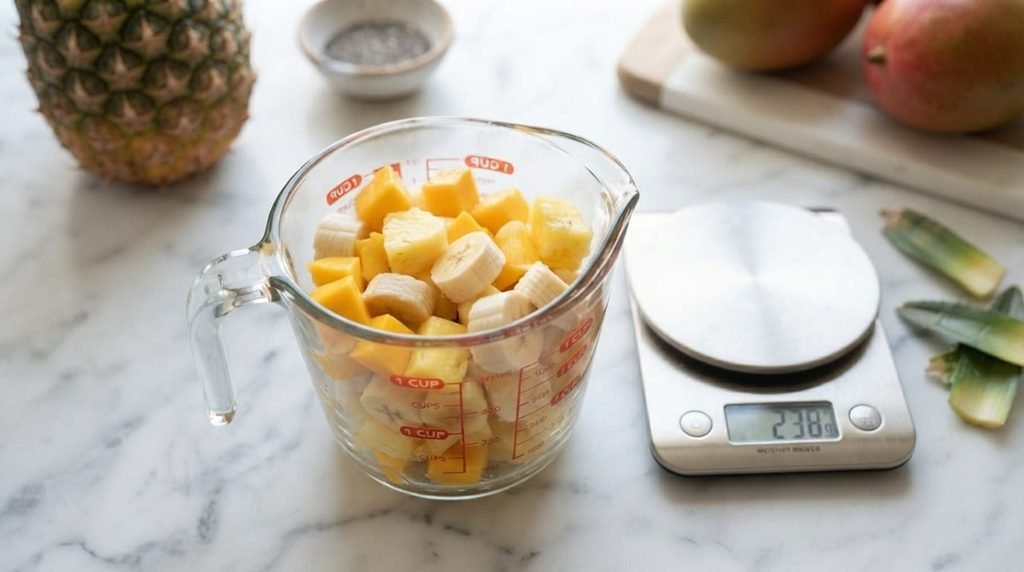
For a standard 16-ounce homemade tropical smoothie made with mango, pineapple, banana, and coconut milk, here’s roughly what you’re looking at per serving:
- Calories: 200–350
- Carbohydrates: 35–50 grams
- Protein: 2–6 grams (without added protein powder or yogurt)
- Fat: 2–12 grams, mostly from coconut milk
- Fiber: 3–7 grams
- Sugar: 25–40 grams, almost entirely from whole fruit
That protein number is the one worth paying attention to. Tropical fruit is naturally low in protein, so a fruit-only smoothie tends to spike your blood sugar and leave you hungry again within an hour. Adding Greek yogurt, a scoop of protein powder, or even a spoonful of nut butter bumps the protein up to 15–20 grams and turns the drink into something that actually holds you over.
Vitamins and Minerals Packed Into Every Glass
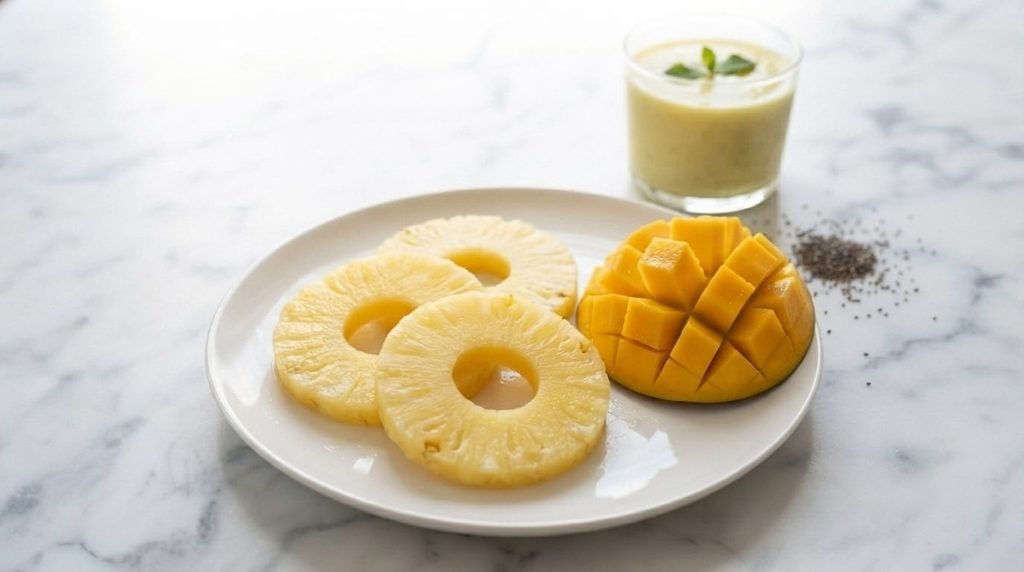
The reason tropical fruit gets so much attention in nutrition circles is the vitamin and mineral density. A single mango covers a large share of your daily vitamin C needs on its own, and pineapple contributes manganese along with bromelain, an enzyme some research links to reduced inflammation and easier digestion. Banana adds potassium, which supports healthy blood pressure and muscle function, while coconut adds small amounts of iron and magnesium.
If you toss in spinach, you’re adding vitamin K, folate, and a meaningful amount of iron without changing the taste much at all. Between the fruit and any greens, a typical tropical smoothie easily covers your daily vitamin C target and contributes a solid share of vitamin A, potassium, and manganese, all in one glass.
Natural Sugar vs Added Sugar: What You Need to Know

This is where a lot of confusion happens. A tropical smoothie made purely from whole fruit can still show 30-plus grams of sugar on paper, and that number alarms people who are watching their intake. But there’s a real difference between sugar that comes packaged inside fruit fiber and sugar that’s poured in from a bottle or syrup.
Whole fruit sugar digests more slowly because the fiber slows absorption, so it doesn’t spike your blood sugar the way straight fruit juice or added sweetener does. The problem starts when recipes lean on fruit juice instead of whole fruit, or add honey, agave, or turbinado sugar on top of already-sweet fruit. If you’re making a tropical smoothie at home, using whole or frozen fruit instead of juice is the single easiest way to cut sugar without losing flavor.
Quick Answer: Is a Tropical Smoothie Actually Healthy?
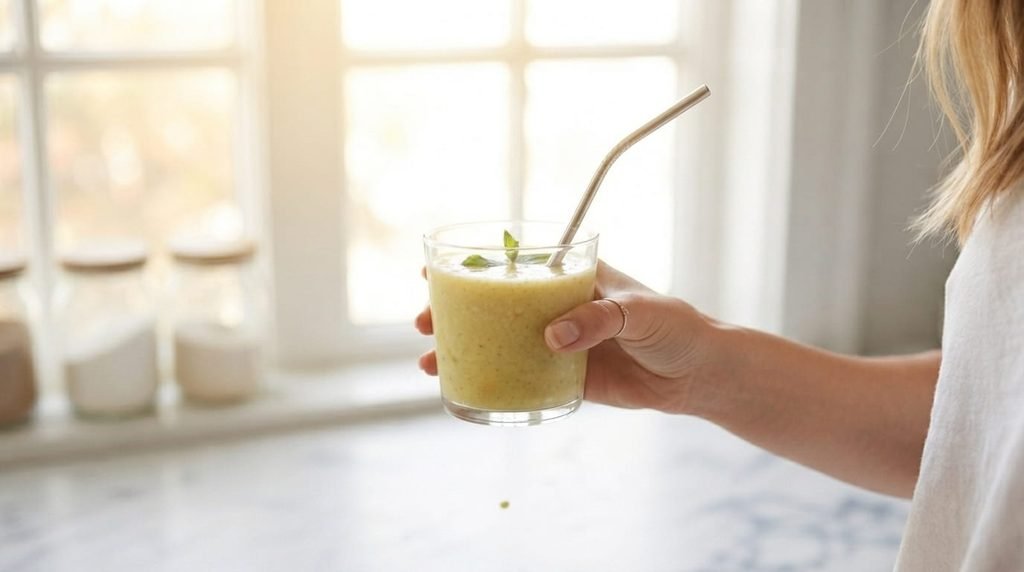
Yes, a homemade tropical smoothie made with whole fruit, a protein source, and no added sugar is a genuinely healthy choice. It delivers fiber, vitamin C, potassium, and antioxidants in one drink, and it beats most breakfast pastries or sugary cereals on nutrition. The catch is portion size and add-ins. A smoothie loaded with fruit juice, syrup, or a double scoop of sherbet can easily cross 500 calories and 50-plus grams of sugar, which pushes it closer to dessert than breakfast.
Homemade vs Cafe Tropical Smoothies: How the Nutrition Compares
I’ve ordered plenty of tropical smoothies from cafes and coffee shops, and the nutrition gap between those and a homemade version can be significant. Cafe smoothies are often 20 to 24 ounces, roughly double a typical home serving, and many recipes add turbinado sugar or sweetened juice blends on top of the fruit itself. It’s common for a cafe-bought tropical smoothie to land between 300 and 700 calories with 40 to 65 grams of sugar, depending on size and mix-ins.
Making the same style of smoothie at home puts you in control of three things a cafe menu usually doesn’t: the exact fruit ratio, whether any sugar gets added at all, and the protein content. In my own kitchen, swapping fruit juice for whole frozen fruit and skipping added sweetener cut the sugar in half without changing how the smoothie tasted.
How to Make Your Tropical Smoothie More Nutritious
A few small changes go a long way toward improving the nutrition profile of a tropical smoothie without sacrificing the flavor that makes it worth drinking in the first place.
- Use whole or frozen fruit instead of juice. You keep the fiber, which slows sugar absorption and keeps you full longer.
- Add a protein source. Greek yogurt, protein powder, or silken tofu all blend in smoothly and turn a snack into a meal.
- Skip the added sweetener. Ripe mango and banana are sweet enough on their own for most palates.
- Sneak in greens. A handful of spinach adds iron and vitamin K without noticeably changing the flavor.
- Watch your liquid. Coconut water or unsweetened almond milk keeps calories lower than full-fat coconut milk or fruit juice.
- Measure your portion. A 12 to 16 ounce glass is plenty for a snack; save the 20-ounce pour for a full meal replacement.
Tropical Smoothie Nutrition for Different Goals
The “right” tropical smoothie nutrition profile depends heavily on why you’re drinking one in the first place. Here’s how I’d adjust the base recipe for a few common goals.
Weight loss: Lean on water, coconut water, or unsweetened almond milk instead of full-fat coconut milk, and add a scoop of protein powder or a half cup of Greek yogurt. This keeps calories closer to 200–250 per serving while the added protein and fiber help you stay full longer, which matters more for weight loss than the calorie count alone.
Muscle building or post-workout recovery: Add a full serving of protein powder or Greek yogurt, plus a spoonful of nut butter for healthy fats. This pushes protein up to 20–25 grams per serving, which lines up well with post-workout recovery needs, while the natural sugar in the fruit helps replenish glycogen.
Kids’ smoothies: Keep the portion smaller, around 8 to 10 ounces, and skip any added sweetener since the fruit itself is plenty sweet for most kids. Hiding a small handful of spinach is an easy way to add nutrients without changing the color or flavor much, since the tropical fruit already dominates both.
Digestive health: Pineapple’s bromelain and the fiber from whole fruit and chia seeds make tropical smoothies a reasonable choice if digestion is your focus. Adding a spoonful of ground flaxseed or a few tablespoons of oats boosts fiber further without changing the tropical flavor profile much.
Frequently Asked Questions
How many calories are in a tropical smoothie?
A homemade 16-ounce tropical smoothie typically has 200 to 350 calories, depending on the fruit and liquid used. Cafe versions run higher, often 300 to 700 calories, because of larger portions and added sweeteners.
Is a tropical smoothie good for weight loss?
It can be, as long as it’s made with whole fruit, a protein source, and no added sugar, and you treat it as a meal or substantial snack rather than an extra on top of your regular eating. Portion size matters more than the “tropical” label.
What fruits are used in a tropical smoothie?
Mango, pineapple, and banana form the base of most tropical smoothies, with papaya, passion fruit, guava, and kiwi as common additions for extra flavor and nutrients.
Can you drink a tropical smoothie for breakfast every day?
Yes, as long as it includes enough protein and fiber to keep you full, and you’re not relying on fruit juice or added sugar. Rotating in greens or a protein source helps make it a more complete breakfast over time.
Tropical smoothie nutrition facts really come down to what you put in the blender. Build yours around whole fruit, a real protein source, and a light hand with sweeteners, and you end up with a drink that’s genuinely good for you, not just good-sounding. Try one of my tropical smoothie recipes and adjust the ratios above to match your own goals.