How to Cook Sausage Links (Stovetop, Oven, Air Fryer & Grill)
If you want to know how to cook sausage links so they come out juicy on the inside with a snappy, browned casing on the outside, the short version is this: cook them low and slow over medium-low heat, and stop guessing by checking the internal temperature instead of just the color. I’ve burned my share of breakfast links rushing the pan on a busy Saturday morning, and the fix is almost always the same, turn the heat down and give them time.
Whether you’re feeding a crowd for brunch or just need a quick side for scrambled eggs on a weeknight, this guide covers every method that actually works, plus the mistakes that turn good sausage into a dry, split-open mess.
Quick Answer: How to Cook Sausage Links
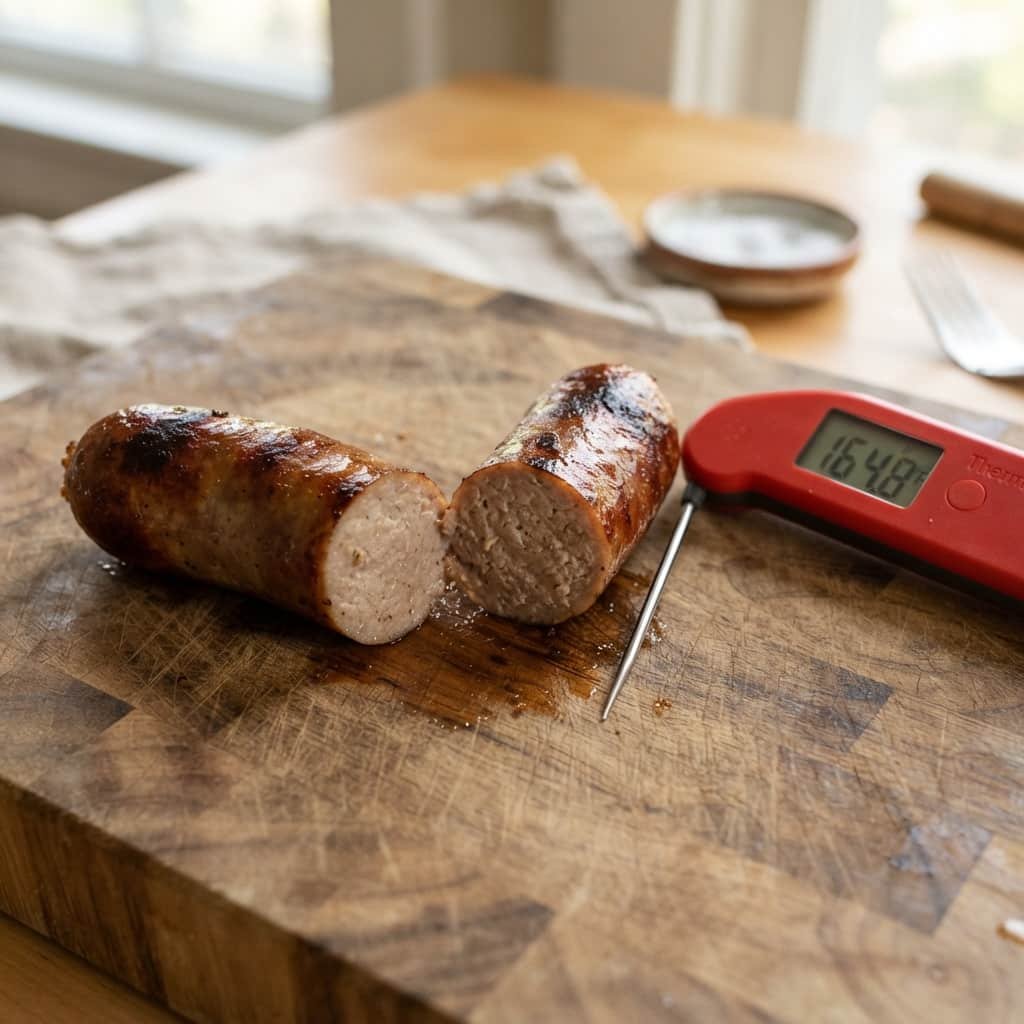
The fastest reliable method is the stovetop: heat a skillet over medium-low heat, add the links in a single layer, and cook for 10 to 12 minutes, turning them every couple of minutes so all sides brown evenly. Pull them once an instant-read thermometer reads 160°F for pork or beef links and 165°F for chicken or turkey. No thermometer? Cut one open. If the center is firm and no longer pink, you’re done.
Before You Start: Picking and Prepping Sausage Links
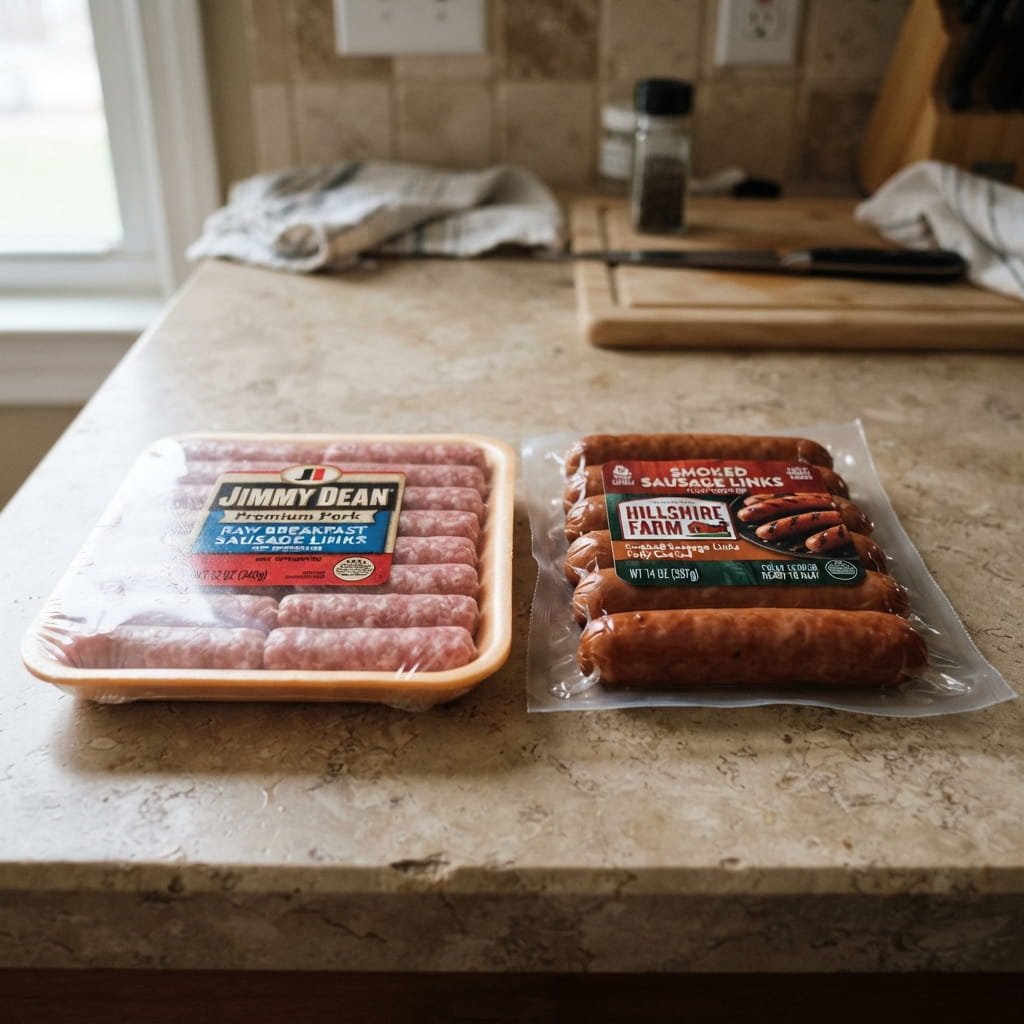
Not all sausage links are cooked the same way, so it helps to know what’s in your package before you turn on the stove.
Raw versus pre-cooked. Fresh, raw pork or turkey breakfast sausage links need to be cooked all the way through until they hit a safe internal temperature. Pre-cooked links, like most hot dogs, smoked kielbasa, or fully cooked bratwurst, only need to be heated through, so their cook time is shorter and the stakes for undercooking are lower.
Thawing. If your links are frozen, the fridge overnight is the safest bet, but you don’t have to thaw them first. Raw sausage links can go straight from the freezer into the oven; just add extra time and check the temperature before serving.
To prick or not to prick. Some cooks like to prick each link a few times with a fork so steam can escape and the casing doesn’t burst. Others skip it because pricking lets flavorful juices leak out, leaving the sausage a little drier. It’s a genuine trade-off, not a rule, so pick based on whether you value a cleaner pan or a juicier bite more.
How to Cook Sausage Links on the Stovetop
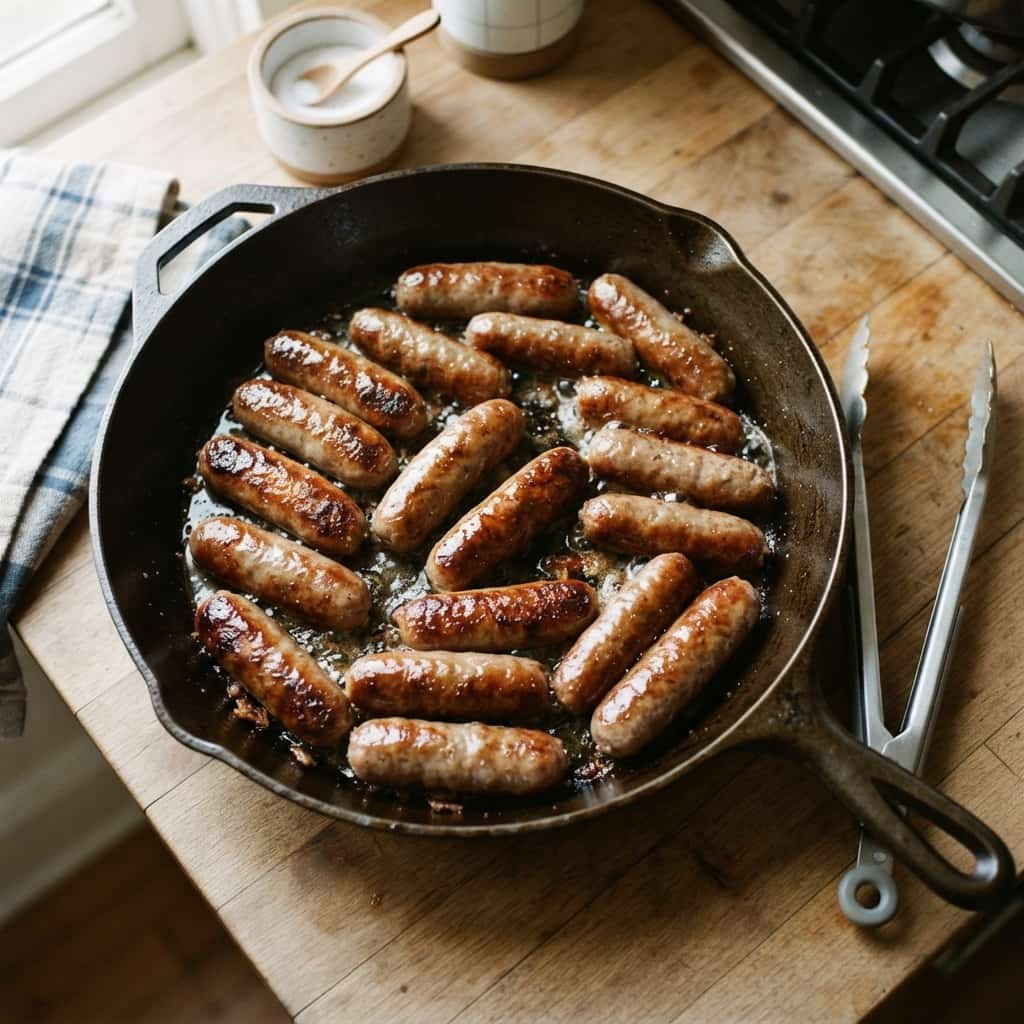
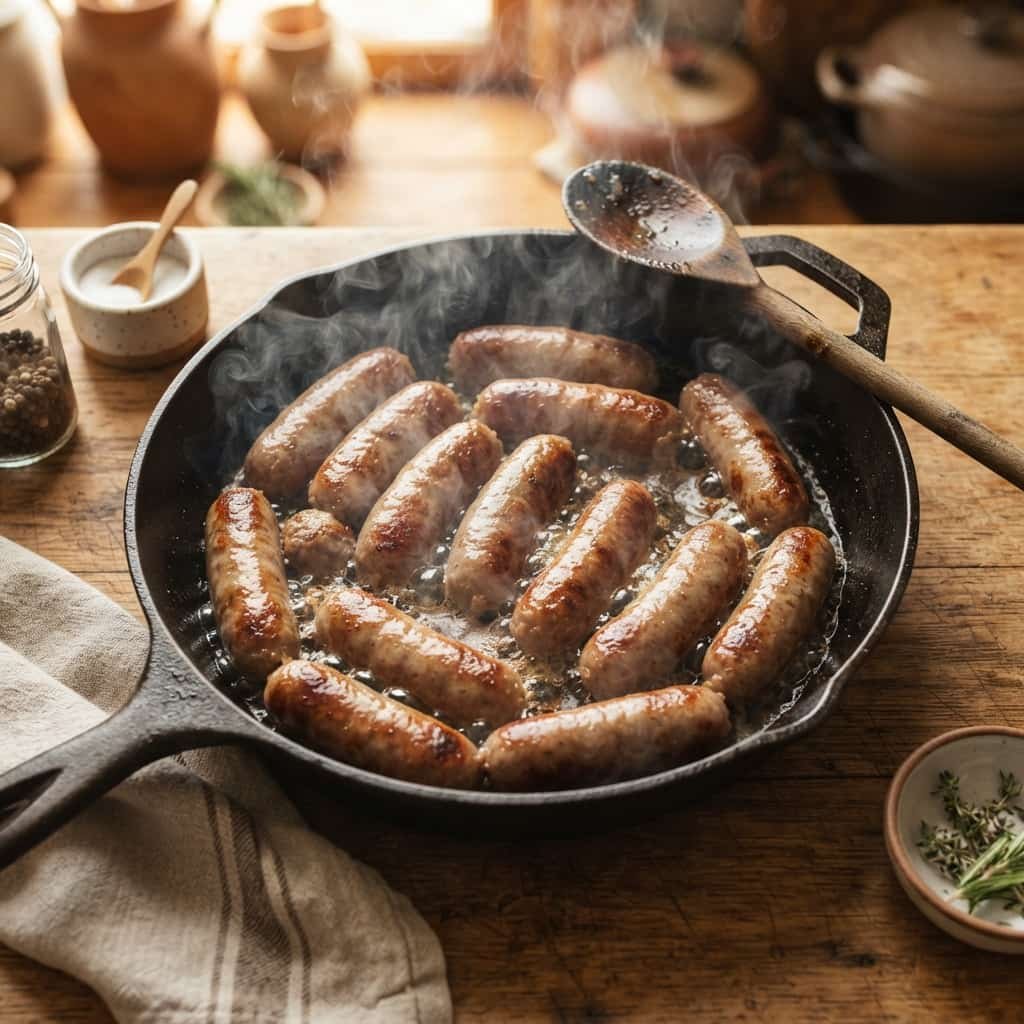
A skillet is the most traditional way to cook sausage links, and it’s the method I reach for most mornings because I can watch the browning happen in real time.
- Heat a nonstick or cast iron skillet over medium-low heat. If you’re using stainless steel, add a tablespoon of oil so the links don’t stick.
- Arrange the sausage links in a single layer with a little space between them. Crowding the pan traps steam and the links will simmer instead of brown.
- Let them cook undisturbed for two to three minutes before moving them. This gives the casing time to set so it releases cleanly from the pan instead of tearing.
- Turn the links every few minutes so all sides pick up color, cooking for 10 to 12 minutes total.
- Check doneness with an instant-read thermometer inserted through the side into the center of the thickest link.
If juices start pouring out and the pan looks dry, add a splash of water and cover it for a minute or two. That extra bit of steam finishes the center without scorching the outside.
How to Cook Sausage Links in the Oven
The oven method is the one to reach for when you’re cooking a large batch or already have something else baking for breakfast.
- Preheat the oven to 350°F to 400°F. A fully heated oven matters here, sausage links that go in too early can burn on the bottom before the center is done.
- Line a rimmed baking sheet with foil or parchment for easy cleanup, then arrange the links in a single layer without letting them touch.
- Bake for 16 to 20 minutes, flipping the links halfway through for more even browning. Thicker links, like bratwurst or Italian sausage, can take closer to 25 to 30 minutes.
- Pull the pan once the internal temperature hits 160°F to 165°F, depending on the meat.
This is also the best route for cooking sausage links straight from frozen. Give them an extra 8 to 10 minutes, and if the links are stuck together, pull the pan out partway through to separate them before finishing.
How to Cook Sausage Links in an Air Fryer
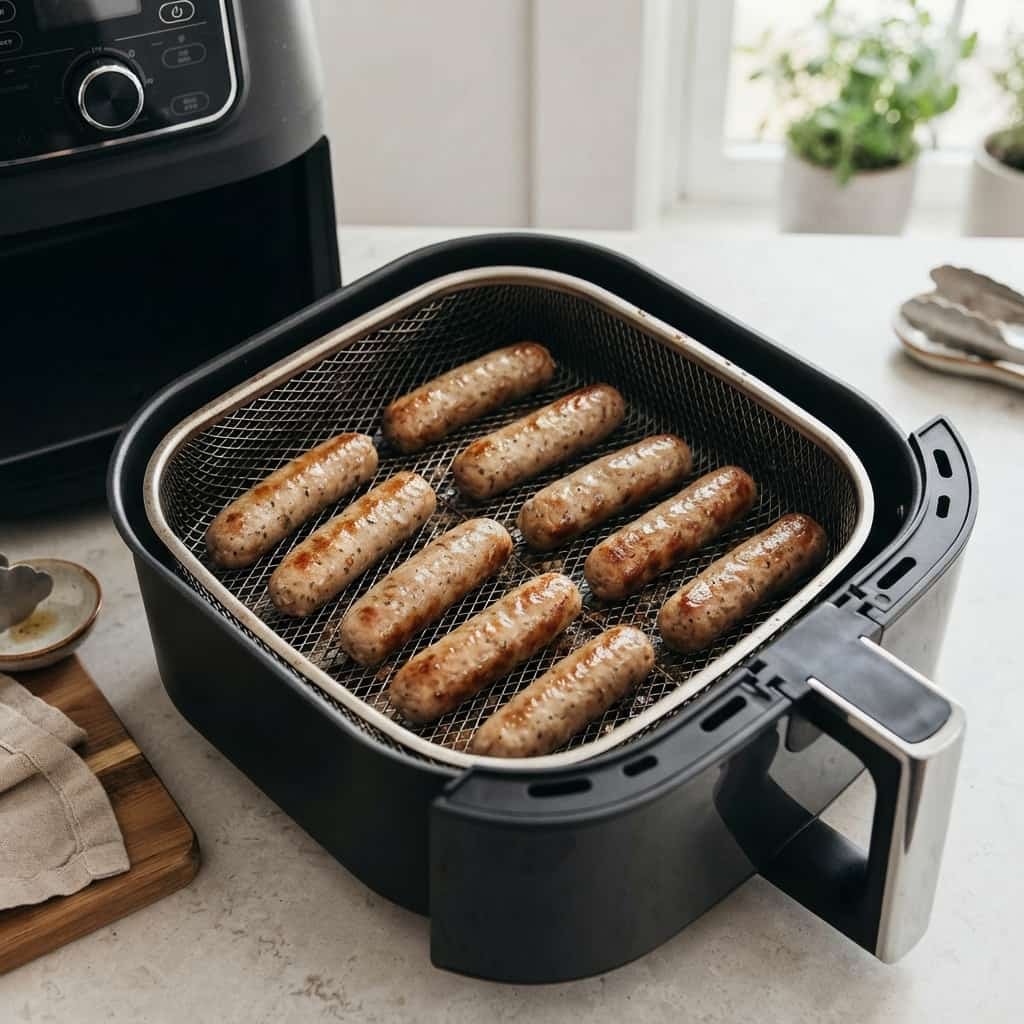
If you’re short on time, an air fryer is the quickest way to cook sausage links, and there’s no flipping required because the hot air circulates around every side.
- Preheat the air fryer if your model calls for it.
- Arrange the sausage links in a single layer in the basket, leaving as much space between them as you can.
- Cook at 380°F for 7 to 10 minutes, checking for a browned exterior and an internal temperature of 160°F to 165°F.
Cook times vary a bit by air fryer model and how many links you’re working with, so check a minute or two early the first time you try a new brand of sausage.
How to Grill Sausage Links
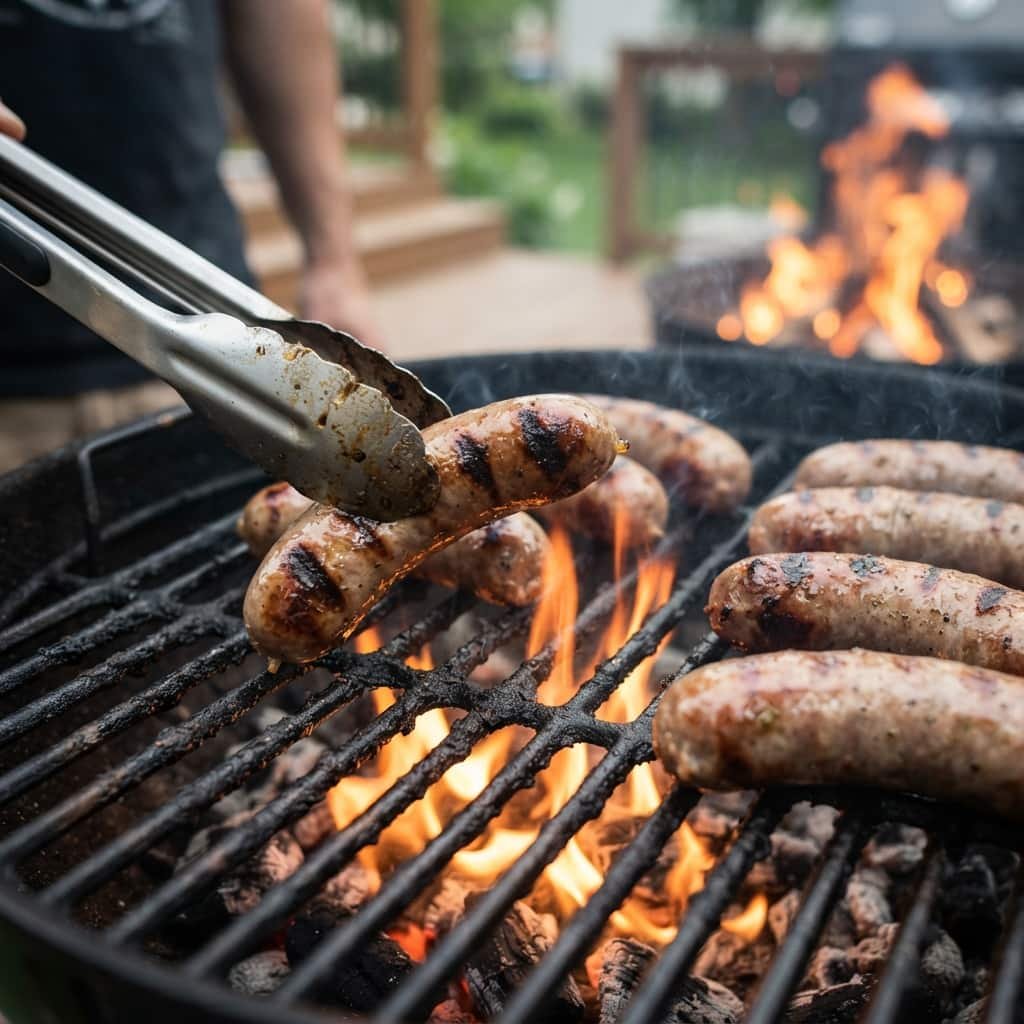
Grilling sausage links takes a little more attention than the other methods, but it delivers a smoky char you can’t get any other way.
- Heat the grill to medium, not high. Sausage links have a habit of flaring up and burning on the outside while staying raw inside if the flame is too aggressive.
- Place the links on the grill and cook slowly, turning them every couple of minutes so they color evenly on all sides.
- Cook for roughly 12 to 15 minutes total, or until an instant-read thermometer confirms they’ve hit a safe internal temperature.
For extra insurance against a raw center, parboil the links in a pot of simmering water for 8 to 10 minutes before they hit the grates. It’s an extra step, but it means you’re only using the grill to finish and brown, not to cook the sausage all the way through, so there’s much less risk of an undercooked center.
How to Tell When Sausage Links Are Done
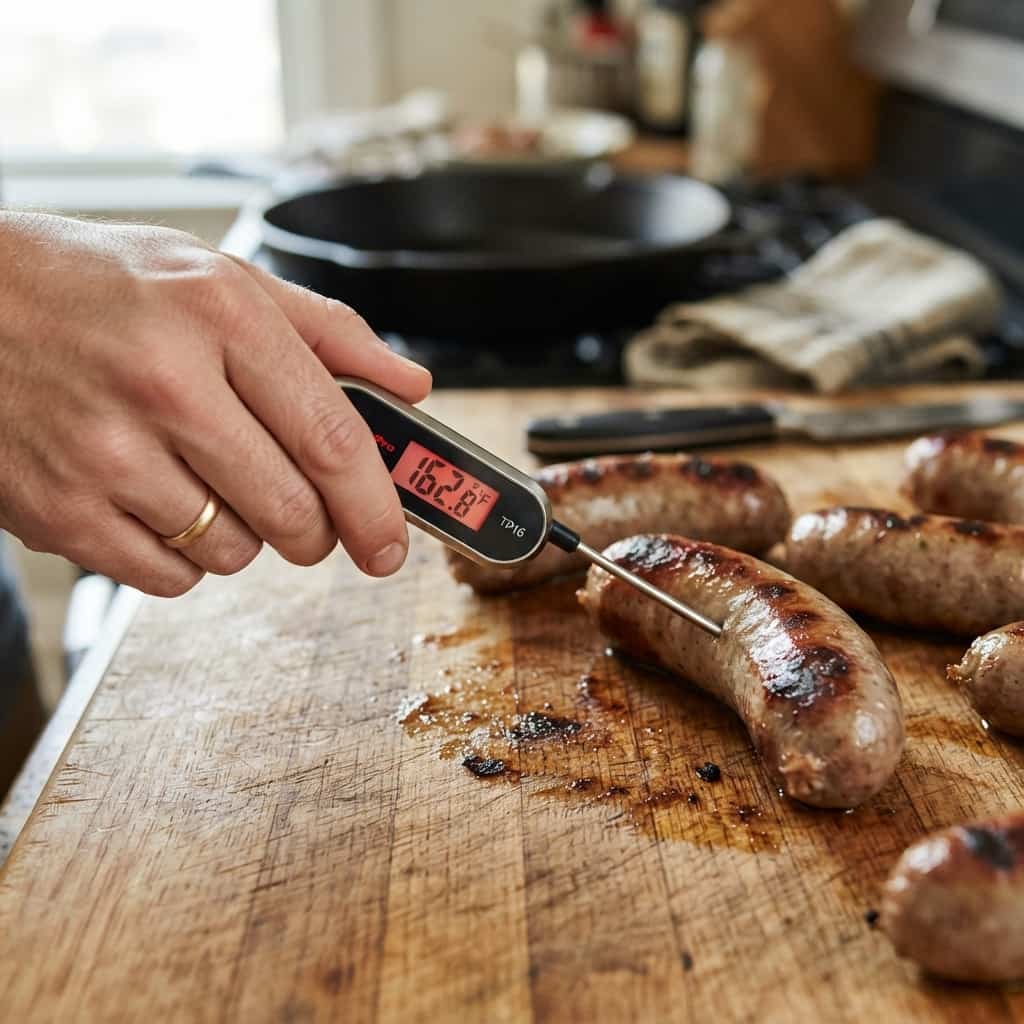
Color alone isn’t a reliable way to judge doneness, since a well-browned casing can still hide a pink, undercooked center. An instant-read thermometer is the one tool worth owning if you cook sausage links regularly.
- Pork, beef, lamb, or veal links: 160°F
- Chicken or turkey links: 165°F
Insert the thermometer through the end of the link so the tip reaches the center, not just the surface. If you don’t have a thermometer, cut into the thickest link. The meat should be uniformly gray-brown or white throughout, with clear juices, no streaks of pink.
FAQs About Cooking Sausage Links
How long does it take to cook sausage links?
Most raw sausage links take 10 to 20 minutes depending on the method, with the stovetop and air fryer on the faster end and the oven and grill running a bit longer for thicker varieties. Pre-cooked links only need 5 to 10 minutes to heat through.
How do you keep sausage links from bursting?
Keep the heat at medium-low rather than high, since a rapid temperature change is what usually splits the casing. Some cooks also prick the links a few times with a fork before cooking so built-up steam has somewhere to escape.
Can you cook sausage links from frozen?
Yes, and the oven is the most forgiving method for it. Bake frozen links at 350°F for about 20 to 25 minutes, checking the internal temperature before serving, and separate any links that are stuck together partway through.
What’s the best way to cook sausage links without drying them out?
Keep the heat gentle and don’t walk away. High heat cooks the outside faster than the inside, so you end up pushing moisture out of the casing just to get the center done. A splash of water partway through pan-frying also helps steam the center without drying out the exterior.
Storing and Reheating Cooked Sausage Links
Cooked sausage links keep well, so it’s worth making extra. Let them cool, then refrigerate in a covered container for two to three days, or freeze them in a freezer-safe bag or container for up to a month.
To reheat, use any of the methods above, a skillet over medium-low heat, a 350°F oven, or a few minutes in the air fryer, until they’re warmed through. A microwave works in a pinch for a single serving, though you’ll lose some of that browned exterior. If the links are still frozen when you reheat them, add a couple of extra minutes and check the center before serving.
A Few Last Tips
Sausage links are forgiving once you get the hang of them, and the same basic rule applies no matter which method you pick: gentle heat, a single layer, and a thermometer instead of a guess. Serve them alongside pancakes, folded into a breakfast sandwich, or sliced into a skillet hash, and you’ll get a browned, juicy result every time. Next time you’re stocking the fridge, pick up an extra pack. Once you’ve got the timing down, cooking sausage links stops being a Saturday-morning project and turns into a five-minute habit.