

Can dogs eat shrimp? Yes, this popular seafood is safe for your pup when it’s cooked plain and served in small amounts. Shrimp isn’t a replacement for dog food, but it makes a fun occasional treat once your dog gets the green light. As with any new food, introduce shrimp to your dog slowly and watch closely for signs of an allergic reaction, since some dogs are sensitive to shellfish just like people are. Shrimp is good for Dogs.
Can Dogs Eat Shrimp
Your dog just caught sight of the shrimp on your plate, and now those eyes are locked on you. Can dogs eat shrimp, or is this one of those foods you need to keep out of reach? The short answer is yes, dogs can eat shrimp, but only under the right conditions. Get the prep wrong and a harmless treat turns into a trip to the vet. Here is what you actually need to know before you drop a piece into your pup’s bowl.
Can Dogs Eat Shrimp Safely?
Yes, shrimp is safe for dogs when it’s cooked plain and served in small amounts. Shrimp itself isn’t toxic to dogs the way onions or grapes are. The danger comes from how it’s cooked, what’s added to it, and how much your dog eats. Plain, peeled, thoroughly cooked shrimp makes a fine occasional snack for most healthy dogs. Skip the butter, garlic, and seasoning you’d normally use, since those ingredients cause the real trouble, not the shrimp. If your dog has never had shellfish before, start with one small piece and watch how they handle it before offering more.
Can Dogs Eat Cooked Shrimp
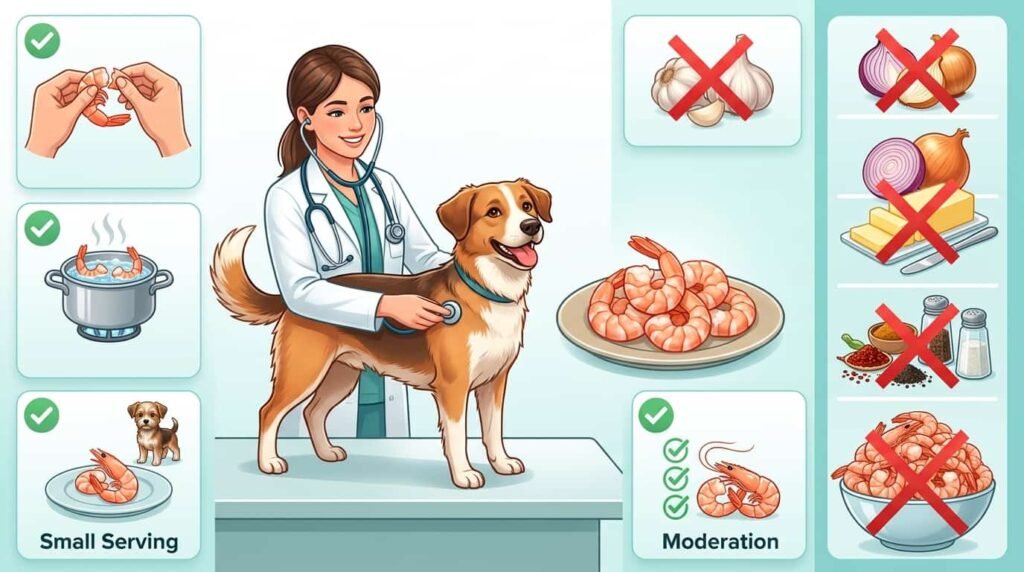
Cooked shrimp is the only kind you should ever feed your dog. Boiling, steaming, or grilling shrimp without oil, butter, or seasoning kills off the bacteria that raw shellfish tends to carry. Cut the cooked shrimp into small pieces so it’s easier to chew and digest, especially for small dogs or puppies. Let it cool down first too, since a hot piece can burn your dog’s mouth just as easily as it would yours. Cooked plain shrimp is where the actual nutritional benefits show up, so this is the version worth adding to your dog’s diet once in a while.
Can Dogs Eat Shrimp Tails
No, dogs should not eat shrimp tails. The tail is tough, hard to digest, and can scratch or get stuck in your dog’s throat, esophagus, or intestines on the way down. Some dogs swallow food quickly without chewing it well, which raises the choking hazard even more. Always pull the tail off along with the shell before you feed your dog shrimp, no matter how small the piece looks. If you suspect your dog swallowed a tail and they’re gagging, drooling, or pawing at their mouth, call your vet right away instead of waiting to see if it passes.
Is Cooked Shrimp Safe for Dogs or Can Dogs Eat Raw Shrimp?
Cooked shrimp is safe for dogs in moderation. Raw shrimp is not. Raw and undercooked shellfish can carry harmful bacteria like salmonella and listeria, along with parasites that survive until the shrimp hits proper cooking temperatures. A dog that eats raw shrimp may end up with vomiting, diarrhea, or a nasty case of food poisoning within a day. There’s no upside to skipping the cooking step, since raw shrimp offers your dog nothing that cooked shrimp doesn’t, minus the risk. If your dog steals a piece of raw shrimp off the counter, keep an eye on them for the next 24 hours and call your vet if symptoms show up.
Benefits of Shrimp for Dogs and Its Nutritional Benefits
Shrimp brings real nutritional value to the table when it’s fed the right way. It’s a lean source of protein that helps maintain muscle, and it’s naturally low in fat and carbohydrates, which makes it a decent option for dogs watching their weight. Shrimp also contains vitamin B12, phosphorus, and niacin, along with omega-3 fatty acids that can support skin and coat health. None of this means shrimp should replace your dog’s regular food. Think of it as a nutrient-dense extra, not a meal replacement, and one that works best as an occasional topper or training treat rather than a daily habit.
Risks of Feeding Shrimp to Dogs, Shells, Tails, and Allergies
Shrimp is high in cholesterol and sodium, so feeding it too often can contribute to weight gain or digestive upset over time, especially in dogs with pancreatitis or existing health conditions. Shells and tails are the biggest physical hazard since they’re difficult to digest and can cause choking or, in rare cases, a bowel obstruction. Shellfish allergies exist in dogs just like they do in people, and a reaction can show up as itchy skin, swelling, vomiting, or diarrhea, sometimes only after a dog has eaten shrimp more than once. Watch your dog closely the first few times you introduce it, and stop right away if anything looks off.
| Shrimp Type | Safe for Dogs? |
|---|---|
| Cooked, plain, peeled shrimp | Yes, in small amounts |
| Raw shrimp | No |
| Fried or breaded shrimp | No |
| Shrimp shells | No |
| Shrimp tails | No |
| Seasoned or buttered shrimp | No |
How to Prepare Shrimp and Feed Your Dog Shrimp Safely
Start with fresh or fully thawed shrimp and cook it plain, no oil, butter, garlic, onion, or seasoning of any kind. Boiling or steaming works well and keeps things simple. Once it’s cooked through, remove the shell, tail, and the dark vein running along the back, since that’s the digestive tract and not something your dog needs to eat. Cut the shrimp into bite-sized pieces based on your dog’s size, then let it cool before serving. You can hand it over as a standalone treat, mix a piece into their regular food, or use small chunks as high-value training rewards.
How Much Shrimp Can Dogs Have?
Moderation is the rule here. A small dog might handle one or two small pieces of shrimp, while a larger dog can usually manage a few more without any issue. Shrimp should stay an occasional treat, not a regular part of your dog’s meals, since the sodium and cholesterol add up if it’s given too often. If your dog is on a prescription diet or has a health condition like kidney disease or pancreatitis, talk to your veterinarian before adding shrimp to their routine at all. When in doubt, less is safer, and you can always offer more next time if your dog handles it well.
Can Dogs Eat Fried Shrimp, Shrimp Shells, or Shrimp Tails?
No to all three. Fried shrimp is cooked in oil and often coated in batter, both of which are hard on a dog’s digestive system and can trigger vomiting, diarrhea, or even pancreatitis in dogs prone to it. Shrimp shells and tails carry the same problem from a different angle, since they’re tough, sharp-edged, and difficult to break down, which makes them a choking and blockage risk rather than a snack. If your dog grabs fried shrimp or a shell off a dropped plate, don’t panic, but keep watch for vomiting, lethargy, or stomach pain over the next day and call your vet if anything seems wrong.
Shrimp can be a fun, protein-packed treat for your dog when you keep it plain, cooked, and peeled. Skip the shells, tails, seasoning, and frying oil, and you’ve got a snack most dogs can enjoy without any drama. Still unsure if shrimp is right for your dog? A quick call to your vet before you start is always the safest move.