
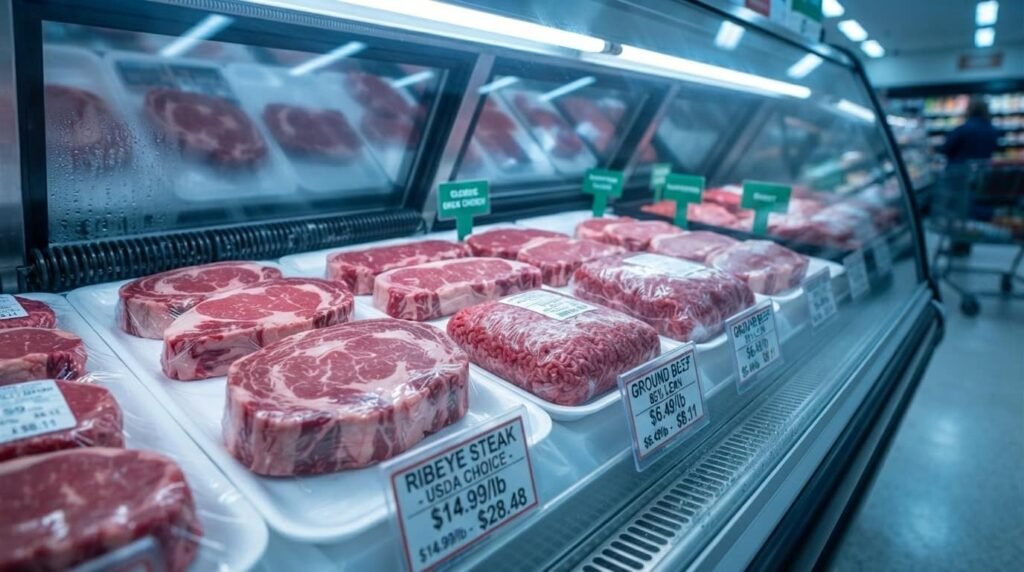
Why Is Beef So Expensive? The Real Reasons Behind High Prices
If beef seems noticeably more expensive at the grocery store, there is a clear reason: the U.S. beef supply is tight, while the cost of producing and moving beef has increased.
The biggest factor is the smaller U.S. cattle herd. Years of drought and difficult pasture conditions encouraged ranchers to reduce their herds, leaving fewer cattle available for processing. At the same time, feed, transportation, labor, imported beef, and other operating costs have added pressure.
Strong consumer demand has made it harder for prices to fall quickly.
The result is a beef market where supply cannot easily catch up with demand. Unlike many manufactured products, cattle cannot be produced faster simply because prices rise. Rebuilding a herd takes years.
What Is Driving Beef Prices Higher?
Several factors are working together, but they are not equally important.
The main driver is the shortage of cattle. Drought contributed to herd reductions, while higher feed and operating costs made expansion more difficult. Trade restrictions and import costs have added another layer of pressure, and demand for beef has remained strong.
Think of it this way:
Fewer cattle + higher production costs + steady demand = higher beef prices.
That basic supply-and-demand imbalance explains much of what shoppers are seeing.
The U.S. Cattle Herd Has Shrunk
The cattle supply is at the heart of the problem.
The original article cites USDA data showing that the U.S. herd had fallen significantly from its 2019 level by January 2025, reaching its smallest size since the early 1950s.
Why does that matter so much?
Because cattle production has a built-in time delay. Ranchers need breeding cows to produce calves, and those calves need to grow before they enter the beef supply.
When ranchers sell breeding animals during difficult periods, fewer calves are born later. Even if producers decide to rebuild immediately, additional beef does not appear on supermarket shelves right away.
That is why a cattle shortage can last much longer than the weather event or economic problem that caused it.
How Drought Raised the Cost of Beef
Drought affects beef prices in two ways.
First, dry conditions reduce pasture and water availability. Ranchers then have to rely more heavily on purchased feed.
Second, drought can encourage ranchers to sell cattle rather than carry the expense of feeding them.
Higher grain, hay, water, and transportation costs can make herd expansion less attractive. When many producers reduce their herds at the same time, the national supply becomes tighter.
So drought is not simply a weather problem. It can affect the number of cattle available several years later.
Why Feed Costs Matter
Feed is one of the major expenses involved in raising cattle.
When grain, hay, fuel, or transportation becomes more expensive, ranchers pay more to keep animals growing. Those costs eventually influence the price at which cattle need to be sold.
This does not mean every increase in feed prices appears directly on a package of ground beef. Rather, production becomes more expensive throughout the cattle industry.
That is one reason beef prices can stay high even when shoppers hear that a particular feed or fuel cost has started to decline.
How Imports and Tariffs Affect Beef Prices
The U.S. beef market also depends on international trade.
Imported beef can help processors obtain particular types of meat, including lean beef used in ground-beef production. The original article notes that processors may combine domestic beef with imported lean trimmings to meet demand.
When tariffs raise the cost of imported beef, processors face higher expenses. In a market that is already short on domestic cattle, replacing those imports may not be simple or inexpensive.
This makes trade policy another factor that can influence the final price consumers see.
What Does the Mexico Cattle Supply Have to Do With Prices?
Trade involving Mexico can also affect the U.S. cattle market.
The original article discusses restrictions on live cattle shipments from Mexico related to New World screwworm concerns. When those shipments are disrupted, U.S. buyers have one less source of cattle available to them.
That matters more when domestic supplies are already tight.
A disruption that might have been easier for the market to absorb during a period of abundant cattle can have a larger effect when buyers are already competing for limited supplies.
Why Is Ground Beef So Expensive?
Ground beef is usually considered one of the more affordable ways to buy beef, but it still depends on the overall cattle supply.
Ground beef is produced from different beef components, including lean trimmings. Imported lean beef can also be part of the supply chain.
When cattle become more expensive and imported inputs face additional costs, ground beef prices can rise too.
So buying ground beef instead of steak can still save money, but the savings may be smaller than shoppers are used to seeing.
Why Are Steaks So Expensive?
Steaks face the same underlying cattle shortage, but premium cuts have another limitation: there are only a certain number of high-value cuts on each animal.
When supplies are tight, retailers and restaurants compete for those desirable cuts.
That is why switching from one expensive premium steak to another may not save much. If your goal is to lower your grocery bill, changing the type of beef you buy is usually more effective.
For example, chuck roast can become a satisfying slow-cooked meal, while ground beef can be stretched through chili, tacos, pasta, or casseroles.
Is Inflation Responsible for High Beef Prices?
Inflation is part of the picture, but it does not explain everything.
Higher general costs have affected fuel, labor, transportation, equipment, financing, and other parts of the food supply chain. However, beef has also faced a specific supply problem caused by reduced cattle numbers and related disruptions.
This distinction is important.
If general inflation slows, beef prices do not automatically return to their previous levels. The cattle industry still has to deal with the underlying supply shortage.
Why Hasn’t Beef Demand Dropped More?
Higher prices normally encourage consumers to buy less.
Some households have certainly switched to other proteins or reduced their beef purchases. However, overall demand has remained strong enough to support elevated prices.
Beef is also deeply tied to popular meals such as burgers, steaks, barbecue, tacos, and meatloaf. During grilling season and major holidays, shoppers may continue buying beef despite higher prices.
As long as enough consumers are willing to pay current prices, there is less pressure for retailers and suppliers to reduce them significantly.
Why Can’t Beef Prices Fall Quickly?
This comes down to biology.
A manufacturer can increase production when demand rises. A cattle rancher cannot produce a market-ready animal in a few weeks.
If producers retain more breeding cows today, those animals still need to produce calves, and the calves need time to mature.
That creates a long gap between the decision to rebuild herds and an increase in beef supply.
For shoppers, this means that even if cattle numbers begin recovering, grocery prices may not immediately return to older levels.
Will Beef Prices Go Down?
They can, but meaningful relief depends heavily on the cattle supply.
The original article notes that agricultural economists expect the recovery to be slow and that elevated prices could continue while ranchers rebuild herds. It also notes that increased imports could provide some relief.
Prices can still move lower temporarily because of sales, seasonal demand, regional supply, imports, and changing consumer behavior.
But a short-term price drop does not necessarily mean the long-term cattle shortage has been fixed.
What Could Finally Bring Beef Prices Down?
The most helpful changes would be:
-
More cattle: A larger breeding herd would eventually increase beef supplies.
-
Better weather: Improved pasture conditions could reduce feed pressure.
-
Lower input costs: Cheaper feed, fuel, and transportation would reduce production expenses.
-
Stable imports: More predictable international trade could add supply.
-
Lower demand: If consumers consistently buy less beef, sellers may have to compete more aggressively on price.
The first factor is particularly important because rebuilding cattle numbers takes time.
How to Save Money on Beef Right Now
You do not have to stop buying beef completely. A few shopping changes can make it easier to fit into your budget.
Buy different cuts
Instead of automatically buying ribeye or tenderloin, look at chuck, round, or other less expensive cuts.
The trick is to match the cut with the cooking method. Tougher cuts can be excellent when slow-cooked or braised.
Shop by unit price
Do not compare packages based only on the total price.
A larger package may look more expensive but cost less per pound. Always check the unit price displayed on the shelf when comparing options.
Build meals around sales
Rather than deciding on a specific cut first, check what’s discounted and plan a meal around it.
A sale on ground beef might mean tacos or chili. A discounted chuck roast might become a slow-cooked dinner.
Buy in bulk carefully
Bulk purchases can save money when the per-pound price is genuinely lower and you have enough freezer space.
But calculate the price per pound before assuming a larger package is a better deal.
Stretch ground beef
Ground beef can go much further when combined with beans, vegetables, pasta, rice, or other ingredients.
Chili, tacos, casseroles, stuffed peppers, and pasta dishes are simple ways to turn a smaller amount of beef into several servings.
Compare beef with other proteins
If beef is particularly expensive one week, compare it with chicken, pork, eggs, beans, or other protein options.
You do not have to replace beef permanently. Rotating proteins can simply reduce the amount you spend during unusually expensive weeks.
Is Local Beef Cheaper?
Not automatically.
Buying directly from a local rancher can sometimes reduce the number of businesses between producer and customer, but local beef can also have higher processing or transportation costs.
If you are comparing local and supermarket beef, look at the final usable cost rather than assuming one option is automatically cheaper.
Bulk freezer beef also requires more money upfront, so make sure you understand what cuts and quantities you are actually getting.
Beef vs. Chicken and Pork
Chicken and pork are useful alternatives when beef prices are putting pressure on your grocery budget.
However, prices vary by location, cut, brand, and weekly promotions. A sale can make one type of meat temporarily cheaper than another.
Instead of following a fixed rule such as “always buy chicken,” compare the options available when you shop.
A flexible meal plan usually gives you more opportunities to save.
The Bottom Line
Why is beef so expensive? Mainly because there are fewer cattle available, while demand and production costs remain high.
Drought helped reduce cattle numbers, and rebuilding the herd takes years. Feed, transportation, labor, imports, and trade disruptions can add to the pressure, but they all sit on top of the same basic problem: limited supply.
For shoppers, the most useful response is flexibility. Compare prices, choose different cuts, shop promotions, and use cooking methods that make less expensive beef taste just as satisfying.
Beef prices may eventually ease as supply improves, but until then, smarter shopping can help keep the cost of beef-heavy meals under control.
Why is beef so expensive in 2026?
The main reason is a reduced cattle supply. Drought-related herd reductions, higher production costs, import conditions, disease-related trade disruptions, and strong demand have added further pressure.
Why is ground beef expensive if it is a cheaper cut?
Ground beef is still affected by the overall cattle shortage. It can also depend on lean beef inputs, including imported beef, which means trade costs can influence its price.
Will beef prices be cheaper in 2027?
They could moderate as cattle supplies recover, but there is no guarantee that prices will return quickly to earlier levels. Herd rebuilding is a slow process.
What is the cheapest beef cut?
There is no single cut that is always cheapest. Chuck, round, and other less premium cuts are often worth checking, especially when they are on sale.
Why doesn’t the U.S. just raise more cattle?
It can increase production, but cattle require time to reproduce and grow. Expanding a herd today does not create a large supply of market-ready beef immediately.
Is inflation the main reason beef costs so much?
No. Inflation has raised costs throughout the food system, but the reduced cattle supply is a major beef-specific problem.
Are chicken and pork cheaper than beef?
They are often useful lower-cost alternatives, but prices vary. Check current prices at your local store rather than assuming one protein will always be cheaper.
What’s the best way to save money on beef?
Shop sales, compare unit prices, consider less expensive cuts, buy sensible quantities in bulk, and stretch ground beef across meals.