Crispy Chicken Parmesan
Ingredients
Instructions
Chicken Parmesan Recipe (Crispy, Never Soggy)
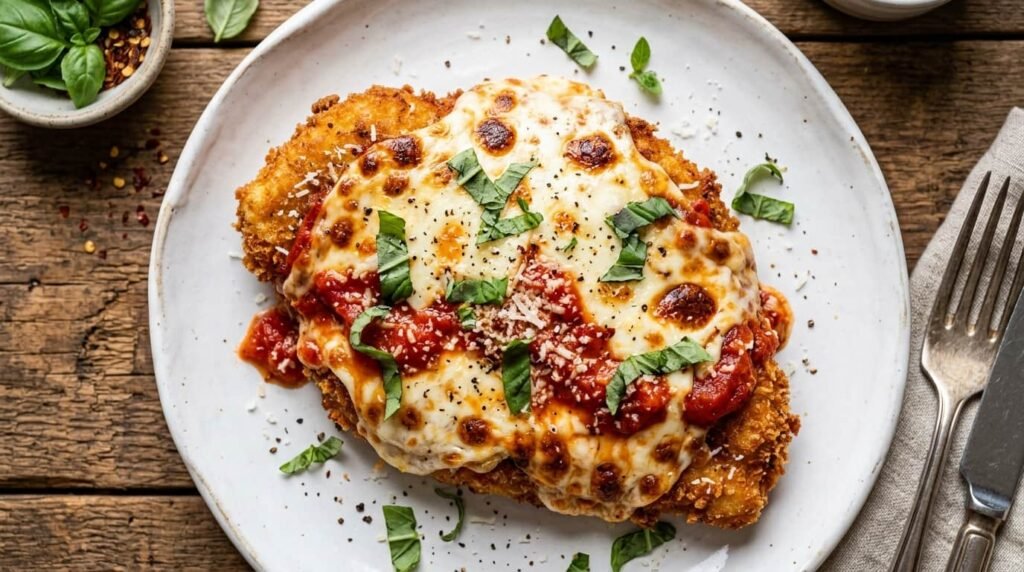
If you’ve ever pulled a beautiful, golden chicken parmesan out of the oven only to cut into it and find a limp, soggy crust underneath the sauce, you’re not alone. It’s the single most common complaint about this dish, and it’s completely avoidable once you know why it happens. This chicken parmesan recipe uses a few small techniques, a wire rack, a thicker sauce, and a lighter hand with the marinara, that keep the breading crisp from the first bite to the last.
Chicken parmesan (sometimes called chicken parmigiana) started as an Italian-American adaptation of eggplant parmigiana, brought over by Italian immigrants in the early 1900s and adapted with the meat that was cheap and plentiful in the United States. It’s not really a dish you’ll find in Italy, but it became a staple on Italian-American restaurant menus by the mid-20th century, and it’s stayed a weeknight favorite ever since.
Why You’ll Love This Chicken Parmesan
This version leans on a few details that make a real difference. The chicken is pounded thin so it cooks evenly and stays juicy, the breading gets extra crunch from Parmesan mixed right into the panko, and the sauce goes on in a thin layer instead of drowning the cutlet. The result is a crust that holds its crunch under a blanket of melted mozzarella, not a soft, sauce-logged coating.
It also comes together faster than most people expect. Once the chicken is breaded, the whole thing is done in about 35 minutes of active cooking, and most of that is hands-off oven time.
Ingredients You’ll Need for Chicken Parmesan
- Chicken breasts: Boneless, skinless breasts sliced in half horizontally give you thin, even cutlets that cook quickly and stay tender. If you’d rather skip the slicing, thin-cut chicken cutlets from the store work too.
- Flour, egg, and panko: The classic three-step dredge. Panko breadcrumbs fry up crispier than regular breadcrumbs because the flakes are larger and drier.
- Parmesan cheese: Real Parmigiano-Reggiano, grated fresh, has less moisture and more flavor than the pre-shredded kind, which matters both in the breading and on top.
- Marinara sauce: Pick a thicker jarred sauce or make your own reduced slightly on the stove. A watery sauce is one of the biggest reasons chicken parm turns soggy.
- Mozzarella: Low-moisture, part-skim mozzarella melts into that classic stretchy, golden layer without releasing as much liquid as fresh mozzarella.
- Olive oil: For pan-frying the cutlets before they go in the oven. This is what gives the crust its initial crispness and color.
If you want to lighten things up, the same method works with chicken thighs pounded thin, or you can skip the pan-fry and bake the breaded cutlets on a wire rack at 425°F until golden before saucing and topping.
How to Make Chicken Parmesan
Start by slicing each chicken breast in half horizontally to create two thinner cutlets, then pound them to an even thickness with a meat mallet or the bottom of a heavy pan. This step matters more than people think, an evenly thin cutlet cooks through at the same rate the crust browns, so you’re not left with a burnt outside and a raw center.
Set up your dredging station in three shallow bowls: seasoned flour, beaten egg with a splash of water, and the panko mixed with Parmesan, Italian seasoning, and garlic powder. Coat each cutlet in flour, dip it in egg, then press it into the panko mixture so the crumbs really stick.
From there, pan-fry the cutlets in olive oil over medium-high heat, just a few minutes per side, until they’re golden brown. This is the crispness insurance policy, frying first (rather than baking raw breaded chicken straight through) locks in a crust that can stand up to the sauce and cheese later.
Move the fried cutlets to a wire rack over a baking sheet rather than laying them flat on the pan. This lets air circulate underneath so the bottom doesn’t steam and soften. Top each piece with a thin layer of marinara, leaving a border of crust exposed around the edges, then finish with mozzarella and a little extra Parmesan. Bake at 425°F until the cheese is fully melted and starting to bubble and brown at the edges.
Pro Tips for the Crispiest Chicken Parmesan
- Don’t skip the wire rack. It’s the single easiest fix for a soggy bottom, both during frying and during baking.
- Go light on the sauce. A thin ribbon of marinara down the center, not a full coating edge to edge, keeps more of the crust exposed and crisp.
- Use a thicker marinara. If your sauce looks watery, simmer it on the stove for 10 minutes to reduce it before using.
- Pat the chicken dry before breading so the flour has something to grip and the coating doesn’t slide off in the pan.
- Check for doneness with a thermometer. Chicken is done at 165°F internal temperature; pulling it too early or too late affects both texture and food safety.
Common Mistakes to Avoid
The most frequent misstep is drowning the chicken in sauce before baking. Too much marinara pools around the cutlet and seeps into the crust from underneath, which is exactly what causes that flabby texture. A close second is skipping the resting step after frying, laying hot, freshly fried cutlets directly on a plate traps steam against the crust just as effectively as a puddle of sauce would.
Overcrowding the pan while frying is another common issue. Too many cutlets at once drops the oil temperature, and the chicken ends up steaming instead of crisping. Fry in batches and keep the oil at a steady medium-high heat.
Variations and Substitutions
This recipe is easy to adapt. For a gluten-free version, swap the flour for a gluten-free blend and use gluten-free panko or crushed rice crackers. Chicken thighs work in place of breasts if you prefer dark meat, just pound them to a similar thickness so cook times stay consistent.
For a spicier take, stir a pinch of crushed red pepper into the breadcrumb mixture. If you’re a fan of the trendy vodka sauce version that’s been showing up on menus, swap the marinara for a vodka sauce and finish with an extra handful of Parmesan for a richer, creamier result. You can also turn leftovers into a chicken parmesan sandwich on a toasted roll, or slice a cutlet over pasta for an easy chicken parmesan dinner.
An air fryer works well too. Air fry the breaded, unfried cutlets at 375°F for about 10 to 12 minutes, flip, then top with sauce and cheese and air fry another 4 to 5 minutes until melted.
Storage and Reheating Instructions
Leftover chicken parmesan keeps well in an airtight container in the refrigerator for up to 3 days. To reheat and preserve the crispness, skip the microwave, it steams the crust. Instead, reheat in a 375°F oven or air fryer for about 10 minutes, or until warmed through and the crust has re-crisped slightly.
To freeze, it’s best to freeze the breaded, fried cutlets before saucing and baking. Wrap them individually and freeze for up to 2 months, then thaw, top with sauce and cheese, and bake straight from there. Fully assembled and baked chicken parmesan can also be frozen, but the crust will soften more noticeably once thawed.
What to Serve With Chicken Parmesan
Spaghetti with extra marinara is the classic pairing, but this dish is flexible. Creamy polenta, garlic mashed potatoes, or a simple buttered pasta all work as a base. On the lighter side, a Caesar salad, roasted broccoli, or garlic green beans balance out the richness. Garlic bread is never a bad idea for soaking up any extra sauce on the plate.
Frequently Asked Questions
Why does my chicken parmesan always turn out soggy?
It’s almost always one of two things: too much sauce, or the chicken sitting flat on a pan or plate where it can’t breathe. Use a thin layer of a thick marinara, and always rest fried or baked cutlets on a wire rack.
Can I bake chicken parmesan instead of frying it?
Yes. Bread the cutlets, place them on a wire rack over a baking sheet, spray lightly with oil, and bake at 425°F until golden and cooked through before adding sauce and cheese. It won’t be quite as crisp as the fried version, but it’s a lighter option that still holds up well.
What’s the difference between chicken parmesan and chicken parmigiana?
Nothing, they’re the same dish. Chicken parmigiana is the fuller Italian-American name, and chicken parmesan (or chicken parm) is simply the shortened, more common version used in the U.S.
Can I make chicken parmesan ahead of time?
You can bread and fry the cutlets a day ahead and refrigerate them uncovered on a rack, then top with sauce and cheese and bake just before serving. This keeps the crust from softening in advance.
What cheese is best for chicken parmesan?
Low-moisture, part-skim mozzarella is the standard choice because it melts smoothly without releasing much extra liquid. Freshly grated Parmesan, rather than the pre-shredded kind, gives better flavor in both the breading and the topping.