Egg Substitute for Baking: 10 Reliable Swaps and Exact Ratios
Ran out of eggs halfway through a recipe? You may not need to abandon the bake.
The best egg substitute for baking depends less on what you have in the kitchen and more on what the egg is doing in the recipe. An egg can bind ingredients together, add moisture, provide richness, help a batter rise, or create structure as it cooks. Some recipes need one of those jobs. Others need several.
That is why replacing one egg with a random spoonful of applesauce does not always work.
A flax egg can hold cookies together beautifully but may make a delicate cake heavy. Applesauce can keep muffins soft but add moisture that a crisp cookie does not need. Aquafaba can whip surprisingly well, while silken tofu is better suited to dense, rich desserts.
The trick is to match the substitute to the recipe.
Below are practical egg replacements, their usual ratios, what they are best at, and the situations where you should choose something else.
What Does an Egg Actually Do in Baking?
Before choosing a replacement, look at the role of the egg in your recipe.
Binding
Egg helps ingredients stick together. This matters in cookies, brownies, fritters, and many quick breads.
For these recipes, a gel-forming ingredient such as ground flaxseed or chia can often do the job well.
Moisture
Egg contributes water to the batter and helps create a tender texture.
This is one reason applesauce, mashed banana, yogurt, and other moist ingredients can work in certain cakes and muffins.
Structure
As egg proteins heat, they set and help the baked product hold its shape. This becomes especially important when a recipe contains several eggs.
A simple cookie recipe calling for one egg is much easier to adapt than a sponge cake where eggs provide a large part of the structure.
Leavening and aeration
Eggs can also contribute to volume. Whipped eggs or whites trap air, while eggs can work alongside baking powder and baking soda to create a lighter texture.
This is where many substitutions go wrong. A substitute may bind the batter but do almost nothing to replace the lost lift.
A useful rule: if the original recipe depends heavily on eggs for volume, use an egg replacement that can contribute to aeration or pair your substitute with an appropriate leavening method.
What Is the Best Egg Substitute for Baking?
There is no single best replacement for every recipe.
For cookies, brownies, and quick breads, ground flaxseed, chia, applesauce, or mashed banana can work well depending on the desired texture.
For light cakes and pancakes, you may get better results from a combination involving baking powder, baking soda, vinegar, or a commercial egg replacer.
For meringues and recipes that require whipped egg whites, aquafaba is one of the most useful plant-based alternatives.
For dense brownies and rich cakes, silken tofu can add moisture and body without introducing a strong flavor.
If you only need to replace one egg, the recipe is generally easier to adapt than one that originally calls for four or five eggs.
10 Egg Substitutes for Baking and Their Ratios
1. Flax Egg: A Good All-Purpose Binder
Ratio:
- 1 tablespoon ground flaxseed
- 3 tablespoons water
- Let it rest for about 5–10 minutes
Mix the ground flaxseed and water until combined, then leave it alone until it thickens into a gel.
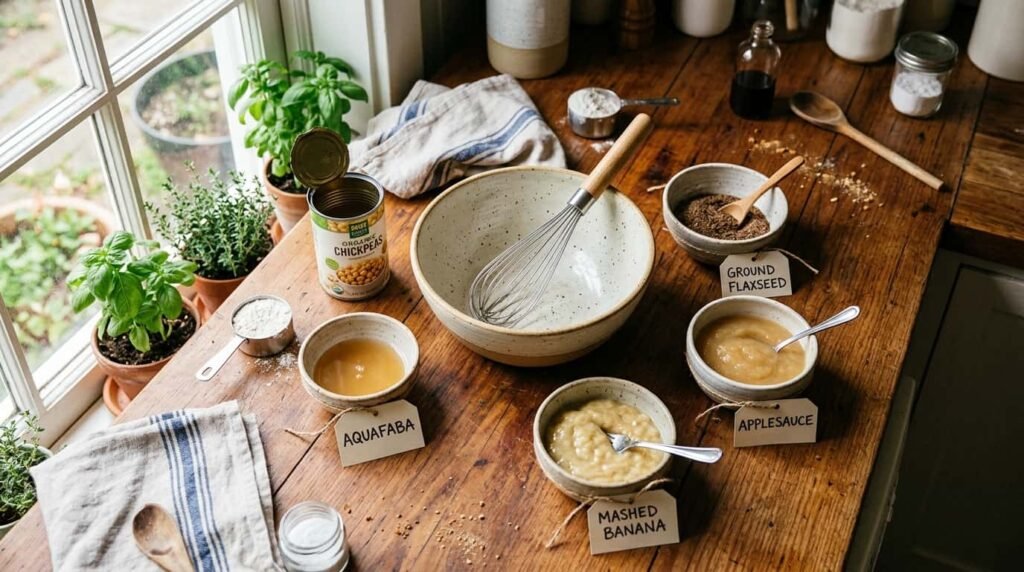
A flax egg is particularly useful when the original egg’s main job is binding. It works nicely in oatmeal cookies, muffins, pancakes, brownies, and many quick breads.
The flavor is usually mild, but flax can add a subtle nutty note. That is barely noticeable in chocolate brownies or banana bread but may be more obvious in a delicate vanilla bake.
One limitation is that flax does not recreate the whipping or leavening behavior of eggs. If your cake relies on several eggs for volume, simply replacing all of them with flax eggs can produce a dense result.
Best for: cookies, brownies, muffins, quick breads, pancakes.
Avoid as the only replacement for: airy sponge cakes or recipes built around whipped eggs.
2. Chia Egg: Similar to Flax, With Strong Binding
Ratio:
- 1 tablespoon chia seeds, preferably ground
- 3 tablespoons water
Allow the mixture to sit until it becomes thick and gel-like.
Chia works on a similar principle to flax. When mixed with water, it forms a gel that can help hold ingredients together.
Ground chia tends to integrate more smoothly into a batter. Whole chia seeds can leave visible specks and a slightly different texture, which may be perfectly fine in hearty muffins but less desirable in a smooth cake.
If you are making something where appearance matters, ground chia is usually the better option.
Best for: muffins, quick breads, cookies, pancakes, dense baked goods.
Watch out for: visible seeds and a slightly heavier texture.
3. Unsweetened Applesauce: Best for Moist Bakes
Ratio:
1/4 cup unsweetened applesauce per egg
Applesauce is one of the easiest substitutes to keep around because it adds moisture while helping ingredients hold together.
It works particularly well in muffins, quick breads, spice cakes, and other recipes where a soft, moist crumb is desirable.
There is a tradeoff: applesauce does not behave like a whipped egg and can make a bake heavier if you use too much. It can also reduce the richness that egg yolks normally provide.
Use unsweetened applesauce when possible. Sweetened applesauce can alter the sugar balance of the recipe.
Applesauce is usually a better choice for a moist muffin than for a crisp cookie where you want the edges to stay firm.
Best for: muffins, quick breads, soft cakes, snack cakes.
Less suitable for: crisp cookies and very light sponge cakes.
4. Mashed Banana: Great When Banana Flavor Fits
Ratio:
1/4 cup mashed ripe banana per egg
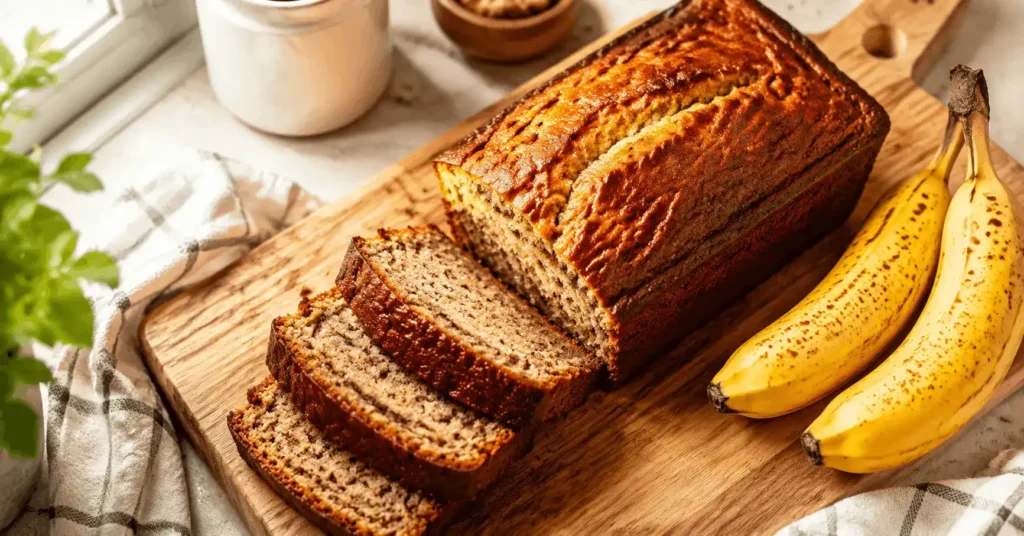
Mashed banana adds moisture and helps bind a mixture. It is an especially natural choice for banana bread because the flavor already belongs in the recipe.
The main issue is obvious: banana tastes like banana.
That makes it less suitable for a plain vanilla cake, sugar cookie, or other bake where you want the original flavor to remain unchanged.
Ripe bananas also add sweetness, so the finished recipe may taste sweeter than the original. They can contribute a softer, denser texture as well.
Think of banana as both an egg replacement and a flavor ingredient.
Best for: banana bread, muffins, pancakes, oatmeal cookies.
Avoid when: you need a neutral flavor or a very light texture.
5. Aquafaba: The Standout for Whipped Recipes
Ratio:
3 tablespoons aquafaba per whole egg
For recipes replacing egg whites, a common starting point is around 2 tablespoons aquafaba per egg white.
Aquafaba is the liquid from cooked chickpeas, commonly obtained from canned chickpeas.
Its biggest advantage is that it can foam when whipped. That makes it much more useful than fruit purees when the recipe depends on whipped egg whites.
It can be used in meringues and other recipes where creating a stable foam is important.
Aquafaba can also be used in ordinary baking, but that does not automatically make it the best substitute for every cake or cookie. Its strength is its ability to contribute aeration and structure in situations where a simple puree cannot.
For a recipe that calls for whipped egg whites, this is one of the first substitutions worth considering.
Best for: meringues, whipped applications, some cakes and cookies.
Watch out for: recipes where its texture does not match the original egg requirement.
6. Silken Tofu: A Neutral Option for Dense Desserts
Ratio:
1/4 cup blended silken tofu per egg
Silken tofu is useful when you want moisture and body without adding a strong fruit flavor.
Blend it until completely smooth before adding it to your batter. Small pieces of unblended tofu can leave an unpleasant texture in the finished bake.
Because tofu creates a relatively dense result, it is particularly suitable for brownies, fudgy cakes, pumpkin bars, and similar desserts.
It is not the substitute I would reach for when the goal is an exceptionally light sponge cake. But for a rich brownie where density is part of the appeal, that limitation becomes an advantage.
Best for: brownies, dense cakes, rich desserts.
Avoid when: you need a very airy crumb.
7. Baking Soda and Vinegar: Useful When Lift Matters
Starting ratio:
- 1 teaspoon baking soda
- 1 tablespoon white vinegar
- Per egg being replaced
This combination produces carbon dioxide when the acidic vinegar reacts with baking soda. That gas can help create a lighter texture.
It is most useful when you need leavening rather than strong binding.
However, it is not a complete one-to-one replacement for everything an egg contributes. The mixture does not provide the same proteins, fat, or structure as an egg.
That means it works best in recipes that already have enough flour and other ingredients to provide structure.
Also, avoid adding extra baking soda blindly. Too much can leave a noticeable alkaline taste and affect the texture.
Best for: some cakes, cupcakes, pancakes, and other lighter bakes.
Watch out for: recipes where the egg is doing significant binding or structural work.
8. Carbonated Water: A Simple Way to Add Lightness
Carbonated water can add bubbles to a batter, potentially helping create a lighter texture.
It is most useful when the recipe already has enough structure from flour and other ingredients and you mainly need to compensate for some of the lost liquid and aeration.
The exact amount depends on how much liquid the original recipe contains, so this is less precise than a flax egg or applesauce substitution.
For that reason, carbonated water is better viewed as a recipe adjustment than a universal one-egg replacement.
It can be especially useful in pancakes and some light batters.
Best for: pancakes and selected light batters.
Avoid: treating it as a complete replacement for an egg in recipes where eggs provide substantial structure.
9. Commercial Egg Replacer: The Most Predictable Option
Commercial egg replacers are designed specifically to replace eggs in baking. Many use combinations of starches and other ingredients to provide binding, structure, or leavening.
Ratio: Follow the package instructions.
This is one of the best choices when you want consistency and do not want to experiment with the moisture or flavor changes that can come from fruit purees.
The important detail is to check what the product is intended to replace. A product designed primarily for baking may not behave like a liquid egg replacement in every application.
It is also worth remembering that commercial products vary. Do not assume every egg replacer uses the same ratio.
Best for: cakes, cookies, muffins, and recipes where predictable results matter.
10. Plain Yogurt: A Moisture-Rich Option for Soft Bakes
Starting point:
1/4 cup plain yogurt per egg
Plain yogurt can add moisture, tenderness, and some structure to certain baked goods. It works particularly well in muffins, quick breads, and softer cakes.
Choose plain yogurt rather than flavored yogurt so you do not unintentionally introduce extra sugar and flavor.
Yogurt is not a perfect replacement for the whipping ability of eggs, so it is better suited to recipes where the egg is mainly contributing moisture and structure.
If the batter is already very wet, adding a full 1/4 cup may make it too loose. In that situation, the recipe may need adjustment rather than a rigid one-for-one substitution.
Best for: muffins, quick breads, soft cakes.
Watch out for: already-liquid batters.
Which Egg Substitute Should You Use?
A quick way to choose is to start with the finished texture you want.
| Substitute | Starting Ratio per Egg | Best For | Main Limitation |
|---|---|---|---|
| Flax egg | 1 tbsp flax + 3 tbsp water | Cookies, muffins, brownies | Mild nutty flavor; little lift |
| Chia egg | 1 tbsp chia + 3 tbsp water | Cookies, muffins, quick breads | Can affect texture |
| Applesauce | 1/4 cup | Muffins, soft cakes | Adds moisture and density |
| Mashed banana | 1/4 cup | Banana bread, muffins | Adds banana flavor |
| Aquafaba | 3 tbsp | Whipped recipes | Different texture from egg |
| Silken tofu | 1/4 cup | Brownies, dense cakes | Can make bakes dense |
| Baking soda + vinegar | 1 tsp + 1 tbsp | Light bakes | Does not replace egg structure |
| Carbonated water | Recipe-dependent | Pancakes, light batters | Not a complete egg replacement |
| Commercial replacer | Package directions | General baking | Products vary |
| Plain yogurt | About 1/4 cup | Muffins, cakes | Adds moisture and dairy |
How Many Eggs Can You Replace?
This is where a lot of substitution advice becomes misleading.
Replacing one egg is usually straightforward.
Replacing three, four, or five eggs can be much more difficult because the eggs may represent a substantial portion of the recipe’s structure and volume.
For example, if a cake recipe contains one egg, replacing it with applesauce may work reasonably well. If the recipe contains six eggs and depends on whipping those eggs for volume, replacing all six with applesauce will fundamentally change the recipe.
In recipes with multiple eggs, ask:
- Are the eggs being whipped?
- Does the recipe contain another leavening agent?
- Is the finished product supposed to be dense or airy?
- How much liquid and fat are already present?
- Can the substitute provide enough structure?
If several eggs are doing heavy structural work, look for a recipe specifically developed without eggs rather than trying to convert it blindly.
What Is the Best Egg Substitute for Cakes?
For dense cakes, applesauce, mashed banana, yogurt, or silken tofu can work depending on the flavor and texture you want.
For light cakes, a commercial egg replacer or a carefully designed combination that provides leavening may be more reliable.
The biggest mistake is assuming that every cake treats eggs the same way.
A banana cake is naturally forgiving because banana already contributes moisture and body. A delicate sponge is much less forgiving because air and egg structure are central to its texture.
If the recipe calls for several eggs that are beaten until thick or fluffy, do not expect a fruit puree to reproduce that result.
What Is the Best Egg Substitute for Cookies?
Cookies are often among the easiest baked goods to adapt because the egg may mainly provide binding and moisture.
A flax egg is a strong starting point for many soft or chewy cookies.
Applesauce can work when you want a softer cookie, but it may change the spread and texture. Banana works when its flavor fits.
For crisp cookies, be more careful with high-moisture substitutes. Extra water can make the dough behave differently in the oven.
A useful practical approach is to replace only one egg at a time and pay attention to the dough before baking. If the dough becomes noticeably wetter or softer than the original, the substitution is changing more than just the egg’s binding function.
What Is the Best Egg Substitute for Brownies?
Brownies are generally forgiving because many people actually want a dense, moist texture.
Good options include:
- Flax egg
- Silken tofu
- Applesauce
- Commercial egg replacer
The choice depends on the brownie style.
For fudgy brownies, silken tofu or applesauce can fit the desired texture. For a chewier brownie, flax may be useful because of its binding ability.
One thing to watch is sugar. Applesauce and banana can add sweetness, while flax and tofu generally have much less impact on flavor.
What Is the Best Egg Substitute for Pancakes?
Pancakes need enough structure to hold together, but they also benefit from leavening.
A flax egg can work well in many pancake recipes. Baking soda and an acidic ingredient can also contribute lift when the recipe is designed for it.
Carbonated water can be useful for a lighter batter, although it is not a complete replacement for the functions of an egg.
The biggest pancake mistake is adding too much substitute liquid. A batter that becomes significantly thinner may spread differently on the pan and produce a less fluffy result.
Common Egg-Replacement Mistakes
Using applesauce for every recipe
Applesauce is convenient, but convenience does not make it universal.
It adds moisture and can make delicate or crisp baked goods too soft or dense.
Replacing a whipped egg with a simple puree
A puree cannot suddenly become a whipped egg white.
If the original recipe depends on whipped eggs for volume, choose a substitute that can actually contribute aeration, such as aquafaba, or use a recipe developed around another leavening system.
Ignoring added sweetness
Banana and applesauce can change the sweetness of the final product.
If you are adapting a recipe rather than following a purpose-built egg-free recipe, consider whether the added sweetness fits the rest of the ingredients.
Choosing a strong-flavored substitute
Banana is excellent in banana bread but can be distracting in a plain vanilla cake.
Likewise, flax may be perfectly pleasant in an oatmeal cookie while being more noticeable in a delicately flavored dessert.
Replacing too many eggs without reconsidering the recipe
One egg and four eggs are not equivalent substitution problems.
If eggs provide much of the recipe’s structure, replacing all of them may require more than swapping one ingredient.
How to Choose an Egg Substitute Based on the Job
Instead of memorizing ten substitutions, remember this simple decision process.
If the egg mainly binds:
Start with flax, chia, or a suitable commercial replacer.
If the recipe needs extra moisture:
Consider applesauce, banana, yogurt, or silken tofu.
If you want a neutral flavor:
Silken tofu, aquafaba, yogurt, or a commercial replacer may be preferable depending on the recipe.
If the recipe needs whipped volume:
Aquafaba is worth considering for plant-based baking.
If the recipe mainly needs additional lift:
A leavening-based approach may work better than fruit puree.
If the recipe contains several eggs:
Consider whether you should use a purpose-built egg-free recipe instead of making a direct substitution.
This way of thinking is more reliable than choosing a substitute simply because it is the most common one online.
Can You Use an Egg Substitute in Any Baking Recipe?
No.
Most egg substitutes work best when the recipe is relatively forgiving. Cookies, muffins, brownies, pancakes, and quick breads are generally easier to adapt than soufflés, meringues, custards, or highly aerated sponge cakes.
The more important the eggs are to the recipe’s structure, the harder a direct substitution becomes.
That does not mean egg-free baking is impossible. It means the recipe may need to be designed differently from the start.
For a highly egg-dependent dessert, searching for a recipe specifically developed without eggs will often produce a better result than forcing a substitute into a traditional formula.
How Much Applesauce Equals One Egg?
Use about 1/4 cup of unsweetened applesauce for one large egg as a common starting point.
Applesauce works best in moist baked goods such as muffins, quick breads, and softer cakes.
If a recipe calls for several eggs, however, using applesauce for every egg can make the finished product overly moist or dense. In that situation, a combination of techniques or a recipe designed without eggs is usually a better approach.
Do Egg Substitutes Change the Taste?
Yes, depending on what you choose.
Banana adds noticeable banana flavor and sweetness.
Applesauce can add mild fruitiness and sweetness.
Flax and chia can add a subtle earthy or nutty note.
Silken tofu is comparatively neutral when blended smoothly.
Aquafaba is generally useful when you want a plant-based option without introducing a strong flavor.
Baking soda and vinegar can be relatively neutral when used in appropriate amounts.
If the flavor of the original recipe is delicate, choose the most neutral substitute that can still perform the job you need.
A Practical Egg-Substitution Rule to Remember
When replacing an egg, do not ask only:
“What can replace one egg?”
Ask:
“What was this egg doing in my recipe?”
If it was holding a cookie together, you need a binder.
If it was making a muffin moist, a moisture-rich substitute may be enough.
If several eggs were whipped to create volume, you need an entirely different strategy.
That small shift in thinking makes egg-free baking much less of a guessing game.
For everyday baking, keep a few options available: ground flaxseed for binding, applesauce for moist bakes, aquafaba for whipping, and a commercial egg replacer when you want predictable results. Then choose according to the recipe rather than automatically reaching for the same substitute every time.
The goal is not to make a replacement that behaves exactly like an egg in every situation. The goal is to replace the function the egg was providing while keeping the texture, flavor, and structure you actually want from the finished bake.