
Kitchen Cabinet Refacing Services: What They Cost and How to Choose One in 2026
If your kitchen layout still works but the cabinets look tired, kitchen cabinet refacing services can give you a new-looking kitchen in about a week without tearing anything down to the studs. Refacing keeps your existing cabinet boxes exactly where they are and replaces everything you actually touch and see: doors, drawer fronts, hinges, pulls, and the exposed surfaces of the boxes themselves, which get covered in new veneer or laminate. For homeowners whose cabinets are structurally sound but visually dated, it’s usually the fastest and least disruptive way to fix that.
This guide covers what’s actually included, what it costs going into 2026, how to compare it against replacement and refinishing, and the questions worth asking before you sign a contract. Most of what separates a refacing job you’ll love from one you’ll regret has less to do with the material and more to do with who you hire, which is where a lot of shorter guides stop short.
What’s Included in Kitchen Cabinet Refacing Services
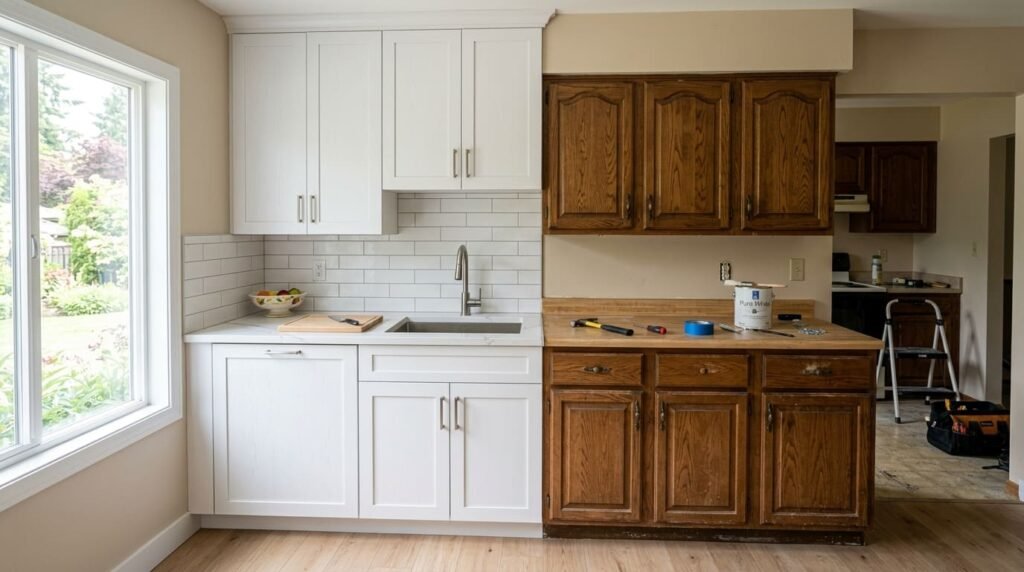
A refacing crew doesn’t touch anything structural. The cabinet boxes, the parts screwed into your studs, stay put. What changes is everything layered on top of them: new doors, new drawer fronts, new hardware, and a thin veneer or laminate skin bonded over the exposed sides, end panels, and face frames of the boxes you already have.
The typical process runs in four stages. First, an in-home consultation where a rep measures your cabinets and talks through door styles, colors, and hardware. Second, material selection, where you pick between laminate, thermofoil, or wood veneer (more on that below). Third, the doors and veneer sheets get fabricated off-site, usually in the company’s shop, while your kitchen stays fully usable. Fourth comes on-site installation, which is where most of the visible disruption happens.
A lot of companies also bundle in extras that aren’t always obvious from the base quote: soft-close hinges, pull-out shelving, under-cabinet lighting, a lazy Susan for corner cabinets, or new countertops. Ask specifically what’s included before you compare two quotes side by side, because a $6,000 quote with soft-close hinges and a $6,000 quote without them aren’t the same offer.
How Much Do Kitchen Cabinet Refacing Services Cost?
For an average kitchen, kitchen cabinet refacing services typically run $4,000 to $13,000, with most homeowners landing somewhere around $7,000 to $8,000 once materials, labor, and hardware are factored in. That range shows up consistently across current industry cost data for 2026, though the spread is wide because pricing depends so heavily on kitchen size, door count, and material grade.
Most companies quote by linear foot, and you’ll typically see:
- Laminate or thermofoil: roughly $100 to $250 per linear foot, often totaling $2,000 to $6,000 for an average kitchen
- Wood veneer: roughly $150 to $350 per linear foot
- Solid wood doors with veneer-covered boxes: $200 to $500+ per linear foot, easily pushing a large kitchen past $15,000
A small galley kitchen with a dozen doors can land close to $3,500. A large kitchen with an island, corner cabinets, and premium wood veneer can run past $15,000. The number of doors and drawers matters more than square footage alone; a kitchen with a full wall of upper cabinets will cost more to reface than an open-concept kitchen with the same floor area but fewer doors.
One thing worth flagging directly: if a quote comes in dramatically below every other bid you’ve collected, don’t treat that as good news. It’s usually a sign of thinner laminate, MDF cores that won’t hold up to moisture, or installers rushing prep work that’s supposed to keep veneer from lifting at the edges. That kind of shortcut doesn’t show up on install day. It shows up eighteen months later as a curling edge near the dishwasher.
Financing is common in this industry, and many companies run seasonal promotions, so it’s worth asking about both cash pricing and financed pricing, and getting the financing terms in writing before you commit.
Kitchen Cabinet Refacing vs. Replacing vs. Refinishing
These three get used interchangeably by homeowners, but they’re different services with different price tags, and picking the wrong one wastes money either way.
Refinishing
Refinishing means sanding your existing doors and drawer fronts and repainting or restaining them. Nothing gets replaced. It’s the cheapest route, typically $1,800 to $4,500, but it only works on solid wood doors that are still structurally sound. It won’t fix warped doors, and it won’t let you switch to a different door style.
Refacing
Refacing replaces the doors, drawer fronts, and hardware, and applies new veneer over your existing boxes. You keep your current layout, but you get a genuinely new look with far more style and color options than refinishing allows. This is the middle option in both cost and how much it actually changes.
Replacement
Replacement tears out the boxes entirely and starts over. It’s the only option that lets you change your kitchen’s layout, add specialized storage, or fix cabinets with water damage or structural problems. It also costs the most, generally $4,500 to $15,000+ for stock cabinets and considerably more for custom work, and takes several weeks rather than days.
If your boxes are sound and you like where everything sits, refacing is usually the better value. If there’s water damage, sagging shelves, or you want to move the sink or reconfigure storage, replacement is the more honest answer even though it costs more upfront.
Materials Used in Kitchen Cabinet Refacing Services
The material your installer uses drives both the price and how long the job actually holds up.
Thermofoil (rigid thermofoil, or RTF) is a vinyl film heat-pressed onto MDF. It gives a smooth, seamless finish and resists moisture reasonably well. Older thermofoil had a real reputation for peeling near heat sources like ovens and dishwashers, and that’s a fair concern to bring up with any contractor quoting it. Newer rigid thermofoil and 3D laminate products have mostly addressed that failure point when installed correctly, and typically hold up for 10 to 20 years.
High-pressure laminate (HPL), sometimes marketed as 3D laminate, is layered kraft paper bonded under high pressure. It’s tougher than older 2D laminate, handles daily wear well, and lands in a similar 10-to-20-year lifespan as good thermofoil.
Wood veneer is a thin slice of real hardwood applied over plywood or MDF. It gives the richest, most authentic look, and unlike laminate or thermofoil, it can be lightly sanded and refinished again down the road. With professional installation, expect 15 to 20+ years of life, at a materials cost that sits well above laminate.
Marketing names for these products vary a lot between companies even when the underlying material is nearly identical, so it’s worth asking your contractor directly which category their standard product falls into rather than trusting the brand name on the sample board.
How Long Do Kitchen Cabinet Refacing Services Take?
Most refacing projects take 3 to 5 working days on-site once materials arrive, compared to two or more weeks for a full replacement. Most of that timeline gets eaten up by fabrication, which happens off-site before installers ever show up at your house, so the days you’re actually living with a torn-apart kitchen are limited to the install itself. Larger kitchens, custom door profiles, or bundled extras like new countertops can stretch that window, but in most cases your kitchen stays at least partially usable throughout.
Is Kitchen Cabinet Refacing Worth It?
For homeowners with structurally sound cabinets, yes, in most cases. Refacing typically costs 30% to 50% less than full replacement, takes days instead of weeks, and multiple industry cost guides put the resale value recouped at somewhere around 70% to 80% of what you spend, though that figure moves with your local market and how the rest of the kitchen looks. It’s the right call when you’re happy with your layout and want an updated look without the mess. It’s the wrong call if your cabinet boxes are damaged or you actually need more or different storage.
How to Choose a Kitchen Cabinet Refacing Company
The gap between a refacing job that looks great five years later and one that’s peeling at the edges after eighteen months almost always comes down to the installer, not the material category alone. Two companies quoting the same “wood veneer” can deliver very different results depending on adhesive quality, prep work, and how carefully the veneer is trimmed around corners and appliances.
A few things worth confirming before signing anything:
- License and insurance. Ask to see documentation, not just a verbal yes. If a worker gets hurt or your home is damaged mid-project and the company isn’t insured, that liability can land on you.
- Where fabrication happens. Doors and veneer panels built off-site in a controlled shop generally come out cleaner and straighter than pieces cut and fitted entirely on location.
- References and photos of past work, ideally projects that are at least a couple of years old so you can see how the finish is holding up, not just how it looked on install day.
- A written contract spelling out material type, cost breakdown, payment schedule, and a start-to-finish timeline before any work begins.
- How they protect the rest of your kitchen. Countertops, floors, and appliances should be covered during fabrication trimming and installation, since sawdust and adhesive overspray are part of the process.
Treat a bid that’s noticeably below every other estimate with the same skepticism you’d apply to any home improvement quote that seems too good. It usually means thinner materials, compressed timelines, or corners cut in the prep work that won’t show up until later.
Frequently Asked Questions
Can I DIY cabinet refacing instead of hiring a pro?
Technically yes, but it’s an unforgiving project for a first attempt. Getting veneer to lay flat without air bubbles, matching finish and grain across dozens of doors, and squaring new hardware consistently all take practice most homeowners don’t have going in. A botched DIY job often costs more to fix afterward than hiring a professional would have cost from the start, so this is a better fit for someone with real cabinetry or woodworking experience than a first-time renovator.
Does cabinet refacing increase home value?
Generally yes. Multiple industry cost studies put the typical resale recoup around 70% to 80% of what homeowners spend on refacing, and an updated kitchen is consistently one of the stronger selling points buyers respond to during showings. It won’t add the same value as a full remodel with reconfigured storage, but it closes the visual gap with newer kitchens for a fraction of the cost.
How is refacing different from painting cabinets?
Painting changes only the surface color of your existing doors and is generally considered a shorter-term fix that can chip, especially around handles and hinges, within a few years. Refacing replaces the doors and drawer fronts outright and applies new veneer to the boxes, which holds up longer and lets you change the actual door style and profile, not just the color.
Will refacing work if my cabinet boxes are damaged?
Not reliably. Refacing depends on the existing boxes being structurally sound underneath the new veneer. If there’s water damage, mold, warping, or sagging shelves, a contractor who knows what they’re doing should point you toward replacement instead, even though refacing would be the cheaper number to write on a quote.
Refacing makes the most sense when your kitchen’s bones are solid and only the look has fallen behind. Get two or three in-home estimates, ask every company the same questions about materials, fabrication location, and timeline, and compare what’s actually included in each quote, not just the total at the bottom.