
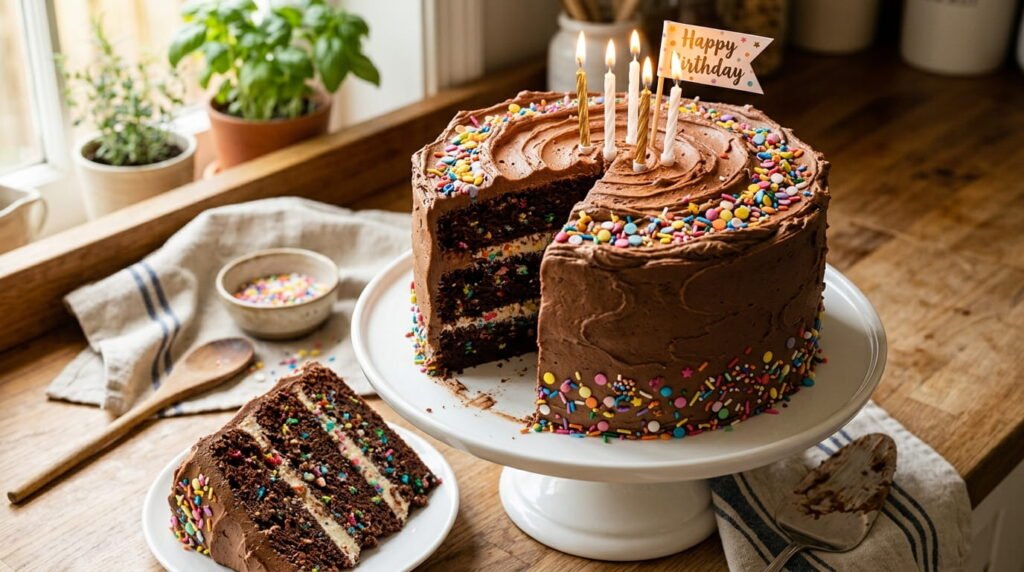
Classic Birthday Cake
Ingredients
Instructions
This birthday cake recipe is the one I make when someone in my house calls dibs on their favorite flavor combo: soft vanilla cake, a good dose of sprinkles, and a thick layer of chocolate buttercream in between. It’s a three-layer cake, but don’t let that scare you off. Once you’ve made it once, you’ll see it’s really just a few mixing bowls and some patience while the layers cool.
I’ve made a lot of versions of this cake over the years, box mixes included, and this scratch recipe beats every one of them on texture. The crumb is tender without being crumbly, it holds up well to stacking, and it doesn’t dry out the next day the way a lot of homemade cakes do.
Why You’ll Love This Birthday Cake
The cake flour and buttermilk combination is what makes this recipe stand out. Cake flour has less protein than all-purpose flour, so the crumb stays soft and fine instead of turning chewy. Buttermilk adds a slight tang and keeps the layers moist for days, not just the first afternoon.
It’s also genuinely a from-scratch cake that a beginner baker can pull off. There’s no fussy meringue step, no water bath, nothing that requires special equipment beyond a hand mixer or stand mixer. And because the batter comes together with basic pantry staples, you’re not making a special trip to the store for one obscure ingredient.
Ingredients You’ll Need
For the cake, you’ll need cake flour, baking powder, baking soda, salt, butter, sugar, eggs, vanilla, buttermilk, vegetable oil, and rainbow sprinkles. A few notes on substitutions:
If you don’t keep cake flour on hand, you can make a rough substitute by removing 2 tablespoons of flour per cup of all-purpose flour and replacing it with 2 tablespoons of cornstarch. It won’t be identical, but it gets you closer to that soft, bakery-style crumb.
For the sprinkles, stick to jimmies (the small rod-shaped kind) rather than nonpareils (the tiny round balls). Nonpareils bleed color into the batter as they bake, and you’ll end up with a cake that looks a bit muddy instead of confetti-bright.
For the frosting, you’ll need butter, cocoa powder, powdered sugar, melted semisweet chocolate, heavy cream, vanilla, and a pinch of salt. The combination of cocoa powder and melted chocolate gives the frosting a deeper flavor than using just one or the other, and the heavy cream keeps it light enough to pipe instead of dense and heavy.
How to Make Birthday Cake
Start by creaming the butter and sugar together until the mixture is genuinely pale and fluffy, not just combined. This step incorporates air into the batter, which is a big part of what gives the finished cake its light texture. Three to four minutes on medium-high speed is usually enough.
Add your eggs one at a time so each one fully incorporates before the next goes in. Adding them all at once can cause the batter to separate, which leads to a denser cake once it bakes.
From there, alternate adding your dry ingredients and your buttermilk mixture, starting and ending with the flour. This method keeps the batter from overmixing, which is one of the most common reasons homemade cakes turn out tough. Fold in the sprinkles last, using a spatula rather than the mixer, and stop as soon as they’re distributed.
Divide the batter between your three prepared pans, smooth the tops, and bake until a toothpick comes out with a few moist crumbs still clinging to it. Pulling the cake out a minute or two early rather than late will save you from a dry layer.
Pro Tips for the Best Birthday Cake
Room temperature ingredients matter more than most recipes let on. Cold eggs and cold buttermilk can cause the butter to seize up and the batter to look curdled, which affects how evenly the cake bakes. Set everything out about an hour before you start.
Weigh your flour if you have a kitchen scale. Scooping flour straight from the bag with a measuring cup packs it down and can add up to an extra half cup of flour by the time you’ve measured three cups, which is enough to dry out the cake.
Keep an oven thermometer in your oven if you have one. Most home ovens run several degrees hotter or cooler than the dial says, and that gap is often the real reason a cake bakes faster or slower than the recipe states.
Common Mistakes to Avoid
Overmixing after the flour goes in is the number one culprit behind a dense, rubbery cake. Once you see no more streaks of flour, stop mixing.
A sunken center usually means the oven door was opened too early, or the cake came out before it finished baking. Try to wait until at least three-quarters of the bake time has passed before checking, and use the toothpick test rather than guessing by eye.
Frosting a cake that’s still slightly warm is another common misstep. Even a small amount of residual heat will melt the buttercream and cause it to slide right off the sides. Give the layers a full hour or two on a wire rack before you start assembling.
Variations and Substitutions
If you’d rather skip the layering and stacking altogether, this batter works just as well in a 9×13-inch pan for a sheet cake. Bake it for about 35 to 40 minutes and check with a toothpick starting around the 32-minute mark.
For a dairy-free version, swap the buttermilk for a plant-based milk mixed with a tablespoon of lemon juice or vinegar, and use a dairy-free butter substitute in both the cake and the frosting.
To make this cake gluten-free, use a 1:1 gluten-free baking blend in place of the cake flour. The texture will be slightly denser but still holds together well for layering.
Not a chocolate frosting fan? Classic vanilla buttercream or a whipped cream cheese frosting both work beautifully with this cake and are easy swaps if the birthday person prefers something lighter.
Storage and Reheating Instructions
Once frosted, store the cake in the refrigerator, loosely covered, for up to 4 days. Bring slices to room temperature for about 30 minutes before serving so the frosting softens back up and the crumb doesn’t taste stiff from the cold.
The unfrosted cake layers freeze well for up to 3 months. Wrap each layer tightly in plastic wrap, then a layer of foil, and thaw them overnight in the refrigerator before frosting. I wouldn’t recommend freezing the cake after it’s been frosted, since the buttercream texture changes once it thaws.
What to Serve With Birthday Cake
A scoop of vanilla or strawberry ice cream on the side is the obvious pairing, but a bowl of fresh berries cuts through the sweetness nicely if you want something lighter on the table. For a full birthday spread, this cake also holds its own next to a fruit platter or a simple lemonade if kids are part of the crowd.
Frequently Asked Questions
Can I make this birthday cake ahead of time?
Yes. Bake the layers up to 3 days ahead and keep them wrapped tightly in the refrigerator, or make them a month ahead and freeze. You can also make the frosting a day in advance and store it in an airtight container in the fridge, just give it a quick beat before using so it’s spreadable again.
Why did my cake sink in the middle?
This is almost always underbaking or an oven door opened too soon. Double check doneness with a toothpick and try to resist peeking until the cake is at least three-quarters through its bake time.
Can I use a box mix instead of making this from scratch?
You can, but the texture won’t be quite the same. This scratch version has a finer, more tender crumb than most box mixes, and the buttermilk gives it a flavor depth that boxed cakes typically don’t have.
How many people does this birthday cake serve?
A three-layer 8-inch cake like this one serves about 16 people with standard slices, or up to 20 if you’re cutting thinner pieces for a larger party.
Can I turn this into cupcakes?
Yes. This batter makes about 30 standard cupcakes. Fill the liners two-thirds full and bake at 350°F for 18 to 20 minutes, checking with a toothpick.

Pingback: 1/4 Sheet Cake: Size, Servings, and Where to Buy One - kitchennista.com
Pingback: What's Funnier Than 24 Cake: A Complete 25th Birthday Guide