
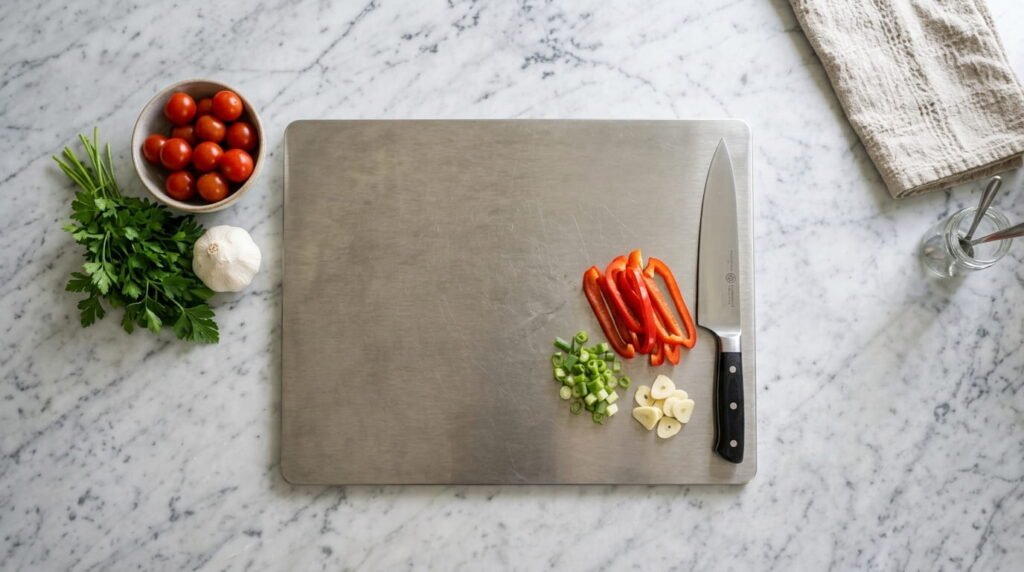
A titanium cutting board made in USA has become one of the most searched kitchen upgrades this year, and for good reason: it promises a surface that won’t warp, stain, or trap bacteria the way wood and plastic can. But before you add one to your cart, it helps to know what “Made in USA” actually means for a titanium product, because the answer isn’t always as simple as the packaging suggests.
What “Titanium Cutting Board Made in USA” Actually Means
Here’s the part most listings skip: the United States does not mine or refine large volumes of raw titanium. China produces more than half the world’s titanium supply, with the rest coming from Japan, Russia, and Kazakhstan. So when a brand advertises a titanium cutting board made in USA, it usually means the board is designed, assembled, finished, or packaged domestically, while the raw titanium sheet itself was sourced overseas.
That’s not necessarily a red flag. Aerospace-grade and medical-grade titanium is a globally traded commodity, and a US company can still apply real quality control, testing, and craftsmanship to the final board. The issue is transparency. A trustworthy seller will tell you exactly where the metal comes from and where the board is finished, rather than letting the flag on the listing do the talking.
Is a Titanium Cutting Board Made in USA Worth Buying?
Yes, if you want a cutting surface that resists warping, staining, and odor absorption better than wood or plastic, and you’re comfortable paying a premium price for it. A genuine board made from Grade 1 or Grade 2 titanium will outlast most other materials, though it’s heavier and pricier than a standard plastic or bamboo board, and it isn’t necessarily the gentlest option for your knife edges.
How Titanium Compares to Wood, Plastic, and Bamboo Boards
| Feature | Titanium | Plastic | Wood/Bamboo |
|---|---|---|---|
| Moisture absorption | None (non-porous) | Low | High |
| Odor retention | Very low | Moderate | High |
| Knife wear | Moderate to firm | Low | Low |
| Warping/cracking | Doesn’t warp | Can crack over time | Common with age |
| Dishwasher safe | Usually yes | Usually yes | Rarely |
| Typical price | $$$ | $ | $$ |
The comparison shows why so many home cooks are switching. A wood or bamboo board can develop deep knife grooves that trap food particles, and those grooves are notoriously hard to clean out fully. Plastic is easy to sanitize but scratches quickly, and those scratches become the same kind of bacteria-holding grooves over time. Titanium’s non-porous surface sidesteps both problems, which is the main selling point behind every titanium cutting board made in USA on the market right now.
What to Look for Before You Buy
Not every “titanium” board sold online is actually pure titanium. Some budget listings use steel alloys with a thin titanium coating, which won’t deliver the same durability or corrosion resistance as a solid piece. Before buying a titanium cutting board made in USA, check for a few specifics:
- Purity grade: Look for Grade 1 or Grade 2 titanium clearly stated, not vague terms like “titanium-infused” or “titanium-coated.”
- Thickness: Thin boards (under 0.05 inch) can flex during heavy chopping. Thicker boards sit flatter on the counter and feel more stable.
- Country of origin disclosure: A seller who states plainly where the raw metal comes from and where assembly happens is more trustworthy than one who only shows a flag graphic.
- Surface texture: Some manufacturers add a micro-textured finish designed to reduce slippage and bacterial adhesion, which is worth asking about if hygiene is your main reason for switching.
Does a Titanium Cutting Board Dull Your Knives?
Titanium is harder than wood and softer than glass or ceramic, so it sits in a middle ground. Used with normal chopping technique, a quality titanium board won’t dull knives noticeably faster than a hard plastic board, though it will wear an edge down faster than a softer wood or bamboo surface over years of heavy use.
Is a Titanium Cutting Board Dishwasher Safe?
Most titanium cutting boards made in USA are advertised as dishwasher safe, since the metal doesn’t absorb water or warp from heat the way wood does. It’s still worth checking the specific manufacturer’s care instructions, since some boards include non-metal components like rubber feet or a wheat-fiber backing that may have different cleaning requirements.
Are Titanium Cutting Boards Really Antibacterial?
Titanium’s non-porous surface means bacteria has nowhere to burrow the way it can in wood grain or plastic scratches, which makes the board easier to clean thoroughly. That’s a real, measurable hygiene advantage in terms of surface cleanability, though no cutting board material eliminates the need for regular washing and proper food handling.
How Much Does a Titanium Cutting Board Cost?
Genuine solid titanium boards typically run from around $60 to $150 or more depending on size, thickness, and finish, which is noticeably higher than plastic ($10 to $25) or wood ($20 to $60). The price premium reflects both the cost of raw titanium and the specialized tooling needed to cut and finish it safely for food use.
Care and Maintenance Tips
Keeping a titanium cutting board made in USA in good shape is straightforward. Rinse it after each use, hand wash with mild dish soap for daily upkeep even if it’s dishwasher rated, and avoid abrasive scouring pads that can scratch the surface finish. Unlike wood, you never need to oil a titanium board, and unlike plastic, you don’t need to worry about it warping near the stove or in direct sunlight.
Where to Buy a Genuine Titanium Cutting Board Made in USA
When shopping, compare listings on Amazon, Etsy, and dedicated kitchenware sites, and read the fine print rather than the headline claim. Look specifically for the titanium purity grade, a clear description of where the metal was sourced, and a real return policy, since a board this size is not a small purchase to get wrong. Customer photos and verified reviews mentioning spark tests or XRF scans are a good sign the seller has nothing to hide about their material.
A titanium cutting board made in USA can be a genuinely smart upgrade for a kitchen that goes through cutting boards too fast, as long as you buy from a seller who’s upfront about sourcing and grade. Look past the marketing language, check the specifics above, and you’ll end up with a board that actually earns its price tag.


Pingback: How Long Does Spray Paint Take to Dry? (2026 Guide) - kitchennista.com
Pingback: Can You Put Kitchen Towel in the Microwave? Safety Guide