Best Baked Salmon Recipe
Ingredients
Instructions
The Best Baked Salmon Recipe (Ready in 20 Minutes)
If you want juicy, flaky baked salmon on the table with almost no effort, this is the recipe to bookmark. One pan, six pantry staples, and twenty minutes from oven-off to fork-in-hand. No fussy marinating, no guessing whether it’s done, just a reliable method that works every single time you make it.
I’ve baked more salmon fillets than I can count over the years, and this lemon garlic version is the one I come back to on a Tuesday night when I want something that tastes like more effort than it actually took. It’s the kind of dinner that makes you look like you planned ahead even when you didn’t.
Why You’ll Love This Baked Salmon
This recipe earns its spot in the weekly rotation for a few simple reasons. It’s ready in twenty minutes start to finish, which beats almost anything you could order in. It uses six ingredients you probably already have, so there’s no special grocery run required. The salmon comes out moist and flaky instead of dry, because the method is built around getting it out of the oven at exactly the right moment. And it’s naturally low carb, gluten free, and loaded with protein and omega-3s, so it fits into pretty much any way of eating.
It also happens to be forgiving. Even if you’re new to cooking fish, this method has enough margin for error that you’re unlikely to end up with something rubbery or bland.
Ingredients You’ll Need
You only need a handful of things for this baked salmon, and most of them substitute easily if your pantry looks a little different.
Salmon fillets. Center-cut fillets around 6 ounces each work best because they cook evenly. Skin-on or skinless both work here. If you’re buying skin-on, ask the fish counter to remove any pin bones, or run your fingers along the flesh to feel for them yourself.
Olive oil. This keeps the fish moist while it bakes and helps the seasoning stick. Avocado oil is a fine substitute if that’s what you have.
Garlic. Fresh minced garlic gives the best flavor. In a pinch, a teaspoon of garlic powder will do the job.
Italian seasoning. A basic dried herb blend rounds everything out. Swap in your own combination of dried thyme, oregano, and basil if you don’t have a pre-mixed blend.
Lemon. Both the juice and a few thin slices go into this recipe. The juice goes into the sauce and the slices go on top of the fish, which adds a little extra moisture and a nice visual touch.
Salt and pepper. Simple, but don’t skip it. Salmon has enough natural fat and flavor that it doesn’t need much dressing up.
How to Make Baked Salmon
Start by getting your oven properly hot. Baking salmon at 425°F is the sweet spot for this recipe: hot enough to cook the fish quickly so it doesn’t dry out, but not so hot that the outside overcooks before the center is done.
While the oven heats, pat the salmon dry with paper towels. This step matters more than it seems like it should. Any surface moisture on the fish will steam instead of caramelize, so drying it off first helps you get better texture and lets the seasoning actually stick instead of sliding off.
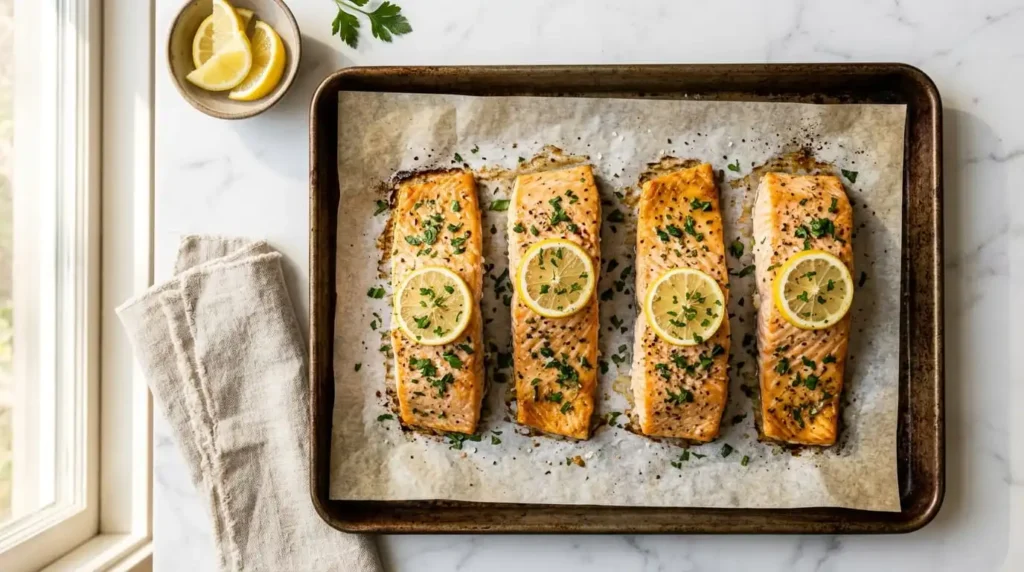
Whisk your olive oil, garlic, herbs, salt, pepper, and lemon juice together in a small bowl. This takes about a minute and gives you a loose sauce that clings to the fish rather than pooling underneath it. Brush it generously over the top and sides of each fillet, then lay a thin lemon slice on top of each one.
Slide the pan into the oven and set a timer for 12 minutes. Thin fillets closer to half an inch will be ready around the 12-minute mark, while thicker cuts closer to an inch and a half may need the full 15. The way to know for sure is to check the internal temperature. Pull the fish when it reads 135°F to 140°F in the thickest part, since it will keep cooking a little from residual heat once it’s out of the oven.
Let it rest on the pan for about 3 minutes before serving. This short rest lets the juices settle back into the fish instead of running out onto the plate.
The Best Temperature for Baking Salmon
There’s a lot of conflicting advice floating around about oven temperature, so here’s the short version. Salmon bakes well anywhere from 350°F to 450°F, and the right choice depends mostly on what you’re going for.
At 350°F, expect a longer bake, somewhere around 20 to 25 minutes, which gives you a bit more of a buffer if you’re new to cooking fish and want less risk of overcooking. At 400°F to 425°F, you get a faster cook of around 12 to 18 minutes with a slightly firmer exterior. At 450°F, salmon cooks in as little as 8 to 12 minutes and develops the most color on top, though it demands closer attention since the margin between perfect and overdone shrinks.
For this particular recipe, 425°F strikes the best balance between speed and control, which is why it’s the temperature I default to.
Pro Tips for the Best Baked Salmon
A few small habits separate great baked salmon from mediocre baked salmon.
Buy the freshest fish you can, and if it’s frozen, thaw it fully in the fridge overnight rather than baking it from frozen, since a from-frozen piece will cook unevenly. Always pat it dry before seasoning. Use a thermometer if you have one, since it takes the guesswork out completely and gives you a repeatable result every time. Don’t overcrowd the pan, since fillets packed too close together steam instead of roast and won’t develop as much texture on top. And resist the urge to keep checking on it in the oven. Opening the door repeatedly drops the oven temperature and throws off your timing.
Common Mistakes to Avoid
The single biggest reason baked salmon turns out dry is leaving it in too long. Fish carries over and keeps cooking after it comes out of the oven, so pulling it a touch early is almost always the safer call than waiting until it looks fully done inside the oven.
Another common mistake is skipping the pat-dry step, which leaves you with soggy seasoning and a fillet that never quite browns. Using a cold fillet straight from the fridge is another one. Letting the salmon sit out for about ten minutes before baking helps it cook more evenly, since the outside won’t finish long before the center catches up.
Finally, don’t skip checking doneness with either a thermometer or a fork test. Guessing based on time alone is risky, because fillet thickness varies a lot between cuts and between fish counters.
Variations and Substitutions
This base recipe is easy to build on once you’ve got the method down. Swap the Italian seasoning for smoked paprika and a touch of brown sugar if you want something sweeter and smokier. Brush on a mix of soy sauce, honey, and grated ginger instead of the lemon garlic mixture for an Asian-inspired take. Spread a thin layer of pesto or Dijon mustard over the top before baking for a different flavor direction entirely.
If you’re avoiding one of the ingredients here, garlic powder can replace fresh garlic, lime juice can stand in for lemon, and any neutral oil can replace olive oil without changing the technique at all.
Wrapping the fillets in a foil packet instead of baking them open on the pan is another good variation, especially if you want extra moisture or you’re adding vegetables to the same packet.
Storage and Reheating Instructions
Baked salmon keeps well in the fridge for up to 3 days in an airtight container. It also freezes nicely for up to 2 months if you want to make a double batch and save some for later.
To reheat without drying it out, go low and slow. A 275°F oven for about 10 to 15 minutes works better than the microwave, which tends to overcook the edges before the center warms through. If you do use the microwave, keep it on medium power and check every 30 seconds. A splash of water in the dish, covered loosely, helps keep things from drying out either way.
Cold leftover salmon is genuinely good too. Flake it over a salad, fold it into pasta, or turn it into quick salmon patties for lunch the next day.
What to Serve With Baked Salmon
This salmon pairs with almost anything, which is part of why it’s such a reliable weeknight dinner. For something light, try it alongside roasted asparagus, a simple green salad, or steamed broccoli. For something heartier, mashed potatoes, garlic butter rice, or roasted baby potatoes round it out nicely. If you want to keep cleanup minimal, roast your vegetables on the same sheet pan as the salmon, since most vegetables cook in a similar window at 425°F.
A dollop of dill sauce or a spoonful of chimichurri on top takes it up another notch if you’re serving it for company.
Frequently Asked Questions
How long do you bake salmon at 400°F?
At 400°F, expect about 15 to 18 minutes for a standard 1-inch fillet. Thinner cuts will be done closer to 12 minutes.
Should I bake salmon covered or uncovered?
Bake it uncovered if you want a firmer top and a bit of color. Cover it with foil or wrap it in a parchment packet if you want extra moisture and a more tender, steamed texture.
Is salmon better cooked with the skin on?
Skin-on salmon holds together better during baking and the skin adds a layer of protection against overcooking. You can remove it easily after baking if you’d rather not eat it.
What’s the safest internal temperature for salmon?
The USDA recommends 145°F for food safety. Many home cooks and chefs prefer to pull it at 135°F to 140°F, since the fish continues cooking after it leaves the oven and this range gives the best texture without being undercooked.
Can I bake salmon from frozen?
Yes, though it’s not the ideal approach. If you’re short on time, bake it at 425°F and add roughly 50% more time, checking the internal temperature closely since frozen fillets cook less evenly than thawed ones.
Can I make baked salmon ahead of time?
You can prep the sauce and portion the fish ahead, then bake it fresh right before serving for the best texture. Fully baked salmon also reheats reasonably well if you’re short on time, though it’s always better fresh out of the oven.