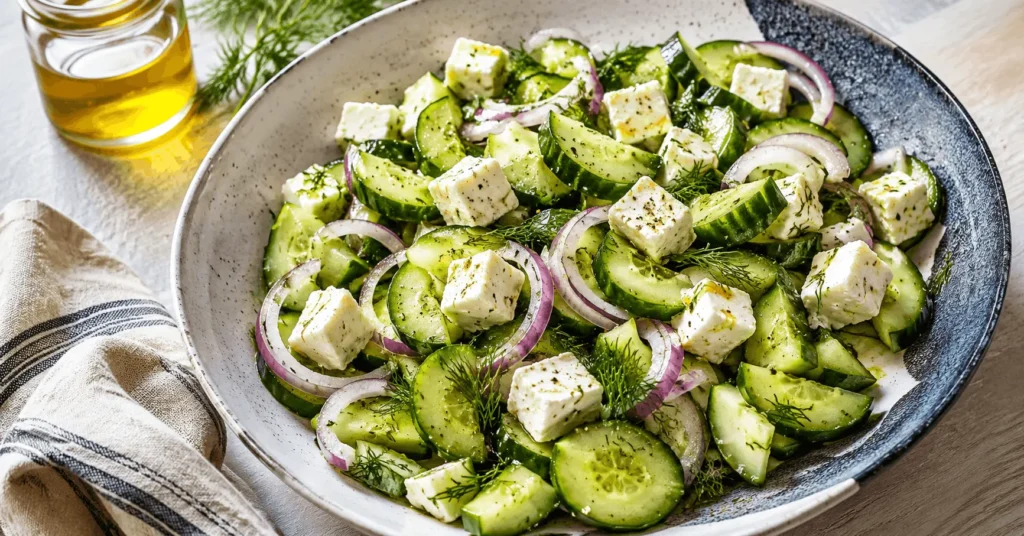
Cucumber and Feta Salad
Ingredients
Instructions
The Best Cucumber and Feta Salads for Summer
There’s a reason cucumber and feta keep showing up together on every Mediterranean table from June through September. Cucumbers are almost entirely water, feta is salty and dense, and when you put them side by side with a squeeze of lemon, you get a bite that’s cool, briny, and a little creamy all at once. This version leans on one trick most recipes skip: a quick salt-and-drain step for the cucumbers, which is the difference between a salad that’s still crisp on day two and one that’s swimming in its own juice by dinner.
I’ve made a version of this salad more summers than I can count, usually because I bought too many cucumbers at the farmers market and needed something to do with them before they went soft. What follows is the one that stuck, plus everything I’ve learned about keeping it from turning into cucumber soup.
Why This Salad Works So Well
Cucumber and feta is one of those pairings that just makes sense on paper. Cucumbers bring crunch and a mild, almost sweet flavor that doesn’t fight with anything. Feta brings salt, tang, and a creaminess that coats each bite instead of sitting on top of it. Add olive oil and lemon juice and you’ve built a dressing that needs almost nothing else to taste finished.
It also happens to be one of the fastest sides in the Mediterranean recipe box. No stove, no oven, fifteen minutes of actual work. That makes it an easy answer for a hot night when turning on the burner feels like a personal attack.
Ingredients You’ll Need
Cucumbers. English cucumbers are the easiest choice here. Thin skin, so you skip peeling, and far fewer seeds than a standard slicing cucumber, which means less water. Persian cucumbers work too, and they’re small enough that you barely have to prep them. If all you’ve got is a regular cucumber, peel it and scoop the seeds out with a spoon before you slice, or the salad will be noticeably wetter.
Feta. Buy a block of feta packed in brine, not the pre-crumbled kind. Crumbled feta usually comes coated in a bit of cellulose or potato starch to keep it from clumping in the bag, and it tastes drier and duller for it. A block that you cut or crumble yourself is creamier and holds its shape better once it’s tossed with the dressing.
Red onion. Thin slices add a sharp bite that balances the richness of the feta. If raw onion is too much for you, soak the slices in ice water for ten minutes before adding them. It softens the edge without cooking away the crunch.
Fresh herbs. Dill is the classic choice and it pairs beautifully with cucumber, but mint, parsley, or a mix all work if that’s what’s in your fridge.
The dressing. Olive oil, fresh lemon juice, red wine vinegar, garlic, and dried oregano. Bottled lemon juice will technically work, but fresh makes a real difference in how bright the final dressing tastes.
How to Make Cucumber and Feta Salad
Start by slicing the cucumbers into half-moons and putting them in a colander set over a bowl or the sink. Toss them with half a teaspoon of kosher salt and let them sit for fifteen minutes. This isn’t optional if you care about texture. The salt pulls water out of the cucumber cells through osmosis, and that water needs to leave before the cucumbers meet the dressing, otherwise it just dilutes everything and turns the bottom of the bowl into a puddle.
While the cucumbers drain, whisk the olive oil, lemon juice, vinegar, garlic, oregano, the rest of the salt, and the pepper together in a small bowl or a jar with a lid. Give the cucumbers a pat with a paper towel once they’re done draining, then combine them with the red onion and dill in a large bowl. Pour the dressing over, toss gently, and fold in the feta last so the cubes stay mostly whole instead of dissolving into crumbles. Serve right away, or give it ten to fifteen minutes in the fridge if you like your salads properly cold.
Pro Tips for the Best Results
Salt the cucumbers even if you’re eating the salad within the hour. It matters at every timeline, not just for make-ahead batches. Use a block of feta and cut it yourself rather than reaching for the tub of crumbles, since it holds its structure much better once dressed. Don’t dress the whole bowl if you’re only serving part of it. Dress individual portions instead and keep the rest of the components separate, because once cucumber meets salt and acid, the clock starts running. And if you’re using dried oregano instead of fresh, use it in the dressing itself rather than sprinkling it over the top raw, since a few minutes soaking in the oil and lemon juice softens its flavor considerably.
Common Mistakes to Avoid
Skipping the salting step is the biggest one. It feels like an extra step for no reason, right up until you see how much water actually comes out of a cucumber in fifteen minutes. Overmixing after the feta goes in is the second. Feta is soft enough that a few too many stirs turns your salad into a beige, cheesy paste instead of distinct crumbles or cubes. Using pre-crumbled feta straight from a tub is a smaller issue but it does affect the final texture and flavor, since it tends to be drier and blander than a block. And dressing the salad too far ahead of time, even with the salting trick, will still soften the cucumbers eventually. This salad is meant to be eaten within a day of being dressed, not stored for a week.
Variations and Substitutions
Add color and bulk. Halved cherry tomatoes, kalamata olives, or a can of drained chickpeas turn this from a side dish into something closer to a light meal.
Swap the cheese. Goat cheese works as a creamier substitute if feta isn’t your thing, and it’s a reasonable option for anyone who finds feta too salty.
Make it dairy-free. Skip the cheese entirely, or use a plant-based feta alternative. The salad still holds up fine on flavor thanks to the herbs and dressing.
Change the herbs. Fresh mint gives the salad a cooler, almost dessert-adjacent freshness that pairs surprisingly well with watermelon if you want to riff on it later. Parsley keeps things more neutral if dill isn’t available.
Go creamy. Some versions smash a bit of the feta right into the dressing itself for a lighter, tangier ranch-like coating instead of distinct cubes. It’s worth trying once if you’ve only ever made the classic version.
This salad is naturally gluten-free and low carb as written. For a vegetarian meal, add chickpeas or a soft-boiled egg. It also happens to work well with a scoop of cooked, cooled couscous or quinoa folded in if you want more of a grain salad situation for lunch.
Storage and Reheating Instructions
Store leftovers in an airtight container in the fridge for up to two days. Past that point, the cucumbers keep releasing water even after the initial salting, and the salad gets noticeably softer and wetter. Give it a quick toss before serving again to redistribute the dressing that’s pooled at the bottom. This salad doesn’t freeze well since thawed cucumbers turn limp and mushy, so plan to make only what you’ll eat within a couple of days. If you know you’re prepping ahead, store the sliced (and salted, drained) cucumbers, the dressing, and the feta in three separate containers, then combine everything right before you plan to eat.
What to Serve With Cucumber and Feta Salad
This salad is built to sit next to something grilled. Grilled chicken thighs, lemon salmon, or lamb kebabs all work well with the cool, briny contrast it brings to the plate. It’s also a natural match for warm pita and hummus if you’re putting together a Mediterranean spread, or as a side next to a rice pilaf or roasted potatoes for something heartier. For a light lunch on its own, add chickpeas or leftover grilled chicken and call it done.
Frequently Asked Questions
Why is my cucumber salad watery?
It usually comes down to skipping the salting step, or using a cucumber variety with a lot of seeds and moisture. Salting draws water out of the cucumber before it meets the dressing, which keeps the salad from getting diluted and soggy.
Can I make this salad ahead of time?
You can prep the components ahead, salted and drained cucumbers, chopped onion and herbs, and the whisked dressing, but keep them in separate containers and combine everything within an hour of serving for the best texture.
How long does cucumber and feta salad last in the fridge?
About two days once dressed, stored in an airtight container. It will release more liquid as it sits, so stir it before serving again.
Can I use regular cucumbers instead of English cucumbers?
Yes, just peel them first since the skin tends to be thicker and more bitter, and scoop out the larger seeds with a spoon to keep the salad from getting extra watery.
Is this salad gluten-free and low carb?
Yes, as written it’s naturally both. Always double-check any packaged ingredients like feta brands if you’re cooking for someone with a gluten allergy specifically, since cross-contamination can happen during processing.
What’s the best cheese substitute for feta?
Goat cheese is the closest swap in terms of tang and creaminess. For a milder option, fresh mozzarella works, though it won’t have the same salty bite.