
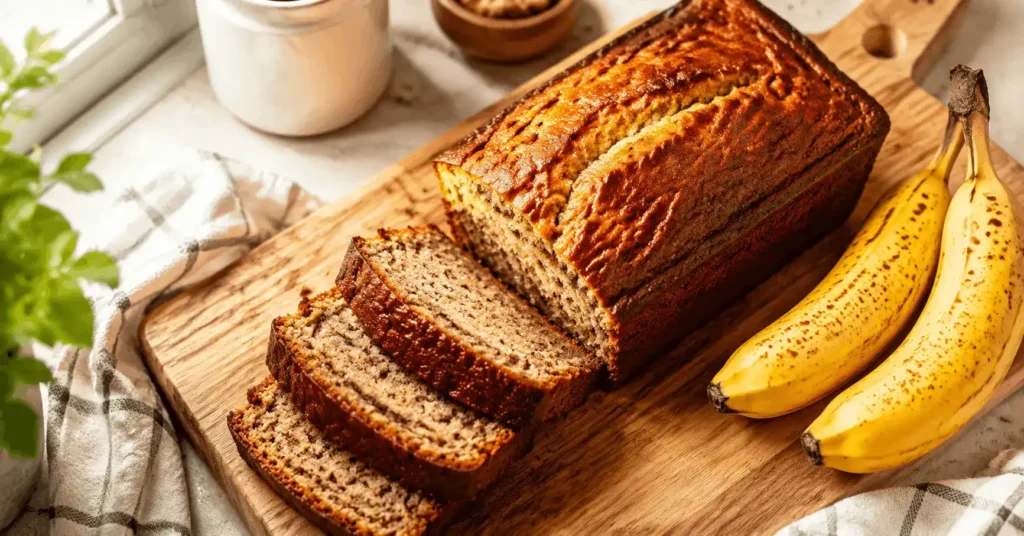
Easy Moist Banana Bread Recipe
Ingredients
Instructions
Recipe for Banana Bread
Banana bread is one of those recipes that shows up in almost every home baker’s rotation, and for good reason. It turns spotty, overripe bananas that would otherwise get tossed into a moist, buttery loaf with barely any effort. This easy banana bread recipe uses one bowl, no mixer, and a handful of pantry staples, and it comes out soft and tender every time.
What makes this version different is the ratio of banana to fat. A lot of recipes lean too heavily on sugar and butter and let the banana flavor get lost. Here, three well-spotted bananas do the heavy lifting for both moisture and sweetness, so the loaf tastes like banana bread first and cake second.
Why You’ll Love This Recipe
This banana bread recipe comes together in one bowl with a fork and a spatula, no stand mixer or hand mixer required. It uses simple, common pantry ingredients (flour, sugar, eggs, butter, baking soda) so there’s no special shopping trip involved. The crumb stays moist for days, and the loaf freezes well if you want to make a double batch and stash one for later. It’s also easy to customize with mix-ins like walnuts, pecans, or chocolate chips without changing the basic method.
Ingredients You’ll Need
The full list and exact amounts are in the recipe card above. Here’s why each ingredient matters and where you can swap things out.
Bananas: Use bananas that are heavily speckled with brown, or even mostly black on the peel. At this stage the starches have converted to sugar, so the bananas are sweeter, softer, and mash easily. Firm, yellow bananas will make a drier, less flavorful loaf.
Butter: Melted butter keeps the mixing process quick and gives the crumb a rich flavor. If you only have salted butter on hand, just cut the added salt in the recipe by half.
Brown sugar: Brown sugar adds a light molasses note and extra moisture compared to white sugar. You can swap in white sugar in a pinch, or split the difference and use half of each.
Egg: One egg is enough to bind this loaf without making it heavy. Room temperature egg blends into the batter more smoothly than a cold one straight from the fridge.
Baking soda: This recipe relies on baking soda, not baking powder, for lift. The acidity in ripe bananas activates the baking soda, so don’t substitute one for the other without adjusting the recipe.
Flour: Standard all-purpose flour gives the right structure. Spoon it into your measuring cup and level it off rather than scooping directly from the bag, since scooping can pack in extra flour and dry out the loaf.
Mix-ins: Walnuts, pecans, and chocolate chips are the classic additions. Toss them in a spoonful of flour before folding them into the batter so they don’t sink to the bottom.
How to Make Banana Bread
Start by mashing the bananas well with a fork, some small chunks are fine and even add a bit of texture. Stir in the melted butter first, since combining these two while the butter is still warm helps everything blend smoothly. From there, mix in the sugar, egg, and vanilla, then add the baking soda and salt directly on top of the wet mixture before stirring them in.
The flour goes in last, and this is the step where most people run into trouble. Fold it in with a spatula just until you no longer see streaks of dry flour. Overmixing develops the gluten in the flour, which is what makes banana bread turn out dense or rubbery instead of tender. A few lumps in the batter are completely normal and actually a good sign.
Pour the batter into a greased 9×5-inch loaf pan and bake at 350°F for 55 to 65 minutes. Check at the 50-minute mark, and if the top is browning too fast, loosely tent it with foil for the remaining bake time.
Pro Tips for the Best Banana Bread
Weigh or measure your bananas rather than just counting them, since banana size varies a lot. About 1 1/2 cups of mashed banana is the target for this recipe. Let the batter sit for five minutes after mixing before pouring it into the pan; this gives the flour a moment to hydrate and can result in a slightly more even crumb. Rotate the pan halfway through baking if your oven runs hot on one side, which is common in a lot of home ovens. Always test doneness with a toothpick inserted into the thickest part of the loaf, not just the edges, since the center is the last part to finish cooking.
Common Mistakes to Avoid
The most frequent issue is using bananas that aren’t ripe enough. If your bananas are still yellow with no brown spots, the bread will taste flat and turn out drier, since underripe bananas have less natural sugar and moisture. Overmixing the batter once the flour goes in is the second biggest culprit behind a tough, gummy loaf. Skipping the toothpick test and pulling the bread out too early is another common problem. Because banana bread is so moist, it can look done on the outside while the center is still wet, so always check before removing it from the oven. Finally, slicing the loaf while it’s still warm can cause it to crumble or compress. Let it rest at least 15 to 20 minutes after cooling on the rack before cutting in.
Variations and Substitutions
For a nut-free version, simply leave out the walnuts or pecans, the recipe holds up fine without them. To make it dairy-free, swap the butter for an equal amount of melted coconut oil or a neutral vegetable oil. For a gluten-free version, a 1:1 gluten-free baking flour blend works well in place of the all-purpose flour, though the texture will be slightly denser. If you want a healthier twist, replace half the butter with unsweetened applesauce or plain Greek yogurt, which cuts some of the fat while keeping the loaf moist. Adding a teaspoon of ground cinnamon or a pinch of nutmeg to the dry ingredients gives the bread a warmer, spiced flavor without changing the method.
Storage and Reheating Instructions
Once the loaf has cooled completely, wrap it tightly in plastic wrap or foil, or store it in an airtight container at room temperature for up to 4 days. For longer storage, refrigerate it for up to a week, though the texture is best at room temperature. To freeze, wrap the whole loaf or individual slices in two layers of plastic wrap, then place in a freezer bag or airtight container for up to 3 months. Thaw at room temperature, or warm individual slices in the microwave for about 15-20 seconds, or in a toaster oven for a slightly crisp edge.
What to Serve With Banana Bread
Banana bread is good enough to eat plain, but a few pairings take it further. A thin spread of salted butter on a warm slice is the classic choice. For breakfast, serve it alongside scrambled eggs and coffee for a simple, filling spread. It also works well as a light dessert with a scoop of vanilla ice cream or a dollop of whipped cream on top, or toasted with a smear of peanut butter for an afternoon snack.
Frequently Asked Questions
Why is my banana bread dense and heavy?
This is almost always caused by overmixing the batter after the flour is added, or by using bananas that weren’t ripe enough. Mix just until the flour disappears, and use bananas that are heavily spotted or fully brown.
Can I use frozen bananas for banana bread?
Yes. Thaw them fully at room temperature first, then drain off any excess liquid before mashing. Frozen and thawed bananas actually mash very easily and work well in this recipe.
How many bananas equal 1 1/2 cups mashed?
Generally 3 medium to large bananas will give you close to 1 1/2 cups mashed, but banana size varies, so it’s worth measuring after mashing if you want to be precise.
Can I make this recipe into muffins instead of a loaf?
Yes. Divide the batter among a lined 12-cup muffin tin and bake at 350°F for 18-22 minutes, checking with a toothpick starting at the 18-minute mark.
Why did my banana bread sink in the middle?
This usually happens when the loaf is underbaked, or the oven door was opened too early during baking, causing the center to collapse before it fully set. Bake until a toothpick from the center comes out clean, and avoid opening the oven door in the first 40 minutes.
Can I double this recipe?
Yes, this recipe doubles well. Bake it in two separate loaf pans rather than one larger pan, since a single oversized loaf tends to bake unevenly.

Pingback: Substitute for Eggs in Baking: 10 Options That Work (2026)
Pingback: Sugar Free Banana Bread: Moist, Easy & Naturally Sweet