Address
304 North Cardinal
St. Dorchester Center, MA 02124
Work Hours
Monday to Friday: 7AM - 7PM
Weekend: 10AM - 5PM
Address
304 North Cardinal
St. Dorchester Center, MA 02124
Work Hours
Monday to Friday: 7AM - 7PM
Weekend: 10AM - 5PM
Type cups or gallons. The other value updates automatically.
| Cups | Gallons | Quarts | Fluid Ounces |
|---|---|---|---|
| 1 | 0.0625 | 0.25 | 8 |
| 2 | 0.125 | 0.5 | 16 |
| 3 | 0.1875 | 0.75 | 24 |
| 4 | 0.25 | 1 | 32 |
| 5 | 0.3125 | 1.25 | 40 |
| 6 | 0.375 | 1.5 | 48 |
| 7 | 0.4375 | 1.75 | 56 |
| 8 | 0.5 | 2 | 64 |
| 9 | 0.5625 | 2.25 | 72 |
| 10 | 0.625 | 2.5 | 80 |
| 11 | 0.6875 | 2.75 | 88 |
| 12 | 0.75 | 3 | 96 |
| 13 | 0.8125 | 3.25 | 104 |
| 14 | 0.875 | 3.5 | 112 |
| 15 | 0.9375 | 3.75 | 120 |
| 16 | 1 | 4 | 128 |
| 17 | 1.0625 | 4.25 | 136 |
| 18 | 1.125 | 4.5 | 144 |
| 19 | 1.1875 | 4.75 | 152 |
| 20 | 1.25 | 5 | 160 |
| 21 | 1.3125 | 5.25 | 168 |
| 22 | 1.375 | 5.5 | 176 |
| 23 | 1.4375 | 5.75 | 184 |
| 24 | 1.5 | 6 | 192 |
| 25 | 1.5625 | 6.25 | 200 |
| 26 | 1.625 | 6.5 | 208 |
| 27 | 1.6875 | 6.75 | 216 |
| 28 | 1.75 | 7 | 224 |
| 29 | 1.8125 | 7.25 | 232 |
| 30 | 1.875 | 7.5 | 240 |
| 31 | 1.9375 | 7.75 | 248 |
| 32 | 2 | 8 | 256 |
| 33 | 2.0625 | 8.25 | 264 |
| 34 | 2.125 | 8.5 | 272 |
| 35 | 2.1875 | 8.75 | 280 |
| 36 | 2.25 | 9 | 288 |
| 37 | 2.3125 | 9.25 | 296 |
| 38 | 2.375 | 9.5 | 304 |
| 39 | 2.4375 | 9.75 | 312 |
| 40 | 2.5 | 10 | 320 |
| 41 | 2.5625 | 10.25 | 328 |
| 42 | 2.625 | 10.5 | 336 |
| 43 | 2.6875 | 10.75 | 344 |
| 44 | 2.75 | 11 | 352 |
| 45 | 2.8125 | 11.25 | 360 |
| 46 | 2.875 | 11.5 | 368 |
| 47 | 2.9375 | 11.75 | 376 |
| 48 | 3 | 12 | 384 |
| 49 | 3.0625 | 12.25 | 392 |
| 50 | 3.125 | 12.5 | 400 |
| 51 | 3.1875 | 12.75 | 408 |
| 52 | 3.25 | 13 | 416 |
| 53 | 3.3125 | 13.25 | 424 |
| 54 | 3.375 | 13.5 | 432 |
| 55 | 3.4375 | 13.75 | 440 |
| 56 | 3.5 | 14 | 448 |
| 57 | 3.5625 | 14.25 | 456 |
| 58 | 3.625 | 14.5 | 464 |
| 59 | 3.6875 | 14.75 | 472 |
| 60 | 3.75 | 15 | 480 |
| 61 | 3.8125 | 15.25 | 488 |
| 62 | 3.875 | 15.5 | 496 |
| 63 | 3.9375 | 15.75 | 504 |
| 64 | 4 | 16 | 512 |
| 65 | 4.0625 | 16.25 | 520 |
| 66 | 4.125 | 16.5 | 528 |
| 67 | 4.1875 | 16.75 | 536 |
| 68 | 4.25 | 17 | 544 |
| 69 | 4.3125 | 17.25 | 552 |
| 70 | 4.375 | 17.5 | 560 |
| 71 | 4.4375 | 17.75 | 568 |
| 72 | 4.5 | 18 | 576 |
| 73 | 4.5625 | 18.25 | 584 |
| 74 | 4.625 | 18.5 | 592 |
| 75 | 4.6875 | 18.75 | 600 |
| 76 | 4.75 | 19 | 608 |
| 77 | 4.8125 | 19.25 | 616 |
| 78 | 4.875 | 19.5 | 624 |
| 79 | 4.9375 | 19.75 | 632 |
| 80 | 5 | 20 | 640 |
| 81 | 5.0625 | 20.25 | 648 |
| 82 | 5.125 | 20.5 | 656 |
| 83 | 5.1875 | 20.75 | 664 |
| 84 | 5.25 | 21 | 672 |
| 85 | 5.3125 | 21.25 | 680 |
| 86 | 5.375 | 21.5 | 688 |
| 87 | 5.4375 | 21.75 | 696 |
| 88 | 5.5 | 22 | 704 |
| 89 | 5.5625 | 22.25 | 712 |
| 90 | 5.625 | 22.5 | 720 |
| 91 | 5.6875 | 22.75 | 728 |
| 92 | 5.75 | 23 | 736 |
| 93 | 5.8125 | 23.25 | 744 |
| 94 | 5.875 | 23.5 | 752 |
| 95 | 5.9375 | 23.75 | 760 |
| 96 | 6 | 24 | 768 |
| 97 | 6.0625 | 24.25 | 776 |
| 98 | 6.125 | 24.5 | 784 |
| 99 | 6.1875 | 24.75 | 792 |
| 100 | 6.25 | 25 | 800 |
how many cups are in a gallon of milk sounds like one of those questions you never plan to ask until you stand in your kitchen holding a giant milk jug and a tiny measuring cup. Suddenly, math feels personal. Don’t worry. You are not alone, and the answer is easier than you think.
Because most people in the US buy milk in gallon containers, they can quickly become frustrated when most recipes appear to ask for a much smaller quantity, causing a lot of confusion. As a new cook or baker, you might find yourself asking how many cups are in a gallon of milk.
While there’s a very straightforward answer to this question. There’s also some logic involved that will make it much easier to answer similar questions and do the measuring when you are cooking or baking.
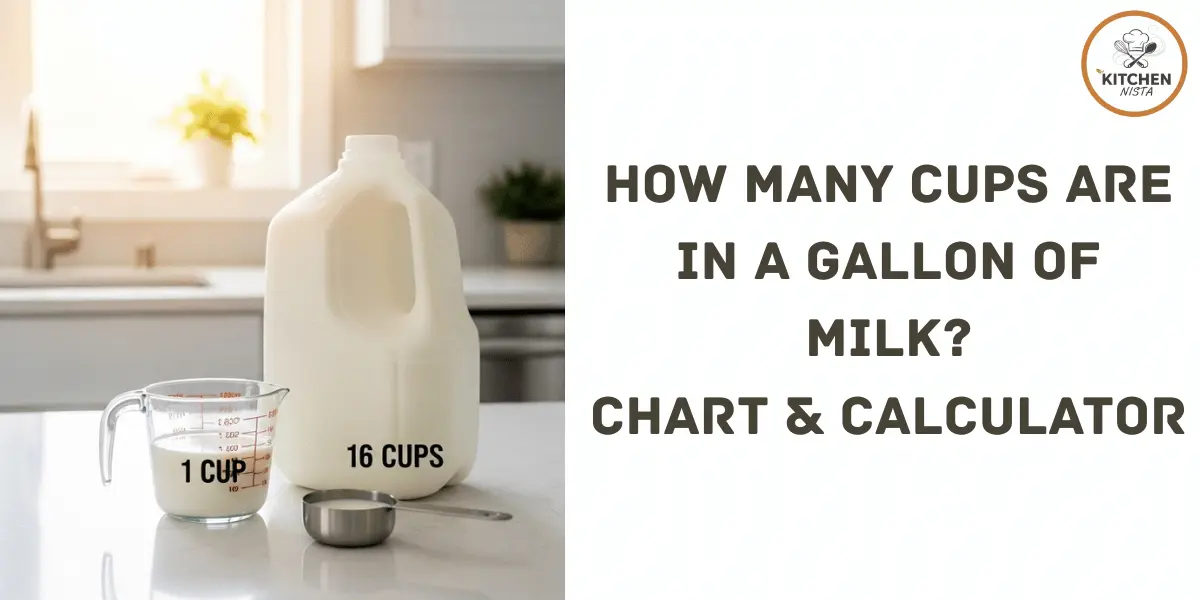
The answer to the question of how many cups are in a gallon of milk in the US measurement system is 16. This means you can do milk quantity conversions when you cook without having to look anything up, and you can do this much quicker than most people can find the answer online.
1 gallon = 16 cups
1 gallon = 8 pints
1 gallon = 4 quarts
1 gallon = 128 fluid ounces
You buy milk in gallons.
You bake a cake using cups.
You measure coffee with cups.
This system makes everyday cooking easier once you understand the relationships between units.
Let’s break it down clearly.
A gallon contains 128 fluid ounces.
One US cup equals 8 fluid ounces.
Now divide:
128 ÷ 8 = 16
That is why:
1 gallon = 16 cups
You can use this simple math anytime you need a conversion.
You rarely use a full gallon at once. Here are common amounts you may measure at home.
Half gallon of milk = 8 cups
Quarter gallon = 4 cups
One pint of milk = 2 cups
One quart of milk = 4 cups
Example:
If a pancake recipe needs 2 cups of milk, you can make that recipe 8 times using one gallon.
This part matters if you read international recipes.
There are two types of gallons:
Used in the United States.
3.785 liters
16 cups
Used in the UK and some other countries.
4.546 liters
About 18.18 US cups
Most American recipes always mean the US liquid gallon.
If your recipe comes from a US website, assume 16 cups per gallon.
Recipes focus on accuracy. Cups give better control for cooking and baking.
Imagine baking cookies.
A recipe saying “0.125 gallon of milk” feels confusing.
But “2 cups of milk” feels natural and easy.
That is why cooks convert gallons into cups before measuring ingredients.
Let’s say you bought a gallon of milk for the week.
Here is how it might be used:
Morning cereal: 1 cup daily
Coffee: ½ cup daily
Cooking pasta sauce: 2 cups
Baking muffins: 1 cup
After several meals, you quickly see how those 16 cups get used.
Understanding conversions helps you plan groceries better and avoid waste.
You only need one rule:
Number of cups = gallons × 16
Examples:
2 gallons = 32 cups
3 gallons = 48 cups
0.5 gallon = 8 cups
This works every time for US liquid measurements.
| Cups | Gallons |
|---|---|
| 1 cup | 0.0625 gallon |
| 2 cups | 0.125 gallon |
| 4 cups | 0.25 gallon |
| 8 cups | 0.5 gallon |
| 16 cups | 1 gallon |
You only need to remember the last line. The rest becomes easy.
You probably never use an entire gallon of milk at one time. Instead, you use small portions throughout the week. Understanding cup conversions helps you estimate how long your milk will last and how many recipes you can prepare.
Imagine you drink one cup of milk every morning with breakfast. A full gallon gives you sixteen servings. If a cake recipe needs two cups of milk, you can make that recipe eight times before finishing the gallon. Small calculations like this help you plan meals and avoid wasting food.
Many home cooks start understanding measurements only after they begin baking. Baking requires accuracy, so knowing how cups relate to gallons saves time and prevents mistakes.
Many people remember the conversion by breaking the gallon into smaller steps. One gallon equals four quarts, and each quart equals four cups. When you combine those numbers, you reach sixteen cups. This approach feels easier than memorizing numbers because it follows a logical pattern.
After using this method a few times, the conversion becomes automatic. You stop thinking about measurements and focus more on cooking itself.
A gallon may look like a large measurement, but the conversion is simple once you understand it.
One gallon of milk equals 16 cups in the United States.
Knowing this helps you cook faster, follow recipes correctly, and manage your kitchen measurements with confidence.
Next time a recipe asks for cups, you will already know how much milk you have available.